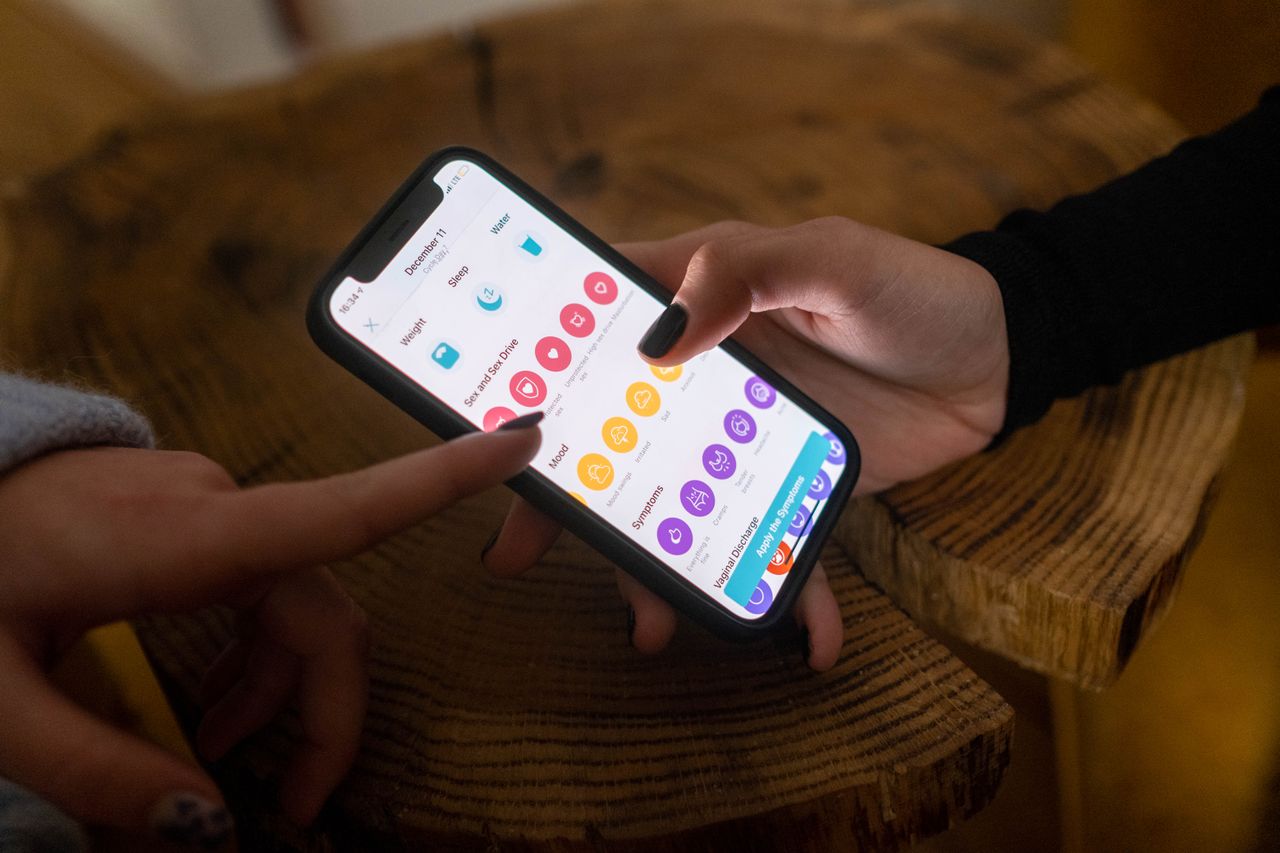
Mental health apps can deliver skills training, mood tracking, and psychoeducation on demand, but they cannot diagnose complex symptoms, respond to real-time crisis risk, or provide the relational continuity that comes from working with a licensed therapist who tracks your progress over time.
What if the app you open at 2am can soothe a hard moment but never actually know you? That's the honest limit of mental health apps: they track, teach, and remind, but they can't sit with your full story the way a real therapist can.
Mental health apps can teach skills, track moods, and offer support at any hour, but they work very differently from a licensed therapist. This article is for anyone weighing an app against therapy, or wondering whether to use both. It covers how the main types of apps work, what they do well, what they cannot replace, and signs it may be time to add a human to the picture.
How mental health apps actually work
How do mental health apps work?
Most apps built for emotional support fall into a small number of categories, and each one does something different with the information you give it. Some hold content and exercises. Some collect data about you and show it back. Some connect you to a language model trained to respond to text. And some exist mainly to schedule and host a session with a licensed human being. Knowing which type you are using matters more than the app’s name or its rating in the app store, because these digital mental health tools are built on very different mechanics underneath a similar interface.
Skills, psychoeducation, and guided audio
The first category teaches. These apps deliver short lessons and exercises drawn from structured therapy models, often adapted from cognitive behavioral therapy, and they deliver the same content the same way to every user who opens them. A module on reframing a worry thought looks identical whether you are a teenager or a retiree. Guided audio for breathing and meditation works the same way, often borrowing structure from mindfulness-based stress reduction programs. Nothing here adjusts based on who you are, because nothing here is reading you.
Self-monitoring: mood trackers, journals, and check-ins
These apps collect what you enter: a mood rating, a sleep log, a few words about your day. Over days and weeks, the app turns that input into a chart or a pattern, showing you that your mood dips on Mondays or that sleep and irritability move together. The value sits entirely in the reflection back to you. The app itself is not interpreting the pattern clinically, it is just organizing what you already typed.
Conversational AI and chatbots
A chatbot responds to the text you type using a language model, sometimes with safety rules layered on top to catch certain phrases or topics. This is not a fixed script and not a human reading your words. A randomized trial of a rule-based chatbot paired with brief weekly support calls found meaningfully greater reductions in anxiety and depression compared to usual care among distressed young adults, though that design combined automated chat with real human contact rather than chat alone.
Apps that are a front door to a human therapist
A fourth category is different from the rest: it is a scheduling and video system that connects you to a licensed therapist. The app itself holds no clinical content and makes no judgment about you. The distinction to keep straight is this: some apps are content and tracking, and some are simply a delivery channel for a licensed person, and nothing in a tracker or a chatbot amounts to a clinical read on you unless an actual person is on the other end reading it.
Why people choose an app instead of therapy
An app does not ask you to sit in a waiting room, explain yourself to an intake coordinator, or wait for an opening. It is there at 2am, on the phone already in your hand, with no appointment and no form to fill out first. For someone newly struggling with anxiety or depression, that immediacy can feel like the only workable option on a bad night, when the alternative feels like a bigger, more exposed process than you can face right then.
Why do people choose mental health apps over therapy?
People choose apps because the barriers to therapy are often structural, not personal. Cost and insurance confusion shape the decision before preference ever enters the picture, and the cost of mental health apps is usually lower and clearer upfront than the cost of a course of sessions. Geography, language, and schedules built around shift work or caregiving narrow the field further, sometimes down to one option. When you weigh mental health apps vs therapy, the app often wins not because it is better, but because it is reachable.
Privacy plays a role too. Typing a feeling into a phone screen feels less exposed than saying it out loud to another person for the first time, especially if you have never said it to anyone. And some people are not sure their problem is big enough to justify therapy at all. An app lets you test that question quietly, without booking anything or explaining yourself to a stranger.
Choosing an app first is not a failure of seriousness. It is usually a rational response to friction: cost, stigma, timing, and uncertainty about whether what you are feeling counts. That reasoning makes sense on its own terms, even before you ask what the app can actually do once you are using it.
What apps genuinely replace, and do it well
Digital mental health tools are not a lesser version of therapy trying and failing to measure up. For a specific set of tasks, they do something a weekly session cannot do by design. The honest comparison between mental health apps vs therapy starts with naming what apps are actually built for.
Daily frequency and between-session continuity
A session happens once a week. An app is there every day, including the days nothing is scheduled. Some kinds of practice depend on repetition more than depth, and a skill rehearsed daily in small doses tends to stick differently than one discussed once and revisited seven days later. For someone already working with a therapist, the app is where the week gets captured instead of disappearing into memory before the next appointment.
A mood log written on Tuesday records what you actually felt on Tuesday. What you report on Friday is a reconstruction, shaped by whatever happened in between and by how the week ended. That gap is exactly why a daily entry is often more useful than a recollection, even a confident one. Patterns that are invisible in the moment, a dip every Sunday night, a spike after a specific kind of conversation, show up clearly once they are logged rather than remembered.
Skills you can genuinely practice alone
Paced breathing, a thought record, a values clarification exercise, grounding through pressure, weight, texture, or the warmth of a held cup: these are things a prompt can walk you through without anyone else in the room. None of them require a clinician standing over your shoulder. Practicing them alone, repeatedly, is part of what makes them useful under pressure later.
Learning the concepts before you need them
Understanding what a panic response actually is, or what avoidance does to a problem over time, is information. It does not require a licensed professional to deliver it, and reading it on your own terms, at your own pace, can make the concept land before you are in crisis and need it to already make sense. Writing a thought down privately can also be the first time it exists outside your head, which is its own kind of relief. And none of this comes with a waiting list, a catchment area, or office hours attached.
What an app cannot replace, no matter how good the app is
An app can screen, track, and teach skills, but it cannot decide what is actually going on when your symptoms fit more than one explanation. That is the core answer to what mental health apps can and cannot replace about actual therapy: they can standardize information, but they cannot weigh it the way a trained person does. The limitations of mental health apps show up most clearly at the exact points where a situation stops being simple.
A symptom questionnaire gives you a score, not a diagnosis. The same set of symptoms, low mood, trouble sleeping, a racing heart in groups, can point toward several different pictures, and telling them apart takes clinical judgment rather than a cutoff number. Someone with social anxiety can score similarly to someone dealing with something else entirely, because overlapping symptoms are common and an algorithm has no way to ask the follow-up question that separates them. The same is true for traumatic disorders, where a presentation can resemble several other conditions until someone trained sits with the full history.
Diagnosis carries weight precisely because it is not guesswork. Madeline Maldonado, LCSW-R says: “there’s no way you can practice independently if you don’t know how to diagnose properly because number one, it’s your legal liability that’s on the line. You know, you are responsible just like a doctor is responsible when they’re putting a diagnosis.” An app carries no such liability and makes no such judgment. It offers a screen, not a formulation.
Real-time risk and the hours that software cannot hold
Software cannot assess risk as it is unfolding, escalate to another person, or stay present while a difficult hour passes. It also cannot notice that you stopped opening it and follow up to ask why. Jenn Mejia, LCSW describes the kind of real-time call this requires: “I know when we can actually pause because you never want to leave somebody … wide open for safety reasons and things like that.” That kind of judgment depends on reading a person in the moment, something a static tool cannot do.
If what you are facing is severe, escalating, or involves thoughts of harming yourself, that calls for individual human guidance rather than a self-directed tool.
If you are thinking about suicide or feel unable to stay safe, reach out to the 988 Suicide & Crisis Lifeline or your local emergency services now, and see our emergency resources. ReachLink is not an emergency service and is not a substitute for emergency care.
Adapting to you rather than to an average user
A protocol built for an average user cannot adjust in the moment to your culture, your history, your body, or the detail you mentioned sideways and then moved past. It will not gently push back when you talk yourself out of something true, and it will not ask the second question that opens up what you just skimmed over. When the process itself causes discomfort, there is no one to raise that with and no one to repair it with. Confrontation and repair both depend on another person being there to notice.
Confidentiality versus data policy
Confidentiality and privacy are not the same thing. An app’s data policy is a commercial arrangement about how your information is stored, shared, or sold. Clinical confidentiality is a licensed obligation a therapist carries toward you specifically, backed by professional and legal accountability. Reading an app’s terms tells you about a company’s practices. It tells you nothing about the kind of protection that comes from working with someone who answers for how they handle what you tell them.
The parts of therapy that only happen between two people
Therapy is not information delivery. An app that hands you the same coping skill a therapist might mention is not a smaller version of therapy, it is a different product doing a different job. The difference between therapy and mental health apps is not depth of content. It is whether another mind is tracking you over time.
A therapist’s presence is not reducible to technique. The work happens in the relationship itself, in being seen by someone who tracks the arc of your experience, who remembers what you said last time and notices what has shifted. That continuity of attention is what an algorithm cannot replicate.
Being known changes what you are willing to say. The first session with a new person rarely contains the thing that actually matters. What you say in month three is usually different from what you said in week one, because trust is cumulative and the room has started to feel survivable. A second person can also catch what you cannot see from inside your own account: the contradiction between the story you told last month and the one you are telling now, the detail you keep leaving out, the pattern that only becomes visible from outside it.
That tracking requires improvisation, not a script. On the difference between planning ahead and responding to what actually happened, Jodi Mullen, PhD, LMHC, RPT-S says: “It’s always improv, right? You don’t know. And I think that we actually do such a disservice to ourselves as clinicians when we do think, I know what Jessica’s going to come in and be talking about, so I can plan for it because I don’t know what happened to you in the week between our sessions or the two weeks between our sessions.” A fixed response library cannot do that. It can only answer the question in front of it, not the person who has changed since the last time they asked one.
The relationship itself does work that no exchange of information can. How you handle closeness, disappointment, and disagreement with a therapist is the same way you handle it everywhere else, and in that room it becomes something you can look at and try differently. Saying the worst thing out loud and watching a person stay is not something a reply generated on request can reproduce, because nothing was risked to produce it. Software can agree with you instantly and endlessly, but agreement that costs nothing to give is not the same thing as being met.
Using both: what a stacked approach looks like in practice
The most useful way to think about digital mental health tools and a therapist is as a division of labor, not a competition. The app holds frequency and data. It collects what happens every day, logs the small shifts, and keeps a record you would otherwise forget by the time you sit down for a session. The therapist holds interpretation and direction. They take what the app collected and help you figure out what it means and what to do about it.
A mood tracker is a good example of how this plays out. On its own, “this week was bad” is hard to work with in a session because there is nothing specific to point to. A week of logged entries can show that the bad days clustered around certain mornings, or followed poor sleep, or came after a particular kind of conversation. That specificity is what turns a vague week into something a therapist can actually help you work through.
Journal entries do something similar for moments a weekly session cannot reach. Something written at two in the morning, in the middle of a hard night, carries detail that fades by the time you are sitting across from someone days later. Bringing that entry into session gives your therapist the raw material instead of a secondhand summary.
Skills work the same way. A therapist can teach a grounding exercise or a thought record in session, then have you rehearse it in the app between sessions, so time together is not spent re-teaching something you already know how to do. Self-assessments, used repeatedly rather than once, show direction of change instead of a single snapshot, which gives both of you a clearer sense of whether something is actually shifting.
An AI chat feature fits into this picture in a narrower way than either a tracker or a therapist. It can be a place to put something you are not ready to say out loud yet, a first draft of a thought before you bring it to a person. It is not a substitute for the person, and treating mental health apps vs therapy as interchangeable at that point misunderstands what each one does. The honest version of this comparison is that the app makes your pattern visible. The work of changing that pattern happens with another person, in psychotherapy, where someone can respond to what you bring in real time.
If you have been using an app on its own and want to see what the other half looks like, working with a licensed therapist alongside it is one way to find out.
Signs it is time to add a human to the picture
The clearest signal is repetition without change. You have logged moods, finished modules, or tracked symptoms for weeks, and the same argument, the same low week, the same pattern of depression keeps returning in the same shape. Consistent use with no movement is data, not a personal failing. It tells you something about the limitations of mental health apps, not about your effort.
Another sign shows up as a gap between knowing and doing. You can describe the coping skill accurately, word for word, and still cannot access it in the moment it matters. That gap usually means the problem involves another person, a partner, a parent, a manager, a child, and a conversation or relationship that an app has no way to be part of. This is one of the real differences in the mental health apps vs therapy comparison: a human can respond to what is happening between two people, in real time.
Watch your own behavior with the app itself. If you are editing what you enter before you type it, or you have quietly stopped opening it and cannot say why, something is being avoided. The same applies if an exercise that used to help now makes an old feeling louder instead of smaller. Daily functioning slipping, sleep, eating, work, leaving the house, is also worth naming plainly rather than working around.
If you notice any thoughts of harming yourself, or a sense that things are escalating, a self-directed tool is no longer the right level of support.
A short self-check: has anything actually changed in the last month, or just been logged?
You deserve support that actually meets what you are carrying
An app can help you track a mood or breathe through a hard moment, but it cannot sit with the fuller, messier parts of what you are going through. That gap you might feel between using these tools and still feeling unseen is not a failure on your part. It just means you are looking for something an app was never built to provide: a real person who can respond to you, specifically, over time.
Wanting that kind of support is not asking for too much. You can create an account at ReachLink and take it at your own pace. A care coordinator can take it from there, matching you with a therapist suited to what you need, so you are not left to sort through that decision alone either.
FAQ
-
What can mental health apps actually do, and what are they not built to handle?
Mental health apps are genuinely useful for a specific set of tasks, like logging moods, practicing breathing exercises, and revisiting coping skills between therapy sessions. Where they fall short is in anything that requires a real clinical judgment call - like figuring out which condition actually explains your symptoms, or assessing whether you are safe during a difficult moment. The same symptom pattern can point toward several very different things, and an app has no way to ask the follow-up question that separates them. Apps are best understood as tools for tracking and practice, not as a substitute for the kind of assessment and relationship that therapy provides.
-
I've been using mental health apps for months and I still feel stuck - would actual therapy make a real difference?
Feeling stuck after consistent app use is one of the clearest signs that what you are carrying needs a different kind of support. Apps can help you log patterns and practice skills, but they cannot adapt to you specifically, push back when you are avoiding something, or build the kind of trust that makes it possible to say the thing you have been working around. Research and clinical experience both point to the relationship itself as a core part of what makes therapy work, being known by someone who tracks your experience over time, notices what has shifted, and responds to you directly. If knowing what to do has not translated into actually doing it, adding a licensed therapist to the picture is the logical next step.
-
Isn't an app just as private as therapy? I'm worried about who actually sees what I share.
Privacy and confidentiality are two different things, and the distinction matters a lot here. An app's data policy describes a commercial arrangement - how a company stores, uses, or potentially shares your information. Clinical confidentiality is a legal and professional obligation that a licensed therapist holds specifically toward you, with real accountability attached if they violate it. Reading an app's terms of service tells you about a company's practices, but it does not give you the same protection that comes from working with someone who is professionally and legally responsible for how they handle what you share. If privacy is a concern, working with a licensed therapist actually offers stronger, more specific protections than most apps do.
-
I think I'm ready to try actual therapy - how do I find a therapist who's a good fit for what I'm going through?
Finding a therapist who fits your specific situation is much easier when you do not have to sort through it entirely on your own. ReachLink connects you with licensed therapists through human care coordinators - real people who take the time to understand what you are looking for and match you accordingly, rather than leaving that decision to an algorithm. You can start with a free assessment at your own pace, and a care coordinator takes it from there, so the first step does not require you to already know what kind of therapist you need. All of ReachLink's therapists are licensed professionals working through evidence-based, therapy-based approaches, so you can get real clinical support without navigating a complicated intake process alone.
-
How often would I need to go to therapy, and how long does it usually take before things start to feel different?
Therapy frequency and timeline vary depending on what you are working on and how you respond to the approach your therapist uses. Many people start with weekly sessions, which gives enough consistency to build on from one appointment to the next without too much time in between. Some people notice meaningful shifts within a few weeks, while others work through deeper patterns over several months. A licensed therapist can give you a much clearer sense of what to expect for your specific situation after your first few sessions, rather than applying a one-size timeline to something that is genuinely personal.