ReachLink is now hiring licensed therapists. Apply to join the current cohort before October 31. Apply now →

Why Walk and Talk Therapy Makes It Easier to Open Up

PsychotherapyOctober 12, 202617 min read
Why Walk and Talk Therapy Makes It Easier to Open Up

Walk and talk therapy pairs licensed clinical treatment with outdoor movement, replacing face-to-face seating with a side-by-side walk that reduces eye-contact pressure and eases disclosure, with small studies linking the format to lower session anxiety, reduced psychological distress, and improved well-being for clients open to therapy in motion.

What if the hardest thing to say out loud gets easier the moment you stop sitting still? Walk and talk therapy swaps the office chair for an outdoor path, removing face-to-face pressure so words can surface naturally. Here's why movement helps more people open up than you'd expect.

What is walk and talk therapy?

What is walk and talk therapy?

Walk and talk therapy is a session with a licensed therapist that happens while both of you are walking, usually outdoors on a park path, a trail, a neighborhood route, or a quiet campus loop, instead of sitting across from each other in an office. The format changes where the conversation happens, not what kind of therapy it is. The clinician still works from a recognizable clinical approach, whatever they normally use with a seated client, and that approach carries over to the sidewalk or the trail. What moves is the setting, not the method.

A walk and talk session is typically a standard length and gets scheduled, documented, and kept confidential the same way an office session is. The therapist usually picks the route ahead of time, favoring a path that is private enough for a real conversation and predictable enough that neither of you has to think about where you are going next. That planning matters because the session needs to feel safe to talk in, not like an improvised outing.

You may see walk and talk therapy grouped with related terms: ecotherapy, nature-based therapy, outdoor therapy, and adventure therapy. These overlap but are not identical. Ecotherapy and nature-based therapy are broader categories built around the idea that contact with the outdoors supports mental health. Outdoor therapy is a looser, more general label for any session held outside. Adventure therapy usually involves more structured physical challenge, like climbing or group expeditions. Walk and talk therapy is the narrowest and most ordinary version of this group: one therapist, one client, one walk.

It also helps to know what it is not. Walk and talk therapy is not a hike, not a wellness coaching walk, not a fitness program, and not a group walking club. It is an individual clinical session, just conducted while moving.

Why some people open up better in motion

Walking changes the physical conditions a conversation happens inside, and for some people those conditions make hard things easier to say. The question of why people open up walking comes down to a few shifts that happen at once: where your eyes go, what a pause means, what your body does with the energy, and what you’re looking at when the sentence gets difficult. None of this is about the words changing. It’s about the setting the words have to survive.

The effect of sitting side by side instead of face to face

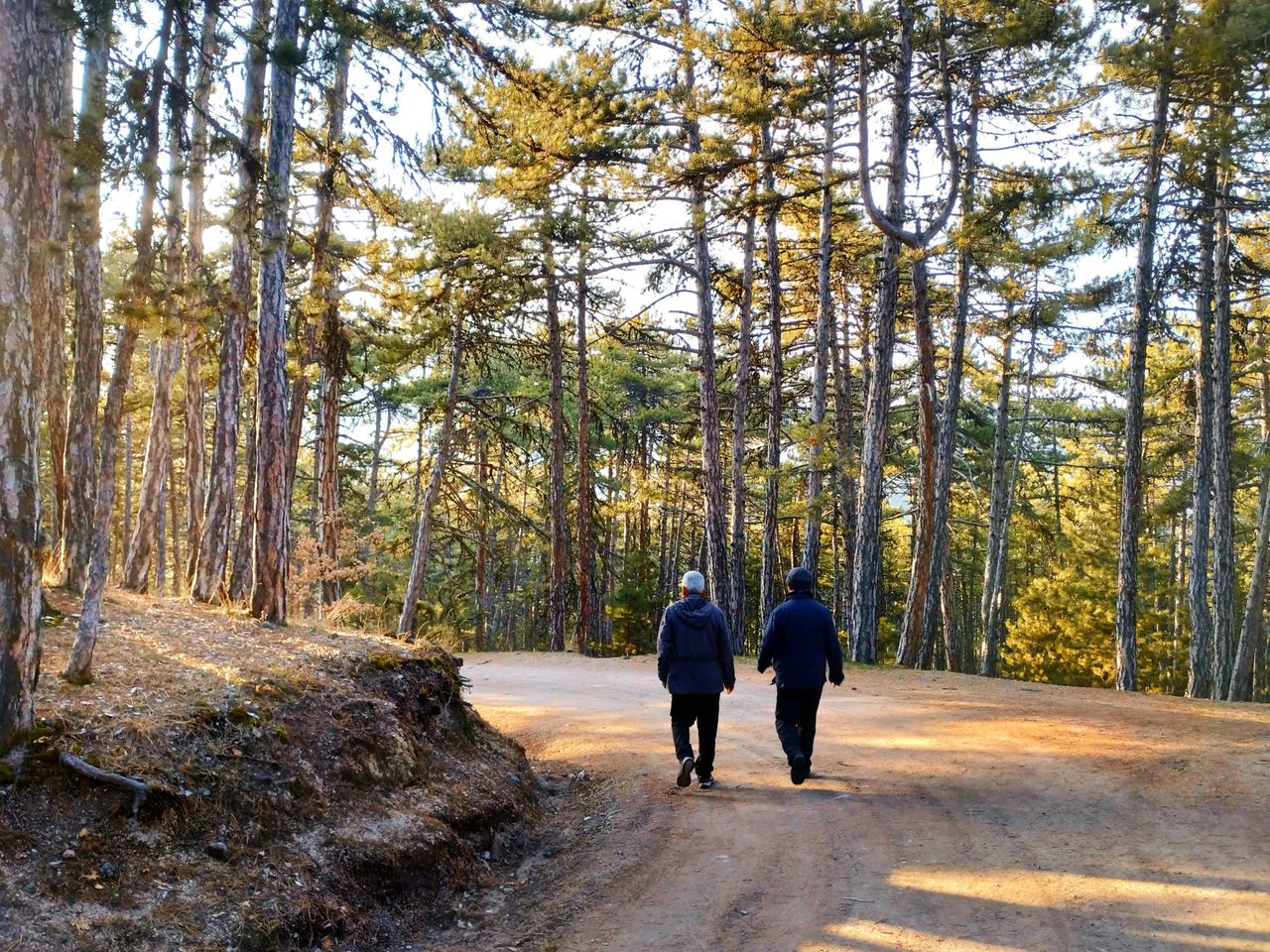
How does walk and talk therapy work? Start with the eyes. In a standard therapy room, you and the therapist sit across from each other, which means sustained eye contact is built into the format. For some people that’s the most pressurized part of being in the room, a sense of being watched while you try to find a sentence. Side by side conversation removes that. Walking next to someone means you’re both facing the same direction, looking at the same path, and the conversation can happen without either person’s face being the main thing in view.

What movement does to the pressure of a pause

When eye contact isn’t required, a pause stops being something that has to be filled or performed. Sitting across from someone, silence can feel like it needs an explanation or a quick recovery. Walking, a pause is just a few steps where nobody says anything, and the walk continues regardless. The body is also doing something the whole time, so restless energy that might otherwise show up as foot tapping, fidgeting, or wanting to leave the room has somewhere to go instead.

Walking with the environment as a third thing in the room

A changing environment gives both people something neutral to share attention with. A hard sentence can be followed by both of you noticing the same tree, the same corner, the same change in the path, rather than by one person being looked at while the other waits. A multiple baseline study of walk and talk therapy found that participants described the combination of the outdoor setting and the act of walking as what let them express themselves more freely, with all five participants showing reduced psychological distress and increased well-being from baseline to follow-up. Forward motion also gives a conversation a built-in sense of progress, and even a built-in sense of an ending, which can make it feel safer to start something difficult in the first place.

This also tends to help people who freeze under direct attention, including some who describe going blank the moment a therapist asks how they feel. A study tracking the same clients across indoor, urban walking, and nature-based walking sessions found that psychological and physiological responses differed significantly across those three settings, with personality traits and a person’s relationship to the outdoors shaping how much the setting itself mattered. For some people, none of this applies, and being outside adds more stimulus than it removes pressure. That’s a real pattern, not a failure of the format, and it’s worth taking seriously rather than pushing through.

What people tend to get out of walking sessions

What are the benefits of walk and talk therapy?

Reported walk and talk therapy benefits cluster around three things: easier disclosure, lower session anxiety, and a sense that the hour felt less clinical. A small multiple baseline study on walk and talk therapy’s effects on mood and well-being followed five adults and found reduced psychological distress and increased well-being from baseline to follow-up. Participants described more freedom of expression, a broader perspective on their own problems, and greater self-acceptance when the conversation happened outdoors and in motion. The same study noted that this format can feel like a more approachable alternative for people who find a traditional office setting intimidating, which speaks directly to lower anxiety symptoms around attending sessions at all.

Time outdoors and light physical activity are both widely studied supports for mood on their own, and a walking session folds both into an appointment that was already on the calendar. A randomized pilot study comparing walk and talk therapy with conventional indoor therapy for men with low mood found reported improvements in mood alongside reduced session anxiety, which matters for anyone working through depression treatment and dreading the next appointment. For some people, that drop in dread is the whole difference between showing up and canceling, and it matters most for clients who have skipped or avoided office sessions before.

Is walk and talk therapy effective, and how strong is the evidence

Is walk and talk therapy effective. The honest answer is that the evidence base is real but still modest: a growing body of small studies with limited samples and varied protocols, not a large or settled literature. Walking sessions are not a substitute for structured treatment of a specific diagnosis, and the mechanisms behind why movement seems to help disclosure are a separate question from whether the benefits hold up at scale. What exists so far points toward a promising, appealing option rather than a proven replacement for established approaches.

What a first walking session actually looks like

A first walk and talk session usually starts sitting down, not walking. The actual movement comes after a short orientation conversation, sometimes in person before the first loop and sometimes by video beforehand, where the logistics get settled before anyone steps outside.

The orientation conversation before the first walk

This conversation covers the route, what happens in bad weather, pace, confidentiality outdoors, and what to do if the walk needs to stop early. It is also where the two of you agree on ground rules for being in public together. For someone managing anxiety symptoms about being seen or overheard during a session, this is the point where those concerns get named and planned for, rather than discovered mid-walk.

How the route and pace get decided

You are typically asked what pace feels right, and told plainly that the pace is yours to set and change at any point, including stopping altogether on a bench if you need to. Some people want brisk and distracting, others want slow and quiet. The route itself tends to be chosen for privacy and consistency rather than scenery, since a familiar path means fewer surprises. A walking therapy session works best when the physical conditions stay predictable enough that your attention can go somewhere other than your footing.

What happens if someone you know stops to talk

This gets decided in advance, too. The two of you typically agree on whether the therapist offers a greeting if you pass an acquaintance, what cover story you will use if that person stops to chat, and what signal you can give to change the subject without explaining why. Having this scripted ahead of time means you are not improvising it in the moment. The first few minutes of a first walk and talk session are often small talk anyway, settling into the rhythm, with the harder material surfacing once the pace evens out.

Phones usually stay silenced rather than off, since a therapist may jot a brief note on their phone rather than a legal pad, and will tell you upfront how they handle documentation without a desk between you. Weather that makes walking unsafe or unpleasant generally triggers a fallback to an indoor room or a video session, decided using the same cancellation policy any therapist would have. Practically, comfortable shoes, water, and layers you can add or remove make more difference than you would expect, and if the route turns out busier than expected, rerouting or ending early is always an option you can raise.

Privacy, safety and the practical realities of therapy outdoors

Walking sessions happen in public, and that changes what privacy means. Before you agree to this format, a therapist should name that change out loud rather than let you assume the office rules still apply.

Confidentiality limits you should hear before you agree

A closed door guarantees a kind of privacy that a trail or sidewalk cannot. Walk and talk therapy confidentiality works differently: someone might pass close enough to catch a phrase, a dog walker might recognize you, a jogger might slow down within earshot. Part of planning an outdoor session is choosing routes, timing, and distance from busy paths to reduce how much gets overheard, and lowering your voice or pausing when someone passes is a normal part of the session, not an interruption to it. Written informed consent for outdoor sessions typically spells this out directly, along with the physical risks below, so you are agreeing to the format with full information rather than discovering the limits mid-walk.

Being seen, and what that means in a small community

In a small town or a tight-knit neighborhood, being seen walking with a particular person is itself a piece of information. Someone might recognize your therapist, or recognize you, and draw conclusions neither of you control. This matters more for some people than others. If public visibility already feeds a pattern of worry, it is worth weighing alongside the broader picture of anxiety symptoms before choosing this format over an office setting.

Physical and environmental risks

Outdoor therapy safety also means accounting for the body and the weather. Uneven terrain, traffic at crossings, heat, cold, poor air quality, early darkness, and a client’s own mobility all shape whether a given route is workable on a given day. A session that turns into a crisis moment outdoors may need to pause, move to a car, or relocate to a seated, private spot rather than continue in motion. Walking outside does not loosen a therapist’s legal and ethical obligations around licensure, scope of practice, or duty of care. Those responsibilities travel with the therapist wherever the session happens, and a reader can confirm with any prospective therapist how they plan for weather, terrain, and interruption before the first walk ever starts.

Curious about something here?

Ask your favorite AI about this article

Who walking sessions tend to help, and who should consider alternatives

So who is walk and talk therapy for? There is no quiz that settles this, and fit can shift from one week to the next. What follows is a way to think about where you might land, not a final answer.

When walking tends to make the work easier

Walking tends to suit people who find a therapy office confining rather than safe. Some people freeze up under sustained eye contact and find that moving side by side, rather than facing someone across a desk, lowers that pressure. Others describe feeling physically trapped indoors, or notice that their anxiety symptoms spike specifically in waiting rooms, before a session has even started. A multiple baseline study of walk and talk therapy found that participants linked the outdoor, moving format to a greater sense of freedom of expression, along with reduced psychological distress and higher well-being from baseline to follow-up. People who think most clearly while in motion, rather than while sitting still, often recognize themselves in this group.

When a shorter route or a seated option makes more sense

Mobility limits, chronic pain, fatigue conditions, and respiratory issues do not rule out walking sessions, but they usually call for adjustment. A shorter loop, frequent benches, or a fully seated outdoor alternative can keep the format without the physical strain.

Presentations where walking is often set aside

Active crisis and acute suicidality usually call for a closed door and the containment a private room offers, not an open path where a disclosure could be interrupted at the wrong moment. If you are thinking about hurting yourself, help is available right now and it does not require an appointment. Trauma and dissociation are judged case by case, since movement helps some people regulate and leaves others pulled away from the work by an unpredictable public setting, a consideration that matters for anyone navigating traumatic disorders. Eating disorder and body image presentations are often handled indoors too, since attaching physical activity to a session hour can carry a loaded meaning that undercuts the work. Hyper-vigilance about being overheard is reason enough to stay inside rather than something to push past. None of this is fixed. Many people alternate, walking some weeks and sitting others, and the choice can be revisited at any point.

Walk and talk therapy compared with office based therapy

The office and the sidewalk ask for different kinds of exposure, and weighing walk and talk vs traditional therapy means weighing those tradeoffs rather than picking a winner. An office gives you a closed door. A walking session gives you a managed but public route, chosen with care but never fully private, since a path or a park still has other people in it.

An office also holds intense emotion in a way a sidewalk cannot. That containment is sometimes exactly what a session needs, a small sealed room where tears or anger have nowhere else to go. Walking removes some of that container, which is sometimes a relief and sometimes a problem, depending on what the moment calls for.

Seated therapy puts you face to face, which makes sustained eye contact available and can make some disclosures feel more exposed. Walking side by side removes that eye contact and often loosens the pace of speech, which is part of why certain things come out more easily in motion. An office based therapy comparison on this point is really a comparison of what each posture makes easier or harder to say.

Reliability matters too. Office sessions do not depend on weather or daylight, while a walking session can be rerouted by rain or an unexpected crowd. A therapist seated across from you can also read posture, hands, and facial expression closely, information that is harder to catch side by side on a trail, while the reverse is true for how your body moves when it has room to move.

Many practices treat this as a choice revisited as the work changes rather than a fixed decision made once. A network meta-analysis of 331 trials found that major psychotherapy approaches perform comparably, which supports treating format as a question of fit rather than one setting being clinically superior. For anyone whose main obstacle is simply getting to an office, online sessions remove that barrier entirely and sit as a third option alongside both formats.

How to find a walk and talk therapist, and what to ask

Walk and talk sessions are still uncommon enough that you usually have to dig for them. Knowing where to look and what to ask on a consultation call makes the difference between finding a clinician with a real plan and ending up disappointed on a first walk.

Where walking sessions are usually listed

When you search to find a walk and talk therapist, the term itself is often the wrong keyword. Many directory profiles file this format under outdoor therapy, nature based therapy, or ecotherapy rather than under walk and talk, so searching those terms alongside your location usually turns up more results. Profiles sometimes mention it only in the written bio, not in a filterable category, so it is worth reading full descriptions instead of relying on filters alone.

Questions to ask before you book

A short consultation call is the place to raise your questions to ask a therapist before committing to this format. Useful ones include what route they use, how they handle being seen by people who know either of you, what happens in bad weather, what happens if you need to stop or sit down mid session, and whether they have actually done this before. It is also worth asking whether their primary therapeutic approach changes outdoors or stays the same, and what that approach actually is. A clinician with a working protocol, the kind described in ethical guidelines for integrating nature into counseling practice, will answer these specifically. A vague or improvised sounding answer is a sign the format has not been thought through, and that is worth knowing before your first appointment rather than during it.

If walking is not available where you live

If no therapist near you offers walking sessions, a few workable alternatives exist. Some clinicians will do a seated session that opens with a short walk, others are open to a phone session you take while walking alone, and online therapy removes the commute and waiting room entirely while keeping the option of pacing around your own space. If no one nearby offers walking sessions, one option is to create a free ReachLink account and browse licensed therapists at your own pace, with no commitment. Starting with a standard format while you keep looking is usually better than delaying care until the format you want becomes available.

Sometimes moving forward helps you move through things

There is nothing wrong with you if sitting across from someone and being asked to talk about your feelings has always felt stiff or exposed. The body holds its own kind of honesty, and walking side by side can loosen what stillness keeps locked tight. Wanting a different way into your own thoughts is not avoidance, it is self knowledge, and it deserves a therapist who can meet you there instead of asking you to conform to a chair.

Whether that looks like walk and talk sessions or a more traditional setup, what matters most is finding a rhythm that actually lets you speak. You do not have to know which approach fits before you reach out. You can begin with a free assessment at ReachLink and let a care coordinator help you find a format that feels like yours, at your own pace and with no commitment attached.


FAQ

  • What actually is walk and talk therapy, and how is it different from regular therapy?

    Walk and talk therapy is a clinical session with a licensed therapist that takes place while both of you are walking, usually outdoors on a park path, trail, or quiet neighborhood route, instead of sitting face to face in an office. The therapeutic approach stays the same - your therapist still works from a recognized method like CBT or talk therapy - but the physical setting shifts from a closed room to an outdoor route chosen ahead of time for privacy and consistency. The main practical difference is posture: walking side by side means you are both facing the same direction rather than looking directly at each other, which many people find makes it easier to speak about difficult things. If the format sounds like it might work for you, it is worth raising it in a consultation call with a therapist who has a clear plan for the logistics.

  • Does walk and talk therapy actually work, or is it just a trend?

    The research behind walk and talk therapy is real but still modest - a growing body of small studies points toward genuine benefits rather than a large, settled body of evidence. A multiple baseline study following five adults found reduced psychological distress and increased well-being from baseline to follow-up, with participants describing greater freedom of expression and a broader perspective on their own problems when sessions happened outdoors and in motion. A separate randomized pilot study comparing walking sessions with conventional indoor therapy for men with low mood found reported improvements in mood alongside reduced session anxiety, which matters for anyone who dreads showing up to appointments. The honest takeaway is that walking sessions look promising for certain people, particularly those who find office settings intimidating, but they work best as a format choice rather than a replacement for structured therapeutic approaches.

  • I worry about running into people I know during a session outside - is that a real concern with walk and talk therapy?

    It is a legitimate concern, and a good therapist will address it before your first walk, not mid-session. The route is typically chosen for privacy and consistency, and you and your therapist agree in advance on how to handle passing an acquaintance - including what to say if someone stops to chat and what signal you can use to change the subject without explaining why. Written informed consent for outdoor sessions should spell out the confidentiality limits clearly, since a closed office door offers a kind of privacy that a trail or sidewalk cannot fully replicate. If public visibility already feeds worry for you, it is worth weighing that honestly against the benefits of the format rather than pushing through discomfort that undercuts the work.

  • How do I find a therapist who does walk and talk therapy, and where do I even start?

    Finding a walk and talk therapist can take a bit of searching because many clinicians list this format under "outdoor therapy," "nature-based therapy," or "ecotherapy" rather than the specific term "walk and talk," so broadening your search terms usually turns up more results. On a consultation call, it helps to ask directly what route they use, how they handle bad weather, what happens if you need to stop mid-session, and whether their therapeutic approach changes outdoors or stays the same. If you are not sure where to begin, ReachLink connects you with licensed therapists through human care coordinators - not an algorithm - who can help you find a format and therapist that actually fits your situation. You can start with a free assessment at ReachLink at your own pace, with no commitment required.

  • Can I still try walk and talk therapy if I have a mobility issue or can't walk very far?

    Mobility limits, chronic pain, and fatigue conditions do not automatically rule out walking sessions, but they usually call for some adjustment to the format. A shorter loop, frequent bench stops, or a fully seated outdoor alternative can keep the benefits of being outside without the physical strain of a longer walk. The key is raising your specific needs during the orientation conversation before your first session, so the therapist can plan a route and pace that works for your body rather than assuming a standard setup will fit. Many therapists are open to a hybrid approach - some weeks walking, others seated - and the format can be revisited whenever your needs change.

Have a question about this topic?

Type your question and we'll send it to the AI assistant of your choice.

Your question will be sent to an external AI assistant. If you're going through a crisis, please reach out to the 988 Suicide and Crisis Lifeline (call or text 988).

Share this article
Take the First Step

Get Real Support.
See Real Results.

Join thousands who have found specialized therapy that truly understands their health journey. Start today — it takes less than 5 minutes.

No referral needed · Most insurance accepted · Start within 48 hours