ReachLink is now hiring licensed therapists. Apply to join the current cohort before October 31. Apply now →

Why Repeated Climate Disasters Can Leave Trauma That Lingers

TraumaOctober 13, 202618 min read
Why Repeated Climate Disasters Can Leave Trauma That Lingers

Cumulative climate trauma develops when repeated disasters, wildfires, floods, hurricanes, strike before recovery from the previous one is complete, producing overlapping PTSD, anxiety, and grief symptoms that standard single-event trauma frameworks fail to capture, and licensed trauma-informed therapy offers survivors an evidence-based path toward lasting relief and renewed stability.

What if the storm you survived three years ago never actually ended, not in your body? Cumulative climate trauma happens when disasters stack faster than you can recover, leaving your nervous system permanently braced. Here's why that exhaustion makes sense, and what actually helps.

Cumulative climate trauma does not reset between disasters. When floods, fires, or storms keep returning to the same place, each new event can land on a nervous system that has not fully recovered from the last one. This piece explains how that pattern differs from single-event trauma, who tends to carry the heaviest load, and what can help when another season is coming.

What cumulative climate trauma is, and how it differs from single-event trauma

Cumulative climate trauma describes what happens psychologically when someone lives through more than one disaster in the same place, often before recovery from the first one is finished. A wildfire season ends, the rebuilding starts, and before the walls are finished another evacuation order arrives. The injury is not two separate events stacked next to each other. It is one continuous process that never gets to close.

Single-event trauma has a shape: a before, a during, and an after. The after is where healing happens, where the nervous system has room to settle and the mind can start making sense of what occurred. Repeated disaster exposure erodes that after, because another event arrives before the first one has been metabolized. That erosion, not the disasters themselves, is the part standard trauma frameworks were not built to capture.

A few terms describe the pieces of this pattern. Acute disaster trauma refers to the psychological impact of a single event, like a flood or hurricane. Chronic environmental stress is the lower-grade, ongoing strain of living somewhere disasters keep recurring, even between events. Anticipatory distress is the dread of the next one, a close relative of anxiety that is oriented toward a specific, plausible future rather than a vague one. Solastalgia names something different again: the grief of watching a familiar place change around you, your own home becoming unrecognizable while you still live in it.

What is the connection between climate crisis and anxiety?

The connection runs through anticipation. Climate anxiety is not only worry about distant, abstract futures. For someone who has already lived through one or more disasters, it is often specific: the next fire season, the next storm track, the next evacuation notice. That distress is part of the same cumulative pattern, not a separate condition layered on top of it.

None of this is a formal diagnosis. Cumulative climate trauma is a pattern description, a way of naming presentations that standard trauma frameworks, built around one event with a clear end, do not fully explain. It gives language to something that would otherwise look like several unrelated hard years instead of one unfinished injury.

What repeated disaster exposure does to mental health

Repeated disaster exposure produces a recognizable cluster of mental health presentations, not a single symptom. A narrative synthesis and meta-analysis of UK populations exposed to extreme weather found that within 12 months of exposure, PTSD affected 30.36% of those studied, depression affected 21.35%, and anxiety affected 19.8%, with water depth and the absence of flood warnings identified as key risk factors. A scoping review of 63 wildfire studies documented increased rates of PTSD, depression, and generalized anxiety disorder at multiple points after a fire, from the weeks immediately after through years later, in both adults and children. Natural disaster PTSD, anxiety, and depressive presentations tend to travel together rather than appearing in isolation, which is part of what makes repeated disaster exposure mental health effects harder to separate into tidy categories.

Post-traumatic stress and intrusive memory after multiple events

What kind of trauma can natural disasters cause? Often it is post-traumatic stress that does not stay attached to one scene. After a single disaster, an intrusive memory usually has a clear source: a specific flood, a specific fire. After several, survivors often describe memories that blur together, as though the mind filed the events under one heading instead of keeping them separate. The brain’s threat detection system works by pattern matching. Kristen McLoud, LCSW explains the mechanism behind intrusive thoughts: “The brain is trying to defend itself. It’s categorizing. Your brain is categorizing the thoughts. As soon as something happens to you, you have an automatic thought because you categorized it. You saw something that was familiar that was maybe something that caused you harm. Maybe somebody didn’t like you in the past. You categorized that. That looks the same. It must be the same. But it’s not really, it’s not always the same.” That same categorizing process can mean a new storm warning pulls up memories from an older disaster, the brain treating similar threats as identical even when the details differ.

Anxiety that attaches to weather and season

For some survivors, anxiety stops waiting for a forecast and starts living in the body year-round. This can look like checking weather apps multiple times a day, sleeping in clothes during storm season in case evacuation becomes necessary, or keeping a bag packed long after the last event ended. MeKenzie Russell Lane, LPC/MHSP points to how ordinary sensory details carry this kind of weight: “that’s what we know about trauma too, is it gets stored in our memories and in our body. So even like some of the, you know, around here, I’ve everyone’s cutting their grass now. So maybe that scent of fresh-cut grass actually triggers you to when you found out someone died.” A smell, a wind pattern, or a change in humidity can function the same way, placing the nervous system on alert for something that has not happened yet.

Depression, grief and loss of place

Depressive presentations after repeated disasters are often shaped less by a single traumatic moment and more by accumulated loss: of a home, a routine, a community, or the sense that rebuilding is worth the effort. This can show up as a flattened, going-through-the-motions quality, where someone reports feeling “fine” until asked a direct question. Withdrawal from neighbors, irritability, and increased substance use sometimes appear alongside it, as ways of managing what feels unmanageable. The grief attached to this kind of loss often has no clear endpoint, since the place or community that was lost can be lost again in the next season. Depression linked to disaster exposure is frequently tangled with this ongoing, place-based grief rather than separate from it.

Why each disaster is harder to recover from than the last

Recovery after a single disaster usually assumes something simple: a stretch of calm afterward where rebuilding can actually happen. Repeated exposure takes that stretch away. The second flood or fire often arrives before the first one has finished being paid off, physically or emotionally, which changes the entire shape of disaster survivor recovery. The problem is not that people got worse at coping. The problem is that the conditions coping depends on stopped showing up.

Practical resources run out in a predictable order. Savings go first, because that is the fastest fix. Insurance capacity often comes next, especially once claims history starts affecting what a policy will cover. After that, people lean on family favors, a ride, a spare room, a loan that everyone knows will not be repaid soon. Eventually they reach the neighbors, and that is where cumulative climate trauma becomes a community problem and not just a household one, because the neighbors are frequently depleted too. A multilevel study on community social capital and post-disaster mental health found that the informal support networks which normally cushion recovery are part of what gets worn down by repeated disasters, which means the help a household needed the first time may simply not be available by the third.

Expectations shift along with the resources. After enough repetition, people stop assuming things will return to how they were, and that changes how they rebuild, insure, and plan for the next ten years. Preparation that worked once can stop feeling like protection at all, which quietly undercuts the exact coping strategies that got someone through the first event.

This is where self-blame tends to creep in. Many survivors interpret a harder second or third recovery as proof they handled it badly, when the more accurate explanation is that the surrounding supports, savings, insurance, and community, had already been spent. The ongoing strain this creates is cumulative by design, not by personal failing.

Single-event trauma vs cumulative climate trauma, side by side

A single flood, fire, or storm and a string of them over several years do not just differ in frequency. They produce different internal landscapes. Laying the two side by side shows why natural disaster PTSD from one event can look and resolve so differently from cumulative climate trauma built from several.

Onset and timeline. Single-event trauma has a clear start and end. Cumulative climate trauma has overlapping starts, often before the last event has finished playing out.

How the memory is organized. Single-event trauma tends to sit as one discrete memory with a defined before and after. Cumulative climate trauma produces memories that blur together, so a person may struggle to say which flood or which fire season they are remembering.

What the person fears. After one event, the fear usually attaches to that event happening again. After several, the fear generalizes to the season or the forecast itself.

What triggers symptoms. Single-event triggers are specific, a smell, a sound, an anniversary. Cumulative triggers are broader: a weather alert, a darkening sky, the calendar turning to a known risk month.

What recovery depends on. Single-event recovery is supported by a stretch of safety and an intact community. Cumulative recovery depends on a pause that may not arrive, in a community that has been depleted by the same repeated events.

Sense of safety. After one event, safety can feel restored once the immediate danger passes. After several, safety feels conditional and temporary.

How people talk about the future. Survivors of a single event often describe getting their life back. Survivors of repeated events more often describe not planning past the next season at all.

Neither column is a diagnosis. The columns describe a pattern in how people narrate their own experience, and that pattern shapes what kind of support actually helps.

Who carries the heaviest load

Repeated disaster exposure mental health outcomes are not spread evenly across a community. Some people absorb event after event with a little more cushion between them: savings, stable housing, a body that moves easily toward an exit. Others start closer to the edge, so each new disaster pushes them further than it pushes their neighbor. The research on gender, place and disaster mental health recovery points to this same pattern: recovery is shaped by social position, not just by the severity of the event itself.

Children and teenagers growing up between events

A child who lives through repeated disasters is absorbing them during the exact years when a sense of a stable, predictable world is still being built. That disruption often does not show up as stated fear. It shows up as a changed sleep pattern, a sudden refusal to go to school, new clinginess, or behavior that looks like a return to an earlier developmental stage.

Low-income households and renters

Low-income households typically carry less insurance coverage, smaller savings buffers, and fewer options for relocating after a disaster. A scoping review of 58 studies on climate disasters and mental disorder in low- and middle-income countries found consistent associations between disaster exposure and conditions like depression and PTSD, with the burden concentrated where resources were already thin. Renters and people in temporary housing face an added layer: they often have no say in whether a damaged property is rebuilt, repaired, or sold out from under them, so each disaster can mean starting over somewhere else entirely.

Older adults, caregivers and people with existing conditions

Older adults frequently face mobility limits, ongoing medical needs, and isolation that make evacuation harder and slower. A disaster can cost an older adult a long-held home and the social network built around it in the same event. People whose livelihood depends on land, water, or predictable weather face occupational loss layered on top of personal loss, since the disaster can take both the home and the income at once. Outdoor workers and repeat responders accumulate exposure twice over, once through their jobs and again through their own households, while an existing mental health condition, a disability, or caregiving duties all shrink the capacity left over for disaster survivor recovery.

Curious about something here?

Ask your favorite AI about this article

The stressors that arrive after the water goes down

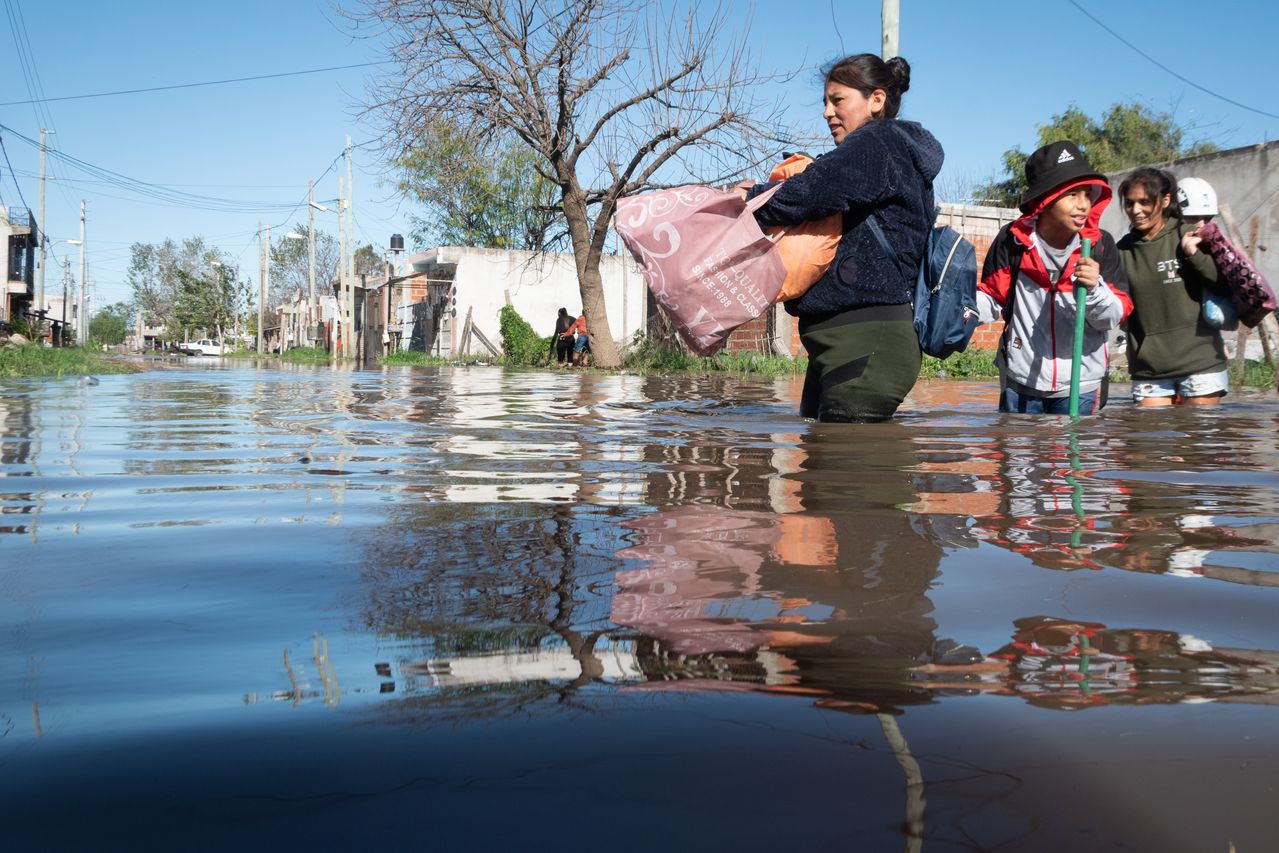
The disaster itself often lasts hours or days. What follows lasts months or years, and it rarely gets counted as part of the damage. Disaster survivor recovery is not one event you move past but a long sequence of smaller, grinding problems that keep the body in a state of alert long after the immediate danger is gone. This is where cumulative climate trauma tends to take root, not in the flood or the fire but in everything it set in motion.

Displacement is often the first of these. A family moves into temporary housing, then moves again when that arrangement ends, then again. Children change schools mid-year. Living out of boxes for an extended stretch carries a specific kind of exhaustion: nothing feels settled enough to rest in, so the nervous system never fully stands down.

Insurance claims and aid applications add a second layer. Filing paperwork, gathering documentation, appealing a denial, waiting for a decision that affects whether you have a home: this is a high-stakes administrative process with no fixed end date. Research on long-term mental health outcomes after flooding points to this kind of prolonged displacement and administrative burden as a major driver of lasting psychological strain, separate from the flood event itself.

Debt from one disaster often carries into the next, so underinsured households start each new event from a weaker financial position. A destroyed workplace, lost client base, or ruined growing season disrupts income at the same time expenses rise. Recovery stretches household relationships thin, and caregiving responsibilities multiply the strain. The question of whether to rebuild, relocate, or stay resurfaces after every event, and answering it again and again produces its own fatigue. For those who do leave, there is a distinct grief in losing a community, often tangled with guilt about the people who stayed behind.

What the research shows about repeat-disaster survivors

Much of what is known about repeated disaster exposure mental health comes from large population studies that track the same people across more than one event, rather than studying one disaster in isolation. A study of Gulf coast residents exposed to multiple disasters found that mental and physical health symptoms built on top of each other across successive storms and spills, rather than resetting once one event had passed. A separate study of Florida residents with repeated hurricane exposure, drawn from a representative sample, found a similar compounding pattern tied to the number of hurricanes someone had lived through, not just the most recent one. Together these point to cumulative climate trauma as a measurable pattern rather than a description that only feels true from the inside.

Both studies also separate direct exposure, like being in the path of a storm, from indirect exposure such as evacuating, losing property, or watching a community absorb damage without being hit personally. Both kinds of exposure showed up in the mental health outcomes, which matters because indirect exposure is often treated as less serious.

The weaker part of the evidence base is what interrupts this buildup once it has started. Studies have been stronger at documenting that symptoms accumulate than at identifying what breaks that pattern. There is also a measurement problem worth naming plainly: many of the instruments used to screen for trauma symptoms were built around a single incident, which may undercount people whose distress comes from several smaller events stacked over years rather than one defining day.

Supporting a child when the adults are also depleted

Children pick up on a parent’s nervous system faster than they pick up on a parent’s words. A forced smile during an evacuation or a too-bright voice after a flood warning does not reassure a child, it confuses them, because the body signal and the words do not match. A more honest line, something like “this is hard and we are handling it,” tends to land better than performed calm. You are not responsible for hiding the weight of a repeated disaster, only for showing the child that the weight is survivable.

Small routines carry more than long conversations do. The same bedtime order, the same dinner, the same walk after the worst of a storm has passed, these give a child something solid to stand on when everything else is in flux. When a child asks a question, answer the question that was actually asked, at the level it was asked, instead of adding more detail than they requested. Giving a child a small, defined job (packing a go-bag, choosing which stuffed animal travels) turns the disaster into something with an action attached, not only a fear.

Watch for distress that shows up sideways: stomach aches, trouble sleeping, sudden refusal to go to school. These are often the clearest signs of climate anxiety in children, more reliable than anything a child says out loud. A child who handled one disaster without much trouble may struggle with the next one, and that shift is not a regression you caused.

None of this works if you are running on empty. Borrowed calm runs out, and a depleted parent is not a failing parent. Caregiver support that is separate from the child’s needs is part of disaster survivor recovery too, not an indulgence on top of it.

What helps when another season is coming

Grounding and routine during alert season

When a watch or warning hits, the body often reacts before the mind catches up. Grounding that uses pressure, weight and texture can interrupt that spiral: feet pressed flat into the floor, a heavy blanket pulled around the shoulders, both hands wrapped around a warm cup. Naming five objects in the room by material, wood, metal, cotton, glass, plastic, gives the mind something specific to do instead of spinning forward into forecasts. Sleep and daily routine are usually the first things to slip once alert season starts, and they are the hardest to rebuild once they go, so protecting a regular bedtime and regular meals matters even when everything else feels unpredictable.

Managing the checking and the forecast

Should you stop checking the news and the forecast entirely? For most people, no. Total avoidance tends to backfire and can increase anxiety rather than lower it, so the more workable approach is limiting checking to set times rather than trying to quit it outright. A separate, useful distinction is preparation versus rumination: write a finite readiness list once per season, covering supplies, routes, documents, contacts, and treat it as done once it is written. Checking that has no endpoint becomes rumination dressed up as responsibility, and climate anxiety often grows in that gap between the two.

Therapy approaches used with repeat-disaster survivors

Several approaches are used in disaster survivor recovery, usually adapted for people carrying many overlapping events rather than one. Trauma-focused cognitive behavioral therapy works on the thoughts and avoidance patterns that build up after a disaster. EMDR uses guided bilateral attention while a person recalls a distressing memory, with the goal of reducing its charge over time. Group and community-based support fits particularly well here, since the loss is shared rather than solitary, and reconnecting with local recovery efforts can ease isolation and restore a sense of agency alongside trauma-informed care. Medication is sometimes part of disaster mental health care, but any decision about it belongs in a conversation with the person who prescribes it, not in this article. One plain signal that self-directed strategies are not enough: symptoms that persist between events, not only during them. If that is happening, you can create an account at ReachLink and browse licensed therapists at your own pace.

If you are thinking about suicide or feel unable to stay safe, reach out to the 988 Suicide & Crisis Lifeline or your local emergency services now, and see our emergency resources. ReachLink is not an emergency service and is not a substitute for emergency care.

Your nervous system is not overreacting to one storm

It is responding to a pattern, a stacking of losses and warnings and near-misses that never gave you enough time to fully exhale between them. That exhaustion you carry, the way your body stays braced even on calm days, makes complete sense when you understand what repeated disaster exposure actually does to a person over time. This is not a character flaw or a sign you are handling things poorly. It is an understandable response to living through what your body registers as ongoing threat, even when the skies are clear right now.

You do not have to sort through all of this on your own, and you do not have to wait until things feel unbearable to ask for support. If you are ready to talk to someone who understands cumulative trauma, you can begin with an assessment at ReachLink, taken at your own pace. From there, a care coordinator will help match you with a licensed therapist.


FAQ

  • How do I know if what I'm feeling after repeated disasters is actually cumulative trauma, or just regular stress?

    Cumulative climate trauma differs from everyday stress in a few key ways. If your distress doesn't ease up between disaster seasons, if weather alerts trigger reactions that feel bigger than the current situation warrants, or if memories from different events blur together into one ongoing sense of dread, those are signs the impact has compounded over time. Unlike single-event trauma, which has a clear before and after, cumulative climate trauma builds when each new disaster arrives before you've had a chance to recover from the last one. If any of this sounds familiar, speaking with a licensed therapist who understands trauma can help you make sense of what you're carrying.

  • Can therapy actually help with climate anxiety when the threat of another disaster isn't going away?

    Yes, therapy can help even when the external threat is ongoing. Approaches like trauma-focused cognitive behavioral therapy (CBT) work on the thought patterns and avoidance behaviors that build up after repeated disasters, helping you respond to real risks without your nervous system staying permanently on high alert. EMDR is another approach used with disaster survivors, aimed at reducing the emotional charge attached to distressing memories over time. Therapy won't make the next storm season disappear, but it can give you tools to carry the uncertainty without it taking over your daily life.

  • Why does each disaster feel so much harder to bounce back from than the one before?

    Each new disaster often arrives before recovery from the previous one is finished, financially, emotionally, or both. Savings get depleted first, then insurance capacity, then the informal support from family and neighbors - and by the third or fourth event, all of those buffers may already be spent. This isn't a sign that you're handling things worse over time. It reflects the reality that the resources recovery depends on have been progressively worn down, which is a structural problem, not a personal failing. A therapist can help you work through the self-blame that many repeat-disaster survivors carry alongside the trauma itself.

  • I think I'm ready to talk to someone about what I've been through - how do I find a therapist who actually understands repeated disaster trauma?

    Starting with a platform that uses real people to match you with the right therapist makes a meaningful difference, especially for something as specific as cumulative climate trauma. ReachLink begins with a free assessment you can take at your own pace, and then a human care coordinator - not an algorithm - reviews your responses and matches you with a licensed therapist suited to what you've actually been through. This means you're not left sorting through a directory on your own trying to figure out who specializes in this area. Once matched, all sessions happen via telehealth, so you can access support from wherever you are, even mid-recovery from a displacement situation.

  • My child keeps having stomach aches and trouble sleeping since our last evacuation - could this be climate anxiety, and what should I do?

    Physical complaints like stomach aches and sleep disruption are among the most common ways children show distress after a disaster, often more reliable signals than anything they say out loud. Children absorb repeated disaster exposure during the years when they are still building a basic sense of the world as stable and predictable, so the impact can be significant even when they appear to be coping on the surface. Keeping small daily routines intact, answering their questions honestly at the level they asked them, and watching for shifts in behavior are practical first steps. If symptoms persist between events or worsen as the next season approaches, a licensed therapist experienced in childhood trauma can help both your child and you navigate what your family has been through.

Have a question about this topic?

Type your question and we'll send it to the AI assistant of your choice.

Your question will be sent to an external AI assistant. If you're going through a crisis, please reach out to the 988 Suicide and Crisis Lifeline (call or text 988).

Share this article
Take the First Step

Get Real Support.
See Real Results.

Join thousands who have found specialized therapy that truly understands their health journey. Start today — it takes less than 5 minutes.

No referral needed · Most insurance accepted · Start within 48 hours