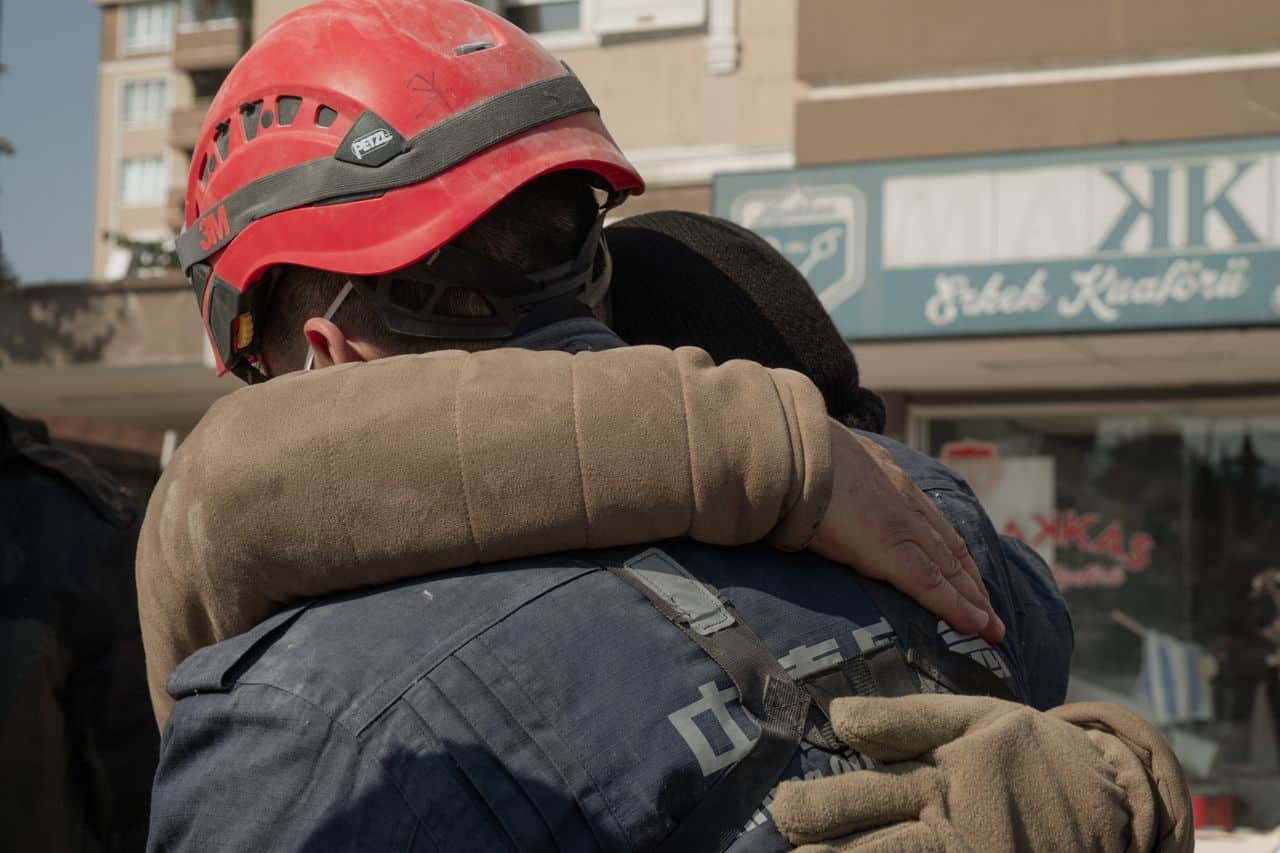
Disaster trauma typically peaks months after the event, during the disillusionment phase when media attention fades and aid dries up, as the nervous system's suppressed stress response finally surfaces as PTSD, depression, or anxiety, making trauma-focused therapy with a licensed therapist essential for lasting recovery.
What if the calm you felt right after disaster struck wasn't strength, but your brain hitting pause on grief? Disaster trauma often peaks months later, once the cameras leave and support fades. Here's why that delayed reckoning happens, and how to recognize it in yourself.
In the first hours and days after a natural disaster, your brain shifts into emergency mode. The nervous system floods the body with adrenaline and stress hormones, triggering what’s known as the acute stress response. This can look like hyperarousal (a state of being intensely alert and on edge), emotional numbing, difficulty concentrating, and even dissociation, where you feel detached from your own body or surroundings. According to common emotional and physical stress reactions following disasters, these reactions are a normal part of how the mind and body cope with extreme threat.
One of the most disorienting aspects of this phase is how functional survivors often appear, and feel. Many people describe moving through the immediate aftermath almost automatically, making decisions, helping others, and holding themselves together with surprising calm. That’s not resilience at work yet. That’s the nervous system deliberately suppressing emotional processing to keep you focused on survival.
This creates a real problem for early mental health assessment. The Psychological First Aid framework for immediate disaster response explicitly recognizes that people show a wide range of reactions in the acute phase, and that the severity of long-term need is easy to misjudge when assessments happen during this suppressed window.
The brain’s emergency mode has a cost. When the adrenaline eventually recedes, often weeks or months later, the emotional weight of what happened begins to surface. That delayed reckoning is where the longer, less visible part of disaster recovery truly begins.
The four phases of disaster psychology — and why the worst one comes after the cameras leave
Disaster psychologists have long recognized that communities don’t recover in a straight line. Recovery follows a predictable arc, moving through four distinct phases, and the most damaging one rarely makes the news. Understanding this arc helps explain why the psychological toll of a disaster can feel so invisible, even as physical neighborhoods visibly rebuild around you.
The Heroic Phase (hours to days) is what most people picture when they think of disaster response. Adrenaline surges. Strangers pull each other from rubble. First responders work without sleep. The immediate threat demands action, and grief gets pushed aside entirely. People describe feeling numb, focused, almost superhuman. That suppression of emotion isn’t a problem in the moment, but it sets the stage for what comes later.
The Honeymoon Phase (weeks 1 through 8) brings a wave of outside support: aid organizations, media crews, government officials, and donations. There’s a powerful sense of communal solidarity, and many survivors feel genuine optimism. The belief that rebuilding the physical environment will restore normal life takes hold. This is when the cameras are rolling and the story feels like one of resilience and hope.
The Disillusionment Phase (months 3 through 24 and beyond) is where the real psychological damage accumulates. Aid dries up. Insurance disputes drag on for months. Media attention shifts to the next crisis. The gap between physical progress and emotional stagnation becomes impossible to ignore. Research on the mental health impact of natural disasters across the recovery timeline confirms that this phase is shaped by compounding socioeconomic disruptions that extend far beyond the initial event. This is precisely when rates of PTSD, depression, and substance use spike, because the external scaffolding of support has collapsed while the internal wounds remain raw.
The data backs this up. Studies tracking persistent depression, anxiety, and PTSD two years after flooding found that psychological distress remained significantly elevated long after the floodwaters receded, particularly among people still living in unrepaired homes. The physical damage sustained the emotional damage.
The Reconstruction Phase (years 2 through 5 and beyond) can bring gradual reintegration and a renewed sense of stability, but only for those who received meaningful psychological support during disillusionment. For many survivors, this phase never fully resolves. The wounds that were ignored during the critical window don’t simply heal on their own.
This is the core mismatch at the heart of disaster recovery: physical rebuilding peaks early, when resources and attention are plentiful, while psychological need peaks much later, when both have largely disappeared.
Why your brain can’t tell the disaster is over
When a natural disaster strikes, your brain does exactly what it’s designed to do: it activates a full-scale emergency response. The problem isn’t that this system turns on. The problem is that, for many people, it struggles to turn off, even long after the floodwaters recede or the debris is cleared. This is the core reason psychological recovery so often outlasts physical rebuilding, and it has nothing to do with weakness or willpower.
Your brain’s built-in alarm system
At the center of this response is the HPA axis, short for the hypothalamic-pituitary-adrenal axis. Think of it as your brain’s threat detection and hormone control system. When your brain perceives danger, the hypothalamus signals the pituitary gland, which signals the adrenal glands to flood your body with cortisol, the primary stress hormone. Cortisol sharpens your focus, suppresses non-essential functions, and prepares your muscles to fight or flee. In a short-term crisis, this is lifesaving.
Prolonged disaster exposure, though, is a different story. When the threat stretches on for days or weeks, including the chaos of evacuation, the uncertainty of displacement, and the grief of loss, the HPA axis gets stuck in the “on” position. Cortisol levels that were meant to spike and return to baseline instead remain chronically elevated. Over time, this dysregulation disrupts sleep, memory, immune function, and mood regulation, none of which physical rebuilding can fix.
When the alarm won’t quiet down
Alongside cortisol dysregulation, the amygdala, the brain’s primary threat-detection center, becomes hyperactivated. It learns, very efficiently, that the world is dangerous. Once that learning is encoded, the amygdala begins interpreting neutral stimuli as threat signals. The sound of rain, a gust of wind, a distant siren: any of these can trigger a full stress response in a survivor, even months after the disaster itself. The brain isn’t being irrational. It’s being overly cautious based on the evidence it collected.
This is precisely why psychological recovery cannot follow an engineering timeline. A damaged road can be repaved on a schedule. A nervous system recalibrates on its own terms, requiring months to years of consistent safety signals before the threat system begins to quiet. You cannot think your way out of this process, reason with it, or simply decide to move on. The brain updates its threat model gradually, and that update requires time, genuine safety, and often the support of a professional who understands how trauma reshapes the nervous system.
The most common mental health conditions after disasters
The dysregulated threat system doesn’t simply reset once the floodwaters recede or the aftershocks stop. Instead, it can drive a cluster of recognizable clinical conditions, each one a downstream effect of a nervous system that learned the world is dangerous and hasn’t yet received the signal that it’s safe again. These conditions are common, they often appear together, and knowing what they look like makes it easier to recognize them in yourself or someone you care about.
PTSD and trauma responses
Post-traumatic stress disorder is one of the most well-documented outcomes after natural disasters, and research shows it can persist for years after the event itself. The core symptoms follow a pattern: intrusive memories that arrive without warning, flashbacks triggered by environmental cues like the sound of heavy rain or the smell of smoke, and a nervous system locked in hypervigilance. People experiencing PTSD after a disaster often avoid anything connected to the event, whether that’s a neighborhood, a news segment, or even a conversation. Emotional numbing is equally common, a kind of internal shutdown that can look like indifference but is actually the mind’s attempt to manage overwhelming input.
Depression, anxiety, and complicated grief
Depression and PTSD rarely travel alone after disasters. Studies on disaster-affected populations consistently show these conditions co-occurring, which compounds recovery and makes each one harder to treat in isolation. The depression that follows a disaster often deepens as rebuilding stalls: the initial adrenaline fades, the insurance calls pile up, and a persistent hopelessness sets in. Survivor’s guilt, the painful sense that you made it when others didn’t, adds another layer. Anxiety disorders intensify around uncertainty: unstable housing, financial strain, and the dread that spikes when a weather forecast mentions storms. Panic attacks triggered by news coverage of other disasters are more common than most people expect.
Complicated grief deserves its own mention. Standard grief models assume a clear loss with a defined endpoint, but disasters rarely offer that. When a person is missing rather than confirmed dead, when a home is destroyed along with every irreplaceable object inside it, or when an entire community identity is erased, grief can stall in ways that don’t follow expected timelines.
Substance use as self-medication
Alcohol and prescription medication misuse rise significantly in the months and years after major disasters. Substances temporarily quiet the dysregulated threat system, offering short-term relief from hypervigilance, intrusive thoughts, and grief. What makes this pattern particularly difficult to address is how normalized it becomes in disaster culture. Phrases like “needing a drink after all this” carry social permission that can mask a pattern quietly becoming dependence. By the time the problem is visible, it has often been building for months beneath a layer of understandable, widely accepted coping.
Why some people are more vulnerable than others
Two neighbors can live through the same hurricane and walk away with completely different psychological outcomes. One rebuilds with relative resilience. The other experiences chronic anxiety, sleeplessness, and grief that lingers for years. This gap is not a matter of strength or weakness. It comes down to a set of biological, social, and economic factors that were already in place before the storm arrived.
Pre-existing mental health conditions significantly lower the threshold for post-disaster breakdown. When someone already lives with anxiety, prior trauma, or depression, their HPA axis is already running at a heightened baseline. When it has been sensitized by earlier adversity, a new catastrophe doesn’t just add stress. It amplifies everything that came before it.
Social isolation removes the single most powerful buffer against chronic stress: other people. Without a strong support network, the brain has no reliable signal that safety has returned. This hits elderly individuals especially hard. Research on aging as a vulnerability factor shows that older adults face heightened risk for post-disaster psychopathology, often because they live alone, have limited mobility, and may already be disconnected from community resources. People with disabilities and those who recently relocated to an area face similar isolation.
Economic precarity compounds everything. People without savings, insurance, or the ability to relocate face a disaster that never fully ends. Research on socioeconomic and demographic risk factors confirms that financial vulnerability extends the psychological timeline of disaster recovery indefinitely, because the stressors keep compounding long after the floodwaters recede.
Loss severity also shapes outcomes in ways that money cannot fix. Losing a home is devastating. Losing a community, the neighbors, the familiar streets, the sense of belonging, cuts even deeper. And losing irreplaceable items like family photos or heirlooms creates a grief that no contractor can address.
Marginalized communities carry an additional burden. Unequal distribution of disaster relief, language barriers, and documentation requirements create structural obstacles that compound psychological harm and delay recovery at every turn.
How children experience disaster trauma differently
Children rarely say, “I’m scared” or “I feel unsafe.” Instead, they show it. After a disaster, watch for behavioral regression: a toilet-trained child who starts bedwetting again, a previously independent child who won’t leave your side, or the sudden loss of skills they had already mastered. Sleep disruption and repetitive disaster play, where children act out the event over and over, are also common signals that something is being processed internally that hasn’t found words yet. Research on trauma-related conditions in children following natural disasters confirms that these behavioral presentations, not verbal distress, are the primary way children communicate trauma at different developmental stages.
Adolescents tend to show distress differently. Rather than expressing fear or sadness openly, they often externalize it through risk-taking, anger, or withdrawal. What looks like defiance or indifference may actually be a stress response in disguise.
The stakes of early disaster exposure run deeper than behavior. Children’s brains are still building the systems that process threat and regulate emotion. Exposure during these critical developmental windows can shape their baseline stress response for years, which is why childhood trauma that goes unaddressed tends to have long-reaching effects.
One of the most overlooked dynamics is parental stress transfer. Children calibrate their sense of safety to their caregivers’ emotional state. Studies on family factors in children’s disaster outcomes show that parental stress is a direct driver of adverse child outcomes, meaning a dysregulated parent cannot fully reassure a child no matter what words they use. School disruption compounds all of this by stripping away routine, peer connection, and often the one stable environment a child could count on.
The second disaster: how the recovery process itself becomes a source of trauma
The original disaster may last hours. The recovery process lasts years, and for many survivors, it causes its own profound psychological harm. Research identifies ongoing post-disaster stressors, not the disaster event itself, as the primary driver of long-term psychological damage. What those stressors look like in practice is a system that forces survivors to relive their worst moments over and over again, on someone else’s schedule.
To access aid, you must document your losses. Then document them again for a different agency. Then again for the insurance adjuster, the FEMA appeal reviewer, the nonprofit case manager, and the contractor giving an estimate. Each retelling is not just paperwork. It is a reactivation of the same trauma response the brain is working to resolve. The nervous system does not distinguish between remembering a loss and experiencing it.
Then come the denials. Insurance claims rejected on technicalities. FEMA appeals that drag on for months. Contractors who take deposits and disappear. These outcomes don’t just create financial strain. They create betrayal trauma, a specific psychological wound that forms when systems people trusted to protect them fail or actively harm them. Layered on top of the original disaster, this kind of betrayal can be harder to recover from than the event that started everything.
The 18-month funding cliff
The timing of federal support makes this worse. The FEMA Crisis Counseling Program, one of the primary vehicles for post-disaster mental health funding, operates on a 60-day initial grant with a possible 9-month extension. That means funding typically runs out 12 to 18 months after a disaster, precisely when survivors enter the disillusionment phase and psychological distress peaks.
Community mental health centers in disaster zones face their own collapse. Clinicians who lived in the affected area are often displaced themselves, creating a provider shortage at the exact moment demand is highest. The people most qualified to help are gone, the funding is expiring, and survivors are hitting their lowest point. This is a structural mismatch between bureaucratic timelines and psychological ones, and it directly extends how long people suffer.
Coping strategies, community support, and when to seek professional help
Individual coping and self-monitoring
Recovery after a disaster rarely moves in a straight line, so evaluating yourself day-to-day can be misleading and discouraging. A more useful approach is tracking your mood and symptoms across weeks, looking for gradual patterns rather than expecting steady daily improvement. Re-establishing a basic routine, even a simple one, gives your nervous system predictable anchors. Limiting how much disaster news you consume, incorporating physical movement, and honestly acknowledging grief rather than forcing optimism are all small but meaningful acts of self-care. Pretending you’re fine when you’re not delays processing, and your brain needs to process.
The role of community and social connection
Shared experience does something that individual coping cannot: it normalizes distress. When the people around you are also grieving, you receive a powerful signal that your response is human, not broken. Research on social cohesion as a driver of community resilience after disaster shows that mutual aid networks provide both practical and emotional buffering that meaningfully supports psychological recovery. Community rituals of mourning, whether formal or informal, help people process collective grief together. As discussed in the neurobiological section, the brain needs consistent safety signals to recalibrate its threat system, and other people are one of the most powerful sources of those signals.
When to seek professional help
Self-help and community support are real and valuable, but they have limits. If symptoms persist beyond four to six weeks, if you’re struggling to manage daily tasks, if substance use has increased, or if you’re experiencing emotional numbness that won’t lift or any thoughts of suicide, professional treatment is the appropriate next step. Evidence also shows that untreated PTSD can erode the social connections you depend on for recovery, making early intervention especially important. Trauma-focused cognitive behavioral therapy and EMDR are among the most well-supported treatments for disaster-related PTSD, and trauma-informed care frameworks are specifically designed to address the cumulative nature of disaster recovery. Seeking help is not a sign of weakness. A broken bone can heal on its own in theory, but a doctor helps it heal correctly. Sometimes neurobiological recovery needs the same kind of skilled support. If you’re noticing persistent symptoms and want to talk with a licensed therapist at your own pace, you can start with a free assessment at ReachLink, no commitment required.
What You Are Carrying Is Real, Even When No One Can See It
The hardest part of recovering from a natural disaster is that the world around you moves on long before you do, and that gap between what others see and what you feel can be deeply isolating. Your nervous system is not broken. It is doing exactly what it learned to do to keep you safe, and unlearning that takes far more time than any rebuilding timeline allows. The grief, the hypervigilance, the exhaustion of fighting systems while also fighting your own mind: all of it makes sense given what you have been through.
Healing does not require you to be ready all at once. If you are noticing that the weight is not lifting on its own, talking with a licensed therapist can help your nervous system find its way back to safety at a pace that works for you. You can explore a free assessment at ReachLink with no commitment required, or download the app on iOS or Android whenever you feel ready.
FAQ
-
Why does my anxiety and depression feel so much worse months after the disaster, when life is supposedly returning to normal?
What you're experiencing matches a well-documented phase called the disillusionment phase, which typically spans months 3 through 24 or more after a disaster. During this period, outside support has dried up, media coverage has moved on, and the gap between physical rebuilding and emotional recovery becomes impossible to ignore. Your brain's stress system, specifically the HPA axis, can remain stuck in a heightened state long after the physical threat has passed, continuing to flood your body with stress hormones even when the danger is gone. This is not weakness or a personal failure - it is a neurobiological response that takes significant time to recalibrate. Tracking your symptoms over weeks rather than day-to-day can help you see patterns and recognize when professional support might be the right next step.
-
Does therapy actually work for trauma and PTSD after a natural disaster, or do you just have to wait until you feel better on your own?
Therapy is one of the most effective tools available for disaster-related trauma, and research supports this clearly. Trauma-focused cognitive behavioral therapy (CBT) and EMDR (eye movement desensitization and reprocessing) are among the best-supported approaches specifically for PTSD and disaster trauma. These therapies work by helping your nervous system process what happened and gradually update its threat responses, rather than staying locked in a state of hypervigilance. Unlike waiting it out, therapy with a skilled professional gives your brain the consistent safety signals and structured support it needs to recalibrate. If your symptoms have persisted beyond four to six weeks or are interfering with daily life, that is a reliable sign that professional support is worth pursuing rather than waiting longer.
-
How do I know if my child is struggling emotionally after a disaster if they are not talking about how they feel?
Children rarely express disaster trauma through words - they show it through behavior. Signs to watch for include regression to earlier behaviors like bedwetting or clinginess in a child who had outgrown them, repetitive play where they act out disaster scenarios over and over, sleep disruption, and sudden loss of skills they had already mastered. Adolescents often show distress differently, through anger, risk-taking, or withdrawal that can look like defiance but is actually a stress response. One often-overlooked dynamic is that children calibrate their sense of safety to their caregivers' emotional state, meaning a parent who is struggling significantly can unintentionally amplify a child's distress. If behavioral changes persist or intensify, connecting with a therapist who has experience in childhood trauma can make a meaningful difference.
-
I think I need to talk to someone about what I've been going through after the disaster - how do I actually get started?
Recognizing that you need support is an important first step, and getting started does not have to be complicated. ReachLink connects people with licensed therapists through human care coordinators, real people who listen to your situation and match you with a therapist based on your specific needs, not an algorithm. You can begin with a free assessment at ReachLink with no commitment required, which gives you a low-pressure way to describe what you're experiencing and find out what kind of support is available. ReachLink therapists are trained in evidence-based approaches like trauma-focused CBT that are specifically effective for disaster-related trauma, anxiety, and grief. Starting a conversation is enough - you do not need to have everything figured out before you reach out.
-
Is it normal to feel guilty for struggling emotionally after a disaster when other people clearly lost so much more than I did?
Comparing your suffering to others' losses is a very common response after a disaster, but it does not reflect how trauma actually works. Psychological distress after a disaster is not proportional to the size of what was physically lost - the disruption of safety, routine, and community can cause genuine trauma even without the most severe material losses. Survivor's guilt, the painful sense that you are struggling when others had it worse, is a recognized psychological response that can itself become a barrier to seeking help. Your pain is real regardless of how it compares to someone else's experience, and minimizing it tends to slow recovery rather than support it. A therapist can help you work through survivor's guilt alongside other trauma responses, without judgment about what you did or did not lose.