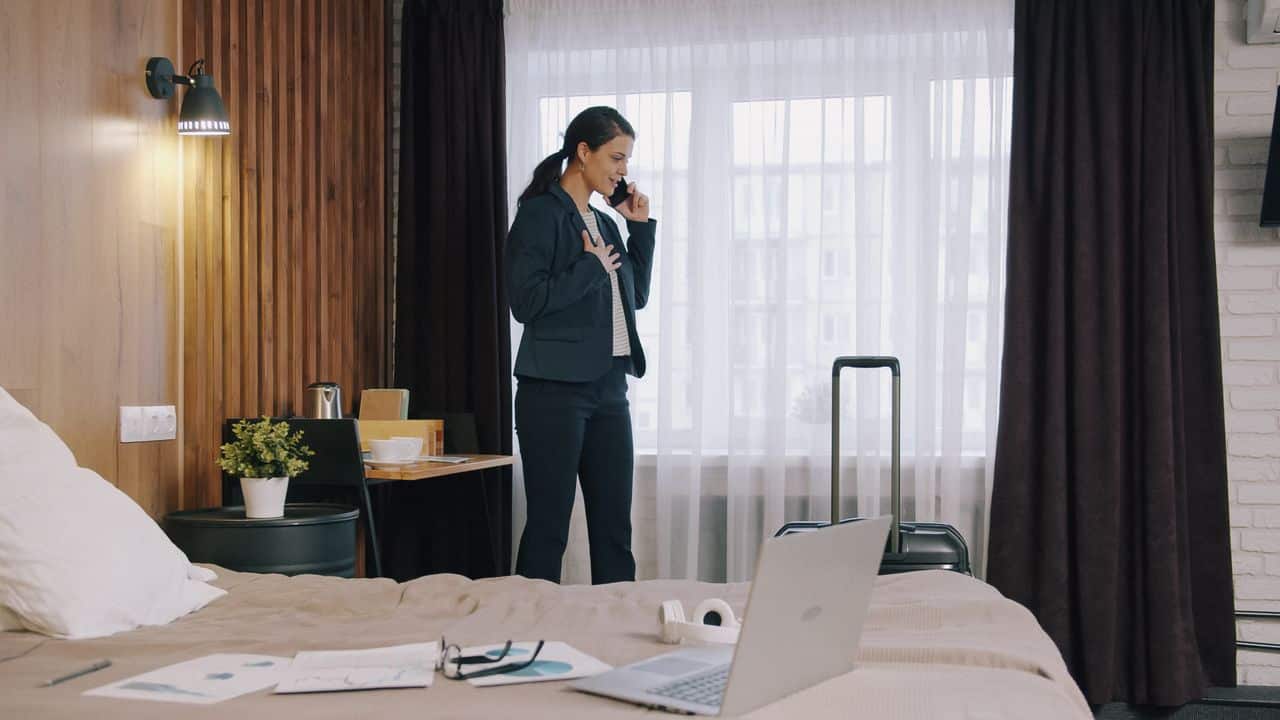
Constant work travel disrupts the circadian and autonomic cues your nervous system relies on for stability, leading to fragmented sleep, heightened anxiety, and emotional flatness that compound trip after trip, but rebuilding portable routines and working with a licensed therapist through approaches like cognitive behavioral therapy can restore regulation and resilience on the road.
What if the exhaustion you blame on jet lag is actually something deeper? Work travel doesn't just disrupt your sleep, it strips away every cue your nervous system relies on to feel safe. Here's what that hidden cost looks like, and how to rebuild stability one trip at a time.
What constant travel asks of your nervous system
Your body runs on repetition. Light at the same hour, meals at the same hour, the same bed, the same route to the coffee shop: these are not preferences, they are cues your body uses to predict what comes next. This is what routine actually does for you. It gives your internal systems a pattern to anticipate, so they can downshift instead of staying braced.
Travel removes those cues and replaces them with novelty, and novelty reads to your body as a situation that needs watching. This is where the autonomic nervous system comes in, the part of your body that runs functions you do not consciously control, like heart rate and digestion. It has two main settings: a mobilizing state that speeds things up to meet a demand, and a settling state that slows things back down once the demand passes. Frequent travel tends to keep the mobilizing state running longer than it needs to, which research on sleep and autonomic regulation links to broader dysregulation, including sleep disorders.
Your circadian rhythm, the roughly 24-hour internal clock that governs sleep and hormone timing, depends on consistent light exposure to stay synced with the actual time of day. A mathematical model of light’s effect on this internal clock shows how early flights, late dinners, and shifted time zones pull that clock away from the one on the wall. Frequency matters here more than distance. A short flight taken every week can be harder on your body’s regulation than one long trip a year, and that strain shows up in patterns connected to anxiety.
Where routines break down first on the road
Routines do not collapse together. They fall in order, and the order is predictable once you know what to watch for.
Movement goes first. A morning walk or a gym session has no external enforcement: nobody is waiting on it, nothing breaks if it is skipped, so it is the easiest thing to drop on a heavy travel week. Meals go next. They shift later, get larger and more irregular, and start happening in company for work reasons rather than at a time your body expects. Sleep timing erodes before sleep quantity does, which is why frequent flyer burnout often shows up as a surprise: people say they are sleeping fine right up until they are not. Research on circadian entrainment treats sleep, feeding, and activity timing as separate cues the body uses to stay synchronized, which is part of why they can erode independently rather than all at once.
Solitude is the routine almost nobody counts as one. Unstructured quiet time rarely appears on a calendar, so on a packed trip it disappears completely without anyone noticing it is gone. That is the pattern worth naming: the routines that break first are the ones with no witness, nothing scheduled, nobody checking. This kind of travel routine disruption compounds quietly, which is part of why it overlaps with stress in ways that are easy to miss until the trip is already over.
Signs your regulation is slipping, not just your sleep
Frequent travel leaves marks that rarely get called by their real name. A tight neck gets blamed on the airplane seat. A short temper gets blamed on a long week. Business travel stress symptoms often show up in the body and mood long before anyone connects them to the travel itself.
Why do I feel anxious when I have to travel?
Travel anxiety often arrives before the trip does, sometimes days ahead of departure rather than at the airport, which is one clue that something beyond simple nerves is building. The physical signs tend to show up first: tension that will not release once you land, appetite that swings between skipping meals and overeating, waking at the same early hour no matter the time zone. Some people describe feeling tired and wired together, exhausted but unable to settle.
Cognitive signs follow. Decisions that used to take a minute start feeling heavy. A rebooked flight or a hotel mix-up can feel disproportionately large. Memory for the trip itself gets patchy, as though the days blurred together while you were technically there.
Emotionally, this often looks like flatness rather than visible distress, plus irritability aimed at the people waiting at home rather than at the trip’s actual demands. During long transit stretches, the world can feel slightly quiet and distant, like watching your own day through glass. These patterns overlap with broader anxiety symptoms worth knowing by name.
Ordinary jet lag resolves on a predictable arc. Accumulating dysregulation does not. It resets with each new trip and starts showing up in the weeks between travel too.
The mental health cost of frequent business travel
A cross-sectional study on business travel and behavioral health found that employees who traveled 21 or more nights a month showed sharply higher rates of sleep trouble, alcohol dependence, anxiety symptoms and depression compared to those who traveled only a few nights. The same study found these employees were nearly four times more likely to smoke. This is not a character problem. It is a documented pattern in frequent flyer burnout, showing up consistently wherever travel load climbs.
Alcohol sits at the center of this pattern for a specific reason. It is built into the culture of work travel, from client dinners to hotel bars, and it is also commonly used to fall asleep in an unfamiliar bed. Used that way, it tends to fragment sleep rather than deepen it. Some travelers turn to over-the-counter or prescribed sleep aids for the same reason, a class of medication meant to help initiate or maintain sleep, though the research above also documents how sleep problems persist at scale regardless.
The harder part is that travel often signals that you are trusted and valued at work. That makes the toll difficult to name, let alone schedule recovery time for, since the calendar rarely treats recovery as legitimate.
Surrounded by colleagues and still alone
A week of work travel can fill every hour with people and still leave you with no one to be unguarded around. You eat breakfast with colleagues, sit in meetings with clients, and share a car to the airport with someone from another office. None of that is the same as being known. Loneliness on business travel often has nothing to do with how many people surround you and everything to do with how few of them you can drop your guard with.
Co-regulation, the way one nervous system settles in response to another calm, familiar one, depends on low stakes. A dinner where you are being evaluated, even informally, is not low stakes. Neither is a hallway conversation with someone whose opinion of you affects your next project. The body can tell the difference between company and safety, even when the calendar looks full.
Time zones add a quieter cut. The hours when you are free and unhurried often do not overlap with the hours when the people who know you best are awake. You end a long day ready to talk and realize home has been asleep for hours.
Coming back does not resolve it either. The household kept running without you, routines reorganized around your absence, and you arrive wanting quiet while everyone else wants your presence. That mismatch carries its own kind of loneliness, even inside your own home.
The 72-hour reentry window after a trip
The trip does not end when you land. Reentry is its own phase, with its own demands, and skipping it is the reason the next trip starts from a deficit instead of a reset. Most travelers treat arrival as the finish line and move straight back into full obligations. What actually determines whether you recover is what happens in the next two to three days.
The first night home
In the first twelve hours, re-anchor your clock before you re-anchor your schedule. That usually means getting daylight and eating a meal at the local hour rather than giving in to sleep the moment you walk in the door. Natural bright light is the strongest cue your circadian system responds to, and the shift back to local time takes multiple days, not hours. Fighting that timeline on night one just delays it further.
Rebuilding one routine at a time
On day one, restore a single routine rather than all of them at once. Choose the one with no outside enforcement, like a morning walk or a consistent wake time, because nobody else will rebuild it for you if you don’t. A consensus review on managing travel fatigue frames post-flight recovery as a distinct phase requiring its own strategy, separate from what you do before or during travel.
What to protect when the next trip is already booked
By day two or three, protect a block of unstructured quiet before work and household demands come back at full volume. Say out loud that you need it instead of quietly withdrawing from people around you. Reentry fails in predictable ways: booking a full day the moment you land, using the weekend to both recover and catch up, or pushing through fatigue as if it is just inconvenient. For anyone flying weekly, this window cannot be improvised each time. It has to sit on the calendar as a standing part of the jet lag recovery routine, not something you only remember once post-trip recovery has already stalled.