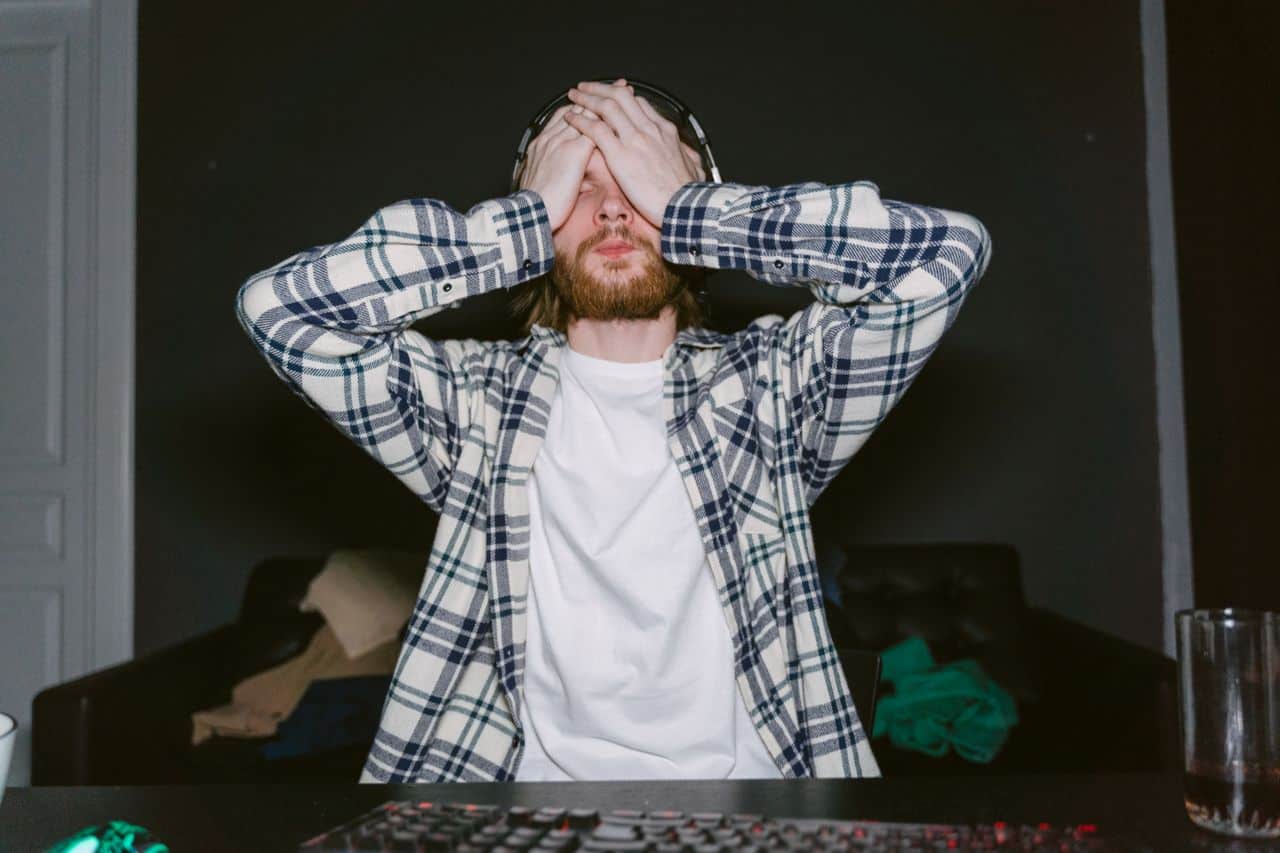
Creative burnout manifests differently by discipline: musicians feel it physically through the instrument and stage, writers notice their inner voice turn hostile or silent, and visual artists avoid finished work, while therapy approaches like CBT and ACT help address the identity fusion fueling it.
Why does a musician dread the stage while a writer can't bear to reread their own sentences? Creative burnout doesn't look the same for everyone, it finds the exact spot where your craft exposes you most. Here's how it shows up differently for musicians, writers, and painters, and what actually helps.
What is creative burnout?
The World Health Organization defines burnout in ICD-11 as an occupational phenomenon that results from chronic workplace stress that has not been successfully managed. The burnout definition ICD-11 uses has three parts: exhaustion, growing mental distance or cynicism toward the work, and a sense that you are no longer good at the thing you do. It was written for jobs with shifts, supervisors, and performance reviews. That is the first problem for anyone making a living from art.
Most creative work has no clock-out. There is no manager to notice when you stop caring, and often no employer at all, just a string of clients, galleries, publishers, or your own name on an invoice. ICD-11 frames burnout as something that happens in the context of work, but for a painter or novelist, the work and the self are harder to pull apart. That overlap is what makes creative burnout worth naming on its own, even though it is not a separate diagnosis. It is the same occupational burnout ICD-11 describes, showing up in someone whose occupation happens to be making things.
Translated into creative terms, the three dimensions look specific. Exhaustion becomes dread before you even open the file or pick up the instrument. Cynicism becomes something sharper than tiredness: contempt for the form itself, the sense that writing or painting or composing is pointless. Reduced efficacy becomes a quiet, persistent belief that your current work is worse than what you used to make.
The creative version is also harder to catch early. A salaried employee who burns out usually stops producing, and that absence gets noticed. An artist with a deadline, a contract, or an audience waiting can keep their hands moving for months after the internal collapse has already happened, which is part of why it goes unrecognized for so long.
The symptoms every creative discipline shares
Before the differences between a songwriter, a novelist, and a painter start to matter, there is a shared baseline worth naming. Artist burnout symptoms tend to show up in the same handful of places no matter what the medium is. Recognizing that common pattern makes it easier to see what is actually happening instead of blaming a bad week or a difficult project.
The clearest sign is a flattening of pleasure in the work itself. The activity that used to pull you in now feels like something to get through. Alongside this, the resistance usually concentrates at the start rather than the finish: the first few minutes of sitting down to work are the hardest part, and once something is underway it often becomes more bearable. Irritability toward the people around the work, audiences, clients, collaborators, commissioners, can also spike in a way that feels disproportionate to whatever they actually did.
Physical signs of creative burnout often get misread as part of the craft rather than strain. Sleep gets disrupted after late sessions, the jaw and shoulders carry tension, appetite shifts without much notice. One of the quieter early signs is pulling away from other people’s work in the same medium: a musician who stops listening to new releases, a writer who stops reading, a painter who avoids galleries. It is easy to explain away as busyness, which is part of why it tends to arrive before anything else does.
Comparison fatigue often follows, with a flicker of bitterness at other people’s announcements that feels unlike you. Underneath all of it sits a kind of inward cynicism: the sense that none of this matters, aimed at work you once cared about. Several of these signs overlap with symptoms of depression, which is worth knowing if the flattening and withdrawal start to feel constant rather than tied to a specific project or season.
What creative burnout looks like in musicians
Musician burnout shows up in the body first and the mind second. Practice sessions get shorter or stop happening, warm-ups get skipped, and the instrument that once felt like an extension of the self starts to feel like one more task on a list. The relationship with the instrument changes before the person would describe themselves as burned out, which is part of why it often goes unnamed for a while.
When the instrument starts to feel like an obligation
For a musician, the first sign is usually that practice turns into maintenance rather than exploration. You pick up the guitar or sit at the piano because you’re supposed to, not because you want to hear what happens next. Warm-ups get cut short or dropped entirely, and the instrument stops feeling like a place to discover something and starts feeling like a chore attached to your identity as a musician.
Burnout inside a band or ensemble
Because music is so often made in groups, musician burnout rarely stays private the way it can for someone working alone at a desk or easel. In bands, orchestras, and session work, exhaustion plays out through the people around you: resentment over who carries the heavier workload, friction over creative direction, disagreements that used to be minor turning sharp. A systematic review of occupational demands in performing artists found that interpersonal and organizational pressures, not just the work itself, shape performers’ well-being, which helps explain why burnout in an ensemble so easily becomes a relationship problem rather than staying an individual one. That’s a real point of difference from disciplines practiced alone, where burnout has fewer people to land on.
When performance stops registering
What does creative burnout look like in musicians on stage? Sometimes it’s stage anxiety that used to be manageable becoming unmanageable, and sometimes it’s the opposite: a flat, technically clean performance that the audience never notices but that feels hollow from the inside. Performance is a repeated physiological event, night after night on tour, so the exhaustion compounds in a way solitary creative work does not. Listening itself can change too: music that once brought pleasure starts to register as noise, or as something to analyze rather than feel. Research on freelance musicians’ working lives points to how irregular, night-shift hours and the drinking culture around venues and after-shows can make recovery harder to come by between gigs. Pain is often the symptom that finally forces attention, since the body that holds the instrument is also the instrument burnout is wearing down.
What creative burnout looks like in writers
What does creative burnout look like in writers?
Writer burnout usually builds for months before anyone notices, including the writer. There is no stage, no stand, no rehearsal room where a decline becomes visible to someone else. The work happens alone, so the first real sign is often a body of pages that has quietly gotten worse, or a writer who has quietly stopped starting them. Because nothing dramatic marks the shift, burnout in writers tends to get labeled laziness, a rough patch, or a character flaw long after it actually started.
When the words come out in someone else’s voice
One of the clearest signs is that sentences stop sounding like the writer’s own. The prose still functions. Grammar holds, the plot moves, the argument lands, but something underneath it has gone flat. A writer in this state can usually tell before anyone else can. They read back a paragraph and recognize the competence and the absence of themselves in it at the same time, which is its own kind of discouraging.
When reading becomes impossible too
Writing trouble gets noticed, often as something closer to writer’s block, but a more alarming sign tends to be the collapse of reading. A writer who can no longer sit with a book, including books they once loved, is describing something past a stuck draft. Reading is usually the quiet proof that language still holds any pleasure. When even that stops working, the fatigue looks less like a creative dry spell and more like symptoms that resemble depression, flat affect, loss of interest, and a withdrawal from the thing that used to feel restorative.
Productivity that looks like work and isn’t
Research, note-taking, outlining, and inbox management can expand to fill an entire working day, and all of it feels like effort without the exposure of actually drafting. Editing can shift from revision into deletion, where a writer starts cutting pages that were already considered finished. Deadline-driven writers often keep delivering through all of this, which hides the exhaustion from editors and from the writer’s own sense of how they are doing. With no studio neighbor or bandmate to catch the change, isolation removes the one thing that might have flagged it sooner.
What creative burnout looks like in visual artists
What does creative burnout look like in visual artists?
Visual artist burnout shows up first in the space, not the sketchbook. A painter who once lost track of time at the easel starts finding reasons to be anywhere else. The studio stops being where the work happens and becomes a room with a closed door, and that avoidance is often the clearest early sign of burnout in illustrators and painters, more visible than anything in the work itself.
When the studio becomes a room you avoid
Entering the studio starts to take effort it never used to take. Some artists respond by letting the space drift into clutter, supplies half put away, surfaces disappearing under old sketches. Others do the opposite and compulsively clean and organize instead of making anything, so the room looks ready for work that never starts. A related pattern shows up in material choice: expensive oils get set aside for a cheap ballpoint, a large canvas gets traded for a small notebook, because anything that requires real commitment feels too risky to touch.
Repeating the work that sells
Output does not always stop. Often it narrows instead, circling one motif, palette, or style long after the artist has lost any real interest in it. For illustrators, designers, and other commercial artists, this usually tracks the client relationship. Revision requests that once felt like normal collaboration start to land as criticism, and the client becomes the person the artist feels most defensive around.
When showing the work stops feeling possible
Visual work gets judged in public in a way that is immediate and countable, likes and views attached to the image itself. That visibility can turn posting into something dreaded rather than satisfying, and many artists quietly stop sharing altogether rather than face it. Unfinished pieces pile up and get turned to face the wall, a physical record of the stall that a writer’s stalled draft or a musician’s unfinished track rarely leaves behind. Even looking at other people’s work, a gallery show, a feed, an exhibition, can start to feel like something to avoid instead of a source of ideas.
The three disciplines side by side
How creative burnout differs between musicians and writers, and between either of them and visual artists, comes down to where the work exposes you. Each discipline puts a different part of you on the line first, so burnout shows up at that point before it shows up anywhere else. Laid side by side, the pattern is easier to spot in yourself.
The exposure point each discipline shares
A musician’s exposure is physical: the instrument, the stage, the body doing the work in front of other people, so burnout surfaces there first. A writer’s exposure is internal: the relationship with their own thinking, so burnout surfaces as a mind that has gone quiet or hostile toward itself. A visual artist’s exposure is the finished object, seen and judged, so burnout surfaces as resistance to producing anything that will be looked at. None of these are separate problems. They are the same exhaustion, landing wherever each discipline leaves you most exposed.