ReachLink is now hiring licensed therapists. Apply to join the current cohort before October 31. Apply now →

What Hikikomori Actually Is and Why It Keeps Spreading

LonelinessOctober 1, 202622 min read
What Hikikomori Actually Is and Why It Keeps Spreading

Hikikomori is a Japanese term for prolonged, severe social withdrawal lasting six months or more, a pattern now documented worldwide due to shared pressures like precarious employment, rigid education systems, and heavy online life, and it typically improves through gradual, low-pressure re-engagement supported by family involvement and licensed therapy such as cognitive behavioral therapy.

What if staying in your room isn't laziness, but the only safety you can find right now? Hikikomori describes a severe, prolonged withdrawal from the world, and understanding why it happens is the first step toward finding a way back out, at your own pace.

Some people stop leaving the house, and then stop leaving one room, and the withdrawal lasts for years. Japan gave that pattern a name, hikikomori, and for a long time treated it as a domestic problem. It is no longer described that way. Here is what the term actually covers, what drives it, how it differs from depression, social anxiety and unemployment, what changed after 2020, and what tends to help both the person inside the room and the family outside it.

What is hikikomori?

Hikikomori is a Japanese term for prolonged, severe social withdrawal. A person stays inside the home, avoids school and work, and disengages from social participation for an extended stretch of time. The word describes a state, not a diagnosis you receive from a doctor, and it originated in Japan before spreading into international use.

The word resists a clean English equivalent. Its characters point to something closer to “pulling inward” or “being confined,” and no single English word carries the same weight. That gap is a large part of why hikikomori in English usually stays untranslated: clinicians and journalists borrow the Japanese term rather than force it into a phrase like “shut-in” or “recluse,” which flatten the meaning.

A widely cited definition sets the threshold at withdrawal sustained for roughly six months or more, paired with marked avoidance of relationships outside the household. This six-month mark comes from diagnostic criteria for pathological social withdrawal proposed in World Psychiatry in 2020, which helped give researchers a shared starting point for identifying cases rather than relying on impression alone. Japan’s Ministry of Health guidelines also helped standardize how the pattern gets described, and researchers outside Japan have since adapted similar criteria for their own studies, though the thresholds they use are not always identical.

Is hikikomori a mental disorder? The answer stays unsettled. Hikikomori has no entry of its own in the DSM, and a 2010 review in the Journal of Nervous and Mental Disease examining hikikomori as a possible culture-bound syndrome found that while most cases fit existing diagnostic categories, a notable subset shows substantial psychopathology that does not map onto any existing DSM-IV-TR or ICD-10 disorder. That gap is why some researchers argue hikikomori deserves recognition as its own category, while others treat it as a behavioral pattern that can appear alongside conditions such as anxiety.

Withdrawal does not always mean total confinement. Some people who fit the description still leave the house occasionally, for a convenience store run late at night or a short walk once the streets are empty. What defines hikikomori is the sustained absence of social participation, not a person’s exact location at every moment.

Signs and characteristics of severe social withdrawal

Hikikomori symptoms rarely appear all at once. What looks like a sudden shutdown is usually the last stage of a slower pullback, one that starts small enough to explain away and ends with a person who no longer leaves a single room.

What are the early warning signs of hikikomori?

The earliest signs cluster around exits rather than outbursts. A missed class becomes a dropped semester. A job search quietly stops producing applications. Plans with friends get cancelled once, then again, then stop being made in the first place. None of these looks alarming on its own, which is part of why the pattern is so easy to miss until the person has already stopped showing up almost everywhere.

How the living space changes

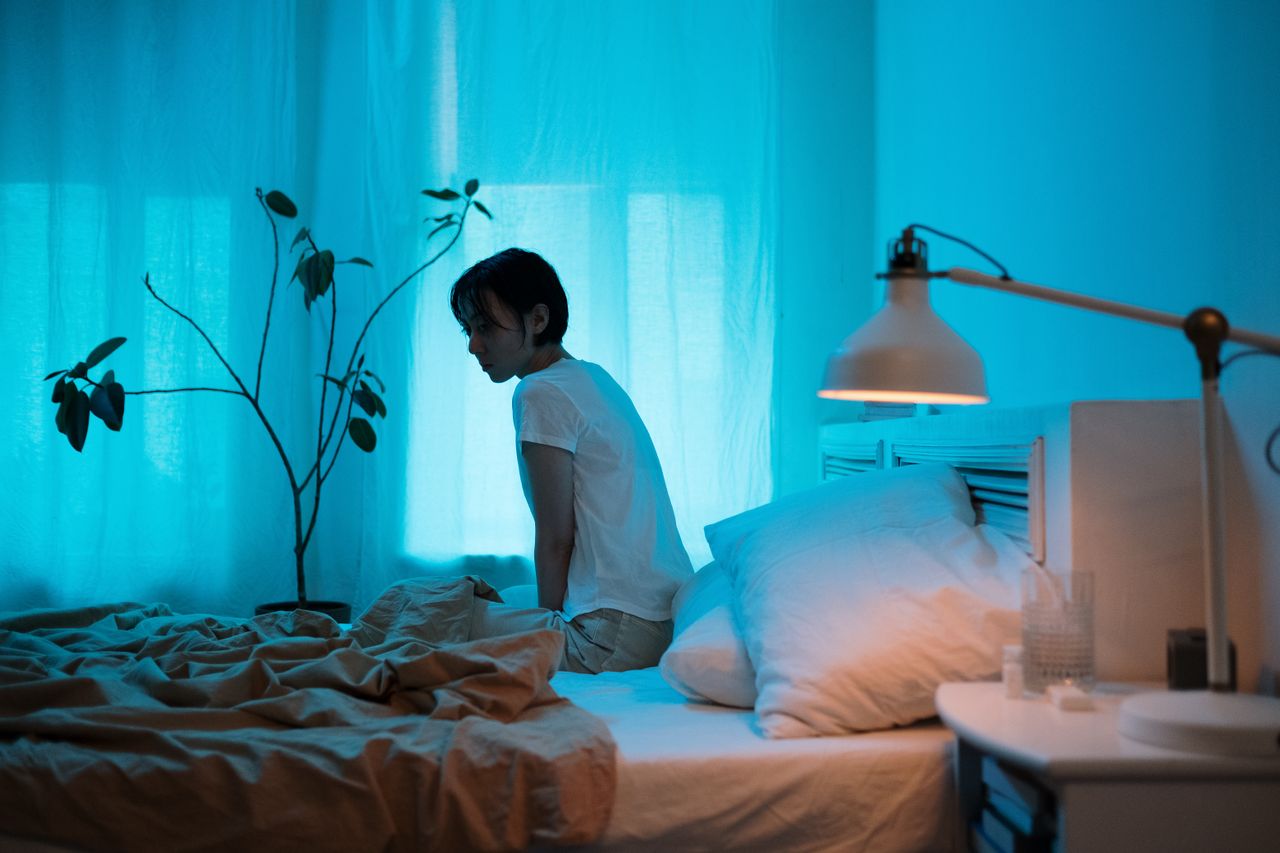
Severe social withdrawal often shows up first as a shrinking territory. The person retreats from the whole house to one floor, then to one room, then to that room with the door shut. Meals get left outside and picked up once the hallway is empty. Day and night flip, so the person is awake while the household sleeps, which avoids contact without anyone having to refuse it directly. Communication does not always stop completely: texts, notes slid under the door, or short messages can continue even after face-to-face contact has ended. Physical health tends to erode quietly alongside this, with disrupted sleep, poor nutrition, deconditioning from lack of movement, and dental or medical problems that go unaddressed because leaving the room to handle them feels impossible.

The emotional pattern: shame, relief, and the widening gap

The room can feel like the only place the pressure lifts, even as the isolation itself becomes another source of pain. Withdrawal often brings a strange mix of relief and shame: relief because the room removes the possibility of being watched or judged, shame because the person knows how the withdrawal looks from outside. That shame tends to grow with time. The longer someone stays withdrawn, the more the gap between their age and their circumstances widens, and the harder any question about “what are you doing now” becomes to face. Former friends get avoided first, followed by extended family, since they are the people most likely to ask directly. This pattern overlaps in places with social anxiety, particularly the fear of judgment and the avoidance it produces, though the two are not the same thing.

What causes hikikomori

No single cause explains hikikomori syndrome. Most accounts describe an interaction between a person’s temperament, their family environment, and the social and economic pressures around them. A precipitating event often starts the withdrawal: bullying, a failed exam, a lost job, a humiliating social moment, or a health crisis. Some cases have no clear trigger at all.

Individual factors, including autism and neurodivergence

A 2013 clinical paper in the Journal of Psychopathology introducing the concept of primary hikikomori, cases with no obvious mental disorder, identified a recurring profile: a tendency to avoid competitive settings, an idealized self-image built on what others expect, an inability to make a fresh start from the current situation, and parents who keep investing in that ideal image. Separately, a Japanese population study by Koyama and colleagues, published in Psychiatry Research in 2010, reported that 45.5% of hikikomori cases had no lifetime history of a psychiatric disorder, which is the figure most often used to size the primary group. The remaining cases overlap with a wide range of conditions, including mood, anxiety, psychotic, developmental and personality disorders, though the proportions vary considerably between studies. The overlap between hikikomori and autism shows up often enough in clinical samples that assessment matters before assuming withdrawal is purely social or motivational. Autistic burnout in particular can look identical to hikikomori from the outside: a person stops attending school or work, stops answering messages, and retreats to their room, when what is driving it is exhaustion from years of masking rather than avoidance itself. This is part of why a careful evaluation matters rather than a label applied on sight.

Family patterns that can sustain withdrawal

A 2020 study in Frontiers in Psychiatry, following 190 social withdrawal cases in an at-home treatment program in Spain, found dysfunctional family dynamics in 61.5% of cases and a family psychiatric history, particularly maternal affective and anxiety disorders, in 59.3%. The same study found childhood family maltreatment in 20.7% of cases, sometimes connected to broader patterns like childhood trauma, and found these factors closely linked to greater severity of withdrawal. A family able to support an adult child indefinitely can unintentionally remove both the financial pressure to re-enter the world and the practical pathway back into it. Shame compounds this: the longer someone stays withdrawn, the more explaining a return would seem to require, which keeps the withdrawal going.

Social and economic pressure

Rigid, narrow pathways into adult life raise the cost of a single misstep. Someone who falls off the expected track, whether through a missed exam, a failed job search, or a stalled career, can find no legitimate route back on. This structural strain sits alongside individual and family factors rather than replacing them as an explanation.

How hikikomori differs from NEET, depression, and social anxiety

Hikikomori overlaps with several other categories without matching any of them exactly. Telling them apart matters, because the reasoning changes what kind of support actually fits.

What’s the difference between NEET and hikikomori?

NEET stands for not in education, employment, or training. It is an economic label, not a description of how someone spends their time or whether they leave the house. A person can be NEET and still see friends regularly, date, or spend most days out of the home looking for work. Someone else can be employed remotely, technically part of the workforce, and still be severely withdrawn, rarely leaving a single room for extended stretches. The two categories describe different things, so they overlap in many cases without ever lining up perfectly.

When withdrawal is driven by depression

In depression, withdrawal usually follows mood rather than causing it. Energy and interest tend to collapse first, and isolation follows as a consequence rather than a starting point. A person experiencing depression will often say they want connection but cannot find the energy or motivation to reach for it. The wish to be around people is intact even when the capacity is not.

When withdrawal is driven by social anxiety

Avoidance in social anxiety attaches to specific situations where the person expects to be watched or judged. According to the National Institute of Mental Health, social anxiety disorder involves intense fear of scrutiny or evaluation, needs to persist for at least six months, and must interfere with daily functioning to meet criteria. A person with social anxiety can usually describe exactly what they fear will happen: freezing during a presentation, saying something embarrassing, being stared at. The fear is specific even when it feels enormous.

Severe social withdrawal that fits the hikikomori description tends to outlast both the mood state and the feared situation. The person may no longer be depressed in the clinical sense, and no particular situation may frighten them anymore, yet the withdrawal continues, organized less around fear and more around shame at how long the absence has already gone on. This raises a fair question: is hikikomori a mental disorder in its own right, or a pattern that can accompany several different ones? Assessment tends to work backward through sequence and function: what stopped first, what the person believes would need to change before they could leave, and whether staying inside has become a solution to something rather than a symptom of it. None of these categories rules out the others, and a person can fit the pattern of withdrawal while also meeting criteria for a mood or anxiety condition at the same time.

Is hikikomori spreading beyond Japan?

Hikikomori was once treated as a condition unique to Japan, tied to its particular pressures around work and family. That framing has become harder to defend. Cases matching the same pattern of severe social withdrawal have surfaced under different local names in South Korea, Hong Kong, Spain, Italy, France, and the United States, often identified independently before researchers connected them to the Japanese description.

Where withdrawal has been documented outside Japan

An international case vignette survey published in PCN Reports in 2025 collected 344 complete responses from psychiatrists in 34 countries, and respondents from every country except Thailand said they believed they encounter similar cases in their own practice. That is clinical perception rather than documented caseload, but it covers a wide spread of countries. A 2022 cross-sectional online survey in Frontiers in Psychology, using a convenience sample of 1,066 Chinese youths and a three-month threshold rather than six, classified 8.1% into the hikikomori group, with loneliness scores and living situation strongly associated with which respondents fell there. Neither figure is a population prevalence rate, and the differing thresholds are exactly why some researchers now argue for shared diagnostic criteria so cases can be compared across borders rather than treated as separate local phenomena.

Why the same conditions are appearing in other countries

The pressures associated with withdrawal are not exclusive to Japan. Precarious youth employment, education systems built around high-stakes exams, housing costs that keep adults living with parents well into adulthood, and a heavy shift of daily life online all show up in the countries where cases have been documented. None of these conditions guarantees withdrawal on its own, but their overlap across so many places helps explain why a pattern once considered distinctly Japanese keeps reappearing elsewhere under different names.

What is the “8050 problem” in Japan?

The 8050 problem describes households where parents in their eighties are still financially and practically supporting a withdrawn adult child in their fifties. It names a specific consequence of long-term withdrawal: the person who first pulled back in their twenties is now approaching old age themselves, still dependent, with no plan for what happens when the parent dies or needs care. Japan is confronting this because it has had hikikomori cases longest. Other countries that have only recently identified similar cases have not yet reached the point where their withdrawn populations are aging into the same crisis, which is part of why the 8050 problem functions as a warning rather than a Japan-only story.

Measuring any of this precisely is difficult everywhere. The defining trait of the population in question is that its members do not answer the door, the phone, or a survey, which means every count, in Japan or elsewhere, is likely an undercount rather than a full picture.

What changed after 2020: remote work, online life, and who withdraws now

Lockdowns changed what withdrawal looked like from the outside. When staying home became a public health rule rather than a private choice, the visible friction that once made severe social withdrawal obvious to family or neighbors disappeared. Nobody was going to work or school, so nobody noticed who wasn’t. A 2022 review in Psychiatry and Clinical Psychopharmacology examining hikikomori as a severe, prolonged form of social withdrawal notes that the lessons from hikikomori research carry direct relevance to pandemic-era lockdown effects, since both involve extended time away from in-person contact with few external cues to mark it as unusual.

For some people who were already withdrawing before 2020, that period brought a strange kind of relief. The gap between their daily life and everyone else’s briefly closed. Nobody was asking why they hadn’t left the house, because nobody had left the house. That relief tended to be temporary, and it did not address whatever was keeping the person home in the first place.

Why re-entry was harder than lockdown

For many people, going back out was the harder phase, not staying in. Lockdown gave a shared, external reason for absence that required no explanation. Re-entry required explaining an absence that, for some, had grown much longer than the lockdown itself, with no external event left to point to.

Curious about something here?

Ask your favorite AI about this article

The newer profile: employed, connected, and still withdrawn

Remote work and online study created a version of withdrawal that doesn’t match the older picture. A person can meet job obligations, earn income, attend classes, and never be in a room with another person. That complicates the assumption that severe social withdrawal always shows up as unemployment or academic dropout, since someone can look fully functional on paper while having almost no in-person contact.

Online communities complicate the picture further. They can provide real connection, and they can also provide just enough connection that going outside starts to feel unnecessary. A study comparing pathological and non-pathological hikikomori among young adults found that those with more severe hikikomori symptoms used more social media platforms overall and engaged more heavily on TikTok and YouTube, including sending and receiving more messages, than those without pathological withdrawal. Screen time alone doesn’t tell you which kind of connection someone has. What matters more is whether the online contact leaves any pull toward the outside world, or replaces it entirely.

This shift shows up in who gets described as withdrawn now. The population includes more people in their thirties and forties, not only the teenagers and young adults the term was first used for, and more people who hold a job or a routine that looks ordinary from a distance. That makes the older markers, dropping out of school or losing a job, much less reliable as a way of noticing that someone has withdrawn.

Treatment and support options for severe withdrawal

Hikikomori treatment rarely starts with the withdrawn person walking into an office. It usually starts with someone else picking up the phone.

Starting with the family when the person won’t engage

When the person will not leave the house or accept outside contact, support typically begins with the family, since they are the ones able to make first contact with a provider. Japan’s Ministry of Health, Labour and Welfare guideline on hikikomori response identifies family support as a core part of intervention and social reintegration, not a workaround until the real work starts. The aim is to change the pattern of interaction happening around the closed door: how requests are made, how conflict plays out, how much pressure the house itself is applying. That shift can happen before the withdrawn person agrees to see anyone. It does not require forcing the door open.

Therapy approaches used with withdrawal

Once a person is willing to engage, cognitive behavioral therapy is commonly used to work on the avoidance loop underneath withdrawal, including the catastrophic predictions about being seen or judged that keep someone from testing the outside world. Where an underlying condition sits alongside the withdrawal, such as depression, anxiety, or an unrecognized neurodevelopmental difference, assessing and treating that condition becomes part of the picture. Medication is sometimes part of care in those cases, and what it addresses is a question for a prescribing clinician rather than an article.

Outreach, peer spaces, and low-demand settings

Home-visit outreach, developed extensively in Japan, sends a worker to the house to build contact slowly, without introducing a clinical goal in the first visits. Peer and intermediate settings, sometimes called free spaces or halfway spaces, offer a place to be around other people with no work or school expectation attached yet. Online and text-based therapy lowers the entry barrier further, since the first session does not require leaving the room at all. Severe social withdrawal often loosens through small, low-pressure contact repeated over time rather than through a single decisive push.

Where families get stuck, and what helps instead

Households living with severe social withdrawal often settle into patterns without choosing them. These patterns can feel like the only option available at the time, but some of them make the withdrawal harder to move.

The accommodation pattern

The most common pattern is quiet accommodation. Meals get left outside the door, bills get paid without discussion, questions about school or work get dropped after enough silence, and the household slowly reorganizes itself around the withdrawal until nothing in daily life actually requires it to change. This usually comes from love and exhaustion, not neglect. Parents and partners often accommodate because confrontation has failed before, or because the alternative feels cruel in the moment.

Naming this pattern is not the same as blaming the family for it. Many households also carry an inherited belief that private struggle should stay private. Charity Anderson, LPC points to where that belief starts: “the misconception of therapy is born in childhood. When we teach our children, what happens in my house stays in my house, and you don’t tell nobody what’s going on, you’re teaching your children that it’s not okay to talk to people, that it’s not okay to express yourself.” That early lesson can keep a family quietly managing a crisis alone long after outside help would have made sense.

Contact that doesn’t carry a demand

Ultimatums and forced exits tend to deepen withdrawal rather than end it, because they confirm the fear underneath it: that being seen means being judged or corrected. Leslie Moya, LCSW describes a related trap in helping generally, what her field calls the righting reflex: the urge to chime in and save the day, partly so the helper does not have to sit with the discomfort. Her point is that when the fix comes too fast, people feel dismissed rather than heard, and a great deal is lost because the listener starts formulating a response before the full message has arrived. What tends to help instead is low-demand, consistent contact that carries no request attached, so presence stops predicting pressure. A meal left with no comment, a note slid under a door, a short exchange that asks nothing in return: these keep a thread the person can pick up later, on their own terms.

When waiting it out stops being reasonable

Waiting stops being reasonable once certain signals show up. Withdrawal that has hardened past several months, the loss of the last remaining contact with anyone outside the home, declining physical health, or the family’s own collapse under the weight of managing it all are signs that hikikomori treatment and outside support are worth pursuing rather than continuing to wait. Families carrying this alone often experience their own version of the isolation they are trying to interrupt, and that isolation deserves attention too. Family caretakers navigating this kind of prolonged strain are not separate from the problem, and their own support matters as much as the plan for the person withdrawing.

What re-engagement actually looks like

Re-engagement rarely starts with someone walking out the front door. It usually starts with one small, low-stakes point of contact that the person controls completely: answering a text, opening a door for a delivery, sitting at the table for a meal without being asked to talk. That first contact matters because it represents connection on the person’s own terms. A reply is not a small thing to the person sending it, even when it looks small from outside.

Progress in hikikomori syndrome tends to stall right after the first visible success. A person leaves the house once, and the household’s expectations jump faster than the person’s capacity does. The stall itself is ordinary, not a sign that the earlier movement was fake.

A setback after weeks of steady movement is common too, and it does not erase what came before it. This is usually the point where families lose patience and assume the person has gone back to zero. They have not. Family therapy can offer a structured place to work through that reaction without it landing on the person who just had the setback.

How long someone has been withdrawn shapes how long re-entry takes, and longer withdrawal generally means a longer runway. People do re-enter after many years. The goals that tend to hold are the ones the person picked for themselves, not the ones the household needed met, and the first one is rarely a job. Hikikomori treatment works toward a life the person can actually stay in, not a return to the timeline they left.

Frequently asked questions

Is hikikomori a mental disorder?

It has no entry of its own in the DSM. Most cases fit existing diagnostic categories, but a subset shows real psychopathology that does not match any existing DSM or ICD disorder, which is why researchers remain divided on whether it should become its own category.

How long does withdrawal have to last to count as hikikomori?

The most widely used threshold is six months or more of sustained withdrawal from social participation, paired with marked avoidance of relationships outside the household. Some studies use shorter cutoffs, which is one reason figures are hard to compare across countries.

What is the difference between NEET and hikikomori?

NEET is an economic label for someone not in education, employment, or training. It says nothing about whether the person leaves the house or sees anyone. A person can be NEET and socially active, or employed remotely and severely withdrawn.

Does someone with hikikomori ever leave the house?

Often yes. Brief errands late at night or walks when the streets are empty are common. What defines the pattern is the sustained absence of social participation, not total physical confinement.

Is hikikomori only a Japanese phenomenon?

No. Cases matching the same pattern have been identified in South Korea, Hong Kong, China, Spain, Italy, France, and the United States, among others, often under different local names. Researchers increasingly treat it as society-bound rather than culture-bound.

What should a family do if the person refuses all contact?

Support usually begins with the family rather than the withdrawn person, since they can make first contact with a provider. Changing how requests, conflict, and pressure operate around the closed door can start before the person agrees to see anyone.

Pulling away from the world can feel safer than facing it

The urge to retreat into a room, a screen, a space where nothing can reach you, is not weakness or laziness. It often grows out of shame, exhaustion, or a fear of failing in front of others that has become too heavy to carry alone. That withdrawal might feel like protection right now, even as it quietly deepens the isolation you are trying to escape.

If you are in crisis or having thoughts of harming yourself, call or text 988 to reach the Suicide and Crisis Lifeline in the US, or go to your nearest emergency room. ReachLink is not an emergency service.

You do not have to untangle this by yourself, and you do not have to wait until things feel unbearable to reach out. Support does not require you to explain everything at once or to have the right words ready, and if leaving the house is the obstacle itself, a first conversation can happen from the same room. You can begin with a free ReachLink account and a free assessment, at your own pace, with no commitment beyond seeing what support could look like for you. A care coordinator will use what you share to help find a fit that makes sense for where you are, not where you think you should be.

Whatever pace you need right now is a reasonable one.


FAQ

  • How do I know if what I'm going through is actually hikikomori and not just being introverted or burned out?

    Hikikomori describes a pattern of severe, prolonged social withdrawal - usually lasting six months or more - where a person stops participating in school, work, and social life outside the home. The key difference from introversion or burnout is duration and scope: an introvert recharges alone but still moves through the world, and burnout typically lifts with rest. Hikikomori involves a sustained retreat where even leaving the house feels impossible, often paired with a growing sense of shame about how long the absence has already gone on. If the withdrawal has lasted months and feels stuck rather than temporary, that distinction is worth exploring with a therapist.

  • Does therapy actually help someone who refuses to leave their room or won't talk to anyone?

    Yes, and it often starts before the withdrawn person is even willing to engage directly. Therapists frequently begin by working with family members, helping them shift how they interact with the person at home, since changes in the household dynamic can reduce pressure and gradually open a door. When someone is ready to talk, cognitive behavioral therapy (CBT) is commonly used to address the avoidance loop underneath the withdrawal, including fears of judgment or failure that keep a person from testing the outside world. Online and text-based therapy can lower the entry barrier significantly, since the first session does not require leaving the room at all. Progress tends to be gradual and nonlinear, but people do re-engage after years of withdrawal.

  • Can someone have hikikomori if they still work from home and seem functional from the outside?

    Yes, and this is an increasingly recognized pattern since 2020. Remote work and online study have made it possible to meet job obligations, earn income, and attend classes without ever being in a room with another person. Someone can look fully functional on paper while having almost no in-person contact for extended periods, and research has found this profile appearing more often among people in their thirties and forties, not only the teenagers and young adults the term was originally used for. What matters more than employment status is whether the isolation is deliberate and sustained, and whether the outside world has quietly stopped feeling accessible at all.

  • I think I might be dealing with this - how do I actually find a therapist who understands social withdrawal?

    Finding the right fit matters more than finding any therapist quickly, and you do not have to figure that out alone. ReachLink connects people with licensed therapists through human care coordinators - real people who use what you share in a free assessment to help match you with someone suited to where you are right now, rather than leaving it to an algorithm. You can start the process from wherever you are, including at home, since all sessions are available online with no requirement to leave the house. The free assessment lets you describe what you are experiencing at your own pace and with no commitment, and from there a care coordinator works with you to find a therapist who fits your situation.

  • What should families do when someone they love won't leave the house or accept any help?

    The most important thing families can do is shift the patterns happening around the closed door rather than try to force it open. Ultimatums and pressure tend to deepen withdrawal because they confirm the fear that being seen means being judged or corrected. Low-demand, consistent contact - a meal left with no comment, a short text that asks nothing in return - keeps a thread the person can choose to pick up when they are ready. Family therapy can be a useful place to work through the strain of waiting and to build a more sustainable approach, since families living alongside prolonged withdrawal often experience their own isolation and need support too. If the withdrawal has hardened past several months, physical health is declining, or the household is struggling under the weight of managing it alone, reaching out for outside support is reasonable and does not require the withdrawn person to be the one who makes the call.

Have a question about this topic?

Type your question and we'll send it to the AI assistant of your choice.

Your question will be sent to an external AI assistant. If you're going through a crisis, please reach out to the 988 Suicide and Crisis Lifeline (call or text 988).

Share this article
Take the First Step

Get Real Support.
See Real Results.

Join thousands who have found specialized therapy that truly understands their health journey. Start today — it takes less than 5 minutes.

No referral needed · Most insurance accepted · Start within 48 hours