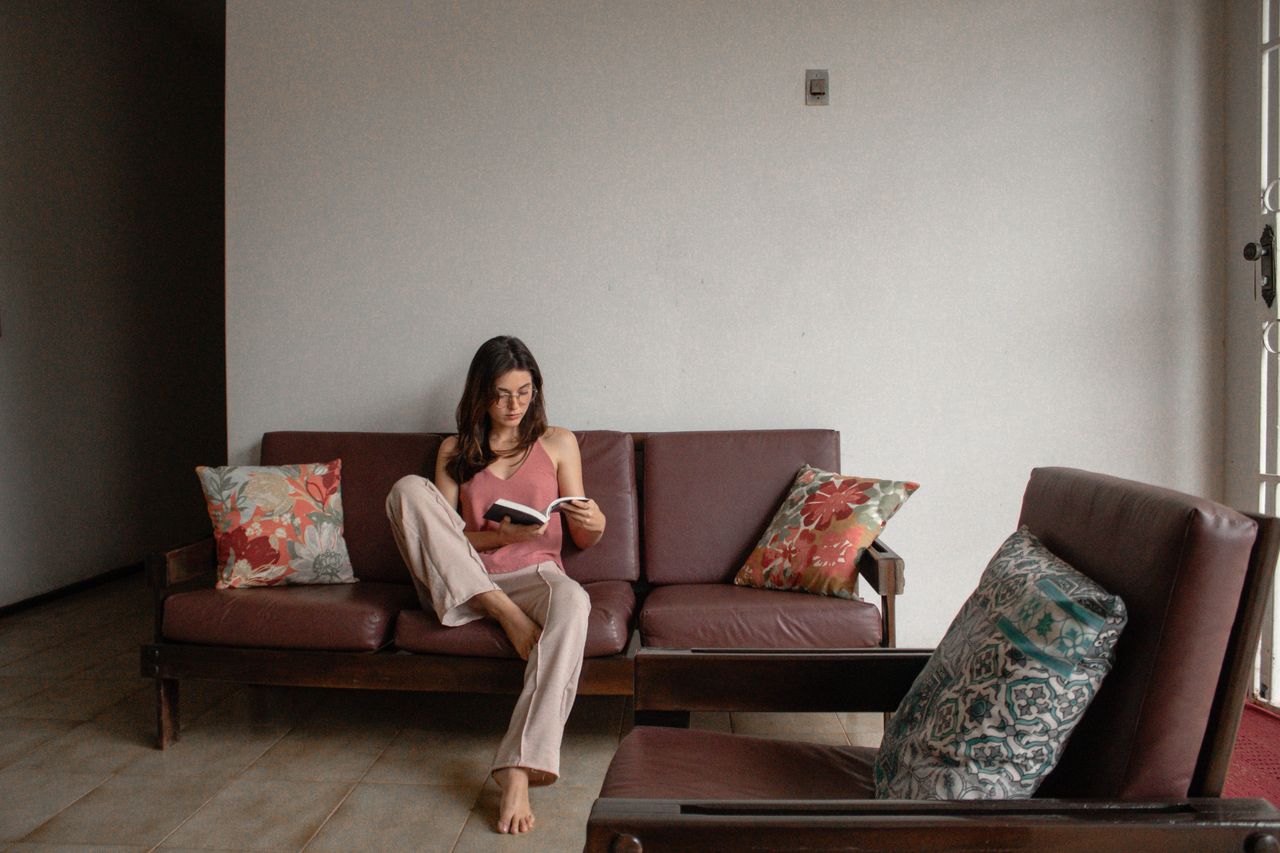
Living alone raises depression risk by roughly 42% compared to shared households, yet research shows the true determinant of mental health outcomes is whether solitude feels chosen or imposed, a distinction licensed therapists can help you clarify through evidence-based support.
Is your evening alone actually recharging you, or quietly wearing you down? Living alone can mean either one, and the difference has less to do with your square footage than with whether that solitude feels chosen or forced. Here's how to tell which one you're living.
What does living alone actually do to your mental health?
More Americans are living alone than at any point in recorded history. U.S. Census Bureau data shows that single-person households now make up roughly 29% of all U.S. households, a figure that has nearly tripled since the 1960s. That shift is not just a demographic footnote. It raises a real and pressing question: what does solo living actually do to the mind and body over time?
The research paints a genuinely mixed picture, and the honest answer is that living alone is neither inherently harmful nor inherently healthy. What matters far more is the context around it.
The measurable risks of solo living
On the risk side, the data is specific and worth taking seriously. A longitudinal meta-analysis published in Frontiers in Psychiatry found that people living alone face a 42% increased risk of depression compared to those in shared households. Elevated rates of anxiety and substance use also appear consistently across studies of solo dwellers.
Beyond mood and behavior, solo living can leave biological fingerprints. Research on social isolation has documented elevated interleukin-6 (IL-6), an inflammatory protein linked to depression and cardiovascular disease, with some studies finding levels roughly 14% higher in chronically lonely individuals compared to socially connected peers. Cortisol, the body’s primary stress hormone, also shows disrupted daily rhythms in people experiencing prolonged isolation. The normal pattern of a sharp morning peak followed by a gradual decline flattens out, which is associated with fatigue, cognitive fog, and mood dysregulation. Sleep fragmentation is another measurable consequence, with isolated adults showing meaningfully lighter, more interrupted sleep than those with regular social contact.
Why solo living can also support mental health
The story does not stop at risk. For many people, especially introverts and those leaving high-conflict or overcrowded living situations, solo living correlates with greater autonomy satisfaction and stronger self-efficacy. Having control over your own space, schedule, and routines can reduce daily stress and support a clearer sense of identity. Some research suggests that people who choose to live alone report higher life satisfaction than those who live alone due to circumstance.
That distinction, chosen versus unchosen solitude, turns out to be one of the most important variables in predicting mental health outcomes. Your living arrangement is not your fate. The quality of your social connections, your sense of agency, and whether your solitude feels like freedom or isolation shape the outcome far more than the floor plan of your home.
Loneliness vs. solitude: why they are not the same thing
These two words are often used interchangeably, but they describe very different experiences. Getting them confused can lead you to misread your own emotional state and reach for the wrong solution.
Loneliness is a perceived social deficit. It is the gap between the connection you want and the connection you actually have. According to research distinguishing loneliness from social isolation, loneliness is entirely subjective, a felt sense, not a headcount. You can feel it in a crowded room, at a family dinner, or in a long-term relationship. Conversely, you can live alone and feel no loneliness at all.
Solitude, on the other hand, is the objective state of being physically alone. It carries no emotional charge on its own. Depending on the context and the person, solitude can feel deeply restorative or quietly distressing. The state itself is neutral; your relationship to it is what matters.
This is why the “crowded-alone” phenomenon is so telling. Research consistently shows that some people living with partners or family members score higher on loneliness scales than solo dwellers do. People with social anxiety, for example, can feel profoundly disconnected in social settings precisely because proximity does not equal connection.
The practical reason this distinction matters: it points you toward the right response. If you are experiencing loneliness, the goal is to build or deepen meaningful connection. If you are simply spending time in solitude, the more useful question is whether that time is working for you or against you.
Voluntary vs. involuntary solitude: the single variable that changes everything
Not all alone time is created equal. Researchers have found that perceived choice over your living situation is the strongest predictor of whether solo living supports or harms your mental health, outweighing factors like age, income, and even the size of your social network. It is not just the fact of living alone that matters. It is whether you feel like you chose it.
How to tell which kind of solitude you are experiencing
Voluntary solitude means your solo living situation aligns with your values and feels like an active decision. You have access to social connection when you want it, even if you do not always use it. You might go days without seeing friends and feel perfectly fine, because the option is there and the quiet feels restorative.
Involuntary solitude looks different from the inside. It is solitude imposed by circumstance: a job relocation that pulled you away from your community, a relationship that ended, or financial constraints that left you without roommates you actually wanted. The defining feature is not the living situation itself. It is the feeling of being stuck in it.
To figure out which category fits you right now, work through these reflective questions honestly:
- Did you actively choose to live alone, or did circumstances make it the default?
- When you picture your ideal living situation, does it look like what you have now?
- Do you feel like you could change your situation if you wanted to, or does it feel fixed?
- Is your solitude something you protect, or something you endure?
- Do you have meaningful social connection available to you, even if you do not always reach for it?
- When you spend a quiet evening alone, does it feel like a choice or like a reminder of something missing?
- Has anything shifted recently, a loss, a move, a change in your social circle, that reframed how your alone time feels?
There are no right or wrong answers. The goal is clarity about where you actually stand.
The gray zone: when chosen solitude stops feeling like a choice
Many people land somewhere between these two poles. You might have chosen to live alone and genuinely loved it for years, but then life shifted. Friends moved away. A relationship ended. Remote work replaced the daily social contact your office once provided. The living situation did not change, but the experience of it did.
This gray zone is worth taking seriously. When voluntary solitude gradually loses its voluntary quality, the mental health risks start to look more like those tied to unwanted isolation. The transition can be subtle enough that you do not notice it until the weight has already built up. This kind of slow-moving shift also mirrors what clinicians see with adjustment disorders, where life circumstances quietly erode a person’s sense of stability and agency over time.
If working through these questions surfaced something uncomfortable, ReachLink’s free self-assessment can help you explore what you are feeling at your own pace, with no commitment required.
Signs your alone time is helping you
Not all solitude looks the same. For some people, time alone quietly restores them. For others, it slowly chips away at their well-being. Knowing which category you fall into starts with paying attention to a few concrete signals in your daily life.
Your stress recovery gets faster. One of the clearest signs that solitude is working for you is how quickly you bounce back after a hard day. If you can process a frustrating interaction, let it go, and move forward without it spilling into the next morning, your alone time is doing its job. You may also notice that you feel less reactive in social situations, not because you care less, but because you are not already running on empty when you show up.
You are actually thinking, not just waiting. There is a real difference between using solitude to reflect and using it to simply pass time. When alone time is healthy, you tend to return to creative projects, work through problems, or gain clarity on decisions that felt murky before. You are processing life, not avoiding it.
Social time feels like a choice. When solitude is restorative, social interactions stop feeling like obligations. You look forward to plans rather than dreading them. You leave conversations feeling energized or satisfied, not relieved that they are over.
Your routines hold steady. Consistent sleep, regular meals, and a predictable daily structure are quiet but powerful signs of psychological stability. When you maintain these habits without anyone else enforcing them, it reflects a grounded sense of self-discipline and inner motivation.
You know what you actually want. Perhaps the most telling sign is identity clarity. You can name your values, your preferences, and your goals without needing someone else to define them for you. That kind of self-knowledge is one of solitude’s most meaningful gifts.
Signs your alone time is hurting you
Solitude and chronic isolation can look identical from the outside, and that is what makes the shift so easy to miss. When you live alone, there is no one in the next room to notice that you have stopped picking up the phone or that you have eaten cereal for dinner four nights in a row. The warning signs tend to be quiet, gradual, and easy to rationalize.
When saying no starts to feel too good
One of the earliest red flags is a change in how you respond to social invitations. Turning one down occasionally is normal. When declining starts to feel like relief, and that relief is almost immediately followed by a hollow feeling or regret, something more significant is happening. The pattern becomes self-reinforcing: the less you engage, the more social situations feel overwhelming, which makes it easier to say no again. Over time, your comfort zone shrinks without you realizing it.
What your brain does with too much quiet
Without regular social interaction to interrupt your thoughts, your brain’s default mode network, the mental system that activates when you are not focused on a task, runs largely unchecked. Research on the neuroscience of loneliness and affective dysregulation links this overactivation to repetitive negative thought loops, where the same worries, regrets, or self-critical thoughts cycle on repeat. This is called rumination, and it is not a personality flaw. It is a neurological response to sustained isolation.
Physical and behavioral shifts worth noticing
Chronic isolation does not stay in your head. It moves into your body and your habits. Studies on loneliness and disrupted sleep in middle-aged adults show that isolation is linked to fragmented, lower-quality sleep, even when total sleep hours look normal. You might also notice changes in appetite, less motivation to cook or eat regularly, or a creeping reliance on alcohol or other substances to wind down.
Time perception is another subtle signal. When days feel indistinguishable and weekends blur into weekdays, it often means your routines have quietly collapsed. And perhaps the most important warning sign is emotional flatness: not the sharp ache of loneliness, but a muted, gray numbness. That numbness can feel like adaptation. It rarely is. It is usually a sign that isolation has settled in deeply enough to dull your emotional range entirely.
Who is most vulnerable? Risk factors that make solo living harder
Solo living does not affect everyone equally. Certain people carry a higher risk of negative mental health outcomes, and understanding those risk factors can help you honestly assess where you stand.
Age is one of the clearest dividing lines. Older adults living alone after a partner’s death face a fundamentally different situation than a 28-year-old who chose a solo apartment after college. The older adult may have lost their primary source of daily connection, their sense of routine, and their identity as part of a pair, all at once. The CDC identifies older adults and low-income individuals as among the groups most at risk for social isolation, and the consequences for physical and mental health can be serious.
Pre-existing mental health conditions raise the stakes considerably. For a person experiencing depression or social anxiety, the absence of daily social contact does not just feel uncomfortable. It actively reinforces the condition. Depression narrows motivation to reach out; social anxiety makes reaching out feel threatening. Solitude, in these cases, can quietly deepen the problem.
Economic insecurity adds another layer. Financial stress and social withdrawal tend to feed each other. When money is tight, activities that build connection, like dining out, traveling to visit friends, or joining a class, often get cut first. The result is a feedback loop of isolation and rumination that is hard to break from the inside.
Life transitions create vulnerability windows even for people who have previously thrived alone. Research published in Frontiers in Public Health found that circumstantial solo living following divorce, separation, or widowhood significantly elevates psychiatric risk compared to those who chose to live alone.
Introversion is not a protective factor in the way many people assume. People who are introverted still need genuine connection. They may need less of it, and they tend to prefer depth over frequency, but the need itself does not disappear simply because someone enjoys time alone.
Practical strategies to protect your mental health when living alone
Living alone does not have to mean navigating your mental health without a plan. The strategies below are organized by what they target: your social connection, your daily structure, and your self-awareness. Small, consistent actions tend to work better than big overhauls, so start with what feels manageable.
Daily micro-routines for connection
You do not need long, deep conversations every day to stay socially grounded. Brief, regular interactions, like chatting with a barista, exchanging a few words with a neighbor, or joining a weekly walking group, give your brain consistent social input that keeps isolation from quietly taking hold. Video calls with friends or family, even short ones, count too. The goal is to make connection a daily habit rather than something that only happens when you plan a big event. Predictable micro-moments of contact are often more stabilizing than occasional social marathons.
Building external structure without a roommate
A roommate’s schedule creates invisible structure: mealtimes, noise, movement, a reason to be somewhere at a certain hour. Without that, your day can blur into an unshapen block of time, which makes low mood and rumination more likely. Time-blocking your day, committing to a class or group activity at a set time each week, and building accountability partnerships with friends or colleagues can all recreate that scaffolding. Designating specific alone time as chosen, for reading, creative work, or a mindfulness-based stress reduction (MBSR) practice, also matters. Intentional solitude feels different from default aloneness, and that distinction has a real effect on how you experience being by yourself.
Monitoring your own patterns
When you live alone, no one else notices if you have been quieter than usual, sleeping at odd hours, or skipping meals. That means self-monitoring becomes a genuine skill to develop. A simple weekly check-in with yourself on sleep quality, mood, and how often you have had real social contact can catch slow drift before it becomes a crisis. Tools from cognitive behavioral therapy (CBT), like brief thought records or behavioral activation logs, give that self-monitoring some structure and make patterns easier to spot. Physical health also deserves a place in this check-in: exercise, consistent nutrition, and sleep hygiene have an outsized effect on mood when you do not have the natural social buffering that shared living provides.
When to seek professional help
Living alone can be deeply rewarding, but there are clear signs that solitude has shifted from a lifestyle choice to a clinical concern.
Symptoms lasting more than two weeks are a key threshold. If you are experiencing persistent low mood, anxiety, or disrupted sleep for more than 14 days, that warrants a professional evaluation, not just a mood reset or a busier weekend.
Functional impairment is another signal worth taking seriously. When isolation starts affecting your work performance, your ability to care for yourself, or your willingness to leave the house, something more than ordinary loneliness is likely at play.
Substance use as a coping tool deserves honest reflection. If you notice yourself relying on alcohol, cannabis, or other substances to get through evenings or weekends alone, that pattern can quietly deepen over time.
Passive suicidal ideation or persistent feelings of meaninglessness require immediate attention, even without an active plan. Research on loneliness and suicidal ideation confirms that chronic loneliness meaningfully raises this risk, which is why these feelings should never be minimized or waited out.
Therapy is especially valuable for people living alone because it provides something solo life often lacks: consistent relational contact with someone who tracks your patterns over time. A therapist notices what you might normalize or miss entirely.
If any of these signs feel familiar, you can connect with a licensed therapist through ReachLink to get started for free, with no commitment and completely at your own pace.
What You Are Feeling About Being Alone Makes Sense
Whether your solitude feels like a sanctuary or a slow ache, both experiences are real and both deserve to be taken seriously. The line between restorative alone time and isolating loneliness is not always obvious, and it can shift without warning as life changes around you. Recognizing where you stand, honestly and without judgment, is already a meaningful step toward taking care of yourself.
If something in this article brought up feelings you have been quietly carrying, you do not have to sit with them alone. You can explore what you are feeling with a licensed therapist through ReachLink, completely free to try, with no commitment, and entirely at your own pace. The app is also available on iOS and Android whenever you are ready.
FAQ
-
How do I know if living alone is actually hurting my mental health, or if I'm just going through a rough patch?
Living alone affects people very differently, and the line between a temporary rough patch and something more serious comes down to a few key signals. If you are experiencing persistent low mood, anxiety, disrupted sleep, or emotional flatness for more than two weeks, that is worth taking seriously rather than waiting out. Other warning signs include declining social invitations and feeling a hollow sense of relief afterward, letting daily routines like regular meals and consistent sleep slip, or noticing that your days feel indistinguishable from one another. A useful starting point is an honest weekly check-in on your sleep quality, mood, and how often you have had real social contact - patterns that build over time are much easier to catch when you are actively looking for them.
-
Can therapy actually help with loneliness, or do you just need to get out more and make friends?
Therapy can be genuinely effective for loneliness, and it works differently than simply getting out more. A licensed therapist can help you identify patterns, like withdrawing from invitations, ruminating on repeat, or relying on substances to get through evenings alone, that quietly make isolation worse over time. Evidence-based approaches like cognitive behavioral therapy (CBT) give you structured tools to catch and shift the negative thought loops that tend to thrive when you spend a lot of time alone. Therapy also provides something solo living often lacks, which is consistent relational contact with someone who tracks your patterns and notices what you might normalize or miss entirely. Getting out more can help, but therapy addresses the underlying patterns that determine whether social situations actually feel connecting or just overwhelming.
-
Does it actually matter whether I chose to live alone, or does my brain not care either way?
It matters significantly, and the research backs this up. Studies have found that perceived choice over your living situation is one of the strongest predictors of whether solo living supports or harms your mental health, outweighing factors like age, income, and even the size of your social network. People who actively chose to live alone and feel it aligns with their values tend to report higher life satisfaction, while those who ended up living alone due to circumstance, like a relationship ending, a relocation, or financial constraints, show outcomes closer to those tied to unwanted isolation. The tricky part is that this can shift over time - you might have chosen solo living and loved it for years, but then life changed and the same situation started feeling less like a choice. Checking in honestly with yourself about whether your solitude still feels voluntary is a genuinely useful mental health habit.
-
I think living alone is starting to get to me - where do I even start if I want to talk to someone?
Starting is simpler than it might feel in the moment, and you do not need to have everything figured out before reaching out. ReachLink connects you with licensed therapists through human care coordinators, not an algorithm, so the matching process takes your actual situation and needs into account rather than pairing you based on a quiz. You can begin with a free self-assessment at your own pace and with no commitment required, which can help you clarify what you are feeling before you even speak with anyone. Once matched, you work with a licensed therapist who can help you understand whether what you are experiencing is loneliness, involuntary isolation, or something like depression or anxiety that has been quietly building. Taking that first step, even just completing the free assessment, is often the hardest part.
-
I'm an introvert who loves being alone - does that mean I'm protected from the mental health risks of living solo?
Introversion makes solo living feel more natural, since introverts tend to recharge through time alone rather than through social interaction, but it is not a protective factor against the mental health risks of chronic isolation. Introverts still need genuine human connection - they may prefer less of it and tend to value depth over frequency, but the underlying need does not disappear simply because someone enjoys quiet time. Research on social isolation shows that biological markers like elevated stress hormones and disrupted sleep can emerge regardless of personality type when social contact drops below a meaningful threshold. If you are introverted and living alone, the goal is not to become more extroverted - it is to make sure the connections you do have are consistent and meaningful enough to actually meet your social needs.