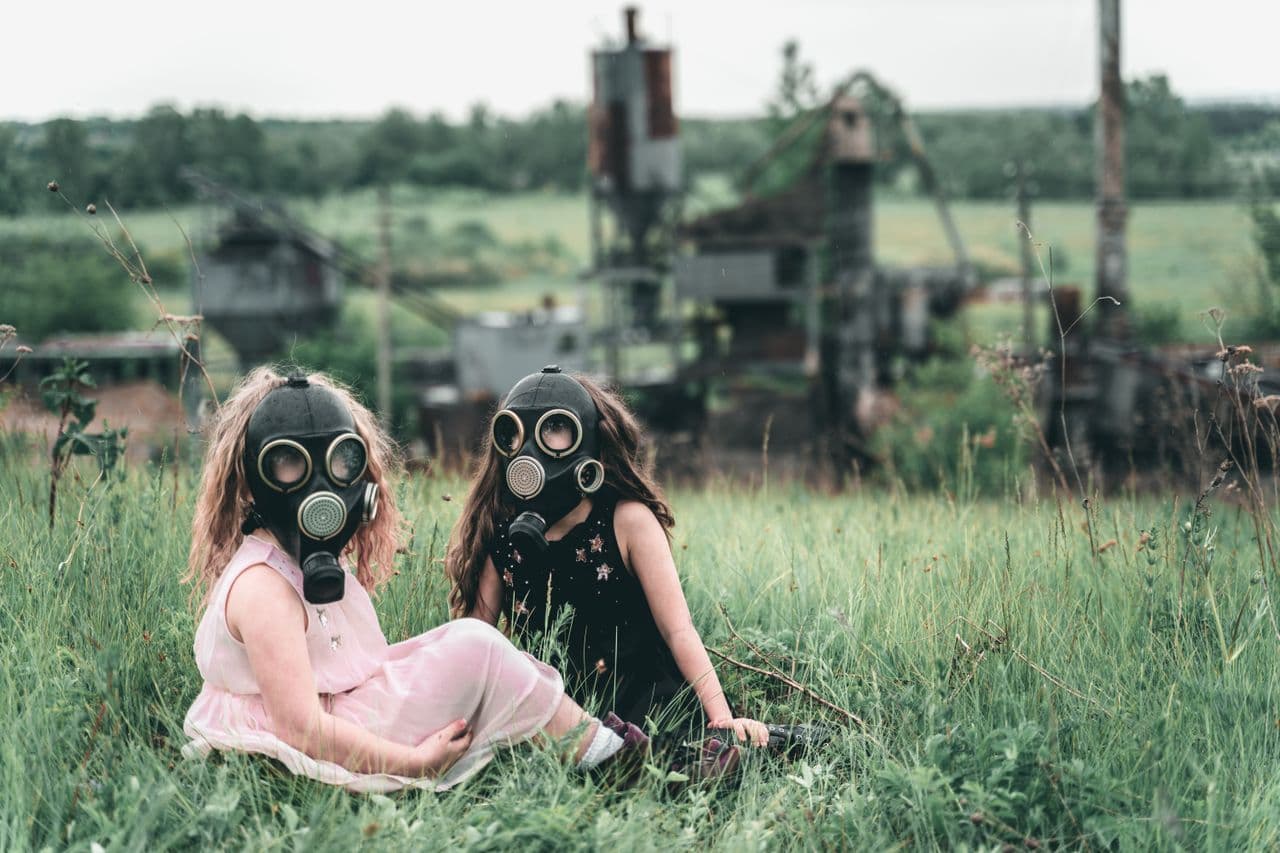
Climate anxiety typically shifts the timing and scale of family planning decisions rather than eliminating the desire for children altogether, with research linking climate concern to delayed or reduced intentions to have kids, and licensed therapists use approaches like acceptance and commitment therapy to help individuals process this uncertainty and grief without dictating which choice is right.
Does worrying about wildfires and rising seas really change whether someone decides to have a baby? Climate anxiety doesn't erase the desire for kids, but it quietly reshapes the timeline, the guilt, and the questions couples ask each other at 2 a.m. Here's what the research actually shows.
What climate anxiety is, and why it lands on the question of children
What is climate anxiety?
Climate anxiety is persistent worry, dread, or grief about environmental change and what it means for the future. It is a response to a real and documented situation, not a symptom of a disorder. Someone with climate anxiety might scroll through wildfire coverage and feel their chest tighten, or lie awake running through what the next few decades might look like. That reaction can sit alongside the general anxiety symptoms a person might already recognize in themselves, like a racing mind or trouble settling, without meeting the threshold for a clinical anxiety disorder. The distress is proportionate to what is happening in the world, which is part of what makes it hard to categorize.
What is the difference between climate anxiety and eco-anxiety?
Eco-anxiety is the broader term, covering distress about ecological loss in general: species decline, habitat destruction, pollution, the slow unraveling of places a person once knew. Climate anxiety usually refers to the narrower slice of that distress tied specifically to climate change and its downstream effects. A related word, solastalgia, describes the grief of watching a familiar home environment change around you while you stay in place. None of these terms appear in diagnostic manuals, and that absence matters more than it might seem. Without a clinical label, people often default to one of two conclusions: either something is wrong with them, or there is nothing going on worth naming. Neither is accurate. The distress is real and common enough to warrant real stress management, even without a diagnosis attached to it.
Why family planning is where abstract worry becomes a decision
Most climate worry stays diffuse. It shows up as background unease, not as something that demands a choice by a certain date. Climate Anxiety and the Kid Question is different, because deciding whether to have a child converts that abstract dread into a specific question about a specific, not-yet-existing person. This is often the first decision a person faces that forces the worry to resolve into something concrete. What climate anxiety does to decisions about having children shows up as intrusive scenario thinking, trouble picturing a timeline past a certain point, and guilt attached to ordinary plans like buying a house or picking a career. Guilt and grief around this specific choice are their own territory, worth sitting with on their own terms.
What the research actually found about climate anxiety and family planning
How does climate anxiety affect decisions about having children?
Climate anxiety tends to shift the timeline and scale of family plans rather than erase the desire for children outright. A systematic review of studies on climate change concern and reproductive decision-making pooled research asking whether climate worry connects to reproductive intentions, and the large majority of the studies it included found some association between climate concern and reduced or delayed intentions to have children. That is the clearest answer the published literature gives to what climate anxiety does to decisions about having children: it shows up as a pattern across populations, not as a single predictable outcome for any one household.
What are the effects of climate anxiety on family planning?
The effect described in that review rarely looks like a flat refusal to ever parent. It looks like people saying they want fewer children, want to wait longer, or no longer feel certain about a plan they once had. The review identifies several reasons behind this: uncertainty about what kind of future a child would grow up into, concern about overpopulation and overconsumption, worry about meeting a family’s basic needs, and broader environmental or political frustration. Later work on having children climate change decisions, looking at different countries and age groups, generally finds that climate concern sits alongside economic pressure, housing costs, and partnership status rather than replacing them as the deciding factor.
The two different worries the research keeps finding
Two separate concerns run through this body of work, and they get blended together often enough to confuse the picture. One is worry about the world a future child would have to live in: the heat, the instability, the uncertainty about resources decades out. The other is worry about the child’s own environmental footprint, the idea that one more person adds to emissions and strain on resources. The systematic review treats these as distinct themes, and most of the research behind both comes from Global North countries, with far less evidence from the Global South populations who face the heaviest climate impacts already.
What a finding across many studies means for one person’s decision
A pattern found across thousands of survey respondents describes a population, not a household. The research says that climate concern is commonly associated with wanting fewer or later children across the groups studied. It does not say what the right choice is for you, your partner, or your specific circumstances. It also only measures what people say they intend, and stated intentions are not the same as what people eventually do. The gap between an intention and an outcome is wide for nearly every reason people delay or change their plans around parenthood, climate concern included.
What this research cannot tell you
Most of what exists on climate concern and having children comes from surveys given once, to one group, at one point in time. People answer questions about their worry and their plans in the same sitting, which means the data shows what someone said on a given day, not what they later did or what actually drove the decision. A person can report high climate anxiety and go on to have children, or report none and remain childless for unrelated reasons. Nothing in a single-moment survey can separate those stories from each other.
There is also a question about which way the influence runs. Someone already unsure about parenthood, for reasons of money, relationship stability, or simply not wanting kids, may reach for climate change as the explanation that sounds most defensible. That does not make the concern fake. It does mean that climate language can function as a way of voicing ambivalence that already existed, not only as the cause of it.
The people who get studied are not a cross-section of the world. A systematic review of climate change and reproductive decision-making found that most of this research comes from the United States, Canada, New Zealand, and Europe, leaving a significant gap for populations in the Global South who face more direct climate impacts. Samples also lean toward younger adults, English speakers, and people already paying attention to climate issues. Studies measure climate anxiety in different ways, so results are not always describing the same experience, and almost no one has followed people over years to see whether early hesitancy about having children held or changed.
None of this means the question is unanswerable in your own life. It means no study hands you a verdict to measure yourself against.
Who feels this most, and why it varies so much by place and circumstance
Climate anxiety does not land evenly, and what it does to decisions about having children looks different depending on who is asking the question and from where. The hesitancy reported most often clusters among younger adults who have not yet had children and who are weighing the choice now, not looking back on one already made. For this group, the question is live and unresolved, which is part of why it carries so much weight. This is one reason the topic connects so directly to women’s mental health, since people in their twenties and thirties making active childbearing decisions are often absorbing this pressure at the same time as other major life choices.
Where someone lives changes the shape of the worry itself. The IPCC’s Working Group II assessment documents that vulnerability to heat, flooding, and displacement is not distributed evenly, with marginalized and poverty-affected populations facing the sharpest risks to water, food, and health systems. Someone already living through wildfire smoke seasons or repeated flooding is not anticipating a future harm the way someone in a stable, wealthier region might be. In many high-emitting countries, the worry gets framed around a child’s environmental footprint. In lower-emitting and more directly affected regions, it is framed around a child’s safety and ability to make a living at all.
Financial precarity, unstable housing, and caregiving responsibilities do not sit apart from climate worry. They interact with it, often so closely that separating one thread from another is not realistic. Gendered expectations also shape who carries this decision publicly, who is asked to explain it, and who absorbs the social cost of saying no. For people whose family, cultural, or religious context treats parenthood as a given, the worry can feel less like fear and more like isolation, since there is no one nearby who treats the question as open.
What couples actually disagree about when they disagree about this
Climate Anxiety and the Kid Question rarely stays a conversation about climate. It starts there, with articles shared and statistics quoted, but it usually turns into something else within a few exchanges. What looks like a disagreement over facts is often a disagreement over risk tolerance, control, and what each partner believes they owe a child who does not exist yet. Two people can agree on every projection about the future and still land in completely different places, because the facts were never the actual disagreement.
When the argument is about facts but the conflict is about risk
One partner cites sources. The other raises counterpoints. Neither is actually trying to win an argument about the climate, they are trying to get the other person to feel the same amount of danger they feel, or the same amount of hope. Risk tolerance is personal and often set long before either partner started thinking about parenthood at all. Matching the research rarely changes it.
When climate is the stated reason and something else is underneath
A common pattern: one partner’s certainty reads to the other as pressure, and the other’s hesitation reads back as rejection of a shared future. Timeline mismatch is its own conflict. Both may want a child, but one wants to decide now and the other wants to keep the question open indefinitely, and that gap can outlast any climate discussion. Climate can also become the acceptable reason to voice when the real hesitation is ambivalence about parenthood, doubt about the relationship’s stability, or plain exhaustion, since naming climate feels less personal than naming those.
What moves the conversation when evidence does not
Debating evidence rarely resolves this, since the disagreement is about meaning, not data, and the partner bringing more sources usually ends up feeling less heard. What tends to help is each partner stating what they are most afraid of, rather than what they have concluded. Fear is specific and nameable in a way that a position is not. Some couples reach a decision without ever reaching full agreement, and choose to hold that difference instead of forcing it closed.
Eco-grief about parenthood is a specific kind of grief
General climate distress tends to stay abstract. It points at a future decade, a melting ice shelf, a system failing somewhere out past the horizon. Climate Anxiety and the Kid Question pulls that same distress down into something much smaller and more specific: a particular imagined child, and a version of your own life you had quietly assumed you would get to live. That is not the same feeling, even when it shares a cause.
It is also a loss with no event attached to it. Nothing happened. Nobody died. There is no funeral, no card, no language that fits what you are describing when you try to explain it out loud. People sometimes name this as grief with no established ritual, which is part of why it goes unrecognized even by the person feeling it.
It can sit alongside other, more visible grief. Someone who already has a child can still grieve the child they decided against, and carry guilt about that grief that has nowhere to go, since admitting it can feel like a betrayal of the child who exists. The grief can also show up sideways, as distance rather than tears: going quiet when the topic comes up, changing the subject, feeling strangely little when you expected to feel a lot.
When friends or family notice, they often respond with reassurance: new technology will help, people are resilient, it will work out. That reassurance can land as correction rather than company, as if the feeling itself were the problem to be fixed. Calling it grief instead of anxiety changes what actually helps, because anxiety asks to be managed and grief asks to be witnessed. Those are different requests, and conflating them is often why the comfort offered misses.
When having children becomes the climate-conscious choice
Not everyone who takes climate change seriously lands on the same answer. Some people reach the opposite conclusion from the one explored earlier and decide that raising a child who grows up able to act on the problem is part of their response to it, not a contradiction of it. For them, having children and climate change are not opposing forces. A child is a future adult who might work on the problem directly, and that possibility matters to them as much as any projection of harm.
This position is often described as a refusal to let a forecast of the future dictate the present. That is a different stance from optimism and different from denial. It is closer to a decision not to let an uncertain future override a present choice that feels right for other reasons.
Other people arrive at parenthood through adoption or fostering. This can resolve a concern about adding another person to a strained planet while introducing a separate set of considerations entirely, from the needs of a child who has already experienced loss to the realities of the adoption or fostering system itself. None of that is a simple substitute for biological parenthood, and it comes with its own weight.
Remaining child-free for climate reasons and remaining child-free for other reasons can look identical from the outside. From the inside, they often feel different, carrying different grief, different relief, different conversations with family.
None of these positions, having a biological child, adopting, fostering, or staying child-free, is the evidence-based answer, because the evidence does not reach that far. What tends to distinguish a settled decision from an unsettled one is not which option a person picked. It is whether they chose it, or defaulted into it without choosing at all.
Making the decision without waiting for certainty
There is no version of this decision that arrives with full information. What climate anxiety does to decisions about having children is often less about the facts and more about what you do with the facts once you have them. The goal is not to resolve every unknown. It is to find a way of deciding that you can live with while the unknowns stay unknown.
What are the best ways to cope with climate anxiety?
One of the more useful shifts is noticing your own information behavior. Climate anxiety is often kept alive by the habit of reading more, checking more, searching for the piece of news that will finally settle things. At some point the reading stops producing new information and starts producing dread instead, and that shift is worth noticing on its own terms. You do not need a rule about how much to read. You need to catch the moment reading stopped teaching you anything.
Grounding helps with the physical weight of this kind of worry more than reasoning does, because the worry is about a future timescale your body cannot act on right now. Pressure, weight, texture, naming what is actually in the room: these bring attention back to a scale of time you can do something about today. Involvement in collective or local climate action does not change the forecast, but it changes your relationship to the worry. Many people find that doing something, even something small and local, reduces the distress even when it does not reduce the uncertainty.
Separating the two questions inside the one question
“Should I have a child” is actually two questions wearing one coat: do you want to parent, and do you believe a child can have a good life. Climate Anxiety and the Kid Question often collapse these into a single yes or no, and that collapse is where a lot of the paralysis comes from. Keeping them separate lets you answer what you actually want, rather than letting a belief about the future stand in for a desire in the present. It also helps to write down the specific condition that would change your answer. A decision with a named condition attached becomes reviewable rather than permanent, and that alone can lower the pressure to be certain today.
When support from a therapist helps
How can climate anxiety impact mental health, badly enough to need outside support? It tends to show up as interference with sleep or work, distress that does not track with what is actually in the news, or a decision that has stayed frozen for a long time at real cost to you. Therapy for this does not aim to talk you out of the concern or push you toward either answer. It usually works on tolerating uncertainty, processing the grief underneath the question, and separating your values from your fear. Acceptance and commitment therapy is often used for exactly this kind of values-based decision under uncertainty, and grief-focused work can address what is being mourned separately from the decision itself. Mindfulness-based stress reduction offers another route into the grounding described above. The aim across all of it is the same: making the decision yours, not your anxiety’s. If the question has been sitting unresolved and is costing you sleep or steadiness, you can create a free ReachLink account and browse licensed therapists at your own pace, with no commitment.
There is no wrong answer to carry here
Whether you are leaning toward parenthood, away from it, or still circling the question, the weight you feel comes from caring deeply about a future you cannot fully control. That is not a flaw in your thinking. It is what it looks like to hold love and fear for the world at the same time, and to take that seriously enough to sit with the discomfort instead of rushing past it.
This kind of uncertainty does not need to be worked through alone or resolved before you are ready. Talking it through with someone trained to hold both the emotional and practical sides of a decision this size can make the weight easier to carry, even before any decision is made. You can begin with a free assessment at ReachLink, at your own pace and with no commitment attached.
FAQ
-
How do I know if what I'm feeling about climate change is just normal worry, or something more like anxiety?
Climate anxiety sits in a specific middle ground - it's a real, proportionate response to documented events, not a clinical disorder you get diagnosed with, but also not something to brush off as overthinking. If you find yourself losing sleep over wildfire coverage, running mental scenarios about what the next few decades will look like, or feeling a persistent background dread that doesn't quite lift, that pattern has a name even if it doesn't appear in a diagnostic manual. The distress tends to feel different from everyday stress because it's tied to a timeline your body can't act on right now, which is part of what makes it so hard to settle. Recognizing it as a genuine, named experience rather than a personal flaw is usually the first step toward doing something useful with it.
-
Does therapy actually help with climate anxiety, or does it just try to talk you out of caring?
Therapy for climate anxiety doesn't aim to convince you that everything will be fine or that your concern is overblown - a good therapist meets you where you are and takes the worry seriously. What therapy tends to work on instead is building your capacity to tolerate uncertainty, process the grief that often sits underneath the anxiety, and separate your values from your fear so you can make decisions that actually feel like yours. Approaches like Acceptance and Commitment Therapy (ACT) are well-suited to this kind of values-based decision-making under uncertainty, while mindfulness-based approaches help with the physical weight of worry that reasoning alone doesn't reach. The goal is not to stop caring about climate change - it's to stop being paralyzed by the caring.
-
Why does the idea of not having children because of climate change feel like grief even though nothing actually happened?
Eco-grief around the parenthood question is a specific kind of loss, and it's hard to name because there's no event attached to it - no death, no ending, no moment anyone else would recognize as a loss. What's being mourned is often an imagined life, a particular future child, or a version of the world you quietly assumed you would get to live in. Because nothing concrete happened, there's no ritual for it and no culturally recognized way to talk about it, which means many people carry it without anyone around them treating it as real grief. Understanding it as grief rather than anxiety changes what actually helps, because grief needs to be witnessed, not just managed.
-
I've been losing sleep over whether to have kids because of climate change and I don't know where to start - how do I find a therapist who actually gets this?
If this question has been sitting unresolved long enough to affect your sleep or your ability to focus, that's a real signal that outside support would help - not because something is wrong with you, but because this is genuinely hard to work through alone. ReachLink connects people with licensed therapists through human care coordinators, not an algorithm, so you're matched with someone whose experience actually fits what you're dealing with. You can start with a free assessment at ReachLink at your own pace and with no commitment, which gives you a low-pressure way to figure out what kind of support would help before you commit to anything. The licensed therapists on the platform work with anxiety, grief, and values-based decision-making, all of which are directly relevant to the climate and kids question.
-
Can therapy help when my partner and I completely disagree about having children because of climate change?
When couples disagree about having children and climate is part of the conversation, the conflict is often less about the facts of climate change and more about differences in risk tolerance, what each person believes they owe a future child, and what each person is actually afraid of. Therapy can help each partner identify what's underneath their position, whether that's fear, grief, ambivalence about parenthood itself, or a mismatch in how much uncertainty each person can sit with. Individual therapy is useful for clarifying your own values before or alongside couples work, and couples therapy can create a structured space for a conversation that tends to stall when it stays focused on data and evidence. The goal isn't to force agreement - it's to help both people understand what they're actually disagreeing about.