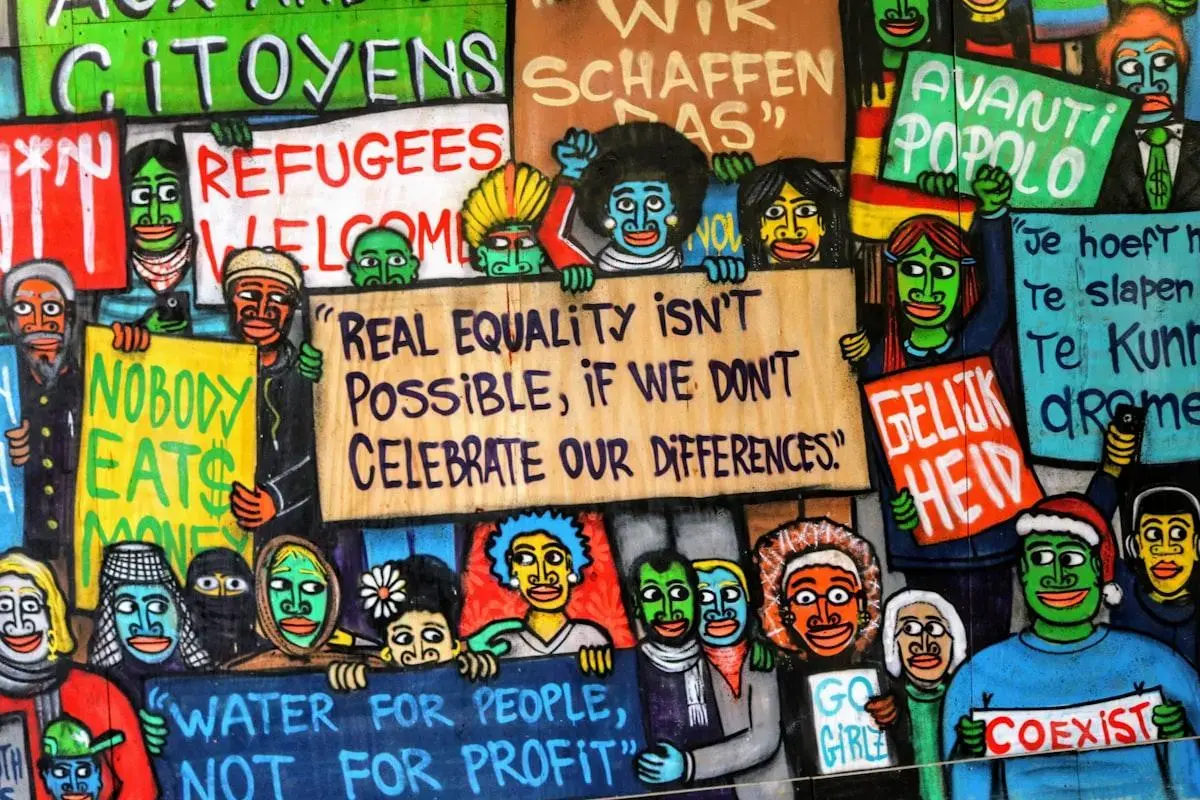
World Refugee Day on June 20 honors displaced persons worldwide while highlighting their elevated mental health risks, including anxiety, depression, and PTSD, emphasizing the critical need for accessible therapeutic interventions and culturally-sensitive mental health support.
What does it mean to rebuild your life from nothing while carrying invisible wounds of trauma? World Refugee Day reminds us that behind displacement statistics lie profound stories of resilience — and the mental health challenges that require our understanding, compassion, and support.
Extending Compassion: World Refugee Day and Our Shared Humanity
Each year, countless individuals are forced to abandon their homes in search of safety and security. While our commitment to supporting refugees should be unwavering throughout the year, World Refugee Day offers a special opportunity for global solidarity. On this day, communities worldwide can acknowledge the resilience, courage, and challenges faced by those who have been displaced from their homes in pursuit of a better life.
Understanding World Refugee Day
According to the United Nations (UN), every minute, 20 people leave everything behind to escape persecution, war, or terror. Observed annually on June 20, World Refugee Day was established by the UN in 2001 to highlight the critical needs of displaced communities, encourage open-mindedness, and foster reflection on the unique challenges refugees face.
This day serves as a reminder that the global community bears responsibility for addressing the root causes of displacement, including ending conflicts and providing necessary resources to support affected populations. The observance emphasizes the importance of comprehensive support for refugees, encompassing everything from mental health services to educational opportunities and legal assistance.
The Origins of World Refugee Day
The inaugural World Refugee Day took place on June 20, 2001, marking the 50th anniversary of the 1951 Convention Relating to the Status of Refugees. This convention, along with the 1967 Protocol, provides the only global legal framework addressing critical aspects of refugee life and establishing standards for their treatment across borders. These documents also outline refugees’ obligations toward their host countries.
A fundamental principle established in this convention is non-refoulement, which prohibits returning refugees to countries where they face serious threats to their freedom or lives, unless they pose a security risk to the host country or have been convicted of a serious crime.
Defining Displacement
A refugee is someone forced to flee their country due to violence, persecution, or armed conflict. The UN Refugee Agency (UNHCR) reports that today, 73% of all refugees come from just five countries: Syria, Afghanistan, Ukraine, Venezuela, and Sudan.
Why People Flee: Understanding the Causes
Not everyone who leaves their home country is fleeing danger. Some may relocate for educational opportunities or better economic prospects. These individuals are generally not classified as refugees.
Refugees are specifically those who are forced to leave their homes due to dangerous conditions, seeking protection from conflict, hunger, poverty, natural disasters, climate change, or persecution based on their gender identity or sexual orientation.
Categories of Displaced Persons
Several terms describe displaced individuals, with important distinctions between them:
Refugees
Refugees have been forced to flee their home countries due to war, violence, persecution, natural disasters, or climate change, and cannot return due to safety concerns for themselves or their families.
Asylum Seekers
An asylum seeker is someone who seeks international protection but has not yet completed the refugee application process. While all refugees were initially asylum seekers, not all asylum seekers ultimately receive refugee status.
Internally Displaced Persons
These individuals have been forced to leave their homes but remain within their own countries’ borders. Some may eventually cross international boundaries, at which point they would be classified as refugees.
Stateless Persons
Stateless people hold no citizenship in any country, often because their births were never officially registered. Without legal documentation, they frequently cannot access education, employment, banking services, marriage rights, or property ownership, making them vulnerable to exploitation.
Migrants
A migrant has moved away from home, either within their country or across international borders. While there’s no universal definition, the United Nations Department of Economic and Social Affairs considers someone who has lived outside their country of origin for at least a year to be a migrant.
Returnees
Returnees are displaced people who permanently return to their homes after the root cause of their displacement has been resolved. While no longer holding refugee status, they are still in the process of reintegrating into their home countries.
A Growing Global Crisis
According to the UNHCR, approximately 117.3 million people worldwide were forcibly displaced by the end of 2023, representing an 8% increase from 2022. As Filippo Grandi, the United Nations High Commissioner for Refugees, notes: “Behind these stark and rising numbers lie countless human tragedies. That suffering must galvanize the international community to act urgently to tackle the root causes of forced displacement.”