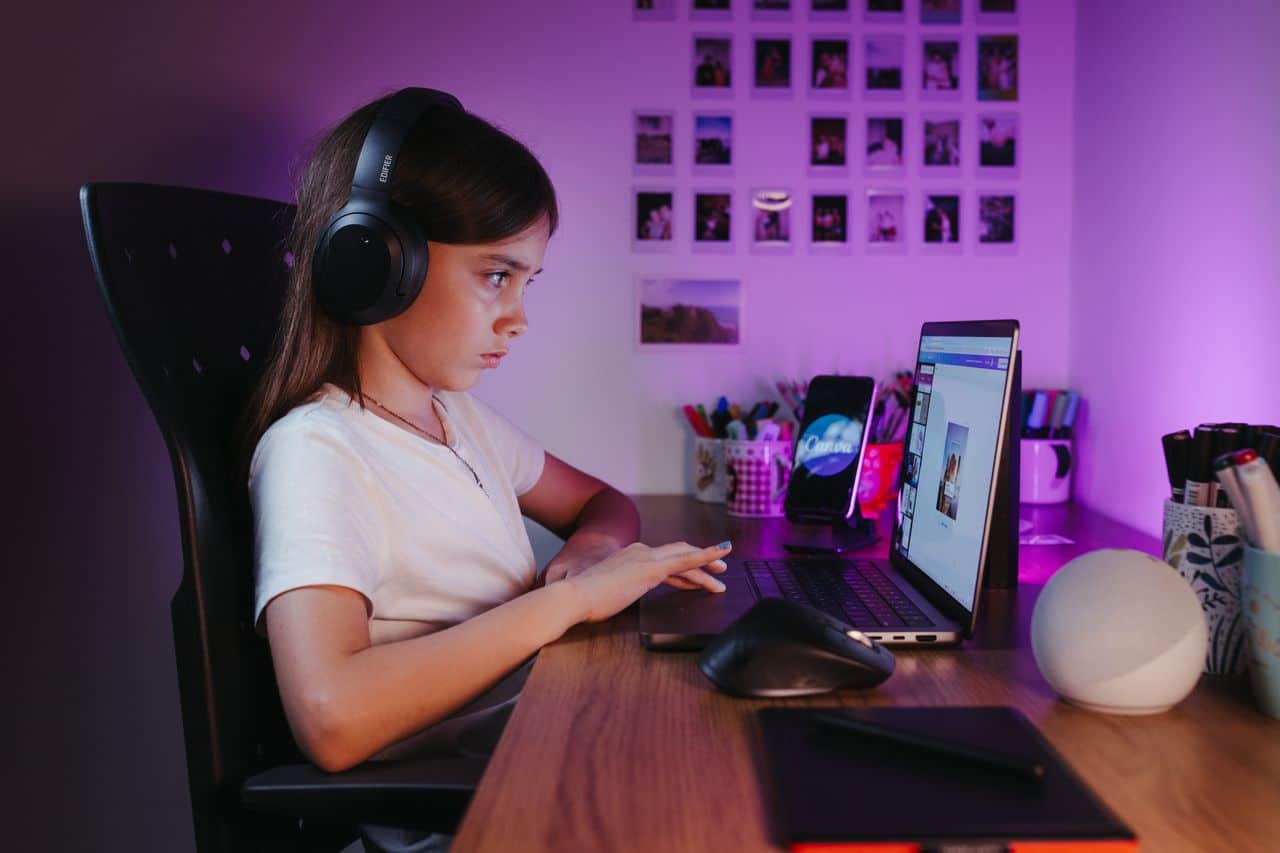
Gaming community reliance becomes a concern for children when it serves as their only social outlet, showing signs like distress over interruptions, secrecy, and declining school or sleep function rather than simple enthusiasm, with family therapy helping parents rebalance support without severing real relationships.
What if your child's gaming community isn't a retreat from real friendship, but the actual thing itself? For many kids, a server full of familiar names provides belonging school never offered. The real question isn't how many hours they play, it's whether this one outlet is carrying too much weight alone.
A gaming community is not the game itself. It is the layer of ongoing social life that forms around play: a Discord server where the same names show up every evening, a guild or clan with its own roles and rituals, a recurring voice-chat group that treats a missed session as something to explain. What is a gaming community, in practice, comes down to persistence. A child logging into a server and being greeted by name, expected at a raid time, or ribbed for missing a scheduled match is in a different situation than a child who plays the same game alone.
That distinction matters because gaming community children build look different from casual players. Solo play ends when the console turns off. Casual multiplayer might mean joining whoever is online for an hour, with no particular attachment to who that turns out to be. A named group with roles, attendance expectations, and inside jokes that carry across sessions is a different structure entirely, closer to a club than a pastime.
“Only social outlet” describes a specific condition inside that structure: the same group of people is supplying companionship, working through conflict, assigning status, and offering support, with no separate offline group doing any of that work. Playing for many hours a day is not the same thing, and the two get confused constantly. A child can play heavily and still have a sports team, a cousin, a friend from school who comes over. The concern is concentration, not volume.
At the far end of heavy play sits a formally recognized condition. The World Health Organization’s ICD-11 defines gaming disorder as a pattern of impaired control over gaming, gaming taking priority over other interests, and continued play despite clear negative consequences, persisting for at least 12 months and causing significant impairment. The WHO is explicit that this affects only a small proportion of people who game. Heavy but functional play is not the same thing as that diagnosis.
Before looking at what can go wrong, it helps to name what a gaming community is actually doing right. For a lot of kids, these groups are not a retreat from social life. They are social life, running on a different set of rules than the ones at school.
How do video games affect social interaction?
Video games change social interaction by replacing small talk with shared activity as the entry point for friendship. A child does not need to make conversation to belong in a raid group or a match. They need to show up, play their role, and come back next time. That lowers the barrier for kids who find unstructured conversation hard, because the task itself carries the interaction instead of the other way around.
Cooperative play also demands real coordination: calling out a plan, waiting a turn, adjusting when a strategy fails, and figuring out what to say to a teammate after a loss. These are negotiation and repair skills, practiced repeatedly and with immediate feedback. Responsive, back-and-forth exchange of this kind is exactly the pattern that research on early social development identifies as building the neural groundwork for social and emotional skill, through repeated cycles of one person acting and another responding in kind.
Text and voice chat give a child a lower-stakes way to practice talking, without eye contact or the pressure of a reaction happening in real time. For a kid who is the only one in their school who cares about a particular game or genre, these groups also remove the time zone and the classroom entirely, connecting them to people who share the interest without requiring proximity. After a hard day, logging in gives a predictable place to land, with people who are glad to see them and a routine that does not change.
Skills that transfer outside the game
The coordination, patience, and repair built in online gaming social skills do not stay confined to the screen. A child who learns to negotiate a role on a raid team is practicing the same muscle used to negotiate a group project. This is also why removing the community rarely feels small to the child losing it: the benefits of gaming communities for kids are specific and real, which is exactly what makes them worth defending.
Warning signs that a single online group is carrying too much weight
Some signs of unhealthy gaming in children show up only when something interrupts the game. Others live inside the group itself, visible only if you know what to watch for. A few things that look alarming are actually ordinary. Separating the three matters more than reacting to any single moment.
Changes in how the child responds to interruption
The clearest signal is how a child reacts when access breaks. A router going down, a device dying, or a parent calling them to dinner can trigger something closer to grief or panic than ordinary annoyance. The American Psychiatric Association’s overview of Internet Gaming Disorder lists withdrawal-like distress and continuing to play despite negative consequences among the diagnostic symptoms clinicians consider, alongside preoccupation and loss of control. That framework does not mean every upset child meets a clinical threshold. It does mean the size of the reaction, not just its existence, is worth noticing. A child who sulks is different from a child who sobs for an hour because they missed a raid.
What is happening inside the group
Online gaming and social isolation in kids often develop quietly, through changes the child does not announce. Watch for offline contact that fades without the child seeming to notice or miss it, and for attendance anxiety: showing up sick, exhausted, or mid-illness because missing a session risks being replaced in the group. Secrecy is another marker, especially around who else is in voice chat, including adults or strangers the child will not name. Status inside the group can also start to outweigh school performance or family feedback as the main source of self-worth, so that a bad grade barely registers but a drop in rank feels catastrophic. Cyberbullying and exclusion inside these groups often stay hidden, because reporting it can mean losing the group entirely, and sleep, appetite, and mood may start tracking game events rather than school ones. A child who seems fine on a school day but devastated after a guild dispute is showing you where the emotional weight actually sits. Some of this overlaps with anxiety symptoms and with the withdrawal patterns seen in social anxiety, which is worth keeping in mind rather than treating every change as a gaming problem specifically.
Signs that are usually not a problem
Intense enthusiasm, strong opinions about the game, and wanting to play daily are not, on their own, cause for concern. The same goes for a child whose friends are mostly online, as long as they are still eating, sleeping, keeping up at school, and able to talk with you about their day. Passion looks a lot like preoccupation from the outside. The difference is whether the rest of the child’s life is still functioning around it.
Which children are most likely to end up with one social outlet
A gaming community rarely replaces a child’s social life out of nowhere. It usually fills a space that was already empty, and understanding how that space opened up matters more than blaming the game itself.
For a child with social anxiety, online spaces strip away the parts of in-person contact that feel hardest: reading a face in real time, filling a silence, walking up to a group mid-conversation. A voice chat or a shared game removes those demands, which makes the interaction both a relief and something to keep returning to. Over time that relief can reinforce the avoidance it was supposed to soothe, since the easier version of socializing gets practiced while the harder version does not. This pattern connects closely to social anxiety more broadly, where avoidance and comfort reinforce each other in a loop.
Circumstance plays a large role too. A child who changed schools, was bullied, or lost a friend group did not choose gaming over offline friendship: the friend group was already gone, and the online community filled the gap rather than created it. Early adolescence raises the stakes further, since peer belonging matters more developmentally at that age than it did a few years earlier or will later. Chronic illness, disability, or limited mobility can also make offline socializing genuinely harder to access, not just less appealing.
Family context shapes this too: long parental work hours, few peers nearby, no reliable transportation, or no safe place for unstructured hanging out all narrow the offline options a child actually has. Once offline attempts happen less often, the next attempt gets harder, since the skills and confidence involved get less practice. That is why kids only have online friends in many cases: not preference, but a narrowing set of real alternatives.
When gaming is scaffolding, not just risk
For some children, the server or the guild chat is the one place where their way of communicating is simply the norm. An autistic child who struggles to read a classmate’s tone or timing in the hallway can type a message, take as long as needed to answer, and never once have to guess what a facial expression meant. A child with ADHD who loses the thread of a fast-moving group conversation at lunch can follow a scrolling chat at their own speed, rejoining whenever their attention comes back. Removing eye contact, tone reading, and split-second timing all at once does not make the friendship smaller. For a lot of kids, it is what makes the friendship possible instead of exhausting.
A friendship built around a shared interest in a game is not a consolation prize for a child who could not make the other kind. It is a real friendship, with its own loyalty, humor, and history, and it deserves to be treated that way by the adults around the child. That matters for naming what is actually happening when people talk about an autistic child’s online friends or the online gaming community of a child with ADHD: this is often a child who has found a format that works, not a child avoiding one that would work better.
The useful response is scaffolding, not dismantling. That can look like keeping the child in a server made up of known, consistent players, favoring spaces with active moderation, or agreeing on stopping points together rather than imposing them. Support does not mean no limits. It means limits shaped around what the child would actually lose, which is different for every family and depends on the specific role gaming support plays.
Scaffolding has a ceiling. If the reliance has tipped into real distress, isolation that is worsening rather than stabilizing, or signs that overlap with anxiety symptoms, that is a different situation than a community working as intended.
Each platform where a child builds a gaming community handles safety in a different way, and that difference matters more than which game your child plays. Some platforms set the rules themselves. Others hand that job to whoever happens to run the server. A few barely moderate at all beyond removing the most extreme content. Knowing which situation you are in tells you what you can actually control.
Discord is server-based, which means moderation is set by whoever owns that particular server, not by Discord itself. A server about a specific game might be carefully run by an adult volunteer, or it might have no active moderator at all. Invite links can come from anywhere: a friend, a stranger in a game lobby, a link posted in a completely different app. Roblox sits differently, since it hosts millions of user-created experiences but applies platform-level chat filtering and account restrictions across all of them, so a young child and a teenager can occupy the same virtual space under the same baseline rules. Fortnite organizes play around squads with voice chat, and younger accounts are cabined with restricted communication by default. Minecraft splits into two very different experiences: a private realm with known friends, or a public server with players you have never met, and the safety gap between those two is significant. Twitch is built around watching rather than playing, so the relationship your child forms is often with a streamer they will never meet, and chat moderation depends entirely on how that individual channel is run.
Discord, Roblox, Fortnite and Minecraft each publish their own family or parental control settings, covering things like who can send a direct message, who can send a friend request, and what chat filtering applies by age. Searching for parental controls gaming platforms by name, rather than relying on a general app-wide setting, gets you the specific page for each one. Discord Roblox parental controls in particular are worth checking together, since a child often moves between the two in the same evening. These settings change as platforms update their policies, so what you confirm this month is worth rechecking in a few months.
Private spaces versus open ones
The single most useful question is whether a space is moderated by the platform, by a community owner, or not meaningfully at all. A private Minecraft realm with three known friends is a different risk than an open Discord server found through a random invite link. Neither is inherently a problem, but knowing which one your child spends most of their time in tells you where to focus your attention.
How families can rebalance without a confiscation
When a child only socializes online through gaming, the console or headset stops being a toy and becomes the place where their friendships live. That changes what any rule about screen time actually touches. A plan that works starts with understanding what the child stands to lose, not just what the parent wants to limit.
Why fast removal backfires
Taking the device away without warning tends to produce acute distress, not quick compliance. The child loses access to people mid-conversation, often mid-game, with no way to explain their absence to a team or guild that was counting on them. What follows is often a sense of betrayal, secrecy around future play, and the loss of something a parent needs: being the person the child tells when something goes wrong online. Once a child believes that reporting a problem leads to losing the group entirely, they stop reporting problems.
Learning the group before changing the rules
Before any rule changes, find out who is actually in the group. Ask for names, roles, and what your child’s standing is within it: are they the one who always shows up, the one who organizes the raid, the newest member still proving themselves? Ask what gets lost if they miss a night, whether that’s a scheduled match, a guild event, or simply being the person who usually answers first. A child is not defending a game. They are defending people, and that reframe changes the entire conversation.
Adding an offline thread before subtracting an online one
Reduce online time only after something offline exists to hold the gap, ideally something connected to the same interests driving the gaming itself. If your child plays a strategy game, a local tournament or a related club gives them a parallel place to belong. Bring the gaming world into shared space too: play together, let your child teach you the mechanics, and keep devices in common rooms rather than closed bedrooms. Subtracting first and adding later leaves a hole with nothing in it.
Setting limits the child helped write
Limits a child helped write hold up better than limits handed down. Sit down together and agree on specifics: how many nights, what time, and what happens if the limit gets broken, then write it down so it isn’t renegotiated from memory during an argument. Negotiate exit points the group itself respects, like the end of a match or the end of a raid, instead of cutting a session off mid-play, which reads as disrespecting the team as much as the child. Keep tracking mood and sleep alongside gaming time, since a written record settles disputes a household would otherwise argue about from memory, and keep an open channel for reporting harassment or contact from strangers without your child fearing that saying something costs them the group. If the conversations at home keep ending in the same argument, or the distress around gaming looks bigger than a rule can hold, parents can create a free ReachLink account and browse licensed therapists at your own pace, with no commitment. Working through this with a family therapy provider can also give everyone a shared structure for these conversations instead of repeating the same standoff.
When to get outside support
A few honest questions can tell you more than any checklist. Is your child distressed, or just absorbed? Is anything slipping: grades, sleep, hygiene, the basic rhythm of the day? Is something happening inside the group that worries you, and is the reliance on it growing or has it leveled off? A phase tends to answer these questions reassuringly. A problem does not.
Some signals point more directly toward professional help. These include a child talking about self-harm, threatening something drastic if access to the game or group is taken away, contact from adults in the community the family cannot identify, or a child who has quietly stopped trying to connect with anyone offline at all. If a child is talking about wanting to hurt themselves, help is available right now and it does not require you to have the situation figured out first.
Family-focused therapy for gaming and social anxiety typically works on three fronts: the negotiation between parent and child that has probably broken down, the anxiety that the gaming may be covering for, and social skills practice that does not require giving up the online group entirely. Sometimes the household conflict itself has become the main problem, and therapy for the parent alone is a legitimate place to start. Research on pathological gaming and parenting outcomes found that parental stress and reduced confidence in parenting were connected to the underlying strain in the household, not just the child’s behavior.
For a child already comfortable talking through a screen, online therapy can lower the barrier to starting that conversation at all.
What to remember
A few key takeaways on a child’s gaming community can keep you steady when a conversation about screens turns into an argument.
Treat the community as a real social world with real relationships. Calling it fake is the fastest way to make your child stop talking to you about it. The concern is reliance on a single outlet, not the number of hours played. Watch for distress, secrecy, and shrinking function in school or sleep, not enthusiasm itself.
For some children, especially neurodivergent ones, that community is doing real work and deserves better structure rather than removal. Find out who moderates the space and what the platform publishes for parents. Add before you subtract, and set any new rule with your child rather than on them. If distress, safety, or daily functioning is slipping, bringing in outside support is a reasonable, ordinary step, not a failure.
Your worry about them does not mean you are failing them
Watching your child find belonging in a world you cannot fully see is unsettling, especially when you cannot tell anymore where connection ends and dependence begins. That uncertainty does not mean you have missed something important or that the situation is beyond repair. It means you are paying attention, and that noticing is often where real change quietly begins.
You do not have to figure out alone whether this is a passing phase or something that needs more support. A family therapist can help you understand what your child is actually getting from that community, and what might be missing elsewhere in their life. You can begin with a free assessment at ReachLink, at your own pace and with no commitment, to see what support might look like for your family.
FAQ
-
How do I know if my kid's gaming community has become their only real social outlet?
The key difference is not how many hours your child plays, but whether gaming is their only source of friendship, belonging, and emotional support. A child whose entire social life lives in one online group, with no separate school friends, family connections, or offline relationships doing any of that work, is in a different situation from a heavy gamer who still has people outside the screen. Warning signs include intense distress when access is lost, mood that tracks game events more than school or family ones, and offline contact that quietly fades without the child seeming to notice. If your child is still sleeping, eating, keeping up at school, and able to talk with you, daily gaming alone is not cause for alarm.
-
Does family therapy actually help when a kid refuses to cut back on gaming?
Yes, and it often works better than rules alone because therapy addresses what is underneath the gaming, not just the behavior itself. A licensed therapist can help untangle whether gaming is filling a social gap, covering for anxiety, or something else entirely, and then work with the family to find an approach that does not require the child to simply give something up. Family-focused therapy for this kind of situation typically works on three things at once: the conflict between parent and child that has likely broken down, the anxiety or isolation the gaming may be masking, and social skills practice that does not require giving up the online group entirely. Therapy can also give everyone a shared structure for these conversations instead of repeating the same standoff.
-
Is it actually okay for my autistic or ADHD kid to have most of their friendships online?
For many neurodivergent children, online gaming communities are not a substitute for real friendship - they are what makes friendship possible in the first place. Gaming removes the parts of in-person socializing that tend to be hardest: reading facial expressions in real time, filling silences, and navigating fast-moving group conversations. A child with ADHD can follow a scrolling chat at their own pace, and an autistic child can take as long as needed to respond without ever having to decode a classmate's tone mid-conversation. A friendship built around a shared game has real loyalty, humor, and history, and the more useful response is to help structure that community well, with known players and active moderation, rather than treating it as a problem to remove.
-
I think my child needs help but I don't know where to start - what's the first step?
Starting does not require having everything figured out first. ReachLink connects families with licensed therapists through human care coordinators, not an algorithm, so the matching process takes your family's specific situation into account rather than running on a generalized formula. You can create a free account and browse therapists at your own pace, with no commitment required. If gaming conflict, isolation, or anxiety is involved, a therapist can help you understand what your child is actually getting from their online community and what, if anything, might need to change. A free assessment is a low-pressure way to find out what support could look like for your family.
-
What's a realistic way to cut back on gaming time without it turning into a huge fight?
The most important move is to find out who is actually in your child's gaming group before changing any rules. Ask for names, roles, and what your child stands to lose if they miss a night, because you are not managing a game, you are managing a set of real relationships, and that reframe changes the entire conversation. The approach that tends to work best is adding something offline before subtracting time online, ideally something connected to the same interests driving the gaming. Limits that a child helped write hold up better than ones handed down, so agreeing on specific nights, times, and exit points together, then writing them down, gives you something concrete to return to instead of the same argument.