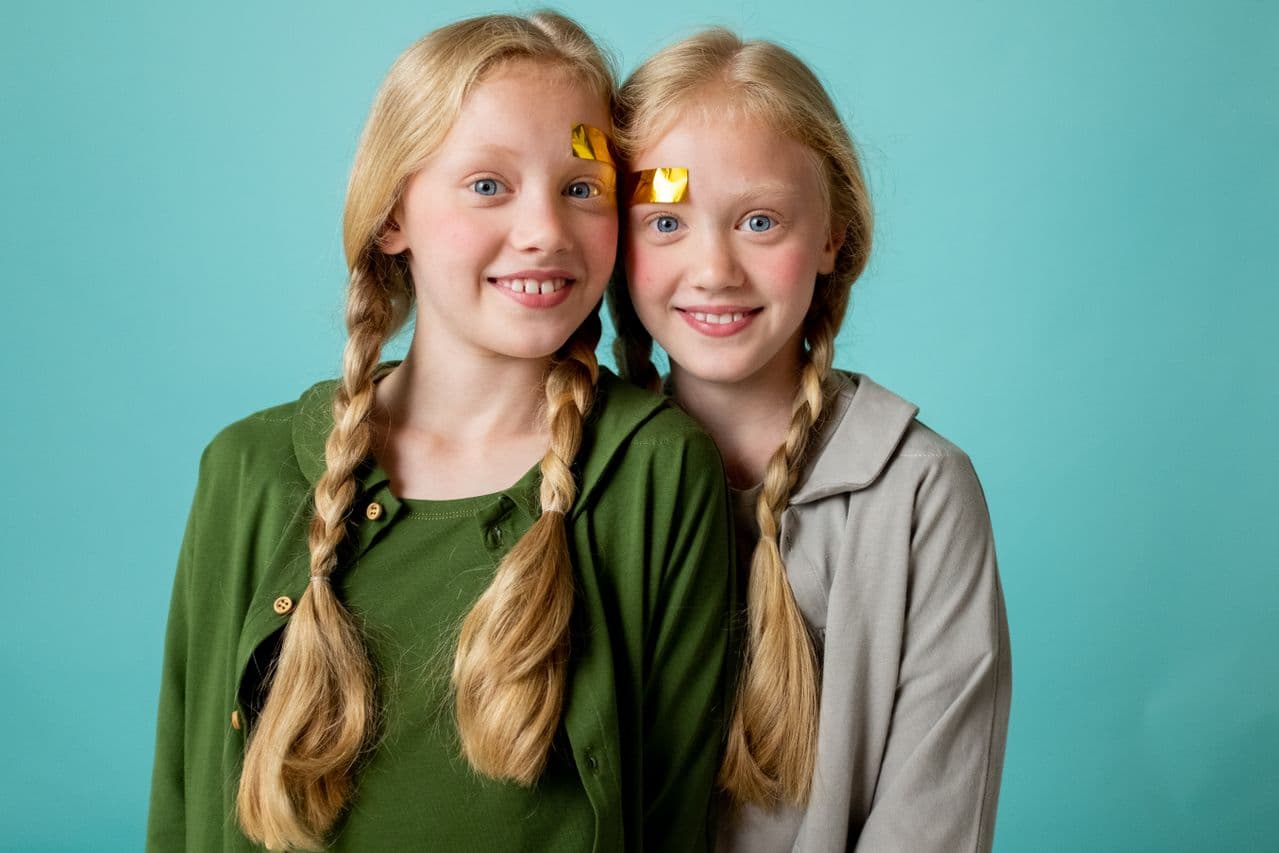
Being a twin creates a uniquely complex identity development process called identity interdependence, in which each twin's self-concept forms partly in reference to the other, producing challenges like rigid role assignment, comparison pressure, and individuation struggles across five distinct psychological stages, all of which licensed therapy can help adults recognize and resolve.
Have you ever felt like growing up as a twin shaped who you are in ways that are still hard to name? Your twin identity, the self built alongside another person from birth, is one of psychology's most layered structures, and understanding it can finally make sense of patterns you've carried your whole life.
Twin identity vs. individual identity: the core developmental tension
Growing up as a twin means developing two selves at once. There is the individual self you build through your own experiences, preferences, and choices. And then there is something else: a twin identity, a co-constructed sense of self that includes your co-twin as part of who you are. This is not simply closeness or affection. It is a psychological structure where your self-concept is partially built in reference to another person who shares your age, your home, and often your appearance.
For singletons (people who are not twins or multiples), identity development follows a relatively straightforward path. From early childhood, they differentiate themselves primarily from caregivers, gradually building a sense of “I” that is distinct from parents and family. Twins face a structurally different task. They must differentiate from caregivers and from a same-age peer who is moving through the exact same developmental milestones at the exact same time. That peer is not a sibling in the traditional sense. They are a mirror, a constant reference point, and a relational anchor all at once.
This creates what psychologists sometimes call identity interdependence: a feedback loop in which each twin’s self-concept is shaped, at least in part, by how they see themselves in relation to the other. If one twin is “the outgoing one,” the other may unconsciously settle into “the quiet one,” not because that label fits perfectly, but because the pairing demands contrast. These relational attachment styles form early and can quietly shape how each twin understands themselves for years. When that self-understanding leans too heavily on the co-twin as a reference point, it can leave the individual self feeling thin or uncertain, which is a known risk factor for low self-esteem.
None of this means twins are destined for identity struggles. Many people who grow up as twins integrate both identities with real success, carrying a strong sense of self alongside a meaningful shared bond. The developmental task is simply more complex, with more moving parts and more relational variables than most people ever have to navigate.
How twin relationships shape the developing self
Growing up with a twin means your sense of self forms inside a relationship unlike any other. From the very beginning, you share space, attention, and experience with someone who mirrors you in age, environment, and often appearance. That closeness shapes identity in ways that are deeply layered, offering real psychological gifts alongside some quiet complications.
A unique attachment architecture
Most children form their earliest emotional bonds vertically, meaning they attach upward to caregivers who provide safety and guidance. Twins do this too, but they also develop a lateral attachment bond with each other, a peer connection that forms simultaneously and carries its own emotional weight. This dual architecture means twins often have two primary sources of felt security from very early in life. That can be a profound advantage, but it also means the twin relationship itself becomes part of the foundation that identity is built on, not just a friendship, but a structural element of the self.
The built-in mirror
Having a same-age companion at every stage of development creates something researchers call a built-in mirror. You receive constant social feedback from someone who knows you intimately and shares your world completely. This can accelerate certain social skills and emotional attunement. At the same time, the reflection you get from your twin is never fully objective. Over time, seeing yourself through your twin’s eyes can quietly distort self-perception, making it harder to develop a clear, independent sense of who you are outside that relationship.
Language development adds another layer to this. Many twins develop cryptophasia, a private language or system of communication shortcuts that only they understand. These shared codes can deepen intimacy, but they also shape internal self-narrative in ways that are intertwined with another person from the start. The voice inside your head may carry echoes of a shared language before it ever becomes fully your own.
The paradox of security and constraint
The twin bond can function as a powerful emotional buffer. When the outside world feels overwhelming, having a twin nearby provides built-in comfort and co-regulation. This is a genuine strength. The complication is that this buffer can reduce the felt need to build independent coping strategies, because relief is always close at hand. When attachment disruptions do occur in twin relationships, the emotional consequences can be significant, touching on the same territory as childhood trauma in terms of how they shape a person’s ability to self-soothe and connect with others.
This is the central paradox of growing up as a matched set. The closeness that makes you feel most known and most secure is the same closeness that can make individuation feel like a kind of loss. Becoming more yourself can feel, at least in part, like moving away from someone you love.
The Twin Identity Development Model: a stage-by-stage framework from birth to adulthood
Twin identity does not form all at once. It builds, shifts, and renegotiates across five distinct developmental stages, each with its own psychological task, its own risk of going sideways, and its own version of a healthy outcome. Understanding where you are in this model, or where things may have gone off course, can bring real clarity to patterns you have carried for years.
Stage 1: Pre-Verbal Mirroring (Ages 0–3)
In the earliest years, the psychological task is forming basic attachment. For twins, this happens within a dyad, meaning each child must develop secure bonds with both a caregiver and a co-twin as two distinct relationships. The most common failure mode here is over-fusion, where caregivers, often overwhelmed or simply charmed by the novelty of twins, treat them as a single unit. Dressing them identically, referring to them as “the twins” rather than by name, and responding to their needs interchangeably can blur the earliest sense of “I” before it has a chance to form. The healthy outcome is two securely attached individuals who feel seen separately, even while sharing nearly everything.
Stage 2: Co-Identity Formation (Ages 3–7)
Between ages three and seven, twins begin noticing individual preferences, but they are still building a shared social identity together. The failure mode at this stage is rigid role assignment. Families and outsiders often settle into convenient labels: the bold one, the quiet one, the funny one, the serious one. When those roles harden, each twin starts performing a character rather than discovering a self. The healthy outcome is flexible role exploration, where both children feel free to be funny sometimes and serious other times, without one “owning” a trait permanently.
School-Age Differentiation and the Adolescent Identity Crisis (Ages 7–18)
Stage 3: School-Age Social Differentiation (Ages 7–12)
Once twins enter school, the psychological task shifts to navigating peer relationships independently. This is often the first time twins are genuinely expected to function in separate social contexts. The failure mode is social dependency, where twins struggle to join a group, make a friend, or handle conflict without the other present. The healthy outcome is developing separate friendship networks while keeping the twin bond intact, not instead of it.
Stage 4: The Adolescent Identity Crisis (Ages 12–18)
This is where twin identity tension peaks. Every adolescent wrestles with the question of who they are apart from their family, but twins face a layered version of that question: who am I apart from the person who has always been my mirror? The failure modes pull in opposite directions. Some twins rupture the bond prematurely, rejecting their co-twin as a way of asserting independence. Others refuse to individuate at all, staying enmeshed because separation feels like loss. Both extremes carry real psychological costs, including the kind of emotional dysregulation and depressive patterns associated with mood disorders when identity development stalls. The healthy outcome is a renegotiated closeness, one that makes room for two autonomous people without dismantling what they have shared.
Stage 5: Adult Re-Negotiation (Ages 18+)
Adulthood asks twins to do something genuinely new: consciously decide what their relationship means now. Independent careers, romantic partnerships, and sometimes different cities all require each twin to build a life that is not organized around the other. The failure modes here are guilt-laden distance, where one or both twins withdraw but carry chronic shame about it, and infantilized closeness, where the relationship never matures beyond its childhood form. The healthy outcome is a chosen adult bond, one that honors a shared history without treating it as a constraint. At this stage, the twin relationship becomes something you actively maintain rather than something that simply exists around you.
The five twin relationship archetypes and their identity outcomes
Not all twin relationships shape identity the same way. Decades of clinical observation point to five recurring relational patterns, each producing a distinct identity outcome. These archetypes give twins, their families, and clinicians a shared vocabulary for understanding what has happened, and what might still be possible.
The Fused Pair
Fused twins operate as a single social and psychological unit. They finish each other’s sentences, make decisions together by default, and struggle to articulate preferences that belong to only one of them. The identity outcome here is chronic difficulty with autonomous decision-making and a fragile sense of self when the pair is separated, whether by geography, a new relationship, or loss. When the bond is the identity, being apart can feel like disappearing. In more extreme presentations, this pattern can contribute to the kind of boundary and self-concept instability seen in some personality disorders.
The Divided Pair
Divided twins have carved up the available identity space between them: one is the creative one, the other is the athlete. This split often starts in childhood as a practical way to avoid direct competition, but it hardens over time. The identity outcome is a narrow self-concept that feels incomplete on its own terms. If the other twin crosses into “your” territory, the whole structure can feel threatened. Like Fused twins, Divided twins may develop rigid self-definitions that shade into personality disorder territory when those definitions are persistently defended against reality.
The Rival Pair
Rival twins are locked in ongoing comparison and competition. The relationship is the measuring stick, and every achievement is tallied relative to the co-twin. The identity outcome is a self-concept built primarily in opposition rather than from the inside out. Who you are becomes defined by who your twin is not, which means your sense of self is only as stable as the comparison holds.
The Balanced Pair
Balanced twins have negotiated overlapping but distinct identities with what researchers call permeable boundaries, meaning each person can share traits, interests, and even failures without feeling like the other is encroaching. The identity outcome is a secure individual self-concept that coexists comfortably with a valued twin identity. Being a twin feels like an addition, not a constraint.
The Estranged Pair
Estranged twins have distanced or cut off contact, often after a failed individuation attempt or an unresolved rupture. The identity outcome can feel like an amputation. The co-twin shaped so much of who you became that their absence leaves identity questions open and unresolved, often accompanied by grief and guilt that is hard to explain to people who have never had a twin.
These patterns are not permanent
It matters to name these archetypes without treating them as fixed diagnoses. Twins move between patterns across developmental stages and major life transitions: leaving home, losing a parent, becoming a parent, or simply growing older. A Fused Pair in adolescence can become a Balanced Pair in adulthood. A Rival Pair can become Estranged and then, with work, something closer to Balanced. The pattern you recognize today is a starting point, not a verdict.
If you recognize your own twin relationship in one of these patterns and want to explore what it means for your sense of self, you can connect with a licensed therapist through ReachLink. It is free to start, with no commitment required.
The individuation challenge: why separating when you were born together is uniquely hard
Individuation is the psychological process of developing a self-concept that belongs to you alone. For singletons, this process is gradual and largely unremarkable. For twins, it carries a weight that is structurally different from the start. Individuation does not mean rejecting your twin or dismantling the bond you share. It means building an inner life that can stand on its own, even when your twin is standing right beside you.
The difficulty is that for twins, becoming a distinct person can feel indistinguishable from betrayal. When your closest companion has been present since before birth, difference can feel like abandonment. Research on separation-individuation in adolescent twins supports this, showing that the twin relationship itself can complicate the normal developmental push toward autonomy. Wanting your own friends, your own interests, or your own emotional world can trigger guilt that is genuinely hard to explain to someone who has never shared an identity.
Some twins describe what might be called a phantom limb effect when they begin to individuate. They feel incomplete, unmoored, or quietly guilty, as if something essential has been removed. Studies on separation and relational shifts among adult twins document the emotional and communicative disruption that emerges when twins begin to carve out separate lives, and these responses closely mirror the symptoms associated with separation anxiety. The grief is real, even when the separation is healthy.
Parental and social responses shape this process more than most people realize. Parents who have built their identity around raising twins may feel unsettled when the pair diverges. They may, without intending to, reward sameness and treat the twin who individuates first as a problem to be managed. That unspoken pressure can stall development for both children.
Failed individuation is also not always visible. Some twins appear independent on the surface, maintaining separate careers, homes, and social lives, while internally organizing their self-worth almost entirely around the twin relationship. The separation looks complete. The psychological work has not yet begun.
Comparison pressure within the twin pair: when your closest relationship becomes your measuring stick
Sibling rivalry is common, but twin comparison operates on a different level entirely. With ordinary siblings, age gaps create natural separation: different grades, different friend groups, different developmental stages. Twins do not have that buffer. You share the same classroom, the same coach, the same birthday party, often the same social circle. When differences emerge between you and your twin, they feel less like natural variation and more like a verdict.
That verdict rarely stays external. When a teacher praises one twin’s math ability or a coach consistently starts one over the other, those observations do not just sting in the moment. Over time, they become part of how each twin privately evaluates themselves. The external ranking gets absorbed into an internal framework: if my twin is the athletic one, what does that make me?
Many twins develop a quiet, often unspoken solution called domain splitting. One becomes the artistic twin, the other becomes the academic twin. One is the social one, the other the serious one. This arrangement reduces direct competition, but it comes with a real cost. When your identity is partly built around not overlapping with your twin, you may avoid entire areas of interest simply because they feel claimed. That is not freedom of self-expression. That is self-definition by subtraction.
Comparison pressure tends to spike at predictable transition points: standardized test scores, puberty timing, who starts dating first, college acceptance letters, early career milestones. Each of these moments reopens the same fundamental question twins have been quietly asking since childhood.
For identical twins, the pressure carries an extra dimension. When you look alike, any difference in weight, skin, or physical development becomes visible and public in a way that fraternal twins rarely experience. The body itself becomes another measuring stick, making the comparison feel even more inescapable.
The outside world’s role: how society constructs twin identity from the outside in
Twin identity does not form in a vacuum. Long before a twin child can articulate who they are, the world around them has already started answering that question. Strangers stop parents in grocery stores to marvel at matching faces. Teachers debate whether to separate twins in the classroom. Grandparents assign nicknames that stick for decades. Each of these moments sends a quiet but consistent message: you are a pair first, and a person second.
The mechanism here matters. When the external world repeatedly treats you as half of a unit, your self-concept begins to organize itself around that framework. Research on parent and child negotiations of twin identity shows that parental framing and the social presentation of sameness play a direct role in how twins come to understand themselves. A parent who always introduces their children together, or who dresses them identically, is not just making a practical choice. They are shaping an internal narrative.
This dynamic produces what some researchers call twin question fatigue: the exhausting, repetitive experience of being asked “which one are you?” or “can you feel what your twin feels?” Over time, twins learn to perform twinship for an audience, adjusting how they present themselves based on what people seem to expect. That performance can quietly crowd out a more personal sense of self.
Well-intentioned choices compound this effect. Matching outfits, shared birthday parties, and the same classroom all feel celebratory on the surface. But each one reinforces fusion and can delay the individuation process that psychologists consider essential to healthy development.
Cultural context shapes this too. Some cultures frame twinship as a spiritual distinction or a social honor, while others emphasize the uniqueness of each twin as individuals. Where a culture lands on that spectrum influences how much permission twins are given, from birth, to simply be themselves.
What You Are Carrying Makes Complete Sense
Growing up as a matched set means your sense of self was shaped inside one of the most complex relational structures a person can inhabit. The psychology of twin relationships and what they do to identity is not a simple story, and if parts of it felt uncomfortably familiar, that recognition is worth sitting with. Whether you see yourself in the closeness, the comparison, the guilt of pulling away, or the quiet ache of estrangement, those experiences point to something real about who you became and who you are still becoming.
You do not have to sort through this alone. If you would like to explore what your twin relationship has meant for your sense of self, you can connect with a licensed therapist through ReachLink at your own pace, free to begin, with no commitment required.
FAQ
-
How does growing up as a twin actually affect your sense of who you are?
Growing up as a twin often means your identity forms alongside - and sometimes in contrast to - another person who shares your face, your home, and your earliest experiences. Twins frequently wrestle with questions like "Who am I without my twin?" or "Am I the funny one, the smart one, or just the other one?" This dynamic can lead to either a deeply merged sense of self or an overcorrected need to be entirely different from your twin. The psychological term for this is identity enmeshment, and it can shape everything from how you make decisions to how you form relationships outside of the twin bond. Recognizing this pattern is often the first step toward building a stronger, independent sense of self.
-
Can therapy actually help me figure out who I am outside of being a twin?
Yes, therapy can be genuinely helpful for twins working through identity questions, and many people find it to be a real turning point. A licensed therapist can use approaches like Cognitive Behavioral Therapy (CBT) to help you identify thought patterns tied to your twin dynamic, or talk therapy to explore how your early relationship shaped your self-concept. The process is not about distancing yourself from your twin - it is about understanding which parts of you are authentically yours versus shaped by comparison or contrast. Most people begin to notice meaningful shifts within the first few months of consistent sessions. Finding a therapist who understands family systems and childhood development can make a significant difference.
-
What does it feel like to grow up being treated as a matched set, and does that cause lasting damage?
Being treated as a matched set - dressed alike, referred to as "the twins" instead of by name, or constantly compared - can quietly chip away at a person's sense of individuality over time. It doesn't always feel harmful in the moment, especially in childhood when it might feel normal or even special. But many twins report feeling invisible as individuals, unsure of their own preferences, or anxious when separated from their twin in adulthood. This isn't "damage" in a clinical sense, but it can create patterns of self-doubt, people-pleasing, or difficulty asserting your own needs. These patterns are very workable in therapy, and many twins find that simply naming the dynamic out loud for the first time brings immediate relief.
-
I think my twin dynamic has really messed with my identity - how do I find a therapist who actually gets it?
If you feel like your twin relationship has shaped your identity in ways you want to explore, working with a licensed therapist who understands family systems and childhood development is a solid starting point. ReachLink connects you with licensed therapists through human care coordinators - real people who take the time to understand your situation - rather than an algorithm that matches you based on a quick quiz. You can begin with a free assessment that helps the care team understand what you are looking for, so you are more likely to be paired with someone who is a genuine fit. From there, your therapist can work with you using approaches like talk therapy, CBT, or family therapy depending on what feels right. Taking that first step does not have to feel overwhelming - the process is designed to meet you where you are.
-
Does the twin identity stuff mostly affect you as a kid, or can it still show up in your adult life?
Twin identity dynamics don't just disappear when you grow up - they often resurface in adulthood in less obvious ways. You might notice it when you struggle to make decisions independently, feel anxious about being perceived as an individual in new social or professional settings, or experience complicated emotions when your twin hits major milestones before you. Adulthood can also bring new challenges if you and your twin move to different cities, enter different life stages, or drift apart - transitions that can feel surprisingly destabilizing. A therapist can help you untangle which adult struggles have roots in your twin experience and build a clearer, more grounded sense of self that belongs entirely to you.