Sports superstition rituals reveal a deeper need for control over uncertain outcomes, serving as anxiety-regulation tools that boost self-efficacy until interruption causes real distress or the rules keep multiplying, a shift licensed therapists address through cognitive behavioral therapy, exposure-based techniques, and acceptance and commitment therapy.
Why does a pitcher tap his cap before every single pitch, even though it changes nothing? Sports superstition rituals reveal something deeper about anxiety and the need for control when outcomes feel out of reach. Here's what these habits are really protecting, and when they quietly cross into something else.
Sports superstition rituals, from lucky socks to a fixed warm-up order, are rarely about luck. They tend to show up exactly where an outcome feels least controllable, and they can say a lot about where a person’s anxiety has settled. This guide looks at what these rituals do, when they help, and when control-seeking starts to look more like compulsion.
Why uncertainty produces rituals
Competitive sport sets up a strange condition. The stakes are high, the preparation is real, and yet the outcome still depends on things no single person controls: a gust of wind, a bad bounce, an opponent’s best day. That gap between effort and outcome is exactly where ritual behavior tends to show up. A pitcher who cannot control whether the batter connects will still tap his cap, tug his sleeve, go through the same sequence pitch after pitch.
That sequence is doing something specific. Psychologists call it the illusion of control: the sense that an action is influencing an outcome it has no actual causal link to. A lucky sock cannot change a scoreboard. A fixed warm-up sequence cannot change an opponent’s skill. But the brain registers the action as if it narrows the gap anyway, and that registration is often enough to lower the felt stakes of the moment.
Notice where these rituals cluster. It is rarely the whole game. It is the free throw with the crowd quiet, the serve toss, the walk to the plate, the final minute before the gun. These are the moments with the least room for correction and the most time to think, which makes them the moments where anxiety about an uncontrollable outcome is sharpest.
Amanda Martin, PhD, LMFT-S, LPC describes how this works more broadly: “Oftentimes our nervous system and our mind will focus in on the fear of what could go wrong to try to create a plan to prevent it. But our focusing in on that fear state, we train the fear state to stay, which puts us in more of an anxious state.”
What the ritual is actually protecting is self-efficacy: the athlete’s belief that they can execute the shot, the swing, the serve they are about to attempt. Threaten that belief and performance often follows it down. This is also why the same pattern of control-seeking shows up far outside a stadium, and why it sits on a spectrum that, at its more rigid end, overlaps with patterns studied in obsessive compulsive disorder. A ritual is rarely irrational. It is a fairly accurate map of where a person’s anxiety has settled.
What are some famous superstitions in sports?
Famous athlete superstitions tend to fall into a few categories: equipment, clothing, food, numbers, and fixed sequences of movement before a play. Michael Jordan wore his University of North Carolina shorts under his NBA uniform for his entire career. Serena Williams has tied her shoelaces a specific way and bounced the ball a set number of times before serving. Wade Boggs ate chicken before every single game and took batting practice at the exact same time for years. Rafael Nadal lines up his water bottles in a precise arrangement courtside, labels facing the same direction.
Many of these pre-game rituals started as pure coincidence. An athlete does something unremarkable on the day of a great performance, then repeats it the next game just in case, and the behavior hardens into a rule they no longer question. The original link between the action and the outcome was never real. What survives is the habit, now treated as load-bearing.
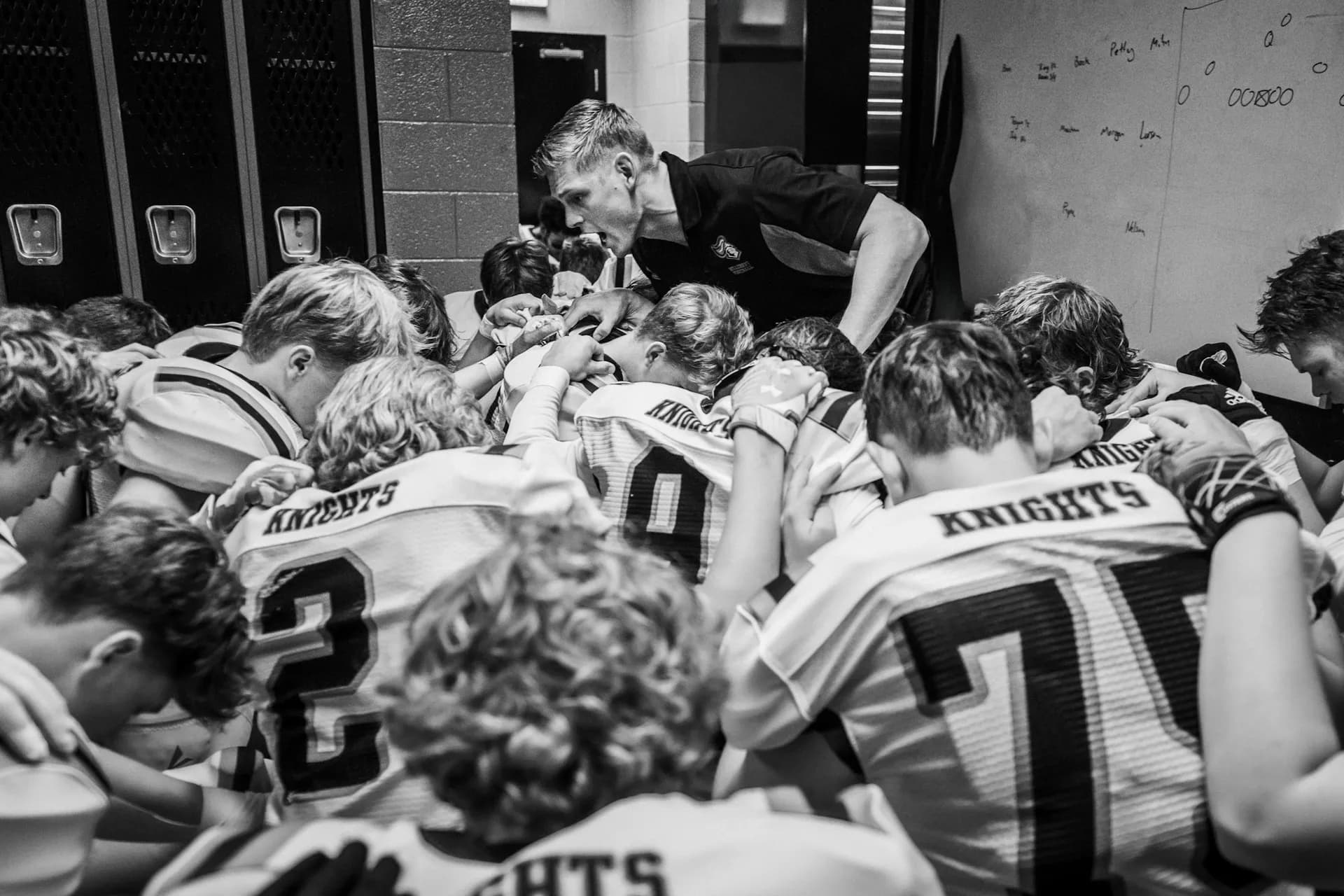
Team rituals work a little differently than individual ones. A pre-game chant, a locker room routine, or a chosen entrance order does more than calm any one player. It binds a group together before they face something with a shared, uncertain outcome.
They rarely show up mid-performance, when an athlete is already in motion and absorbed in the task. They show up right before the whistle, the serve, the first pitch: the exact moment when the outcome is least in anyone’s hands.
Does superstition actually help performance?
A lucky pair of socks cannot change the weather, slow down an opposing pitcher, or make a ball land in. Nobody studying this seriously argues that it can. The real question behind does superstition improve performance is narrower and more useful: what does the ritual do to the person doing it?
A study of superstitious rituals among elite athletes looked at exactly that, examining confidence, perceived control, persistence, and attention rather than outcomes on the scoreboard. That distinction matters. A ritual cannot touch the object of the game, but it can change how steady a competitor feels walking into it.
If a ritual helps, the path runs through the athlete’s internal state, not through any effect on luck itself. That is also why the same routine can settle one competitor and do absolutely nothing for the person next to them. One athlete ties their shoes a certain way and feels the noise in their head quiet down. Another does the identical thing and notices no shift at all, because the ritual was never the active ingredient, their own belief in it was.
This is also why you should be skeptical of any claim that a lucky object or routine produces a measurable performance edge on its own. The findings in this area are mixed and depend heavily on context, the individual, and what the ritual means to them personally. For someone managing performance anxiety, a ritual might lower the volume on racing thoughts before a competition. For someone else, it might do nothing at all.
The honest summary sits in the middle: a ritual is a psychological tool, not a mechanism acting on the world. Its value depends entirely on how it is held, and by whom.
What a pre-game ritual is actually doing for you
A pre-game ritual is not about luck. It gives the body and mind a job to do during the stretch of time when there is nothing left to prepare and the event has not yet started. That gap is often where sports routine anxiety builds, because an idle mind defaults to rehearsing worst cases. A repeatable sequence fills that space with something concrete instead.
Why a repeatable sequence settles the waiting period
The waiting period before competition is usually when anxious thinking peaks, not during the event itself. Once play starts, attention has somewhere to go. Before it starts, a fixed sequence of actions gives attention the same kind of place to land, so the mind has a task instead of a loop. This is also why pre-game rituals show up across so many sports regardless of the activity itself: the content matters less than the fact that it is repeatable and already decided in advance.
Process-based routines versus object-dependent ones
The most durable rituals are light on content and heavy on process. A breathing pace, a fixed order of warm-up movements, a cue word repeated the same way each time, or a consistent physical pressure like gripping a towel or feeling the weight of a bat all do the same job: they give the body a predictable set of cues no matter the venue, the crowd, or the opponent. This overlaps with what mindfulness-based stress reduction trains more broadly, anchoring attention to something physical and present rather than to the outcome ahead. Amanda Martin, PhD, LMFT-S, LPC works from a model in which examining an athlete’s existing rituals and preparation patterns is used to strengthen their connection to a flow state, rather than to rehearse everything that could go wrong. In her view, the value sits in what the routine does to a performer’s internal state, not in any claim that the ritual itself produces the result on the scoreboard.
Keeping a routine portable so it can survive interruption
A routine that depends on one object, one song, or one seat is fragile by design. Equipment goes missing, songs cut out, seats get taken. When that happens, the broken ritual can become the story of the day instead of a minor inconvenience, which defeats the purpose it was built for. A portable version travels in the performer’s own actions: a breath count, a phrase, a grip, something no venue can take away.
A simple test tells you whether a routine is working for you or running your nerves. Ask whether you could still compete today if the routine were interrupted right now, without that interruption becoming the center of your attention. If the answer is yes, the ritual is doing its job as a tool. If the answer is no, it has started to hold more weight than it can carry.
When a ritual stops helping and starts running the show
Most pre-game rituals never cause a problem. The difference between a ritual and a compulsion is rarely about what the behavior looks like from the outside. Tying your left shoe before your right, or eating the same meal before every game, can sit anywhere on a wide range of normal. What separates ritual vs compulsion is what happens when the behavior gets blocked.
What happens when the ritual is interrupted
Skip the ritual and watch what follows. If what you feel is mild irritation that fades once the game starts, that is ordinary preference. If what follows is real anxiety that does not fade, one that follows you onto the field and sits there through the first quarter, that is a different thing. Kristen McLoud, LCSW describes intrusive thoughts as automatic and unprompted: a thought that pops in, unsettling and uninvited, triggered by a situation the person is in. In the context of a broken ritual, that situation is the interruption itself, and the discomfort it produces is the first marker worth paying attention to.
When the rules keep multiplying
A second marker shows up over time rather than in a single moment. The ritual that worked last season needs an extra step this season. One lucky sock becomes a sequence: socks, then laces, then a specific hallway, then a specific song. Trying to skip a step or talk yourself out of it tends to make the urge louder, not quieter, which is part of why the list of rules tends to grow instead of settling.
A third marker is scale. A ritual that takes a few minutes before warmups is one thing. A routine that starts eating into sleep, dictating which hotel room you can accept on a road trip, or deciding what you eat for days before a game is another. When the behavior starts shaping decisions that have nothing to do with the actual performance, it has outgrown its original job.
The shift from preference to obligation
The clearest marker is often the smallest one: the language. “I like to” describes a preference. “I have to” or “I can’t not” describes an obligation, and that shift in wording tends to show up before a person is ready to call it a problem. The motivation changes too, from doing something because it helps you settle, to doing it because something bad will happen if you skip it.