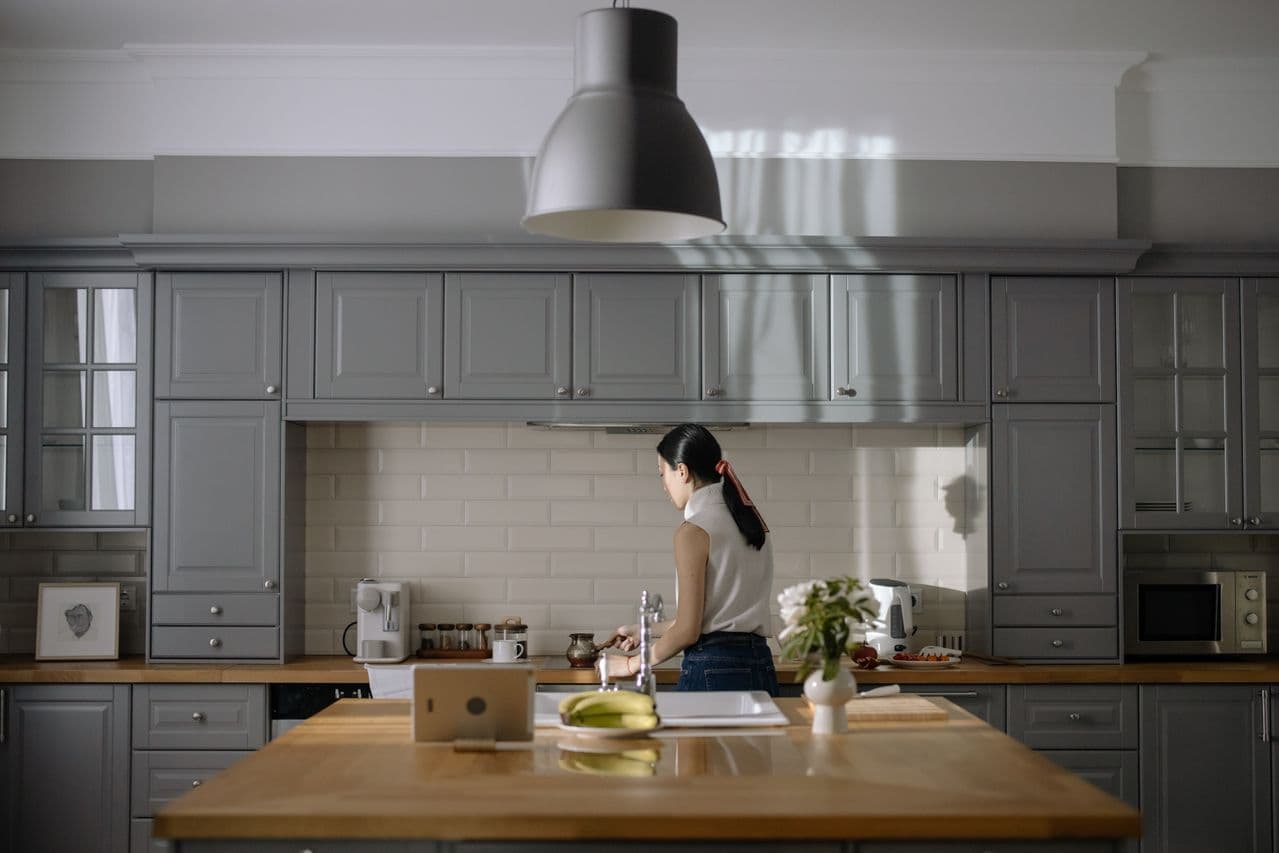
Needing every room to look a certain way before you can relax often reflects anxiety-driven control-seeking rather than a cleanliness preference, since the brain treats a tidy house as proof of safety or competence, and evidence-based approaches like cognitive behavioral therapy and acceptance and commitment therapy help loosen that cycle.
What if the unmade bed behind a closed door, one you can't even see, is quietly keeping you from relaxing on your own couch? This kind of anxiety isn't about cleanliness at all. It's about control, safety, and a standard that keeps moving no matter how much you tidy.
If you can’t relax until the house is clean, and not just tidy but exactly right in every room, the standard is often less about cleanliness than about what order is doing for your nervous system. Rest can start to feel conditional, allowed only after the whole house passes a check. This article looks at where that pattern can come from, when it may point to something clinical, and what can help you rest in a room that is not finished.
The difference between liking a tidy room and needing every room to be right
Most people who prefer things tidy experience that preference locally. The room they are sitting in is the room that matters. A messy closet down the hall, a pile of mail in the office, a kid’s room with the door shut: none of it registers, because attention stays where the body is.
The pattern this article is about works differently. An unmade bed two rooms away, behind a closed door, can still keep a person from sitting down on the couch. Nothing about the messy room is visible or in use. It still counts, somehow, against the whole house.
That is the core distinction worth naming, because it explains why some people cannot relax until every room in the house looks a certain way. Rest stops being something the body does when it is tired. It becomes conditional, something allowed only after a standard has been met everywhere, not just where you happen to be. If you have ever searched for why you can’t relax until the house is clean and felt like none of the usual advice about one room at a time quite applies, this is likely why.
The standard driving this is rarely about hygiene. A room can be fully clean and still feel wrong if a cushion is out of place or a cord is visible. A dusty room with everything in its spot can feel more settled than a spotless one that looks disordered. The requirement is visual and specific: a whole-house standard, not a cleanliness one.
Many people describe a final walk-through before they can sit down, checking each room in sequence, and starting over if one thing catches their eye on the way. That loop is worth naming directly: a conditional rest cycle, where the condition that has to be met keeps moving, because a lived-in house generates new disorder every day. The walk-through never really finishes. It just gets interrupted by whoever lives there.
This cycle often connects to something closer to anxiety than to taste. The order itself is not the point. What the order is doing, and what it is standing in for, is a separate question worth sitting with.
What order actually does for a stressed nervous system
Before getting into why this matters so much to some people and so little to others, it helps to look at what a disordered room actually does to a body and a brain. The effects show up in three places: stress levels, the ability to concentrate, and sleep. None of this requires a theory about personality or control. It shows up in how people feel by the end of the day.
Clutter, stress and the end-of-day crash
A home that looks unfinished, with piles of possessions and nowhere clear to land, has been linked to a measurable drop in well-being. Research on possession clutter and subjective well-being found that an overabundance of belongings disrupts a person’s sense of home and crowds out the things that matter more, including relationships and work. The same research describes clutter as something that keeps demanding attention until it pushes other priorities out of the way. That pattern, a room that never stops asking for something, lines up with the familiar feeling of stress building across the day and peaking by evening, which is also where stress management support becomes relevant for people who notice this pattern repeating.
Why a messy room makes it harder to think
Visual clutter and stress are connected partly through attention. A room full of unsorted objects gives the eyes too many places to land, and each one pulls a small amount of focus away from whatever you are trying to do. People often describe this as feeling scattered without being able to say why. Part of the answer is that every object sitting out of place can register as an unfinished task. A cluttered room becomes something closer to a to-do list that the eyes keep re-reading, one item at a time, without ever reaching the end.
What disorder in the bedroom does to sleep
A disordered bedroom has been associated with worse sleep quality and more difficulty falling asleep, which then carries into the next day as irritability and a shorter fuse. Clutter and sleep quality are linked closely enough that the state of a bedroom at night can shape how rested a person feels by morning. Anyone noticing a consistent pattern of poor sleep tied to an unsettled space may find it useful to look at sleep disorders as a starting point for understanding what is happening.
Tidying itself can genuinely calm a stressed system. The repetitive motion, the visible progress, and the shrinking of a chaotic space into something finished all give the body something concrete to settle around. The relief that follows is real. It just tends not to last, because it is tied to an outcome, a finished room, that does not stay finished for long.
Why order feels like control, and what it is standing in for
A house is one of the few places a person gets to fully decide how things are. You cannot control the economy, your boss’s mood, or whether a biopsy comes back clean, but you can control where the mugs go. That gap, between what you can manage in the wider world and what you can manage at home, is often where the need for order anxiety takes root. The home becomes the one domain where effort reliably produces the result you wanted.
This is why the pull toward an exactly ordered house tends to sharpen during periods that have nothing to do with housekeeping. A layoff, a parent’s diagnosis, a move to a new city: these are the moments when people describe suddenly needing the cabinets organized or the closet redone. The house is not the actual problem. It is the part of life still willing to cooperate.
Why can’t I relax until my house is clean?
Often, you can’t relax until the house is clean because the clean house is functioning as proof, not just as a clean house. A tidy kitchen becomes evidence that you are competent, that you are keeping up, that nothing in your life is actually slipping. For some people the standard being measured against was never their own. They are picturing a house that would pass an inspection set by a parent, a mother-in-law, or a version of themselves they are still trying to prove wrong, and that imagined inspector never quite signs off, which is why the relief never fully lands.
The dread of an unannounced visitor is part of the same pattern. It is rarely really about what a guest might think of the throw pillows. It is about being caught in a state that confirms the fear underneath, that you are not actually on top of things.
Two origin stories come up often. Some people grew up in a house where mess carried real consequences, a parent’s anger, a sense that disorder meant danger, so an orderly space now reads to their body as safe. Others grew up in a genuinely chaotic house and have built an adult life that is the deliberate opposite of it, as a form of proof to themselves that they are not recreating what they came from. Tidiness and control get linked early in both cases, just from opposite directions.
What tidying produces afterward is real relief, but narrow. It settles the immediate discomfort without touching whatever triggered it, which is why the urge returns. Amanda Martin, PhD, LMFT-S, LPC describes how this kind of anxiety management tends to reinforce itself: “Oftentimes our nervous system and our mind will focus in on the fear of what could go wrong to try to create a plan to prevent it. But our focusing in on that fear state, we train the fear state to stay, which puts us in more of an anxious state.” Fixing the room fixes the room. It does not fix the fear, so the fear comes looking for the next room to fix. When that pattern starts to resemble something more rigid, it can brush up against territory closer to obsessive compulsive disorder, which works differently and is worth naming on its own terms.
Why some people and not others
The same room can hand two people completely different experiences. One walks in and feels nothing in particular. The other registers every item out of place before they’ve set down their keys. That gap is not a difference in willpower or taste. It comes from differences in sensory wiring, neurotype, temperament, household role, and what else is happening in a person’s life at the time.
Sensory sensitivity and how much a room registers
Sensory processing sensitivity varies a lot from person to person, and people high in it take in visual information that other people’s brains filter out automatically. A stack of mail, a cushion out of line, a cord left on the counter: these register as active input rather than background noise. For someone with high sensory sensitivity, clutter is not a minor irritation sitting in the corner of the room. It is closer to a low hum that does not turn off until the room is addressed.
Neurodivergence and the need for external structure
For some autistic adults and adults with ADHD, a fixed external order does a job that an unreliable internal one cannot. When objects have one place and stay there, the environment supplies a kind of consistency the mind cannot always supply on its own, and a disruption to that order can feel genuinely disorienting rather than simply annoying. ADHD can also produce what looks like the opposite pattern: long stretches where a room drifts into disorder, followed by an exhausting all-or-nothing reset. A study on compulsive hoarding and ADHD found that people who hoard reported more symptoms of inattention and hyperactivity than controls, along with greater comfort and a sense of protection drawn from their possessions. Both the rigid-order pattern and the ADHD and messy house cycle can show up in the same person, sometimes in the same week.
Temperament plays a role too. People higher in conscientiousness tend to tolerate less unfinished business sitting in their field of vision, so an unmade bed or an open cabinet door pulls at their attention until it’s closed.
Who ends up carrying the household standard
Someone in every shared home tends to become the person the house’s appearance falls to, whether or not they’re the one who set the standard in the first place. That role often lands along predictable lines of gender or caregiving responsibility rather than preference. Anxiety and depression pull in opposite directions here: anxiety can raise the bar for what counts as acceptable, while depression can remove the energy to meet any bar at all. Life stage adds another layer, since small children, caregiving duties, or sharing space with roommates can make a whole-house standard nearly impossible to maintain no matter how much someone wants it kept.
When a preference for order becomes something clinical
A strong preference for order costs you time. A clinical pattern costs something more: function, relationships, sleep, or the ability to leave the house on schedule. That distinction matters more than the behavior itself. Two people can straighten the same shelf for completely different reasons, and only one of them is describing a diagnosable pattern.
What is messy house syndrome?
Messy house syndrome is not a clinical diagnosis. It is an informal label people use for a home that has become unmanageable, where clutter or disorder has outpaced a person’s ability to keep up with it. Sometimes this connects to depression or burnout, where the energy needed for upkeep simply is not there. Sometimes it overlaps with hoarding disorder, which is a distinct, diagnosable condition with its own criteria. The label describes a situation, not a cause, so it is worth asking what is underneath it rather than treating the label as an answer.
Ordering and ‘just right’ patterns in OCD
Obsessive-compulsive disorder involving symmetry, ordering, or a ‘just right’ feeling is driven by distress and a compulsion to neutralize it, not by enjoying a tidy room. A crooked picture frame does not register as a minor annoyance. It registers as wrong in a way that produces real anxiety until it is corrected. This is different from obsessive-compulsive personality traits, where a rigid standard is experienced as correct rather than intrusive. That difference is part of why personality-level rigidity can go unexamined for years: it does not feel like a symptom to the person living it. Generalized anxiety can also express itself through the house, worrying about dishes or clutter as one more thing to manage, without any ordering diagnosis being relevant at all.