ReachLink is now hiring licensed therapists. Apply to join the current cohort before October 31. Apply now →

Why Climate Anxiety Turns Into Activism or Avoidance

AnxietyOctober 28, 202620 min read
Why Climate Anxiety Turns Into Activism or Avoidance

Climate anxiety turns into activism or avoidance depending on a person's sense of self-efficacy, emotional capacity, and social support, with action more likely when people believe their efforts matter and avoidance more likely when distress feels unmanageable, a pattern licensed therapists can help identify through evidence-based approaches like acceptance and commitment therapy.

Why do two people facing the same climate headlines end up in completely different places, one organizing a rally, the other unable to open the news app? Climate anxiety doesn't follow logic, it follows what each person's mind decides it can survive. Here's what that split really reveals.

Climate anxiety tends to move people in one of two directions: toward doing something about the threat, or away from thinking about it at all. Which way someone goes has less to do with how much they care than with their sense of agency, how much they are already carrying, and the people around them. This article looks at both paths, when each stops helping, and how to cope without swinging to either extreme.

Why do some people cope with climate anxiety through activism and others through avoidance?

Both responses are attempts to manage the same unbearable feeling. Climate anxiety has to go somewhere, and it tends to move in one of two directions: toward doing something about the threat, or away from thinking about it at all. Why some people cope with climate anxiety through activism and others through avoidance comes down to a handful of overlapping factors: whether a person believes their action can change anything, how much distress they already have room to carry, and what the people closest to them treat as normal. None of this is about character. It is about what resources and beliefs a person is working with when the feeling shows up.

What is the difference between activism and avoidance in coping with climate anxiety?

The difference is not the size of the fear, it is what the person does with it. A study on climate anxiety and self-efficacy found that the same anxious thoughts can push a person toward pro-environmental behavior or toward what researchers call eco-paralysis, a kind of freeze response, depending on how much general self-efficacy that person has. Self-efficacy here means a basic sense that your actions can produce results. When that sense is intact, anxious energy tends to convert into action. When it has been worn down, the same energy tends to convert into looking away, because looking away is the only move that still feels available.

Perceived agency is often the strongest divider of the two. Someone who believes their vote, their choices, or their advocacy might actually shift an outcome has somewhere to put the distress. Someone who has concluded that nothing they do will matter is left holding the feeling with no outlet, and avoidance becomes the more bearable option. Research on collective efficacy and environmental behavior found that people’s sense of whether others are also acting, not just whether they personally can act, shapes whether they engage or disengage.

Capacity matters just as much as belief. A person already managing financial strain, a caregiving load, illness, or grief has less room to take on an open-ended, planet-sized threat, regardless of how much they believe action could help. Proximity changes the equation too: someone who has lived through a flood, a wildfire, or a heat event tends to experience the threat differently than someone who mostly encounters it through news and social feeds. Social context does a lot of the work here as well. Having even one person nearby who treats the problem as something you can act on makes action feel possible, while isolation tends to leave avoidance as the only move that feels workable. Identity plays a part too, since someone who already thinks of themselves as an organizer or an outspoken person has a ready-made channel for the feeling that a more private person does not.

Both responses can help in the short term, and both can turn into something costly over time, which is a separate question worth sitting with on its own.

What climate anxiety is, and what it feels like

Climate anxiety, sometimes called eco-anxiety, describes persistent worry, dread, or grief about environmental deterioration and what it means for the future. The psychology of climate anxiety frames it as a response that ranges from mild stress to more severe distress, and treats it as a recognized form of psychological distress rather than a standalone diagnosable disorder. A few related terms show up often in conversations about this topic. Eco-grief refers to mourning a lost or changing landscape, species, or way of life. Solastalgia describes the homesickness you can feel while still living in the place you love, as it changes around you. Climate doom is the sense that catastrophe is inevitable and nothing can be done, and climate indifference is the opposite pull, a flattening out where the topic stops registering at all.

Common signs and symptoms of climate anxiety

Day to day, climate anxiety often shows up as intrusive thoughts about the future, trouble sleeping after reading the news, or a sinking feeling triggered by weather that seems wrong for the season. Some people notice trouble concentrating, irritability, or guilt about ordinary choices like driving or buying something new. A common thread is the sense that people around you are not taking the problem seriously, which can make the worry feel more isolating. Physically, it can register as tightness in the chest or stomach when the subject comes up, restlessness, or a fatigue that does not lift with sleep. These patterns overlap with general anxiety symptoms, though climate anxiety is distinct in one way: the feared outcome is real and shared rather than distorted, which is part of why simple reassurance tends to fall flat.

Who is most affected by climate anxiety

At-risk groups include children and young people, people whose homes or livelihoods depend on land, water, or predictable weather, and those living through extreme heat, fire, flood, or drought. The psychology of climate anxiety also names older adults, people with existing mental illness, and lower socioeconomic groups as disproportionately affected. People working in climate science or environmental fields, and people who have been displaced, often carry a heavier load as well. Eco-emotions and psychoterratic syndromes notes that these effects arrive both directly, through extreme weather, and indirectly, through disruption to health, income, and daily routines.

When worry has tipped into something that needs attention

A useful marker is whether the distress stays proportionate or starts interfering with sleep, work, relationships, or basic functioning. The psychology of climate anxiety distinguishes adaptive anxiety, a healthy response to a real threat, from forms that tip into something closer to depression or clinical anxiety. The emphasis is on supporting the emotion rather than eliminating it. If the worry has started crowding out ordinary functioning, that shift matters more than the worry’s intensity alone.

When avoidance stops being protective

Avoidance earns its place for a reason. It works, fast and reliably, which is exactly why it is hard to flag as a problem while it is happening. On why avoidance takes hold so quickly, Jenn Mejia, LCSW says: “And that’s why avoidance is the number one tool that most people who’ve been through a traumatic experience use. It’s a whole, and it’s a very effective tool until it’s not, you know, if I don’t have to think about it, it doesn’t have to exist. I don’t have to feel it. The downside though, is you cannot control what or when a trigger is gonna hit. So when it does, it does.” Climate avoidance works on the same logic. It removes an intolerable load before you have to carry it.

What climate avoidance actually looks like

It rarely looks like outright denial. More often it is news avoidance: skipping headlines, muting certain accounts, closing a tab before the climate section loads. It can show up as changing the subject when a dinner conversation turns to wildfires or flooding, or as humor that deflects, the joke about buying beachfront property “while it’s still underwater-adjacent.” Performative fatalism does similar work: declaring “we’re already done for” sounds like despair but functions as an exit from the conversation. Quietly dropping out of groups or conversations you used to join is often the clearest sign, because it happens gradually enough that you may not notice you have stopped showing up.

Chosen boundary or automatic shutdown

A boundary is something you decide: not reading disaster coverage before bed, because you know it disrupts sleep. A shutdown is something that happens to you, a reflex you did not choose and cannot easily reverse. The distinction matters because trying to force the second kind by sheer willpower tends to backfire. Suppressing awareness of something you are genuinely concerned about does not make the concern disappear. It redirects the energy into background static, a hum of unease that follows you because the original worry was never addressed. A boundary respects what matters to you and creates structure around it. A shutdown just turns the volume down on the whole kitchen.

Kristen McLoud, LCSW says: “You can’t ignore the boiling kettle on the stove. It’s gonna go off and it’s gonna annoy you until you see it there and do something about it… So the more you put it off or tell yourself not to have the thought, the more you’re inviting it back in. Unfortunately, that’s how the brain is working. If I tell you not to think about something, you’re gonna probably go think about it more.”

Signs the avoidance has hardened

A few markers separate a temporary step back from something more entrenched. Neutral information, not just distressing headlines, becomes intolerable. The shutdown spreads to related topics that once felt manageable. Maintaining the avoidance takes more effort over time rather than less. Relationships start to narrow around what can and cannot be discussed. The person reports no distress at all while showing its physical signs, tension, fatigue, a flat response to things that once mattered, patterns that overlap with broader anxiety symptoms.

Shame does quieter work here than fear does. Avoidance often protects against guilt, the sense of not doing enough, as much as it protects against dread. Being told to care more tends to deepen that shame rather than loosen it. Research on pro-environmental behavior across political orientations found that despair and a person’s sense of the stakes shape whether distress turns into action or into disengagement, which suggests the shutdown is not a failure of character so much as one direction distress can take. Protective disengagement, the deliberate kind, tends to loosen on its own once the pressure easing it was needed for passes. Entrenched avoidance rarely responds to confrontation and tends to need something gentler to shift. From the outside, fatalism and genuine indifference can look the same, a shrug, a change of subject, but one carries a current of dread underneath and the other does not.

When activism stops helping

Why is activism a common response to climate anxiety?

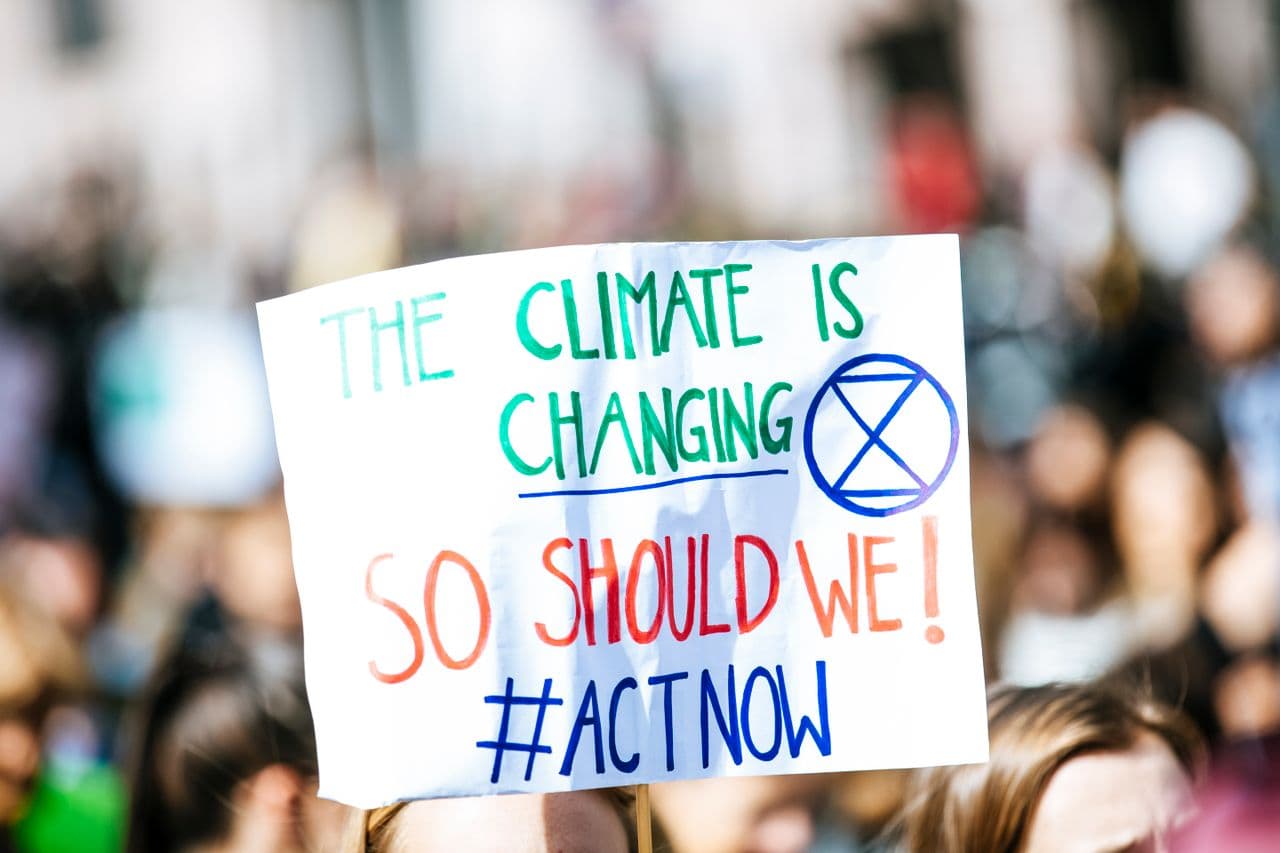
Activism is common because it gives a formless feeling somewhere to go. Helplessness turns into a task list, isolation turns into a group chat, and the fear finally has an exit. A mixed methods study of emerging adults found that collective action significantly weakened the link between climate anxiety and depressive symptoms, though the same study noted that individual action alone did not have this effect. Separate survey research from Australia found that eco-anger, rather than eco-anxiety or eco-depression, predicted better mental health and more sustained engagement in climate action. Anger tends to push toward approach. Anxiety alone often does not.

The shift from chosen to compulsive

Somewhere along the way, action can stop being something a person chooses and start being something they cannot stop. The marker is what happens when they try to rest. Chosen action leaves room to step back without much fallout. Compulsive action produces guilt the moment the person sits still, as if rest itself were a betrayal of everyone still fighting.

What it looks like before collapse

Sleep gets traded for one more planning call. Dinner with friends who are not involved in the cause starts to feel unbearable, like wasted time. Resentment builds toward people perceived as doing less, and small personal choices, a flight, a plastic bag, start getting tallied against a private moral ledger. The identity narrows until the cause is the only thing left in it.

The same depletion happens in personal life. Naomi Burks, LMFT describes what constant giving without refilling looks like across relationships: “You have a full cup of coffee, a full pot of coffee, and you’re just pouring it out every day. And, oh, I’m pouring my daughter some, I’m pouring my son some, and my significant other. And then, okay, now I’m pouring my boss and my coworkers and my family members. And eventually you have nothing left.”

Burnout, cynicism, and the numbness underneath

Activist burnout often shows up as exhaustion that a weekend off does not touch, followed by a creeping cynicism toward the movement itself. Eventually the feeling can flatten into a numbness that looks a lot like the avoidance the person was trying to outrun in the first place. Naming it is harder in activist spaces, where constant effort is treated as a shared value and slowing down can feel like letting the group down. That pressure alone can keep someone pushing past the point where the pushing is doing anything useful.

Telling sustainable action from anaesthetic action

One way to tell them apart is whether the action still feels connected to a value, or whether it has become a way to avoid sitting with the feeling at all. Sustainable engagement usually has edges: defined roles, commitments with an actual end point, and relationships that have nothing to do with the cause. It also leaves room for grief, not just organizing. Without those edges, the exhaustion compounds in the same way any unmanaged load does, which is part of why stress management and the burnout patterns inside it so often overlap with this kind of depletion.

Curious about something here?

Ask your favorite AI about this article

Coping with climate anxiety without swinging to either extreme

The goal is not to feel less about the climate. It is to be able to feel it without being flattened by it, and without going numb to avoid feeling anything at all. The best strategies for coping with climate anxiety sit in the middle of that range, close enough to the facts to stay engaged, far enough from constant exposure to stay steady. Most of these are small, repeatable, and have nothing to do with fixing the crisis itself.

Managing your information intake on purpose

How do people cope with climate anxiety day to day? A lot of it comes down to deciding when and how they take in information, rather than letting information find them. Set a specific time to check climate news, and a specific amount of time to spend on it, rather than leaving the tab open all day. Notice the difference between gathering information you actually need and scrolling because stopping feels unsafe. If you cannot name what you are looking for, you are probably not informing yourself anymore.

Grounding and settling when the dread spikes

Grounding techniques work best when they are gentle rather than jarring. Pressing your feet into the floor, feeling the weight of a blanket across your lap, or pushing your palms flat against a wall all give your body something steady to register. Holding a warm cup and naming its texture and temperature out loud does the same thing. Naming five objects in the room works when your thoughts are moving faster than your senses can keep up with. These are not fixes, just ways to come back into the room you are actually in.

Underneath the dread is often a more specific feeling: grief, anger, or helplessness rather than fear. Naming which one it is, instead of converting it straight into another task, lets grief be grieved instead of managed. Keeping a person you can talk to about this without it becoming the whole relationship, and a setting where the topic is set down entirely, matters as much as any technique. Tracking what came before a spiral, a bad night’s sleep, a heat wave, a string of headlines, in a journal or mood log can show you your own pattern over time.

Choosing action that your life can actually sustain

What are the different ways people cope with climate anxiety through action? Some take on everything at once and burn out. Others pick one specific, bounded commitment, a local project, a recurring volunteer shift, a single advocacy effort, rather than an open-ended obligation that never feels finished. Collective action aimed at something concrete differs from symbolic gestures meant only to settle individual guilt. Acceptance and commitment therapy offers one way to think about this: acting because the action reflects who you are, not because it promises to resolve the outcome.

How to talk with someone who shuts down about climate change

When a partner, friend, relative or colleague goes quiet or changes the subject every time climate change comes up, it helps to start from a different assumption than the one that feels obvious. The shutdown usually isn’t a lack of information. It’s more often a response to feeling overwhelmed or ashamed, and that distinction changes how the conversation should go. Someone who already feels helpless doesn’t need more facts, they need the feeling to be survivable first.

This is why statistics tend to backfire. Piling on numbers or asking “how can you not care about this” treats disengagement as ignorance, and it reads as an accusation. Most people respond to accusation by closing the door harder, not opening it.

A few things tend to keep the door open instead. Ask what they think about when the topic comes up, rather than telling them what they should think. Ask what would make the problem feel less hopeless to them. Say what you feel, not what they ought to feel. Let silence sit instead of filling it. Ask before you inform, and ask permission before sharing anything alarming, since consent changes how the same information lands.

Offering a small, concrete action to do together, a shared meal planning swap, a walk to talk it through, a local cleanup, bypasses the argument entirely because it doesn’t require agreement on a position. If the answer is no, accept it and leave the door open for another time, with no penalty for raising it again later. A frightened partner needs reassurance before problem-solving. A relative whose livelihood depends on a high-emissions industry needs the conversation to not feel like a referendum on their job. In all three cases, the goal is staying in relationship, not winning the exchange.

Supporting a young person who is frightened about the climate

Climate anxiety in young people often carries a different weight than it does for adults. A child or teenager did not create the problem, but has a longer stretch of future ahead to imagine it unfolding in. Many also get told, directly or indirectly, that their fear is dramatic or excessive, which tends to make the fear quieter but not smaller.

False reassurance, the kind that promises everything will be fine, usually backfires because kids can tell when an answer does not match what they are seeing. Honest reassurance sounds different: naming the people and organizations working on the problem, and reminding a child or teen who is with them right now, rather than guaranteeing an outcome no one can guarantee.

Before any problem-solving, the feeling needs a place to land. Grief and anger about the climate are reasonable responses, not overreactions to manage away.

How to help a child with climate anxiety looks different by age. Younger children do better with concrete, close-to-home explanations and small, visible routines. Teenagers can handle more complexity and benefit from real agency: a project they help shape, not a token task handed to them, scaled to how much they want to carry.

Protecting sleep matters too. Limiting late-night scrolling through distressing content works best framed as care, not punishment.

Watch for distress spilling into school performance, friendships, appetite, or sleep. That shift suggests outside support would help. Letting a young person see you feel something hard and keep functioning teaches more than any reassurance you could offer.

Finding support when climate anxiety is affecting daily life

Self-directed coping has limits. When sleep has not recovered in weeks, when a sense of dread shows up even on good days, when you find yourself pulling back from work or people you care about, or when a period of intense activism ends in collapse, those are signals that it may be time for structured support rather than another strategy to try alone.

What therapy for climate anxiety usually focuses on

Climate anxiety therapy is not about convincing you that your concern is irrational. The concern is often grounded in real conditions, and a therapist is not trying to argue you out of it. The focus instead is on tolerating distress without shutting down, restoring your ability to function day to day, and reconnecting your actions to what you actually value. A few approaches show up often in this work: acceptance and commitment therapy, which centers on acting in line with your values while making room for difficult feelings rather than eliminating them; cognitive behavioral therapy, which addresses the thought and behavior patterns that intensify dread; and grief-oriented work, which treats environmental loss as loss, not as a thinking error to correct. An integrative review of climate-related mental health research points to trauma-informed assessment and longer-term therapeutic relationships as ways professionals can support people affected by climate-related distress.

Community, groups and peer support

Look for an eco-anxiety support option such as a climate-aware therapist, a group format, a climate cafe, or a peer support space where this concern is treated as valid instead of a symptom to fix. Community support does something individual coping often cannot: it restores the sense that the weight is shared rather than carried alone.

Signs it is time to get help

Between sessions, tracking mood, sleep, and news exposure can reveal what actually triggers a spiral.

If distress is severe or includes thoughts of self-harm or suicide, reach out to the 988 Suicide & Crisis Lifeline or your local emergency services now, and see our emergency resources. ReachLink is not an emergency service and is not a substitute for emergency care.

Environmental and public health organizations, youth mental health services, and local climate groups are worth exploring too. If climate distress has started shaping your sleep, your relationships or your ability to work, talking with a licensed therapist can help.

Whatever you reach for when the fear gets loud is not wrong

Whether you move toward marches and petitions or find yourself unable to watch another headline, both responses come from the same place: a nervous system trying to protect you from something that feels too big to hold. Activism and avoidance are not opposite moral choices, they are different ways of managing an overwhelming truth, and neither one means you care more or less than someone who copes differently. What matters is whether your particular way of coping is still letting you function, connect with people, and feel some sense of steadiness in your days. If the climate dread has started to crowd out your sleep, your relationships, or your hope, that is worth paying attention to, and you do not have to sort through it by yourself. A therapist can help you understand your own patterns without judgment and find a way of coping that actually holds up over time. You can create an account at ReachLink and browse licensed therapists at your own pace to see what fits.


FAQ

  • How do I know if what I'm feeling about climate change is actual anxiety or just normal worry?

    Climate anxiety sits on a spectrum, from mild background stress to something that disrupts sleep, concentration, and daily relationships. The key marker is function - if the worry stays proportionate and doesn't stop you from working, connecting with people, or getting rest, it is closer to a normal response to a real threat. When it starts crowding out ordinary functioning, such as persistent sleep disruption, intrusive thoughts you cannot shake, or pulling back from relationships, that shift matters more than how intense the worry feels on any given day. Climate anxiety is also distinct from general anxiety in one important way: the feared outcome is real and shared, not distorted, which is part of why simple reassurance rarely helps.

  • Does therapy actually help with climate anxiety, or does it just tell you not to think about it?

    Therapy for climate anxiety does not try to convince you that your concern is irrational, because it usually isn't. A therapist's focus is on helping you tolerate the distress without shutting down, restoring your ability to function day to day, and reconnecting your actions to what you actually value. Approaches like cognitive behavioral therapy (CBT) work on the thought and behavior patterns that make dread spiral, while acceptance and commitment therapy (ACT) helps you act in line with your values while making room for hard feelings rather than eliminating them. Grief-oriented work treats environmental loss as real loss rather than a thinking error to be corrected. The goal is not to feel less about the climate - it is to be able to feel it without being flattened by it.

  • Can you burn out from climate activism the same way you burn out at work?

    Yes, and activist burnout often follows a recognizable pattern - sleep gets traded for one more planning call, resentment builds toward people perceived as doing less, and a creeping cynicism toward the movement itself sets in over time. What often follows is a numbness that looks a lot like the avoidance the person was trying to outrun in the first place, which can be confusing and hard to name. A useful marker is what happens when you try to rest: sustainable engagement leaves room to step back without much guilt, while compulsive action produces guilt the moment you sit still, as if rest itself were a betrayal. Collective action with defined roles and actual endpoints tends to hold up better than open-ended commitments that never feel finished, and tracking the warning signs early can prevent a full collapse.

  • How do I find a therapist who actually gets climate anxiety, and what does getting started look like?

    Finding the right therapist doesn't have to mean an exhaustive search on your own. At ReachLink, human care coordinators - not algorithms - match you with a licensed therapist based on your specific concerns, so you're connected with someone suited to your situation rather than whoever happens to be available. The process begins with a free assessment you can complete at your own pace, with no commitment beyond seeing what fits. From there, your care coordinator works with you to find a therapist experienced in anxiety and related concerns, drawing on approaches like CBT or ACT that are well-suited to climate-related distress. If climate worry has started affecting your sleep, relationships, or ability to function, that's a good signal that structured support is worth trying.

  • What's the difference between setting news limits for your mental health and just avoiding the problem?

    The difference comes down to whether the choice is deliberate or automatic. A boundary is something you decide - for example, not reading climate coverage before bed because you know it disrupts sleep - while avoidance is a reflex that happens to you, one you didn't choose and can't easily reverse through willpower alone. Suppressing awareness of something you genuinely care about doesn't make the concern disappear - it tends to redirect the energy into background unease that follows you because the original worry was never addressed. A practical test is whether you can still engage with neutral information on the topic, not just distressing headlines, without it feeling intolerable. If even balanced information has become hard to sit with, or the shutdown is spreading to related topics and relationships, that's a sign it may have moved past a healthy boundary and toward something worth exploring with support.

Have a question about this topic?

Type your question and we'll send it to the AI assistant of your choice.

Your question will be sent to an external AI assistant. If you're going through a crisis, please visit our Emergency Resources page.

Share this article
Take the First Step

Get Real Support.
See Real Results.

Join thousands who have found specialized therapy that truly understands their health journey. Start today — it takes less than 5 minutes.

No referral needed · Most insurance accepted · Start within 48 hours