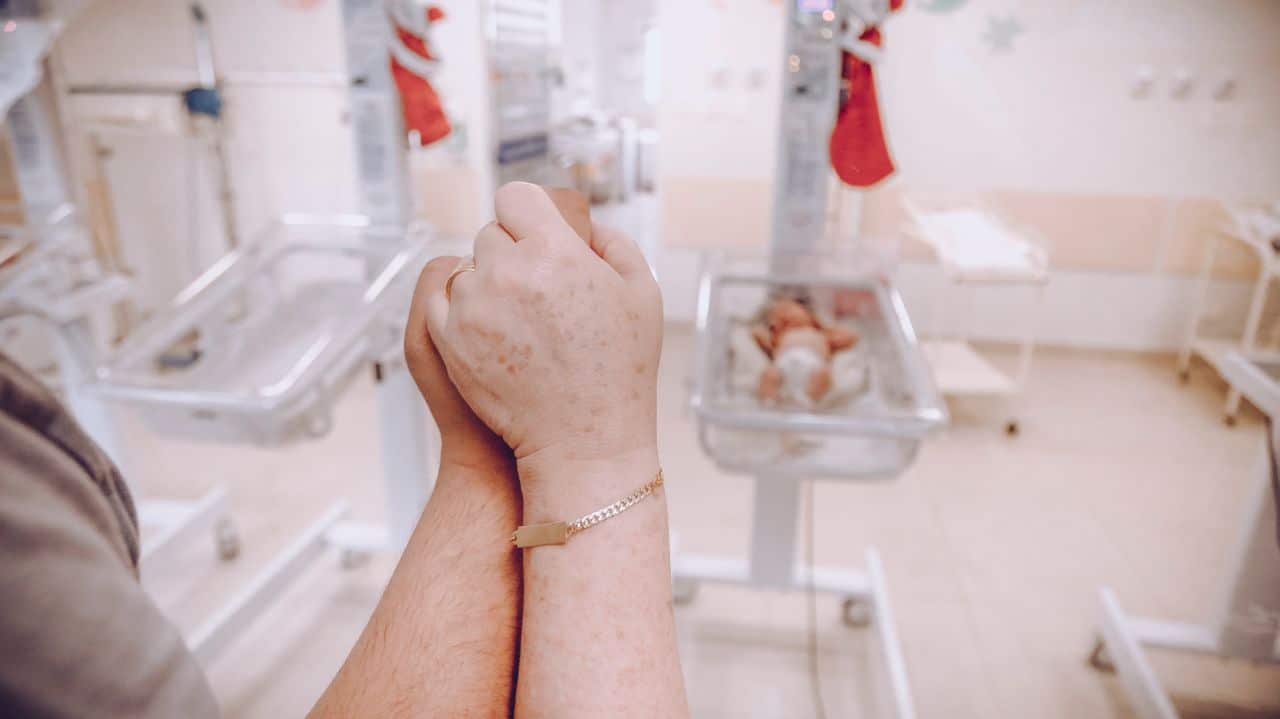
Premature birth trauma is a clinically recognized form of PTSD affecting approximately one in three NICU parents, rooted in sudden loss of control, disrupted parental identity, and prolonged uncertainty, and evidence-based therapies including EMDR, trauma-focused CBT, and somatic experiencing offer meaningful recovery when supported by a licensed trauma therapist.
A baby coming home from the NICU is not a happy ending. For many parents, it is where the hardest part begins. Premature birth trauma meets the clinical definition of PTSD, yet most families leave the hospital without a single screening, a diagnosis, or any roadmap for what comes next.
What premature birth trauma actually is: why this experience qualifies as PTSD
If you found yourself scanning monitors obsessively, flinching at hospital smells months later, or replaying the moment you heard “your baby is coming early,” you are not overreacting. What you experienced almost certainly meets the clinical definition of a traumatic event. Under the DSM-5, the diagnostic manual used by mental health professionals, trauma includes any event involving threatened death or serious injury to yourself or someone close to you. Watching your newborn fight for survival in a neonatal intensive care unit (NICU) qualifies on every count: the medical emergency, the loss of the birth you expected, and the sustained, unpredictable threat to your child’s life.
The research confirms this is a widespread clinical reality, not a personal weakness. Studies on psychological distress in NICU mothers document measurable rates of stress and depressive symptoms in the early postpartum period, and research on PTSD in parents of very preterm infants found that roughly 36% of mothers and 35% of fathers screened positive for PTSD symptoms at NICU discharge. By 12 to 24 months postpartum, those rates remained elevated at approximately 18 to 19%. Paternal figures are considered underreported, since fathers are less likely to be screened at all. Longer NICU stays are associated with greater symptom severity, though a short stay does not protect parents from a significant trauma response.
Despite these numbers, most parents leave the NICU without ever being screened for trauma. Fewer still are connected to therapy that specifically addresses PTSD. That is a serious treatment gap, and it helps explain why so many parents spend their child’s first year feeling like something is wrong with them rather than understanding what happened to them. Learning more about PTSD recognition and recovery can be a meaningful first step.
One critical distinction worth making early: premature birth trauma and postpartum depression are not the same condition, even though they frequently occur together. Postpartum depression centers on persistent low mood, hopelessness, and difficulty bonding. PTSD after a NICU experience tends to involve intrusive memories, hypervigilance, avoidance, and a nervous system stuck in threat mode. Both are real, both deserve care, and both require different treatment approaches to address effectively.
How the NICU changes you: the three core trauma mechanisms
Not all trauma looks the same. The NICU experience encodes distress through three specific mechanisms that, on their own, might each be survivable. Together, they create a trauma profile unlike almost anything else parents face. Understanding these mechanisms is not about assigning blame or diagnosing yourself. It is about naming what actually happened to you.
Mechanism 1: emergency and the sudden loss of control
Premature delivery rarely unfolds slowly. In many cases, parents go from a routine appointment to an operating room in a matter of hours, sometimes minutes. The birth plan disappears. The expected experience, the room, the music, the first hold, evaporates. Research on parental trauma associated with preterm birth shows that trauma encodes through the experience of lost agency rather than clinical severity alone. In other words, it is not just that something dangerous happened. It is that it happened to you, without your input, at full speed. That signature looks remarkably similar to what accident survivors describe.
Mechanism 2: the altered parental role
Once your baby is in the NICU, a quiet but profound shift occurs. You become a visitor. You ask permission to hold your own child. You learn to reach through porthole openings in an incubator rather than simply picking them up. Studies on mothers’ experiences in neonatal care document how this role reversal actively rewires parental identity. The incubator is not just a medical device. It is a physical barrier between you and every instinct you have. Feeding, soothing, protecting: all of it happens on someone else’s schedule, by someone else’s hands.
Mechanism 3: prolonged uncertainty with no safe signal
Most single-event traumas have a clear before and after. The NICU does not. Your baby improves, then crashes, then stabilizes, then alarms sound again. This daily oscillation between hope and dread means your nervous system never receives a reliable signal that the threat has passed. The same research on preterm parental trauma highlights how this sustained uncertainty is itself a core trauma mechanism, distinct from the original emergency. Living in that state for weeks or months produces the kind of chronic hypervigilance associated with anxiety symptoms that often persist long after discharge.
Why the combination matters
Each mechanism compounds the others. Lost control at delivery makes the altered role feel even more destabilizing. The altered role makes prolonged uncertainty harder to metabolize. And uncertainty keeps the nervous system locked in a threat state that prevents any real recovery from the first two. There is also a fourth, quieter layer: invisibility. Society tends to frame a surviving baby as a happy ending, which leaves parents with no cultural permission to grieve what was lost, the birth they expected, the early weeks of normal parenthood, the version of themselves that existed before the alarms started.
Why your body won’t let you relax: the neuroscience behind post-NICU hypervigilance
You have been home for weeks. The doctors say your baby is doing well. Everyone around you seems relieved. So why does your chest still feel like it is braced for impact? The answer is not in your thoughts. It is in your nervous system, and understanding what is happening there can make a real difference in how you make sense of what you are going through.
Your nervous system got stuck in survival mode
Your autonomic nervous system, the part of your body that regulates safety and threat responses, operates across three broad states. The first is ventral vagal, where you feel calm, connected, and socially engaged. The second is sympathetic activation, the fight-or-flight state that floods your body with adrenaline and cortisol when danger is detected. The third is dorsal vagal, a shutdown or freeze response that kicks in when the threat feels inescapable.
The NICU locks parents into that middle state: sympathetic overdrive. For weeks or months, your body ran on high alert around the clock. Alarms, crises, and uncertainty were not occasional stressors. They were the entire environment. Your nervous system adapted to that environment the way it was designed to, by staying ready. The problem is that discharge does not come with an off switch.
Why silence feels more terrifying than noise
Something that surprises many NICU parents: the quiet at home can feel worse than the constant beeping of monitors. This is not irrational. It is classical conditioning at work. Over time, your nervous system learned a specific pattern: silence precedes alarms. The moment before a monitor alarmed was often a moment of quiet. Your brain encoded that sequence as a threat cue. Now, ordinary household silence, the kind that used to feel peaceful, gets flagged by your body as the calm before a crisis. Your nervous system is doing exactly what prolonged threat exposure trained it to do.
Why “your baby is fine” doesn’t reach the part that’s scared
Well-meaning people will remind you that your baby is home and healthy now. You probably know that. And yet the fear persists. This is where the concept of neuroception becomes important. Neuroception is your body’s unconscious surveillance system, scanning the environment for danger below the level of conscious thought. It does not respond to logic or reassurance because it does not process language. It reads body signals, environmental cues, and past patterns.
After prolonged threat exposure, neuroception becomes hypersensitive. Your thinking brain can hold the fact that your baby is safe. Your body’s threat detection system simply is not listening to your thinking brain. This is why cognitive reassurance alone, telling yourself everything is fine, rarely resolves somatic trauma, which is trauma stored in the body rather than just in memory.
What actually helps the body feel safe again
Because NICU trauma lives in the body, effective treatment needs to reach the body. Trauma-informed care approaches this directly, rather than relying solely on talk-based methods. Three categories of somatic, or body-focused, intervention are particularly relevant here.
- EMDR (Eye Movement Desensitization and Reprocessing): Uses bilateral stimulation, such as guided eye movements or tapping, to help the brain reprocess traumatic memories so they lose their physiological grip.
- Somatic experiencing: Works by gradually releasing the survival energy that got trapped in the body during the original threat, helping the nervous system complete responses it never got to finish.
- Body-based grounding practices: Techniques like breathwork, cold water on the face, or slow movement that directly signal safety to the nervous system through physical sensation rather than thought.
None of these approaches ask you to think your way out of what you are feeling. They work with the part of you that is still standing guard, and gently help it stand down.
Two parents, two traumas: how premature birth affects each partner differently
When a baby arrives too soon, both parents are in the room for the same crisis. But the trauma each carries out of that room looks very different. Research on maternal and paternal responses to premature birth confirms that both parents experience measurable psychological distress after a NICU admission, yet the shape of that distress is distinct for each person.
For the birthing parent, trauma is woven into the body itself. Birth flashbacks, physical recovery, and hormonal shifts all arrive at once. Pumping breast milk, which can feel like a relentless mechanical reminder of an interrupted pregnancy, is frequently tied to feelings of failure rather than nourishment. The body is grieving an ending it never got to have, while the mind is trying to stay present for a baby behind glass.
For the non-birthing partner, the trauma is rooted in witness. They watched both their partner and their baby in simultaneous medical crisis, often while being the last person anyone checked on. Studies on paternal stress in neonatal care document how fathers and non-birthing partners face intense pressure to “be strong,” which systematically pushes their grief underground. Delayed-onset PTSD, surfacing six to twelve months after the birth, is a recognized pattern in this group. By that point, the family may assume the hardest part is over.
This is where asynchronous trauma processing quietly damages relationships. One parent may be in acute crisis while the other has gone numb. These phases rarely overlap in a way that feels fair or mutual. The parent who seems to be coping is often the one suppressing the most, and when their symptoms finally surface, it can blindside everyone, including themselves. This is sometimes called the protector trap: the partner who holds everything together delays their own collapse until the family least expects it.
Open-ended questions like “how are you feeling?” are genuinely too broad to answer during acute trauma. Structured check-ins work better. Try specific prompts: “What felt hardest today?” or “Is there anything you needed that you didn’t get?” These questions give a flooded nervous system somewhere concrete to land, and they signal that both people in the partnership deserve to be asked.
The four phases of the first year after NICU: an emotional roadmap
Most parents leave the NICU without a map. They know the medical milestones, the feeding schedules, the follow-up appointments. What no one hands them is a framework for what their emotional life is about to look like. The four phases below are not a clinical diagnosis. They are a pattern drawn from what preemie parents consistently report across the first year and beyond. Knowing the phases exist does not make them easier, but it does make them less terrifying.
One important note before you read: these phases are not a straight line. Parents loop back, skip ahead, or sit inside two phases at once. Partners frequently land in different phases at different times, which can quietly strain even the steadiest relationships.
Phase 1: NICU Fog
When it happens: The NICU stay through the first weeks home.
This phase has a signature feeling: unreality. You are functioning, sometimes impressively so. You are memorizing oxygen saturation numbers, learning to hold a baby through isolette portholes, and answering the same worried texts from relatives. But underneath the competence is dissociation, a mental state where the brain creates distance from an experience too large to process in real time. Adrenaline is doing the heavy lifting. The depth of what you have been through has not landed yet, and that is not a failure. Survival mode is the appropriate response right now. Do not force emotional processing during this phase. The feelings are not gone. They are waiting.
Phase 2: Homecoming Crash
When it happens: Weeks 2 through 8 after discharge.
This is the phase that catches parents completely off guard. The baby is home. This is what you waited for. So why does everything feel worse? The monitors are gone. The nurses are gone. The around-the-clock medical safety net has been replaced by a baby monitor and your own hypervigilance. The moment the adrenaline wears off, every suppressed emotion from the NICU surfaces at once. Research on postnatal depression and social isolation in mothers of preterm infants confirms that the post-discharge period carries significant depression risk, and that social support is one of the strongest protective factors available. The coping strategy here is deliberate: build a micro-support system, even a small one, and resist the pull toward isolation. One person who can sit with you without needing you to be okay is enough to start.
Phase 3: Comparison Spiral
When it happens: Months 3 through 9.
Preemie parents live on two timelines simultaneously. There is your baby’s actual age, counted from birth, and their corrected age, counted from their original due date. A baby born three months early at six months old is developmentally closer to three months. Following corrected-age milestones is not lowering the bar. It is reading the right map. The problem is that social media, parent groups, and well-meaning relatives do not use corrected age. They show you rolling, sitting, babbling babies the same calendar age as yours, and the gap feels like a verdict. Limiting comparison exposure during this phase is not avoidance. It is a reasonable boundary.
Phase 4: Anniversary Reckoning
When it happens: Months 9 through 15.
The approach of your baby’s first birthday can trigger something unexpected: a re-experiencing of the original trauma. The anniversary effect is well-documented in post-traumatic stress, and for preemie parents, the birthday that should feel like pure celebration often carries grief alongside it. Because corrected age extends the developmental clock, the sustained anxiety of the first year does not resolve at twelve months. For many parents, the true end of the first year, emotionally and developmentally, lands closer to fifteen to eighteen months. Planning proactively for anniversary reactions, and recognizing this as a natural moment to consider therapy, can make the difference between being blindsided and being prepared.
What nobody tells you about bringing your preemie home
Everyone expects discharge day to feel like a finish line. Parents anticipate relief, joy, maybe tears of gratitude in the hospital parking lot. What many actually feel is a quiet, creeping terror. The monitors are gone. The nurses are gone. The round-the-clock medical team that kept your baby alive is suddenly just not there. Research on parental post-traumatic reactions after premature birth identifies this transition not as a resolution, but as a distinct secondary trauma event, one that can intensify anxiety rather than ease it.
When home feels more dangerous than the NICU
Hypervigilance after discharge is nearly universal among NICU parents. You check breathing every few minutes. You wake in a panic to silence because silence itself has become suspicious. Some parents describe hearing phantom NICU alarms, a real phenomenon where the brain, conditioned to respond to beeping, generates the sound on its own. Your nervous system learned to treat quiet as a warning sign, and it does not simply unlearn that on the drive home.
RSV isolation compounds everything. Doctors often advise preemie families to avoid crowds and visitors during the first cold and flu season, which is medically sound advice. But it also cuts you off from support during the period when you are most depleted. Feeding adds another layer. Whether breast or bottle, feeding a preemie often involves volume tracking, caloric fortification, and weight checks that turn every feeding into a clinical event. Bonding over a bottle becomes data collection, and that shift is its own quiet grief.
A practical post-NICU safety plan
Building a simple framework before discharge can reduce the cognitive load of those first weeks at home:
- Identify one after-hours contact: Know exactly who to call at 2 a.m. when anxiety spikes, whether that is a nurse line, your pediatrician’s on-call service, or a trusted NICU nurse who offered to stay in touch.
- Schedule regular check-ins: Ask one person, a partner, a friend, a family member, to check in with you on a set schedule. Knowing contact is coming makes the hours between feel shorter.
- Write down actual emergency criteria: Work with your pediatrician before discharge to create a written list of genuine red flags versus anxiety-driven concerns. Having it on paper gives you something to reference when your nervous system is in overdrive.
- Give yourself explicit permission to call: You are not overreacting. You are not bothering anyone. Calling your pediatrician with a worry is exactly what they are there for, and no good pediatrician will make you feel otherwise.
Why the first year feels like holding your breath: the persistence mechanism
The phrase “holding your breath” is not just a figure of speech for parents of premature babies. Chronically activated nervous systems produce real, measurable respiratory changes: shallow breathing, involuntary breath-holding during nighttime check-ins, and deep sighing that never quite completes the stress cycle. Your body is doing exactly what the phrase describes.
Milestones do not fix this. Each developmental checkpoint your baby clears brings a brief exhale of relief, followed almost immediately by anxiety about the next one. Will they gain enough weight? Will they sit up on time? Will they catch up before school? This hope-dread oscillation is exhausting precisely because it never fully resolves. Research on very preterm birth’s long-term influence on parental mental health and family functioning confirms what many parents already feel in their bodies: this anxiety persists for years, not weeks, and remains clinically measurable long after the crisis appears to be over.
What makes premature birth trauma particularly hard to move through is the absence of a clear “all clear” moment. Many acute traumas have a definitive ending point. Premature birth trauma does not. There is no single day when someone tells you your child is safe now and your vigil is over.
The exhale, when it comes, is gradual. It is not one reassuring appointment or one passed milestone. It is a slow retraining of your nervous system’s threat threshold, built through accumulated safety signals, consistent therapeutic support, and time. Your nervous system learned to brace. With the right support, it can learn, carefully and at its own pace, to release.
When to seek help: warning signs that go beyond normal post-NICU stress
Feeling anxious, exhausted, and emotionally raw after a NICU stay is expected. These responses are normal and do not automatically mean something is clinically wrong. But some symptoms signal that your nervous system needs more than time to recover.
Watch for these escalation markers:
- Intrusive flashbacks that are increasing, not fading, weeks or months after discharge
- Avoidance of anything NICU-related: medical records, the hospital floor, or even your baby’s discharge paperwork
- Emotional numbness that persists beyond three months post-discharge, including feeling disconnected from your baby or partner
- Relationship deterioration that feels tied directly to the NICU experience
Some warning signs are physical, and parents rarely connect them to trauma. Chronic insomnia even when you are exhausted, unexplained body pain, a startle response that has not calmed down, and significant appetite changes are all ways that unprocessed trauma lives in the body.
Therapy approaches that work for birth and NICU trauma
Evidence-based non-pharmacological interventions have been shown to meaningfully reduce PTSD symptoms in NICU parents. Three modalities stand out:
- Trauma-focused cognitive behavioral therapy (TF-CBT): helps you identify and reframe thought patterns that keep you stuck in survival mode
- EMDR (eye movement desensitization and reprocessing): uses guided bilateral stimulation to help the brain process traumatic memories so they lose their emotional charge
- Somatic experiencing: works with physical sensations in the body to release stored trauma responses, without requiring you to verbally relive events in detail
A licensed therapist with perinatal or trauma specialization can help you decide which approach fits your needs. Organizations like Postpartum Support International and Hand to Hold also offer helplines and peer support communities built specifically for NICU families.
You have every right to struggle, even when your baby survived
One of the most common reasons NICU parents delay getting help is a quiet, persistent belief that they do not deserve to. Your baby made it home. So who are you to fall apart? This thinking is understandable, and it is also wrong. Survival does not cancel out trauma. The fear, helplessness, and grief you experienced were real, and they have real effects on your brain and body. Seeking support is not a sign of weakness or ingratitude. It is how you show up more fully for your child and yourself.
If you are unsure where you fall on the spectrum, a PTSD self-assessment can help you evaluate your symptoms with more clarity. And if you are recognizing yourself in these warning signs and want to talk to someone who understands trauma, you can connect with a licensed therapist through ReachLink. It is free to get started, there is no commitment required, and you can go entirely at your own pace.
What You Have Been Carrying Is Real, and You Do Not Have to Carry It Alone
If you have spent the last several months feeling like you should be over this by now, or like gratitude for your baby’s survival means you have no right to still be struggling, please hear this: the fear, the hypervigilance, the grief for the birth and the early weeks you never got to have are not signs that something is wrong with you. They are signs that something very hard happened to you, and that your mind and body are still working to find solid ground. That is not weakness. That is what trauma looks like when it goes unsupported.
Healing from premature birth trauma is possible, and it tends to happen gradually, with the right kind of help, not through sheer willpower or waiting it out. If you are recognizing yourself in what you have read here and feel ready to talk to someone who understands trauma, you can connect with a licensed therapist through ReachLink at no cost, with no commitment, and entirely at whatever pace feels right for you.
FAQ
-
How do I know if what I'm feeling after my baby's premature birth is actually trauma?
Trauma from a premature birth can look different from what most people expect. You might experience flashbacks to the NICU, intense anxiety around your baby's health, difficulty bonding, emotional numbness, or a persistent sense of dread even after your baby comes home. These responses are a normal reaction to an abnormal and frightening situation, not a sign that something is wrong with you as a parent. If these feelings are interfering with your daily life or your relationship with your child, speaking with a licensed therapist can help you make sense of what you went through.
-
Can therapy really help with premature birth trauma, or do I just have to wait for it to get better on its own?
Therapy can be genuinely effective for premature birth trauma, and waiting it out is not your only option. Evidence-based approaches like Cognitive Behavioral Therapy (CBT) and trauma-focused therapy help you process the fear, grief, and helplessness that often follow a NICU experience. A licensed therapist can work with you to identify unhelpful thought patterns, build coping strategies, and work through difficult memories at a pace that feels safe. Many parents find that healing happens much faster with consistent therapeutic support than it would on its own.
-
Why do so many parents feel guilty or ashamed after a premature birth, even when everything turned out okay?
Guilt and shame are surprisingly common responses to premature birth, even when the baby survives and thrives. Many parents blame themselves, wondering if something they did or didn't do caused the early labor, and that self-blame can linger long after medical staff have reassured them otherwise. There is also a social pressure to feel only gratitude when a baby survives, which can make it hard to acknowledge grief, fear, or anger without feeling like a bad parent. A therapist can help you untangle these complicated emotions in a space where all of your feelings are valid and there is no pressure to perform gratitude.
-
I think I need to talk to someone about what I went through with my baby's premature birth - where do I even start?
Finding the right therapist can feel overwhelming, especially when you're already emotionally exhausted, but you don't have to figure it out alone. ReachLink connects you with licensed therapists through human care coordinators, not an algorithm, so a real person helps match you with someone whose background fits your specific situation. You can start with a free assessment to share what you're going through, and from there the process is guided and straightforward. ReachLink therapists work via telehealth, meaning you can access support from home, which can be especially helpful during a caregiving-intensive season with your child.
-
Can both parents experience trauma from a premature birth, or is it mostly the mother?
Both parents, as well as other close family members, can experience trauma following a premature birth. Research shows that partners, fathers, and co-parents often develop symptoms of PTSD, anxiety, and depression after a NICU stay, but they are less likely to seek help because the focus tends to stay on the birthing parent and the baby. The helplessness of watching your child in an incubator, not knowing what comes next, is traumatic regardless of who experienced the pregnancy. Individual or couples therapy can help both partners process the experience, either together or separately, and neither parent has to go through it alone.