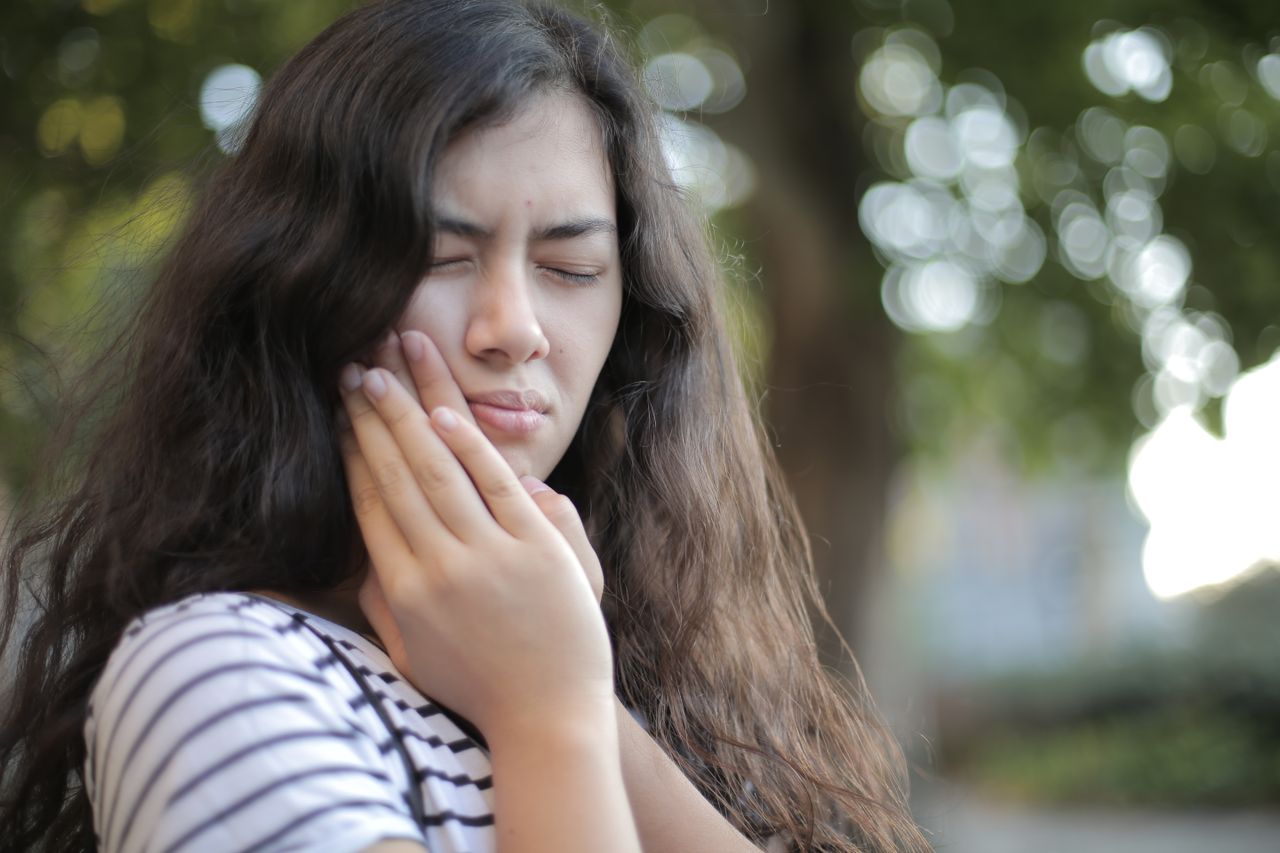
Sleep bruxism, the involuntary grinding of teeth during sleep, is directly linked to chronic stress and unprocessed emotional tension, which keep the nervous system in a state of sustained activation that drives rhythmic jaw clenching through neurological pathways, making therapeutic approaches like CBT and somatic therapy essential for lasting relief, not just dental protection.
Your jaw pain is not a dental problem. Sleep bruxism is your nervous system surfacing stress that never fully processed, and it keeps grinding through the night because your body has run out of other ways to signal it. Here, you will learn the exact neurological and emotional chain driving it.
What is sleep bruxism?
Bruxism is the involuntary grinding, gnashing, or clenching of teeth. There are actually two distinct forms, and the difference matters. Awake bruxism tends to involve conscious clenching during waking hours, often triggered by concentration or stress. Sleep bruxism, by contrast, is classified as a sleep-related movement disorder and operates entirely outside your awareness. According to the clinical distinction between awake and sleep bruxism recognized by oral medicine specialists, sleep bruxism involves rhythmic masticatory muscle activity, or RMMA, which refers to repetitive jaw muscle contractions that occur during brief arousal micro-events in sleep.
These micro-events are tiny disruptions in your sleep cycle that you will never consciously register. Your brain partially rouses, your jaw muscles fire, and then sleep resumes, all without you knowing. This is exactly why sleep bruxism can go undetected for years. The most common discovery routes are a bed partner who hears the grinding or a dentist who spots worn enamel, flattened tooth surfaces, or jaw soreness during a routine exam.
The condition is more common than many people realize. Epidemiological research estimates that approximately 8 to 13 percent of adults experience sleep bruxism, and actual rates are likely higher because so many cases go unreported or unrecognized. That means a meaningful portion of the population is waking up with headaches, jaw pain, or damaged teeth without connecting those symptoms to what happens while they sleep.
Bruxism has several contributing factors, including genetics, sleep architecture, and lifestyle. One thread runs through the research with particular consistency: stress. The sections ahead explore that connection in neurological and emotional depth, looking at why an overloaded nervous system so often expresses itself through the jaw.
Symptoms and signs you might be grinding your teeth at night
Most people who grind their teeth at night have no idea they do it. There is no alarm, no obvious sensation to wake you, and no memory of it in the morning. Instead, the clues show up later, scattered across your body in ways that can feel confusing or unrelated. Knowing what to look for can help you connect the dots.
What you feel when you wake up
Morning symptoms are often the first sign that something happened while you slept. You might notice your jaw feels sore or stiff before you have even said a word. A dull, persistent headache concentrated at the temples is another common signal, and it tends to feel different from a typical tension headache. Some people also experience ear pain or a sense of fullness in the ear with no sign of infection, which research from the Mayo Clinic confirms is directly linked to nighttime grinding.
What your dentist might notice first
Because sleep bruxism is often discovered only after damage has already occurred, your dentist may spot it before you do. According to Cleveland Clinic, common dental signs include:
- Flattened or chipped tooth surfaces from repeated contact
- Worn enamel that exposes the softer layer underneath, called dentin
- Increased sensitivity, especially to cold drinks or food
- Unexplained tooth fractures with no clear cause
Softer signs you might overlook
Beyond teeth, grinding leaves marks on the soft tissues of your mouth. Scalloped edges along your tongue, where it has been pressed against your teeth during sleep, are a telling sign. You might also notice bite marks or raw patches on the inner lining of your cheeks. Over time, the masseter muscles, the large muscles along your jawline responsible for chewing, can become visibly enlarged from overuse. This is called masseter hypertrophy, and it can change the shape of your lower face.
What your sleep partner hears
If someone shares your bed, they may be the first to notice. Audible grinding or clenching sounds during sleep are a clear indicator. You might also experience fragmented sleep or wake up feeling exhausted despite getting enough hours in bed, which points to frequent micro-awakenings disrupting your sleep cycles.
Bruxism versus TMJ disorder: not the same thing
Bruxism and temporomandibular joint (TMJ) disorder are related but distinct conditions. Bruxism can cause or worsen TMJ issues over time, but they are not the same diagnosis. Symptoms like clicking or popping in the jaw, the jaw locking in place, or a limited ability to open your mouth wide are specific to TMJ disorder. If you notice those alongside grinding symptoms, both deserve attention.
The stress-to-jaw pathway: what actually happens in your nervous system
Your jaw does not tighten or grind in isolation. There is a specific, well-documented chain of events that runs from a perceived threat in your mind all the way to the muscles clenching around your molars. Understanding that chain explains why stress shows up in your jaw, and why it keeps showing up even when you are unconscious. Researchers have identified chronic stress as the primary driver of teeth-grinding activity, shifting the focus away from dental structure and toward the nervous system, where the real story begins.
This chain has four distinct stages. Together, they form what we call The Stress-Jaw Cascade.
Stage 1: The HPA axis fires under chronic stress
When your brain perceives a threat, whether that is a car swerving toward you or a performance review you have been dreading for weeks, it triggers the HPA axis. HPA stands for hypothalamic-pituitary-adrenal, the three-part system your body uses to mount a stress response. Your hypothalamus sends a signal to your pituitary gland, which then signals your adrenal glands to flood your bloodstream with cortisol and adrenaline. Under acute stress, this system activates and then quiets down. Under chronic stress, including the kind driven by anxiety symptoms and unprocessed emotional tension, the HPA axis stays partially switched on even when no immediate threat is present. Your body never fully receives the all-clear signal.
Stage 2: Cortisol keeps your muscles on alert
Cortisol does not just prepare your mind for danger. It raises your resting muscle tone throughout your entire body, meaning your muscles never fully return to their relaxed baseline. Think of it like a dimmer switch that never quite reaches zero. In a person experiencing episodic stress, cortisol spikes and then falls. In a person carrying chronic, unprocessed stress, that baseline creeps upward over time. The muscles stay in a low-level state of contraction around the clock, primed to respond to a threat that never fully arrives.
Stage 3: The trigeminal nerve delivers tension to your jaw
The trigeminal nerve, known as cranial nerve V, is the main sensory and motor nerve of the face. It directly innervates the masseter, temporalis, and pterygoid muscles, which are the primary muscles responsible for chewing and jaw movement. When your sympathetic nervous system, the fight-or-flight branch, is activated by elevated cortisol, the trigeminal motor nucleus receives heightened excitatory input. In plain terms, the nerve gets louder, and the jaw muscles respond by contracting with disproportionate force. Research confirms that bruxism originates in centrally regulated neurological pathways like this one, not in the structure of your teeth or bite alignment.
Stage 4: Why the grinding continues while you sleep
During waking hours, your cortex, the brain’s higher-level control center, can partially suppress these brainstem motor patterns. Sleep removes that check. As you cycle through lighter sleep stages and arousal events, the cortex’s inhibitory control weakens. If your baseline muscle tension is already elevated from chronic stress, the trigeminal motor nucleus can fire rhythmic masticatory muscle activity during those arousal windows. That rhythmic firing is the physiological basis of grinding.
This is why a single brutal day at work can leave your jaw aching the next morning, and it is also why people carrying chronic, unprocessed stress grind habitually for months or years. When the baseline never returns to normal, the grinding does not either.
What your jaw is actually holding: the emotional dimension of bruxism
Your jaw is not a random casualty of stress. The masseter muscle, which runs along the side of your jaw, is one of the most forceful muscles in the human body relative to its size. It is biomechanically built to generate and absorb tension. That strength makes it a prime site for chronic stress to take up residence, and it is often the first place your body signals that something emotional is going unaddressed.
To understand why, it helps to look at how your nervous system governs the jaw. Polyvagal theory, developed by neuroscientist Stephen Porges, describes a hierarchy of nervous system states. In the ventral vagal state, where you feel safe and socially connected, the muscles of your face and jaw are regulated and relaxed. When your nervous system shifts into sympathetic activation, fight or flight, or dorsal vagal shutdown, a freeze-like collapse, the jaw responds as part of a primal defensive pattern. Clenching is not random: it is the body bracing, preparing to bite, hold, or survive.
The emotional layer goes deeper than neuroscience alone. Clinical observations consistently link jaw clenching to suppressed anger, unspoken frustration, and chronic anxiety. Research points to a strong association between bruxism, neuroticism, and suppressed anxiety, suggesting that people who habitually hold back emotional expression are more likely to grind. The jaw is, quite literally, where many people swallow their objections, bite back their words, and hold what feels too risky to say out loud. Unresolved anger and long-term stress can both show up as physical tension in this region.
When and how you clench can also point to different emotional patterns. Daytime clenching tends to track real-time frustration, intense concentration, or situational pressure. You might notice your jaw tightening during a difficult meeting or a tense conversation. Nighttime grinding tells a different story. Because it happens outside conscious awareness, it more often reflects accumulated emotional tension that never fully discharged during the day. Stress that was managed, pushed through, or set aside rather than genuinely processed tends to surface at night, when your defenses are down and your body finally gets a turn.
None of this means your jaw pain is all in your head. It means the body keeps a running record of what the mind has not yet resolved.
Stress bruxism vs. sleep apnea bruxism vs. medication-induced bruxism: how to tell the difference
Not all teeth grinding has the same root cause, and that distinction matters enormously for treatment. Three subtypes account for most cases: stress-related, sleep apnea-related, and medication-induced. While they can overlap, each has a recognizable pattern that can point you toward the right specialist.
Stress-related bruxism
This is the most common subtype, and the clearest sign is a direct relationship between your stress levels and your grinding intensity. When a deadline looms or a conflict goes unresolved, the grinding gets worse. You may also notice neck tension, frequent headaches, or a sore jaw first thing in the morning. Unlike other subtypes, stress-related bruxism often shows up during waking hours too, as unconscious clenching while you concentrate, drive, or scroll through your phone. The grinding tends to ease during calmer periods, which is a meaningful clue.
Sleep apnea-related bruxism
This subtype has a very different origin. When the airway begins to collapse during sleep, the jaw sometimes thrusts forward as a reflex to reopen it, and that movement produces grinding. Research on how sleep apnea triggers teeth grinding as an airway-protective reflex shows that grinding episodes tend to cluster around apnea events rather than occurring randomly through the night. The key indicators here are loud snoring, breathing pauses witnessed by a partner, waking with a dry mouth, and feeling exhausted despite a full night of sleep. If these symptoms sound familiar, a sleep study, called polysomnography, is the appropriate next step, not a mouth guard alone.
Medication-induced bruxism
Some people begin grinding their teeth without any notable increase in stress, and the culprit turns out to be a medication. Clinical evidence identifies SSRIs, particularly sertraline, fluoxetine, and paroxetine, along with SNRIs and stimulant medications, as the most commonly implicated drug classes. The mechanism involves changes in dopamine and serotonin activity that affect jaw muscle control. The timing is the telling detail: if grinding started or noticeably worsened around the same time you began or adjusted a medication, that correlation is worth discussing with the prescriber who manages it.