ReachLink is now hiring licensed therapists. Apply to join the current cohort before June 30. Apply now →

Why You Stay Up Late Even When Exhausted

Sleep DisordersJune 19, 202616 min read
Why You Stay Up Late Even When Exhausted

Revenge bedtime procrastination is the deliberate choice to delay sleep when exhausted in order to reclaim personal time a demanding day never provided, a pattern rooted in self-regulatory depletion and systemic overwork that responds well to evidence-based strategies like daytime autonomy building, environment design, and cognitive behavioral therapy.

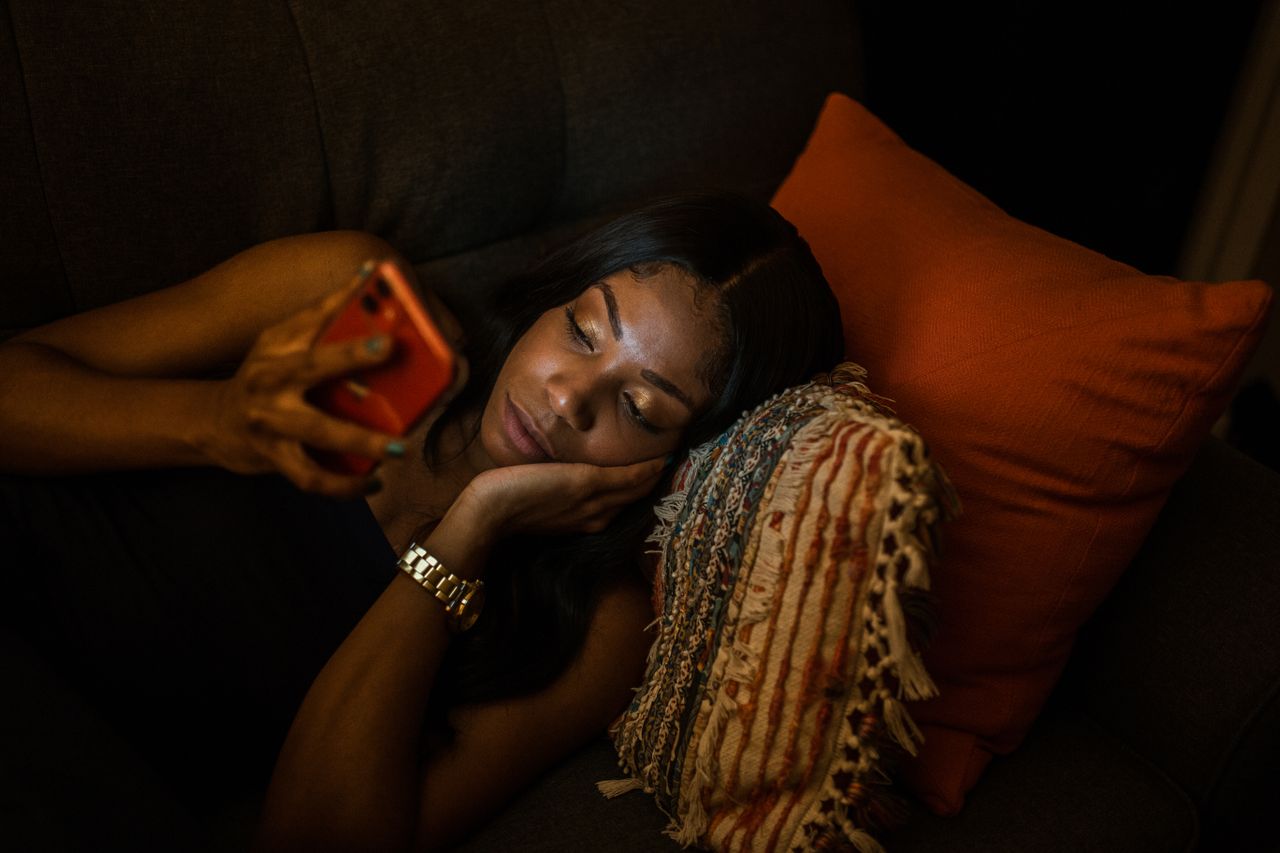
What if staying up late every night, even when you're completely drained, isn't a bad habit but a small act of quiet rebellion? Revenge bedtime procrastination is why millions of exhausted people choose scrolling over sleep, and understanding it may be the first step toward actually changing it.

What is revenge bedtime procrastination?

Revenge bedtime procrastination (RBP) is the deliberate decision to delay sleep, even when you are exhausted, in order to carve out personal time that the day never gave you. It is not about forgetting to go to bed or losing track of time. You know you should sleep, you know you will feel terrible tomorrow, and you stay up anyway. That tension between knowing and doing is exactly what defines it.

The term has its roots in Chinese social media, where the phrase 報復性熬夜 went viral among workers grinding through what is known as “996” culture: working 9 AM to 9 PM, six days a week. For many people living that schedule, the hours after midnight were the only time that truly belonged to them. Staying up late was not self-destruction. It was a small, quiet act of resistance.

The “revenge” framing is what separates this from ordinary procrastination. You are not avoiding a task. You are reclaiming something that feels stolen, trading sleep for a few hours of scrolling, watching, or simply existing without demands on you.

Researchers had already begun mapping this behavior before it had a viral name. A foundational study on bedtime procrastination by Kroese et al. established three criteria that define it:

  • The delay meaningfully reduces your total sleep time
  • There is no valid external reason forcing you to stay awake
  • You are fully aware that staying up will have negative consequences

All three must be present. Miss one, and you are dealing with something else entirely, perhaps a sleep disorder or a genuine late-night obligation. When all three align, what you have is revenge bedtime procrastination: a conscious, emotionally driven choice to stay up late when exhausted, not out of laziness, but out of a deeply human need for autonomy. The Sleep Foundation describes this reclaiming of personal time as the core of what makes RBP distinct from simply being a night owl or having poor sleep hygiene.

Signs you might have revenge bedtime procrastination

Most people stay up too late sometimes. A new show drops, a friend calls, or you just lose track of time. That is normal. The signs of revenge bedtime procrastination look different: it is a recurring pattern that has quietly become your default, not an occasional exception.

Three behavioral markers tend to show up together. First, you regularly intend to go to bed at a reasonable hour but choose not to when the time actually comes. Second, the time you reclaim goes toward low-effort, pleasurable activities like scrolling social media, streaming shows, or gaming. These are not deep hobbies or productive pursuits; they are easy escapes. Third, you feel genuine regret or frustration the next morning, even though you made the choice willingly the night before.

The emotional signature underneath all of this is telling. As sleep medicine psychologists describe, staying up late even when tired often carries a distinct feeling of defiance or entitlement: this is my time, and I am taking it. That feeling persists even when exhaustion is overwhelming, which is what separates RBP from simply enjoying a late night.

If you also notice that worry or racing thoughts are keeping you awake rather than a desire for free time, anxiety may be playing a separate role. The next section can help you tell the difference.

Is it really revenge bedtime procrastination? A 4-type diagnostic framework

Not every late night looks the same. Staying up until 2 AM watching TV feels very different from lying in bed wide awake with a racing heart, even though both leave you exhausted the next morning. Research on distinct types of sleep procrastination behavior confirms that the reasons people delay sleep vary significantly, and that distinction matters because each pattern points to a different solution.

RBP vs. insomnia vs. anxiety rumination vs. ADHD hyperfocus

Revenge bedtime procrastination (chosen delay for pleasure): You could fall asleep, but you actively choose not to. The activity feels good, whether that is scrolling, streaming, or gaming, and the emotional tone underneath it is defiance or indulgence. You are reclaiming time that felt stolen from you. The path forward involves redesigning your environment and building more autonomy into your daytime hours.

Insomnia (wants to sleep but cannot): You are in bed, the lights are off, and sleep simply will not come. You might notice a racing heart, restlessness, or just an inexplicable wakefulness with no pleasurable activity attached. This is a physiological problem, not a behavioral choice. Cognitive behavioral therapy for insomnia (CBT-I), a structured, evidence-based treatment, or a medical evaluation is the appropriate next step. You can explore sleep disorders for a broader look at what might be happening.

Anxiety rumination (intrusive thoughts preventing sleep): Your mind is flooded with worries, to-do lists, or worst-case scenarios. You may not even be in bed yet, but the emotional tone is dread, not pleasure. This is not about reclaiming time; it is about a mind that will not quiet down. Therapy targeting anxiety, along with techniques like cognitive defusion, which involves learning to observe thoughts without being controlled by them, tends to be most effective here.

ADHD hyperfocus (losing track of time without intent): There is no conscious decision to stay up late. You blink, and it is 2 AM. People with ADHD who stay up late often describe this pattern: time simply disappears during an absorbing task. There is no sense of revenge or reclaimed autonomy, just a genuine unawareness that hours passed. External cues, structured routines, and ADHD-specific time management strategies address the root cause here.

Here is a quick comparison across four dimensions:

  • Awareness of delay: RBP: aware and choosing it | Insomnia: aware and frustrated | Anxiety: aware and distressed | ADHD: unaware until it is too late
  • Emotional tone: RBP: defiance, indulgence | Insomnia: frustration, helplessness | Anxiety: dread, worry | ADHD: neutral absorption
  • Activity type: RBP: pleasurable, chosen | Insomnia: none, trying to sleep | Anxiety: mental rumination | ADHD: hyperfocused task
  • Recommended intervention: RBP: environment design, daytime autonomy | Insomnia: CBT-I or medical evaluation | Anxiety: therapy, cognitive techniques | ADHD: time cues, structured routines

How to identify your pattern

The clearest question to ask yourself is: Am I staying up because it feels good, or because something is stopping me from sleeping? If the answer is pleasure and a sense of reclaiming your evening, that points strongly to revenge bedtime procrastination rather than insomnia or anxiety-driven wakefulness. If you feel distress, frustration, or simply have no idea where the time went, one of the other patterns is likely at play. Naming the right pattern is the first step toward addressing it effectively.

What causes revenge bedtime procrastination?

The causes of revenge bedtime procrastination run deeper than bad habits or a lack of discipline. To understand why you stay up late even when exhaustion is written all over you, it helps to look at what happens to your brain and body after a full day of modern life, and at the larger systems that shape your days in the first place.

The psychology of self-regulation at night

Your ability to make good decisions is not a fixed resource. It gets used up. After a day of managing deadlines, navigating difficult conversations, suppressing frustration, and making dozens of small choices, your capacity for self-control is at its lowest point by the time night arrives. Research on self-regulatory resource depletion and bedtime procrastination supports exactly this: when self-regulation is depleted, people are far more likely to delay sleep in favor of leisure. That “I deserve this” feeling at 11 PM is not weakness. It is a predictable outcome of a depleted system.

The stress-cortisol connection adds another layer. High-stress days keep cortisol, your body’s primary stress hormone, elevated well into the evening. This creates a wired-but-tired state where your body is physically exhausted but your nervous system is still buzzing. Chronic stress does not simply switch off when the workday ends, and a dark, quiet bedroom can feel unappealing when your brain is still running hot. Studies on chronotype and self-control resources also show that people whose natural sleep rhythms conflict with their required work schedules face compounded self-regulation failure, making nighttime resistance even harder.

Then there is the dopamine habit loop. Phones and streaming platforms are engineered around variable-ratio reinforcement, the same neurological mechanism that makes slot machines so compelling. Every scroll, every autoplay, every notification delivers an unpredictable reward that your brain finds hard to walk away from. A dark, silent bedroom simply cannot compete with that level of neurochemical stimulation.

The cultural roots: why this is a systemic problem, not a personal failure

The causes of revenge bedtime procrastination are not just psychological. They are structural. Cultures built around overwork, including the “996” model common in parts of East Asia, leave people with almost no waking hours that belong to them. Remote work has dissolved the boundaries between professional and personal time, meaning many people finish their workday without ever truly leaving it. Caregivers, who are disproportionately women, often spend their days meeting everyone else’s needs before their own, arriving at night with nothing left and a desperate need for unstructured time.

In these conditions, staying up late is not irrational. It is a rational response to a situation where nighttime is the only space left. That is precisely why willpower-based solutions fail so consistently: they treat a structural problem as a personal flaw. You are not staying up late because you lack discipline. You are staying up late because your days do not leave room for you.

Who is most affected by revenge bedtime procrastination?

Revenge bedtime procrastination is not random. Certain groups are far more likely to experience it, and understanding who is affected can help you recognize whether what you are dealing with is a common, well-documented pattern rather than a personal failing.

Women and primary caregivers are disproportionately affected. Research on bedtime procrastination demographics found that women and students score higher on bedtime procrastination measures than other groups. For women who carry the bulk of caregiving responsibilities, daytime hours are often entirely spoken for. Nighttime becomes the only window of time that genuinely belongs to them, which makes staying up feel less like a bad habit and more like a necessity.

People with ADHD face a distinct set of risk factors. Difficulties with executive function, time perception, and impulse control all make it harder to initiate the transition to bed. ADHD-related bedtime delays are not always the same as classic revenge bedtime procrastination. RBP involves an intentional choice to delay sleep, while ADHD-related time loss is often unintentional, driven by hyperfocus rather than a conscious bid for autonomy. The two can overlap, but they are not identical.

Curious about something here?

Ask your favorite AI about this article

Students and young adults naturally trend toward later sleep timing, a biological pattern called a delayed chronotype. When early class schedules conflict with that internal clock, the evening hours feel like the only time that fits their natural rhythm. Screen-based entertainment makes this significantly worse.

Shift workers lose the predictability of a consistent personal time window, which pushes leisure into whatever hours are available, often at the expense of sleep. People in high-demand professions, especially those in work cultures built around extreme hours, face the same squeeze: when obligations consume the entire day, nighttime reclaiming becomes the only logical alternative.

What are the health consequences of revenge bedtime procrastination?

Cutting sleep by an hour or two each night might feel harmless in the moment. The short- and long-term health consequences of sleep disruption reach much further than most people expect, touching nearly every system in the body.

Your brain stops working as well as you think it does. Research by Van Dongen showed that chronic sleep restriction produces cognitive deficits equivalent to going without sleep entirely. The cruel twist: your brain adapts to feeling tired, so you stop noticing how impaired you actually are. Your reaction time, decision-making, and focus deteriorate while you remain convinced you are functioning fine.

Your hunger signals get scrambled. Sleep loss lowers leptin, the hormone that signals fullness, and raises ghrelin, the hormone that drives hunger. The result is stronger cravings for high-calorie foods and a higher risk of weight gain and metabolic syndrome over time. This is not a willpower problem. It is a hormonal one.

Your mental health takes a compounding hit. Chronic sleep deprivation raises the risk of depression, anxiety, and emotional dysregulation. Those same mental health struggles are what push people toward late-night screen time as emotional escape in the first place. Poor sleep worsens the very feelings that cause the sleep deprivation to continue.

Your heart carries the cost too. Research consistently links chronic short sleep to elevated blood pressure and increased cardiovascular disease risk, making the health effects of sleep procrastination a long-term concern, not just a next-day inconvenience.

Sleep debt compounds. Each night of lost sleep makes the next day’s self-regulation harder, which makes it more likely you will reach for that late-night escape again. The pattern feeds itself until something interrupts it.

The real fix starts during the day

Most advice about revenge bedtime procrastination focuses on what to do at night: dim the lights, set a phone alarm, try a wind-down routine. That advice is not wrong, but it is incomplete. If RBP is your mind’s way of reclaiming time that the day never gave you, then the most direct fix is to stop the theft before it happens.

The daytime autonomy audit

Try this: count how many minutes of genuinely unobligated, self-chosen time you had today. Not a lunch break spent answering emails. Not scrolling your phone between tasks out of exhaustion. Real time, spent on something you actually wanted to do. For most people experiencing RBP, that number lands somewhere near zero. That gap is the problem. When daytime autonomy, meaning your sense of ownership over your own time and choices, runs dry, your brain goes looking for it after midnight.

Building micro-leisure into your day

You do not need large blocks of free time to ease the pressure. Research on autonomy satisfaction consistently links feeling in control of your daily choices to lower levels of evening procrastination. Scheduling two or three 15-minute windows of genuinely self-directed activity, a walk, a chapter of a book, a hobby, can meaningfully reduce the craving to stay up late. These are not productivity breaks. They are protected personal time.

Protecting your time with boundaries

This is easier said than done, especially for caregivers, shift workers, or anyone operating in a high-demand work culture. Still, small boundaries matter: a firm stop time for work emails, a 10-minute buffer before caregiving duties resume, a standing personal block on your calendar that you treat like a meeting. Start with one boundary. Protect it consistently. Your evenings will begin to feel less like the only place left to breathe.

How to stop revenge bedtime procrastination

Knowing why you stay up late is only half the work. The other half is building conditions that make sleep the easier choice, not the harder one. These strategies are organized by what they actually fix, so you can match the approach to the mechanism driving your late nights.

Design your environment, not your willpower

Willpower is a limited resource, and it tends to run out right around 10 PM. Environment design works with that reality instead of fighting it. A few structural changes do more than any amount of motivation:

  • Move your phone out of the bedroom. Set up a charging station in the kitchen or hallway. When your phone is in another room, the decision to scroll requires getting up, which creates just enough friction to break the habit loop.
  • Automate your screen limits. Use your phone’s built-in screen time settings to lock social apps after a set hour. You are not relying on willpower when the app simply stops working.
  • Create a physical boundary between daytime and sleep spaces. If you work from home, close the laptop and put it in a bag. A small physical act signals to your brain that the day is done.

For people with ADHD-pattern time loss, pair these changes with external time cues: a recurring alarm at 9:45 PM or a smart light that dims automatically at 10 PM. For anxiety-driven wakefulness, keep a thought-download journal on your nightstand. Writing down tomorrow’s worries before bed offloads them from your working memory so they stop competing for your attention.

Evidence-based protocols: MCII made actionable

MCII stands for Mental Contrasting with Implementation Intentions, and research consistently shows it outperforms simple goal-setting. It works by pairing a desired outcome with a specific if-then plan for the obstacle that will get in the way. Here is how to apply it:

  1. Wish: My goal is to be in bed by 10:30 PM.
  2. Outcome: The best result is waking up rested and having energy for the things I actually care about.
  3. Obstacle: The main barrier is wanting to scroll through my phone after 10 PM.
  4. Plan: If I pick up my phone after 10 PM, then I will put it on the charger in the kitchen and pick up my book instead.

That last step matters. Replace high-stimulation screen time with a medium-stimulation analog activity like reading, drawing, or doing a puzzle. These activities still feel like personal time, but they do not trigger the variable-ratio reinforcement loop that keeps social media so hard to put down. Your brain gets the autonomy signal it was craving without the dopamine spike that delays sleep.

When to talk to a therapist

For pure revenge bedtime procrastination, the daytime autonomy strategies covered above are often the primary fix. When the pattern persists despite consistent effort, something deeper is usually driving it.

If stress, anxiety, or emotional exhaustion is fueling your late nights more than habits alone, working with a therapist can help you identify the underlying emotional needs and build personalized strategies around them. Cognitive behavioral therapy (CBT), particularly CBT for insomnia, is one of the most well-supported approaches for persistent sleep procrastination. You can create a free ReachLink account to explore your support options at your own pace, with no commitment required.

You Are Not Lazy. You Are Running on Empty.

If you recognized yourself in this article, you already understand something important: staying up late when you are exhausted is not a character flaw. It is what happens when a day leaves no room for you. The need for time that belongs to you is real, and it deserves to be taken seriously, not just managed with a bedtime alarm.

If the pattern feels hard to shift on your own, especially when stress, anxiety, or emotional exhaustion are part of the picture, support is available at whatever pace feels right for you. You can create a free ReachLink account to explore therapy options with no commitment, or find the app on iOS or Android whenever you are ready.


FAQ

  • Why do I keep staying up late even when I'm exhausted and know I need sleep?

    Many people experience what's often called revenge bedtime procrastination, where staying up late becomes a way to reclaim personal time after a long, demanding day. It's not a character flaw or lack of willpower - it's a psychological response to feeling like the day didn't leave room for rest, enjoyment, or autonomy. The exhaustion is real, but so is the emotional need driving you to stay awake. Recognizing this pattern is the first step toward understanding the deeper needs behind it.

  • Can therapy actually help me stop staying up too late, or is this more of a habits issue?

    Therapy can be genuinely effective for addressing the patterns behind staying up late, especially when exhaustion and a lack of personal time are involved. Approaches like Cognitive Behavioral Therapy (CBT) help you identify the thoughts and feelings that keep you awake, while also building healthier routines and boundaries around your time. A therapist can also help you explore whether stress, anxiety, or burnout is fueling the habit. Many people find that once the emotional root of the behavior is addressed in therapy, sleep patterns naturally improve as well.

  • Is staying up late when you're tired actually a sign of something deeper, or is it just a bad habit?

    For many people, staying up late when exhausted is more than just a bad habit - it's often a signal that something deeper is going on, like chronic stress, burnout, or a persistent feeling of not having enough time for yourself. The behavior tends to develop as a coping mechanism, a quiet way of creating space for personal enjoyment or decompression when the rest of the day hasn't allowed for it. When this pattern becomes regular, it can affect mood, concentration, and overall mental health. If you notice it happening frequently, it may be worth exploring with a therapist who can help you understand what's driving it.

  • How do I actually get started with therapy for sleep issues or stress - where do I even begin?

    Starting therapy can feel overwhelming, but it doesn't have to be. ReachLink makes the process straightforward by connecting you with a licensed therapist through a team of human care coordinators, not an algorithm, so the match is thoughtful and based on your actual needs. You can begin with a free assessment that helps the care team understand what you're going through and what kind of support would be most helpful. From there, you'll be matched with a therapist who can work with you on sleep-related concerns, stress, or whatever is keeping you up at night.

  • What's the difference between just being a night owl and having a real sleep problem that needs help?

    Being a natural night owl means your body genuinely functions better later in the day, and that preference is largely biological. A more concerning pattern is when you're genuinely exhausted but still can't bring yourself to stop scrolling, watching, or simply being awake - especially if it's leaving you drained and struggling to get through the next day. The key difference is whether your late nights feel like a choice that leaves you recharged or a compulsion that leaves you depleted. If it's consistently affecting your mood, focus, or wellbeing, that's a sign it may be worth talking to a therapist about.

Have a question about this topic?

Type your question and we'll send it to the AI assistant of your choice.

Your question will be sent to an external AI assistant. If you're going through a crisis, please reach out to the 988 Suicide and Crisis Lifeline (call or text 988).

Share this article
Take the First Step

Get Real Support.
See Real Results.

Join thousands who have found specialized therapy that truly understands their health journey. Start today — it takes less than 5 minutes.

No referral needed · Most insurance accepted · Start within 48 hours

Why You Stay Up Late Even When Exhausted