ReachLink is now hiring licensed therapists. Apply to join the current cohort before August 31. Apply now →

Why Hole Clusters Disgust You Before You Can Think

PhobiasAugust 20, 202616 min read
Why Hole Clusters Disgust You Before You Can Think

Trypophobia is a documented disgust response to clustered hole patterns affecting roughly 1 in 6 people, driven by pre-conscious activation of the insular cortex rather than typical fear pathways, which is why effective relief requires disgust-focused cognitive behavioral therapy (CBT) rather than standard phobia treatment protocols.

Trypophobia is not a fear response, and that single distinction is the reason most standard phobia treatments miss the mark. The disgust that hits you when you see a lotus pod or honeycomb fires before conscious thought even enters the picture, but the right approach to treatment can change that.

What is trypophobia?

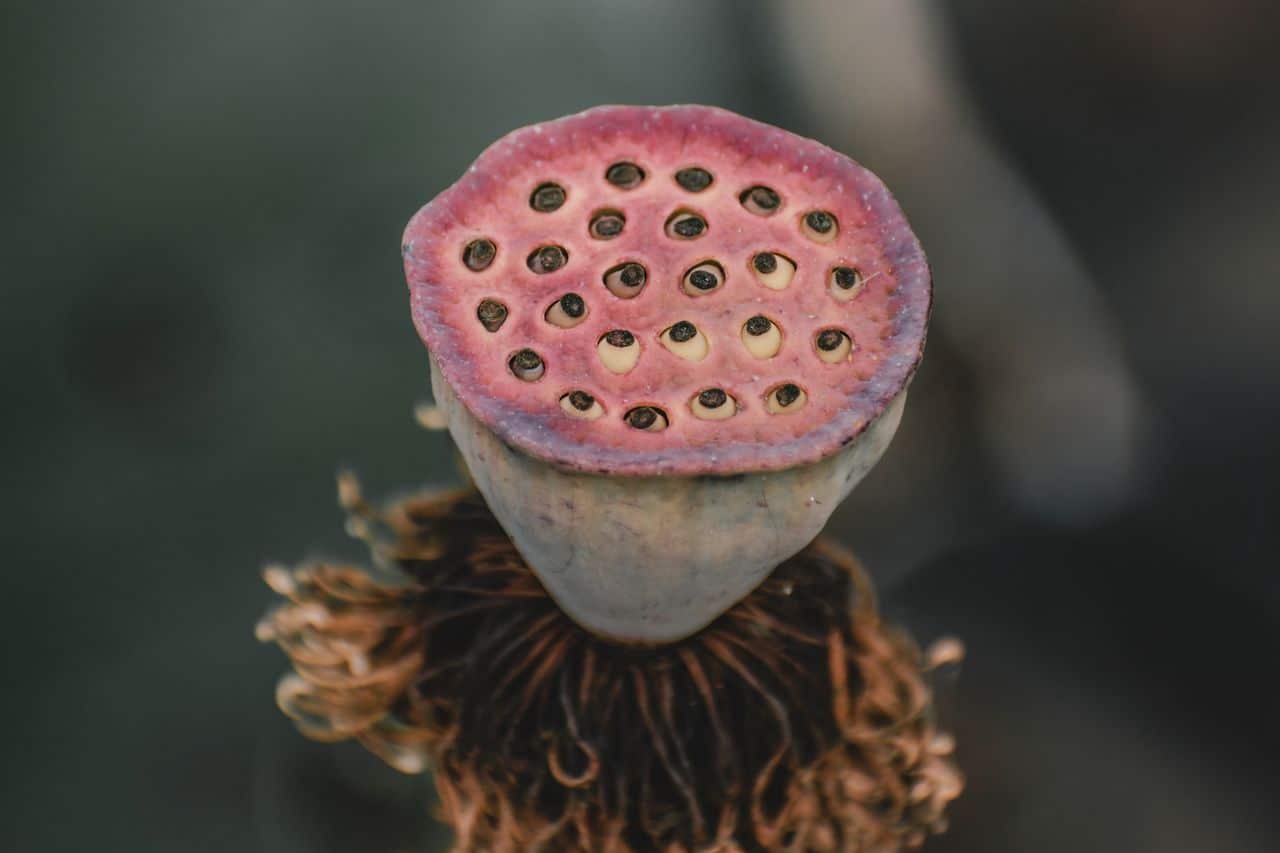
If the sight of a lotus seed pod, a honeycomb, or a cluster of bubbles makes your skin crawl, you are not alone, and you are not overreacting. Trypophobia is an intense aversion to clustered patterns of small holes, bumps, or cavities. The word itself comes from the Greek trypa (hole) and phobos (fear), and it was first coined in 2005 on an online forum. Despite its informal origins, peer-reviewed research on trypophobia has been published since 2013, confirming this is a real, documented phenomenon.

What makes trypophobia genuinely interesting, and often misunderstood, is what the reaction actually feels like. Most phobias center on fear: a racing heart, a desperate urge to flee. Trypophobia is different. The dominant response is disgust, a wave of revulsion, nausea, or skin-crawling discomfort that hits before you have time to think. That distinction shapes everything from why certain images trigger you to how the response can be addressed.

Approximately 17% of people experience trypophobia to some degree, though severe cases are considerably less common. That means roughly one in six people feel at least some discomfort when confronted with clusters of small holes or similar patterns. The reaction is automatic and involuntary. No one chooses to feel revolted by a strawberry or a sponge, and telling someone to simply look away fundamentally misunderstands how the response works.

What actually happens in your brain when you see hole clusters

The discomfort you feel when looking at a cluster of holes is not random, and it is not imaginary. There is measurable neurological activity behind it, and understanding that activity helps explain why the trypophobic response can feel so overwhelming and so difficult to reason your way out of.

The amygdala-insular cortex pathway

A 2015 fMRI study by Le and colleagues found that trypophobic images activate two specific brain regions: the amygdala and the insular cortex. These are not general-purpose areas. The amygdala is your brain’s threat-detection system, the region that fires when it perceives danger. The insular cortex, on the other hand, is closely tied to visceral disgust, the kind associated with contamination, parasites, and disease.

That second region is especially revealing. The insular cortex does not respond to abstract fears, like worrying about a job interview or feeling anxious about the future. It responds to bodily threat cues: rotting food, infected wounds, signs of infestation. Its activation in response to hole clusters suggests the brain is categorizing these patterns alongside genuine biological hazards. This aligns with neurophysiological evidence that trypophobia is a disgust reaction, showing that the brain’s response occurs rapidly, before conscious evaluation has a chance to weigh in. Your brain has already categorized the image as a potential threat before you have had a moment to think, “Wait, that’s just a lotus pod.”

From an evolutionary standpoint, this makes a certain kind of sense. Clustered holes on skin, fruit, or surfaces can indicate parasitic infestation, fungal infection, or decay. A brain that quickly flagged those patterns, without pausing to analyze them, may have had a survival advantage.

Why knowing it’s harmless doesn’t help

This pre-conscious processing is exactly why logic offers so little relief in the moment. By the time you consciously register that you are looking at a harmless sponge or a strawberry, the disgust signal has already fired. The insular cortex and amygdala have done their work. Telling yourself the image is safe is a bit like trying to un-ring a bell.

This does not mean the reaction cannot be addressed or managed over time. It does mean that willpower and rational reassurance alone are unlikely to override a response that was never routed through conscious thought in the first place.

Why trypophobia is disgust, not fear, and why that changes everything

Most phobias work the same way under the hood. A spider appears, your amygdala fires, and your sympathetic nervous system floods your body with adrenaline. Heart pounding, breath quickening, legs ready to run. That is the classic fear response, and it is the blueprint most phobia treatments are built around. Trypophobia breaks that blueprint entirely.

Research on disgust sensitivity and trypophobia proneness shows that disgust sensitivity, not fear sensitivity, is the primary psychological driver of trypophobic reactions. Instead of activating the sympathetic nervous system, clustered hole imagery tends to activate the parasympathetic system, producing nausea, skin-crawling, and a deep urge to look away. The neural hardware involved is different too. Fear-dominant phobias are heavily amygdala-driven. Disgust-dominant responses like trypophobia recruit the insular cortex and basal ganglia, brain regions tied to visceral discomfort, body awareness, and the sense that something is contaminating or wrong.

The symptom profile reflects this difference directly. Where a person with a fear-dominant phobia feels their heart race and wants to flee, a person experiencing trypophobia typically feels goosebumps, itching, nausea, and a sensation of contamination, not panic. That contamination quality overlaps meaningfully with the disgust-based thought patterns seen in obsessive-compulsive disorder, and it signals that trypophobia occupies a different psychological space than a straightforward fear response.

Clinical case evidence supports this directly, demonstrating that fear and disgust are dissociable in trypophobia, meaning the two emotional systems can operate independently. This has real treatment implications. Standard exposure therapy is designed to extinguish fear through habituation, but disgust habituates more slowly and through different mechanisms. Running a fear-based protocol on a disgust-dominant response can be ineffective or, in some cases, counterproductive. A therapist who understands disgust-focused CBT modifications will approach trypophobia very differently from a standard phobia.

Fear vs. disgust phobia comparison

  • Brain regions most active: Fear-dominant phobias engage the amygdala and prefrontal cortex; trypophobia (disgust-dominant) engages the insular cortex and basal ganglia.
  • Dominant emotion: Fear-dominant phobias produce terror, dread, and panic; trypophobia produces revulsion, a sense of contamination, and skin-crawling unease.
  • Physical symptoms: Fear-dominant phobias cause a racing heart, rapid breathing, and an urge to flee; trypophobia causes nausea, itching, goosebumps, and an urge to look away.
  • Standard treatment fit: Exposure therapy is highly effective for fear-dominant phobias; standard exposure may be insufficient alone for trypophobia.
  • Modifications needed: Fear-dominant phobia protocols are well-established; trypophobia benefits from disgust-focused CBT adaptations and slower pacing.
  • Prognosis timeline: Habituation is often faster for fear-dominant phobias; trypophobia habituation is slower and requires a tailored approach.

Common trypophobia triggers

Trypophobia triggers fall into several broad categories, and recognizing them can help you understand your own reactions. What unsettles one person may leave another completely unbothered. The range of triggers is wider than most people expect.

Natural triggers are among the most commonly reported. These include lotus seed pods, honeycombs, pomegranates, strawberry seeds, coral formations, barnacle clusters, and wasp nests. Each shares that dense, repeating cluster pattern that tends to set off a strong response.

Biological and medical triggers tend to produce the most intense reactions. Skin conditions involving clustered lesions, images of botfly larvae holes, and masses of insect eggs all fall into this category. Researchers believe these triggers may connect to a deep-seated threat-detection instinct, since clustered holes on skin can signal disease or parasites.

Man-made triggers are surprisingly common in everyday life. Aerated chocolate, kitchen sponges, bubble wrap, shower heads, crumpets, and repeating dot patterns in architecture or graphic design can all provoke anxiety symptoms in people with trypophobia.

Digital and social media triggers have grown into their own category. Manipulated images that overlay hole patterns onto human skin circulate widely, and platforms like TikTok and Reddit can surface this content through recommendation algorithms, often without any warning. If scrolling exposes you to triggering content, adjusting your content preferences is a reasonable first step.

Trypophobia symptoms: physical and psychological responses

Trypophobia symptoms span three distinct domains: physical, psychological, and behavioral. Together, they paint a picture of a response that is immediate, visceral, and sometimes hard to shake.

Physical symptoms

The body often reacts before the mind has time to process what it is seeing. Common physical symptoms include goosebumps, nausea, sweating, shivering, and a deeply unsettling skin-crawling or itching sensation. Some people even report a tactile illusion of feeling holes on their own skin after viewing triggering images. Research on skin-crawling and itching sensations suggests these responses are rooted in an ancient ectoparasite defense system, meaning the body may be reacting as if it needs to remove something from the skin.

Psychological and behavioral symptoms

On the psychological side, intense disgust tends to lead the charge, often followed by anxiety, an overwhelming urge to look away, and intrusive thoughts about contamination. Some people describe a lingering feeling of being contaminated even after the triggering image is gone. These responses fit within the broader symptom profile seen across phobias more generally.

Behaviorally, trypophobia can quietly reshape daily life. People may actively avoid known triggers, struggle to eat foods like strawberries or crumpets, feel uneasy in natural outdoor settings, or compulsively check their own skin for irregularities.

The severity spectrum

Not everyone experiences trypophobia the same way. For some, mild discomfort passes within seconds and causes no real disruption. For others, moderate avoidance starts limiting everyday choices, like skipping certain foods or avoiding nature walks. At the severe end, the distress is lasting and significantly interferes with daily functioning.

One particularly striking pattern cuts across all severity levels: a paradoxical compulsion to keep looking. Even while feeling disgusted, many people find they cannot stop viewing the triggering image, which tends to intensify the reaction rather than resolve it.

What causes trypophobia?

Researchers have proposed several explanations for why clusters of small holes trigger such a powerful reaction. The leading theories all point to the same core idea: your brain may be responding to a genuine threat signal, even when no real danger exists.

Evolutionary danger detection

One prominent theory suggests that hole clusters resemble patterns found on some of the world’s most dangerous animals. The blue-ringed octopus, king cobra, and poison dart frog all display repeating circular or spotted patterns on their bodies. According to this view, the human brain may have evolved to flag these visual patterns as potential threats, firing off an alarm before conscious thought even kicks in. That automatic response would have been a survival advantage for our ancestors. Today, the same reflex may misfire when you look at a lotus seed pod or a honeycomb.

Disease and parasite avoidance

A closely related theory frames trypophobia as a pathogen-avoidance mechanism rather than a predator-avoidance one. Clustered holes and pitted textures closely resemble the skin symptoms of parasitic infections, certain contagious diseases, and decomposing tissue. Research supports the idea of trypophobia as an overgeneralized disease-avoidance response, suggesting that the disgust you feel may be your immune system’s behavioral partner, pushing you away from anything that looks like it could spread infection. Disgust, in this sense, is not irrational. It is an ancient protective reflex that has simply misfired.

Curious about something here?

Ask your favorite AI about this article

The mathematics of disgust: visual spectral frequency theory

Perhaps the most striking explanation comes from visual science. Research on excess contrast energy at mid-range spatial frequencies builds on foundational work by Cole and Wilkins (2013), showing that trypophobic images share a specific mathematical property: they contain an unusually high amount of contrast energy at mid-range spatial frequencies. In plain terms, the pattern of light and dark in these images has a particular structure that the brain detects pre-consciously, before you are even aware you have seen anything. Crucially, images of genuinely dangerous organisms share this same spectral signature, which may be why the brain treats them as equivalent.

This finding helps explain why the trypophobic reaction feels automatic and why it appears across different cultures. Because the trigger is a low-level visual property, not a learned association, it does not require prior experience or cultural conditioning to activate. These three theories are not competing explanations. The spectral frequency property may be the mechanism through which both evolutionary and disease-avoidance signals are detected, acting as the shared visual fingerprint that tells your brain something is wrong.

How bad is your trypophobia? A 3-tier severity self-assessment

Not everyone who flinches at a honeycomb photo is struggling equally. Understanding where your experience falls matters, because the right response depends on your specific situation. The framework below is a practical self-reflection tool built around scoring ranges from the validated Trypophobia Questionnaire (TQ), a research instrument used to measure trypophobic reactions. Think of it as a tool for self-awareness, not a clinical diagnosis.

Tier 1: mild discomfort

  • Brief unease or skin-crawling when you encounter a triggering image
  • You can look away and feel normal again within seconds
  • No avoidance of real-world places, foods, or situations
  • TQ scores in the lower range

Recommended action: Build awareness of your triggers and practice basic grounding techniques when discomfort surfaces. No professional support is typically needed at this level.

Tier 2: moderate avoidance

  • You actively avoid known triggers, like certain foods, textures, or online content
  • Discomfort lingers for several minutes after exposure
  • Occasional intrusive thoughts about hole patterns arise unprompted
  • TQ scores in the mid-range

Recommended action: Self-help strategies can go a long way here. If your avoidance is growing over time, professional support is worth considering before it narrows your life further.

Tier 3: severe impairment

  • Trypophobia disrupts daily life in meaningful ways, such as avoiding certain foods, environments, or social situations
  • Skin-checking compulsions or persistent intrusive imagery are present
  • Anxiety about potentially encountering triggers is a regular experience
  • TQ scores in the upper range

Recommended action: A therapist experienced in disgust-focused cognitive behavioral therapy (CBT) can offer structured, evidence-based support at this level.

A few things to keep in mind

The TQ is a research instrument, not a clinical diagnostic tool, and these tiers are meant for self-reflection only. They are not a substitute for a professional assessment. Movement between tiers is also common. Stress, exposure to triggering content, and your overall mental health can all shift your experience over time.

If your experience falls into the moderate or severe range, talking to a licensed therapist can help. You can start with a free assessment on ReachLink at your own pace, with no commitment required.

Trypophobia treatment and outlook

Trypophobia treatment is still an evolving area, but the core tools are well-established. Because trypophobia sits at the intersection of disgust and anxiety rather than fear alone, the most effective approaches are those that directly target the disgust response, not just the avoidance behavior.

Therapy approaches for trypophobia

Cognitive behavioral therapy (CBT) is the most studied trypophobia therapy available. It works by helping you identify and restructure the thought patterns that keep the disgust-contamination cycle running. For example, a CBT therapist might help you examine the automatic belief that a cluster of holes signals danger or disease, then gradually replace that interpretation with a more accurate one.

Exposure therapy is often a component of CBT, but it requires careful modification for disgust-dominant conditions. Standard flooding or rapid exposure protocols, which work well for many fear-based phobias, can actually backfire here. Disgust habituates more slowly than fear, meaning intense exposure too quickly can reinforce the response rather than reduce it. Graduated, paced exposure under therapist guidance is far more effective.

Two specific techniques show particular promise. Evaluative conditioning pairs trypophobic images with positive stimuli to gradually shift the emotional association your brain makes. Cognitive reappraisal teaches you to reframe what hole patterns mean, shifting from a sense of contamination threat to a neutral or even aesthetic interpretation. A trauma-informed care framework can also support this gradual process, especially when disgust responses feel deeply automatic or overwhelming.

One of the most important things to know before starting trypophobia therapy: finding a therapist who understands disgust-focused modifications, rather than one who applies a standard phobia protocol, significantly improves your outcomes. If you are ready to explore your options, you can connect with a licensed therapist through ReachLink for free, with no commitment and completely at your own pace.

On the medication side, a doctor may consider SSRIs or SNRIs when trypophobia co-occurs with generalized anxiety or OCD, since these medication categories target the broader anxiety and intrusive-thought mechanisms involved. Benzodiazepines are sometimes used short-term to manage acute responses, but they are not a long-term solution and do not address the underlying disgust conditioning.

Self-help and daily management strategies

Between therapy sessions, or while you are deciding whether to seek professional support, several practical strategies can help reduce the day-to-day impact of trypophobia.

  • Controlled breathing: Slow, diaphragmatic breathing during accidental exposure helps interrupt the physiological disgust response before it escalates.
  • Progressive muscle relaxation: Systematically tensing and releasing muscle groups lowers baseline physical tension, making disgust reactions less intense over time.
  • Curating your digital environment: Actively limit exposure to trypophobic content on social media. Adjust algorithmic preferences, mute or block triggering content categories, and be intentional about the visual spaces you spend time in online.
  • Paced self-exposure: If you want to practice exposure independently, start with the mildest images you can tolerate and move slowly. Pushing too hard, too fast tends to reinforce avoidance rather than reduce it.

What to expect: prognosis and timeline

The outlook for trypophobia is genuinely encouraging. Most people with mild to moderate symptoms see meaningful improvement with appropriate intervention, often within a few months of consistent therapy. Severe cases may require a longer treatment course, but substantial symptom reduction is a realistic and achievable goal.

Progress tends to be nonlinear. You may notice significant improvement, then hit a plateau, then improve again. That pattern is normal and not a sign that treatment is not working. The key variable is finding an approach that accounts for the disgust-dominant nature of the condition, because that single factor shapes everything from how exposure is paced to how thought patterns are restructured. With the right fit, meaningful relief is within reach.

What You Are Feeling Has a Name, and It Makes Sense

If you have spent years wondering why certain images send a wave of revulsion through your body while everyone around you seems unbothered, you now have a clearer picture of what is actually happening. The disgust is real, the neurological response is real, and the difficulty of reasoning your way out of it in the moment is real too. None of that reflects a flaw in you. It reflects how your brain was built to protect you, even when the threat it perceives is not actually there.

Trypophobia exists on a spectrum, and wherever you fall on it, you deserve support that actually fits your experience rather than a one-size-fits-all approach. If the discomfort has started shaping your daily choices in ways you would rather it did not, a therapist who understands disgust-focused care can make a real difference. You can explore ReachLink’s free matching process at whatever pace feels right, with no pressure and no commitment required.


FAQ

  • How do I know if what I have is actually trypophobia or just a normal disgust reaction?

    Trypophobia is a strong, often overwhelming aversion to clusters of holes, bumps, or irregular patterns, like honeycombs, lotus pods, or certain skin textures. Most people feel mild discomfort around these images, but trypophobia goes further, triggering intense disgust, anxiety, goosebumps, nausea, or even panic responses. The key difference is whether the reaction is disproportionate to the situation and starts interfering with your daily life, such as avoiding certain foods, websites, or environments. If your reaction feels automatic and hard to control, it may be worth exploring with a licensed therapist who can help you understand what is happening and why.

  • Does therapy actually help with trypophobia, or do you just have to live with it?

    Therapy can be genuinely effective for trypophobia, and you do not have to simply endure it. Approaches like Cognitive Behavioral Therapy (CBT) and exposure therapy help you gradually reduce the intensity of your response by changing how your brain processes and reacts to triggering stimuli. A licensed therapist can tailor the approach to your comfort level, so you are never pushed faster than you are ready for. Many people find that with consistent therapeutic support, their reactions become much more manageable and stop limiting their everyday lives.

  • Why does the disgust from trypophobia feel so instant and automatic, like it happens before you even realize it?

    The speed of the trypophobia response is connected to how your brain processes visual information. Certain patterns, like irregular clusters of holes or bumps, may trigger a rapid threat-detection response in the brain before conscious thought can catch up, which is why the feeling of disgust or unease seems to arrive without warning. Some researchers suggest this reaction is linked to evolutionary associations with danger, such as venomous animals or disease. Because the response is so automatic, it can feel impossible to control, but therapeutic techniques like CBT help you develop awareness and coping strategies that interrupt the cycle over time.

  • I think trypophobia might be seriously affecting my life - what's the first step toward actually getting help?

    Recognizing that something is affecting your quality of life is already a meaningful first step. ReachLink connects people with licensed therapists through human care coordinators, not an algorithm, so you are matched with someone based on your specific needs and situation. You can start with a free assessment, which helps the care team understand what you are experiencing and find a therapist who is a good fit for working through phobia-related anxiety. From there, your therapist can guide you through evidence-based approaches, like CBT or exposure-based techniques, at a pace that feels right for you.

  • Can trypophobia get worse if you just keep avoiding the things that trigger it?

    Avoidance is one of the most common ways people manage trypophobia in the short term, but it often makes the fear stronger over time. When you consistently avoid a trigger, your brain reinforces the idea that the trigger is genuinely dangerous, which deepens the anxiety response rather than reducing it. This cycle of avoidance and heightened fear is something therapists are specifically trained to address, often using gradual exposure techniques that help desensitize your reaction in a safe and controlled way. Working with a licensed therapist gives you tools to break that cycle without having to face your triggers alone or all at once.

Have a question about this topic?

Type your question and we'll send it to the AI assistant of your choice.

Your question will be sent to an external AI assistant. If you're going through a crisis, please reach out to the 988 Suicide and Crisis Lifeline (call or text 988).

Share this article
Take the First Step

Get Real Support.
See Real Results.

Join thousands who have found specialized therapy that truly understands their health journey. Start today — it takes less than 5 minutes.

No referral needed · Most insurance accepted · Start within 48 hours