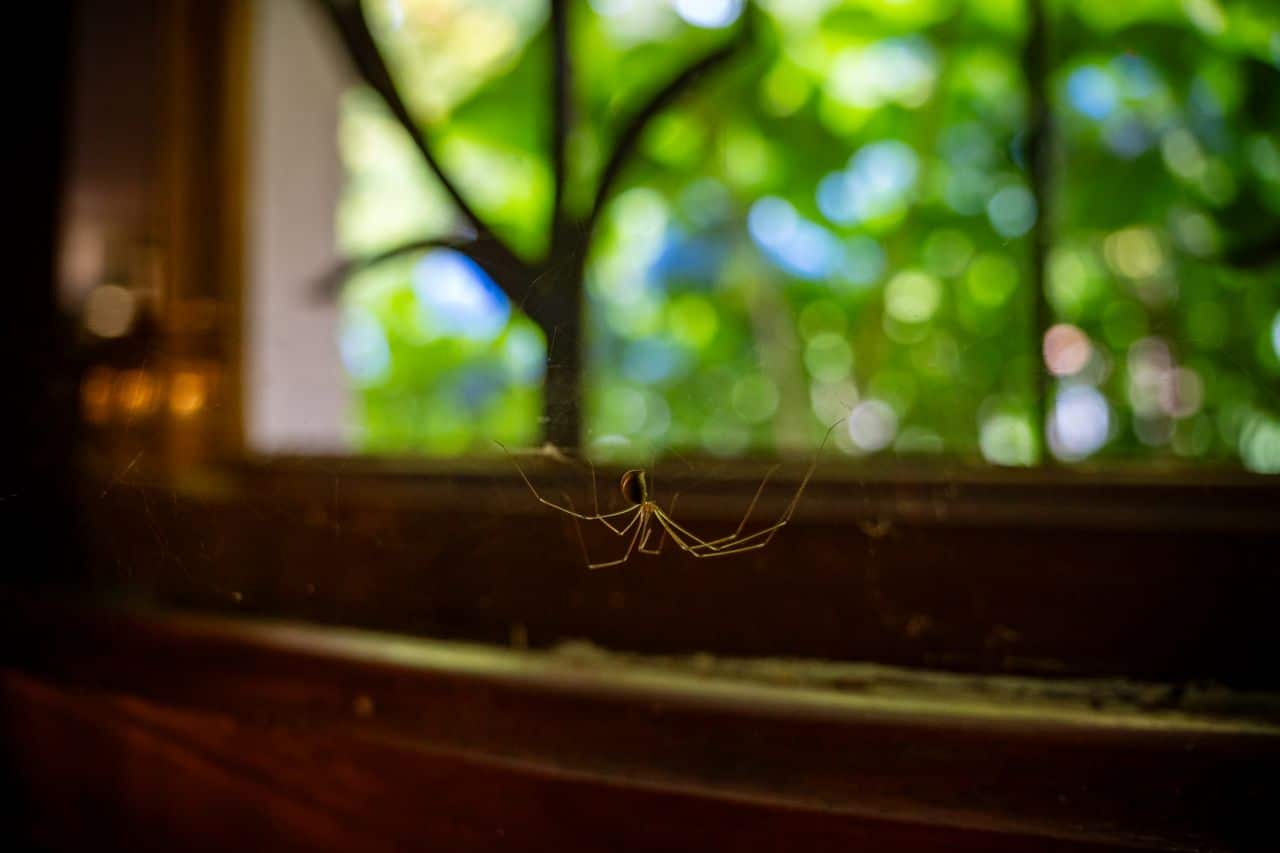
Arachnophobia, or fear of spiders, stems from a mix of evolutionary preparedness, disgust responses, and learned behavior rather than actual danger, and it remains one of the most treatable specific phobias through structured exposure therapy and cognitive behavioral techniques guided by a licensed therapist.
Why does a house spider that's never harmed anyone still send your heart racing? Fear of spiders is one of the most common phobias on earth, and its roots run deeper than any one bad memory. Here's what evolution, disgust, and learning each contribute, and why understanding it doesn't erase it.
What arachnophobia actually is, and how common spider fear really is
Arachnophobia is the clinical name for an intense, persistent fear of spiders. It falls under specific phobias, a category that also covers heights, needles, and enclosed spaces. What separates a specific phobia from ordinary dislike is the mismatch between the reaction and the actual risk, plus the fact that the person often knows the fear is out of proportion even as they feel it. That self-awareness does not make the fear go away. It just adds a layer of frustration on top of it.
Not everyone who flinches at a spider has a phobia. Spider fear sits on a spectrum. Some people feel a mild, passing discomfort and move on. Others go out of their way to avoid basements, gardens, or webs in a doorway. A smaller group experiences a full phobic response: a startle jolt, a racing heart, sweating, freezing in place, and a strong pull to leave the room immediately. Those physical signs overlap with broader anxiety symptoms, which is part of why spider fear can feel so bodily and hard to reason with in the moment.
Why is the fear of spiders so common?
Fear of spiders shows up at strikingly high rates even in places where local spiders pose almost no real danger. Someone in a country with no venomous species can still react to a house spider as though it were a threat to their life. That gap between actual danger and the intensity of the fear is unusual. Most animal fears track roughly with real risk. Spiders do not fit that pattern, and explaining why they don’t is the puzzle the rest of this article works through.
Four evolutionary explanations for spider fear, and what the evidence says about each
No single theory fully explains why spiders unsettle so many people. Researchers have proposed at least four separate accounts, and each one captures part of the picture while leaving gaps the others try to fill. Looking at them side by side shows why the evolution of fear is still an open question rather than a settled answer.
Preparedness theory: fear that is easy to learn and hard to unlearn
Preparedness theory proposes that humans carry a biological readiness to learn fear of certain ancestral threats faster than fear of modern dangers like electrical outlets or speeding cars. The idea, first laid out in Seligman’s 1971 paper on phobias and preparedness, holds that natural selection favored people who acquired caution around recurring dangers quickly and retained it stubbornly. Spiders fit this pattern because they posed a consistent, low-cost threat across many generations, unlike hazards that only appeared with industrial life. The theory explains why spider fear can form after minimal exposure and resist ordinary unlearning, but it does not by itself explain why the fear targets spiders specifically rather than other ancestral threats.
The scorpion hypothesis and the disgust-conflation alternative
The scorpion-overgeneralization account argues that the ancestrally dangerous arachnid was not the spider but the scorpion, and that spiders inherit the response because they resemble scorpions closely enough to trigger the same alarm. A related but distinct account, disgust-conflation, argues that spiders trigger a contamination response rather than a predator response, which would explain why the fear is not calibrated to actual venom risk: harmless house spiders provoke reactions just as strong as dangerous ones. An online study of 968 Central European respondents found that spiders form a distinct cognitive category that extends to other spider-like arthropods, including whip spiders and camel spiders, and that fear appears to be the evolutionary root of this category, with disgust arriving as a secondary layer. That same research points to other chelicerates, scorpions among them, as likely contributors to how this category first took shape, which lends some support to the scorpion hypothesis without settling it outright.
The cultural learning case, and where it is strongest
The cultural and social learning account argues that spider fear spreads through parents, folklore, and media rather than through any inherited template. This account draws strength from the wide variation in how cultures treat spiders: some communities eat them, and others treat them as symbols of good fortune rather than danger. Social transmission of fear, where a child absorbs a parent’s startled reaction long before ever meeting a spider directly, offers a plausible route for fear to spread even in places with no dangerous local species. Where this account struggles is explaining why spider fear appears so early in childhood and so consistently across cultures with very different levels of exposure and storytelling.
What does arachnophobia reveal about evolution?
Arachnophobia reveals that fear rarely has one clean cause, and that evolutionary explanations work best in combination rather than in competition. Each of the four accounts, preparedness, scorpion-overgeneralization, disgust-conflation, and cultural transmission, fits some piece of the evidence and leaves other pieces unexplained. None of them fully accounts for why spider fear is reported more often in women, or why it tends to show up so early in life. A prepared learning bias layered with cultural amplification explains more of the pattern than any single theory does alone, which is consistent with how the Central European study describes fear as the evolutionary core of the spider category while disgust and cultural narrative add further reinforcement on top. That layered picture matters beyond spiders too, since the same mix of biological readiness and learned experience shapes many specific phobias, not just this one.
Inside the experiments: how researchers tested whether spider fear is prepared
A claim about evolution and fear only means something if it can be tested. Researchers studying spider fear built experiments that tried to isolate what makes a feared object different from an ordinary one, and the designs are worth walking through directly, because the conclusions people draw from them often outrun what was actually measured.
The conditioning and extinction studies
These studies asked a simple question: once a fear response is learned, does it fade at the same rate for every object? Researchers paired pictures of spiders and snakes with a mild aversive stimulus, such as a brief shock, and did the same with neutral images like flowers and mushrooms. Once the pairing was removed, they tracked how quickly each learned response disappeared, a process called extinction. A study on fear-relevance and conditioned fear found that responses tied to spiders and snakes persisted longer than responses tied to flowers and mushrooms, even though the conditioning procedure was identical across categories. That gap between spiders and flowers, not the fear itself, is the finding preparedness theory rests on.
Visual search: how fast the eye finds a spider
Visual search studies measured detection speed rather than emotional response. Participants were shown grids of images and asked to find the one item that did not match: a single spider hidden among flowers, or a single flower hidden among spiders. Timing both directions matters, because if spiders are found faster than flowers but flowers are not found faster than spiders, the asymmetry suggests something specific to the spider image itself rather than a general visual difference. Research on attentional bias for detecting spiders in children and adults used exactly this design and found that spiders were located faster than flowers, and that the pattern showed up in both age groups.
Covariation bias: remembering danger that was not there
The covariation bias paradigm tests memory rather than reaction time. Participants were shown a series of images, each randomly followed by either a neutral outcome or an unpleasant one, so no image was actually more dangerous than any other. Afterward, participants estimated how often each image had preceded the unpleasant outcome, and estimates for spider images ran consistently higher than the actual rate, even though the pairings were random. This matters because it is not a reflex measured in the moment, it is a distortion in how the experience gets stored and recalled afterward, which suggests the fear can partly sustain itself through memory rather than through any real pattern in the world.
None of these findings have settled the question cleanly. Replication attempts have produced mixed results, and some researchers have argued that the detection and extinction effects reflect low-level visual features, such as leg angle or curved edges, rather than an inherited threat category from human ancestral history.
Fear or disgust, and why spiders trigger both
A lot of what gets called arachnophobia is not really about danger at all. Fear and disgust are two different systems, and they push the body in different directions. Fear mobilizes you to escape: heart rate climbs, attention narrows, muscles ready to move. Disgust does the opposite. It pulls you back, stops contact, and shows up on the face as a wrinkled nose and a curled lip rather than wide, alert eyes.
Ask someone with a spider fear what actually bothers them, and the answer often has nothing to do with being bitten. Many describe the thought of a spider touching their skin, or the image of one being crushed, as far worse than any bite could be. That is not a threat response. It reads much closer to revulsion.
Disgust is generally understood as a contamination-avoidance response, a system built to keep the body away from things that could carry disease or decay. That framing fits the pattern well. It would explain why a spider’s jerky, unpredictable movement and unusual number of legs seem to drive the reaction more than any awareness of venom does. The legs and the scuttling are what register, not the actual risk.
In practice, fear and disgust rarely show up cleanly separated. Research reviewing disgust across the anxiety disorders points to the two responses blending together, so a person in the moment may not be able to say which one they are feeling, only that they want the spider gone. This blend matters beyond how someone describes their own arachnophobia symptoms. Avoidance driven mainly by disgust does not necessarily respond to the same approach as avoidance driven mainly by a sense of threat, which is part of why untangling the two has mattered so much to how the fear gets studied and treated.
Why some people are terrified of spiders and others are not
Why do some people have a fear of spiders while others do not?
Most people carry a mild, general wariness toward spiders, but only some of them develop a phobia, and the gap between the two has more to do with personal history than with any shared instinct. A meta-analysis of heritability across specific phobia subtypes found that genetic contribution and individual differences vary from one phobia to another, which means a general learning bias toward fearing spiders cannot by itself predict who ends up avoiding sinks and closets for years. The bias is broad. The phobia is specific. Something else has to bridge that gap.
Direct experience is one bridge: a bite, a spider dropping onto an arm, a jolt of surprise in childhood. But plenty of people with severe spider phobia cannot point to any such memory at all. For many of them, the fear seems to have arrived secondhand. A study on vicarious learning of childhood fears supports the idea that watching a caregiver flinch, gasp, or flee from a spider can transmit that same alarm to a child with no direct encounter needed. This is observational learning, and it does not require the child to be harmed, only to watch someone they trust react as if they were.
Words do similar work. Warnings from parents, stories told at school, and media that shows spiders as sneaky and deliberate all build the same association without a single real encounter. Temperament also shapes how far any of this travels: a child with a generally sensitive nervous system may consolidate an early fright into lasting avoidance, while another child with the same experience shrugs it off. This variability overlaps with broader anxiety responses that differ from person to person regardless of the specific trigger.
Avoidance is what locks the pattern in place. Every time a person leaves the room instead of testing whether the spider is actually dangerous, the fear gets confirmed rather than challenged, and the list of tolerable situations quietly shrinks.
When spider fear crosses into something worth treating
A strong jolt at the sight of a spider does not, by itself, mean much. Plenty of people flinch, yelp, or leave the room and are otherwise unaffected for the rest of the day. Intensity of feeling is a poor way to sort ordinary aversion from something that needs attention, because fear can spike hard and still leave no mark on how someone lives. The more useful question is functional: what has the fear made smaller, and what would you do differently if it were not there.
Arachnophobia symptoms that suggest the fear has crossed into avoidance behavior tend to show up in daily choices rather than in the moment of fright itself. Refusing to enter basements, garages, sheds, or gardens is one marker. Needing someone else to check a room before you will walk into it is another. Persistent scanning of walls and ceilings, even in spaces where nothing has ever appeared, points the same direction.
Anticipatory dread is a common sign too. If a camping trip, a house move, or a visit to somewhere rural starts costing you sleep or attention days in advance, the fear is doing work beyond the actual encounter. Duration matters as well: a fear that has stayed constant or worsened over years, paired with distress about having the fear at all and the embarrassment that often comes with it, looks different from a fear that flares and passes.
This is worth sorting out because specific phobias respond well to treatment, more reliably than many other conditions in mental health. That makes the threshold question one worth answering directly rather than quietly building a life around. If avoidance has started shaping where you go, what you plan, and how far ahead you have to think, that is when a phobia needs treatment rather than something to simply tolerate.
What changes during exposure treatment for spider phobia
How a graded exposure hierarchy is built
Exposure therapy for spiders is not a surprise. It is a structured, collaborative process paced by the person going through it, and it usually starts with a hierarchy: a list of spider-related situations ranked from least to most distressing. The list might begin with the word “spider” written on a page, then a cartoon drawing, then a photograph, then a video clip. Later steps might include a spider contained in a jar across the room, then a shorter distance, then eventually being in the same space without a barrier. This is a form of exposure and response prevention therapy, and the order matters as much as the steps themselves, because each one has to feel manageable before the next one starts.
What the reaction does when you stay with it
How do people overcome their fear of spiders? Mostly by staying in the presence of the thing they fear long enough to find out what actually happens next. At each step in the hierarchy, the person stays with the discomfort until it settles on its own, rather than leaving as soon as it spikes. This is where the learning happens, because avoidance never let anyone find out that the fear response has an end point. The change people describe afterward is rarely that spiders become pleasant. It is that the reaction becomes something they can sit through, and the room, the closet, or the yard stops being off limits.
Alongside this, cognitive work targets the specific predictions driving the fear: that the spider will move toward the person on purpose, or that the panic itself will not stop. Naming and testing those specific beliefs, rather than the fear in general, is a core piece of overcoming arachnophobia.
Grounding that does not rely on shock or pain
Grounding used during exposure works through pressure and orientation, not intense sensation. Pressing both feet flat into the floor, pressing the palms together, naming objects in the room out loud, or holding a warm mug with both hands all give the nervous system something steady to return to without needing anything sharp or startling. These techniques are meant to be practiced with guidance, not tried alone during a spontaneous panic response, since attempting exposure-style work without support can reinforce the very fear it is meant to reduce.
Approaches used alongside exposure
Virtual reality and image-based exposure are options when a live spider is not available or not yet tolerable, letting graded exposure happen in smaller, more controllable increments. Other approaches lean less on reducing the fear and more on changing the relationship to it: acceptance-based methods work on building willingness to have the reaction, rather than trying to eliminate it first. Many of these approaches, including the cognitive piece described above, draw from cognitive behavioral therapy frameworks. If avoidance has started shaping where you will and will not go, you can create a free ReachLink account and browse licensed therapists at your own pace, with no commitment, through this registration page.
Does the evolutionary story matter for treatment?
The evolutionary account of spider fear is not just a scientific curiosity. It changes how the fear feels to the person living with it, and researchers disagree about whether that change helps or hurts.
The case for telling people their fear is old
One argument holds that learning your fear is ancient and shared across cultures takes something away from it: the sense that it is a personal flaw. A person who has spent years feeling embarrassed about screaming at a spider in a bathtub may find real relief in hearing that this reaction shows up reliably across humans and even primates. The fear stops looking like a defect and starts looking like an old, common feature of how brains process threat. That reframing does not fix the phobia, but it can lower the shame that often sits on top of it.
The case against it
The counterargument is that calling a fear ancient can slide into calling it fixed. If a person hears “hardwired” and understands it as “permanent,” the evolutionary framing works against treatment instead of for it. Preparedness theory was originally proposed to explain why some fears resist fading on their own, and taken too literally, it implies that treatment should struggle against biology and produce limited results. That is not what happens in practice. Research on approach and avoidance patterns in spider fear has examined exactly this kind of avoidance behavior and its relationship to belief in the possibility of change, and outcomes do not match a fixed, unchangeable script.
What the evidence actually supports
The more defensible position is narrower: origin explains where a fear came from, not whether it can change. This is also where evolutionary psychology criticism has been most useful, pointing out that the underlying phobia treatment research relies on small samples, laboratory analogues that are not real phobias, and mixed replication across labs. Separating an inherited bias from something learned in early childhood remains genuinely hard. What the arachnophobia evidence supports is modest but real: the fear is common, it is unusually easy to acquire, and it also responds unusually well to treatment.
Your reaction is older than your fear knows
That jolt of alarm at eight small legs is not a personal flaw or something you invented to be dramatic. It is a signal shaped by a long inheritance, layered now with your own experiences, memories, and nervous system’s particular sensitivities. Knowing where the fear comes from does not automatically loosen its grip, and that gap between understanding and feeling calmer is a real and frustrating place to stand.
If that fear has grown into something that shapes your days, limits where you go, or keeps your body braced even when nothing is near, it deserves attention beyond curiosity about evolution. A therapist can help you work with your nervous system directly, at a pace that respects how real the fear feels to you. You can begin with a free assessment at ReachLink, with no commitment, and go at whatever speed feels right for you.
FAQ
-
How do I know if my fear of spiders is just normal discomfort or an actual phobia?
Most people feel some degree of unease around spiders, but a phobia involves a reaction that is significantly out of proportion to the actual risk - racing heart, sweating, freezing up, or an overwhelming urge to leave the room. The clearest indicator is functional impact: if the fear shapes where you go, what you plan, or requires someone else to check a space before you will enter it, it has likely moved from ordinary aversion into phobia territory. Anticipatory dread is another signal, such as losing sleep before a camping trip or outdoor visit purely because of the possibility of encountering spiders. Recognizing the pattern is the first step, and specific phobias like arachnophobia are among the most reliably treatable conditions in mental health.
-
Does therapy actually work for spider phobia, or is it something you just have to live with?
Therapy for spider phobia, particularly exposure-based approaches within a cognitive behavioral therapy (CBT) framework, has strong evidence behind it and tends to produce results more reliably than many other mental health conditions. The core method involves building a graded list of spider-related situations, from least to most distressing, and working through them at a manageable pace - staying with the discomfort long enough to learn that the fear response has an endpoint. The goal is not to make spiders feel pleasant but to make the reaction something you can sit through, so the rooms, closets, or outdoor spaces you have been avoiding stop being off-limits. Many people notice meaningful improvement after a relatively short course of therapy, not something that requires years of work.
-
If fear of spiders is hardwired into us from evolution, does that mean it can't really be treated?
The evolutionary origin of spider fear explains where the reaction comes from, not whether it can change, and the two are genuinely separate questions. Preparedness theory suggests humans are quick to learn fear of certain ancestral threats, but that same research shows these responses can also be unlearned through structured exposure with a therapist. Treatment outcomes for spider phobia do not match a fixed or permanent script - people regularly move from severe avoidance to tolerating spaces they previously could not enter. Understanding that the fear is ancient and widely shared can also reduce the shame that often sits on top of it, which tends to make engaging with treatment easier rather than harder.
-
I've had a fear of spiders my whole life and I'm finally ready to do something about it - how do I find the right therapist?
A good starting point is a platform that matches you to a licensed therapist based on your specific situation, and ReachLink does this through human care coordinators rather than an algorithm, so the match reflects what you are actually hoping to work on. Every therapist on ReachLink is licensed and trained in evidence-based approaches like CBT and exposure therapy, which have the strongest track record for specific phobias like arachnophobia. You can begin with a free assessment at no commitment and go at whatever pace feels right, with your care coordinator helping guide you toward a therapist who fits your needs. Taking that first step does not require knowing exactly what to say - just that the fear has been shaping your life and you are ready for that to change.
-
Can a parent accidentally pass their fear of spiders on to their child just by reacting to one?
Yes - research on vicarious learning shows that a child does not need any direct encounter with a spider to develop a fear of them. Watching a trusted caregiver gasp, flinch, or flee from a spider can transmit that same alarm response to a child, with no bite or real threat required. This is part of why spider phobia is so common even in regions where local spiders pose almost no real danger - the fear can spread through observation and language long before any direct experience occurs. If you are a parent with arachnophobia, addressing your own fear through therapy is one of the most direct steps you can take to reduce the likelihood of passing it on.