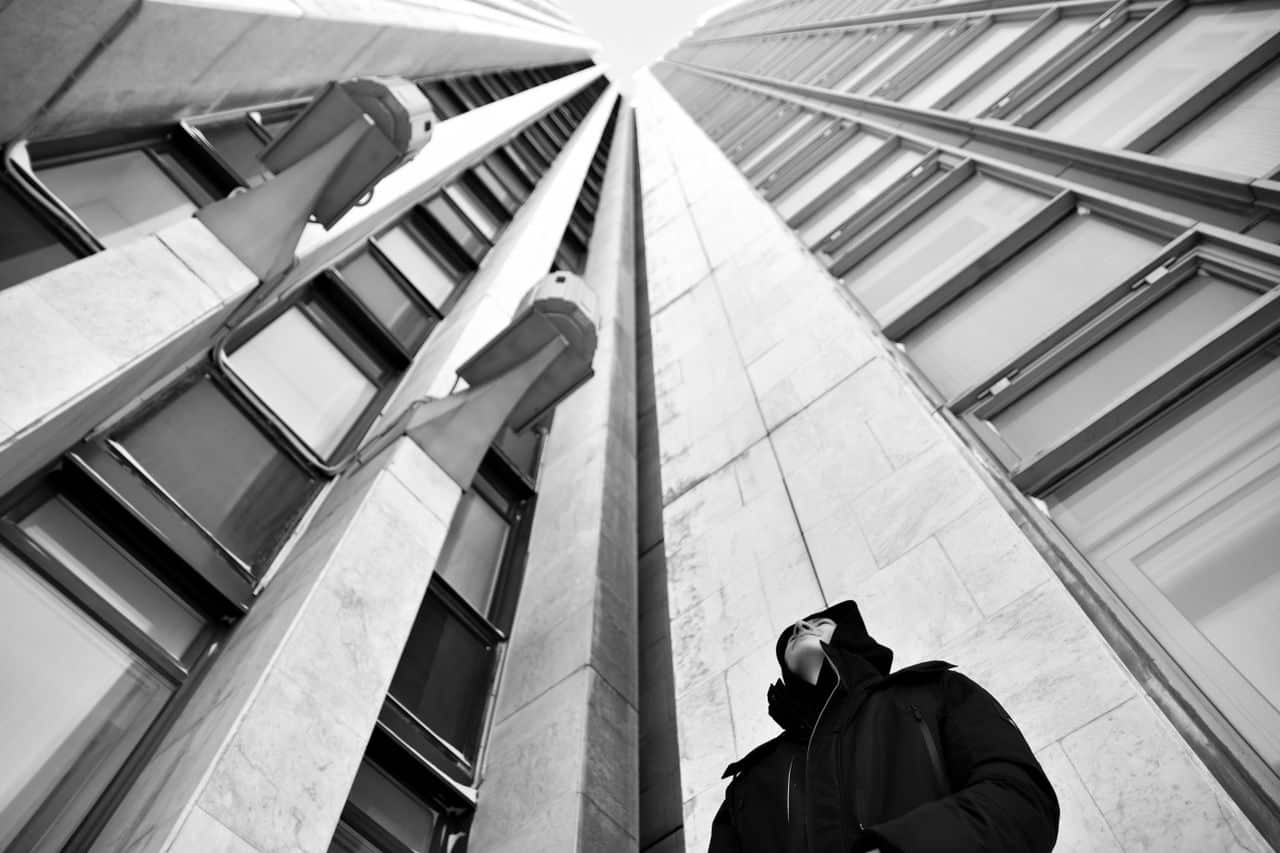
Acrophobia, an intense fear of heights, quietly shapes career choices, housing decisions, and relationships through subtle avoidance and safety behaviors that reinforce anxiety over time, but evidence-based treatments like cognitive behavioral therapy and exposure therapy, guided by a licensed therapist, can effectively reduce symptoms and restore everyday freedom.
What if the job you turned down, the apartment you skipped, or the invitation you declined had nothing to do with scheduling? Acrophobia rarely announces itself as fear. It hides in quiet excuses, small trade-offs, and decisions that slowly shrink your world without you noticing.
What acrophobia is, and what it is not
Acrophobia is a specific phobia in the natural environment category: an intense, persistent fear of heights that is out of proportion to the actual risk in front of you. Cleveland Clinic describes it as an anxiety disorder marked by unreasonable fear rather than ordinary wariness. It is one of the most common phobias, and the fear itself does not need a specific trigger like a glass elevator or an open staircase. Standing near a second-floor window can bring on the same response as standing at the edge of a cliff.
Somewhere below the threshold of a diagnosable phobia sits a milder, very common reaction called visual height intolerance: a wave of unease or unsteadiness when looking down from height, without the persistent avoidance or anticipatory dread that marks acrophobia. Height caution itself is near universal and protective. Most people slow down near a drop-off or grip a railing without needing to. The difference is whether the fear matches the actual danger, whether it persists across situations, and whether it starts shaping the choices you make.
Acrophobia vs vertigo
Acrophobia and vertigo get confused constantly, but they describe different things. Vertigo is a physical sensation, a feeling that the world is spinning or tilting, often caused by inner ear or neurological issues, and it can happen with no fear attached at all. Acrophobia is an anxiety response to height itself, not a symptom of the inner ear. The two can occur together, since real dizziness at height can trigger genuine fear, which is exactly why people use the words interchangeably when they mean two separate things.
Where the word comes from
Acrophobia pronunciation follows ak-ruh-FOH-bee-uh, and the acrophobia etymology traces to Greek: akron, meaning peak or summit, and phobos, meaning fear. Put together, the word literally means fear of the summit. That origin is narrower than how the word gets used today, since most people with acrophobia react to modest heights, not mountain peaks, but the Greek roots still describe the core experience accurately: fear anchored to elevation itself.
Signs and symptoms of a fear of heights
Acrophobia symptoms show up in the body, in the mind, and in behavior, often before a person even reaches the edge of anything. The NHS notes that phobias produce a range of physical and psychological symptoms, from palpitations and trembling to a strong urge to escape the situation. Heights are one of the most common triggers. What follows is what those symptoms actually look like, at each stage.
Physical symptoms during exposure
On approach to a height, the body tends to react before the mind has finished processing the situation. A racing heart, shaking legs, sweating, and shortness of breath are common, sometimes alongside nausea or a sense that the floor is tilting or pulling the body forward. Phobia-related physical symptoms can include dizziness, palpitations, and chest tightness, which can make the experience feel closer to a medical event than an emotional one. These reactions can escalate into full panic attacks, which can end an activity abruptly, whether that means turning back on a hike or stepping away from a window.
Thoughts and mental images
The mind tends to generate a specific kind of content at height: intrusive images of falling, a conviction that a railing will give way even when it is solid, and difficulty judging how far away the ground or the edge actually is. Some people feel a strong urge to drop to hands and knees or grab onto something fixed. These thoughts are not a sign of poor judgment. They are a documented part of how anxiety symptoms present when a perceived threat feels immediate, even when the actual risk is low.
Anticipatory anxiety before the height
For many people, the hardest part happens days in advance, not at the height itself. A trip that includes a scenic overlook, a meeting scheduled on an upper floor, or a planned hike can trigger dread well before departure, and that anticipatory anxiety can be more disruptive than the moment of exposure itself. In children, this often does not come out as stated fear. It can look like tantrums, clinging to a parent, or flat refusal to continue, with no explanation offered.
Symptoms also tend to track perceived instability more than actual altitude. An open stairwell with a visible drop can provoke a stronger reaction than a sealed window on a much higher floor, because the sense of exposure, not the number of feet, is what the body is responding to.
What causes acrophobia
What causes acrophobia has no single answer, and most explanations point to a mix of experience, biology, and learned response rather than one clear origin.
Some people can trace their fear to a specific moment: a fall, a near fall, or watching someone else lose their footing at height. This sometimes happens in early childhood and stays with a person only in fragments, more feeling than full memory. Others develop the fear without ever falling themselves, simply from growing up around a parent or sibling who tensed up or panicked near edges and balconies. Watching a trusted adult react with fear teaches a child that height is something to fear too, even without a bad experience of their own.
Other accounts look further back than personal history. Research on evolved navigation theory found that people perceive about 32% more vertical distance looking down from a height than looking up from the ground, a pattern the researchers argue reflects a perceptual system shaped by the real cost of falling. This suggests some caution around drop offs is built in early and served a protective purpose, which may help explain why fear of heights is so widespread rather than rare.
Balance also plays a role for some people. The body normally uses visual cues from the surroundings to help judge how stable it is, and when those cues thin out, on an open staircase or a balcony with a wide view, some people feel unsteady even though nothing has physically changed.
Many people with acrophobia cannot point to any of this. Mayo Clinic notes that specific phobias arise from a combination of difficult experiences, learned behavior, genetics, and differences in brain function, and that family history and temperament are recognized risk factors. A fear with no story behind it is not less real or less treatable than one with a clear cause.
Where ordinary height caution ends and acrophobia begins
Standing at a cliff edge, most people feel some version of the same thing: a lurch in the stomach, a pull backward, a hand that reaches for a railing that may not even be there. That reaction is not the marker of acrophobia. It is closer to universal, which is exactly why it cannot be the line that separates common discomfort from something worth addressing.
A few questions do more work than the presence or absence of fear itself. Is the reaction out of proportion to the actual risk in front of you? Does it show up reliably, across situations and over time, rather than tracing back to one bad fall or one frightening moment? And when height is unavoidable, does it produce either full avoidance or white-knuckled endurance, the kind that leaves you shaking or exhausted afterward rather than mildly unsettled?
One signal cuts through the rest. Notice whether the fear reacts to heights that carry no realistic danger at all: a stepladder in the kitchen, a second floor window, a chair pulled up to change a light bulb. Ordinary caution tracks the actual drop. Acrophobia symptoms often do not.
The clearest test, though, is subtraction. Ask what you no longer do that you would otherwise have done: a hike you skip, a viewing platform you avoid, a job you would not take because the building has too many floors. Also notice how much room the fear takes up when no height is present at all, in the planning, the rerouting, the private negotiations with yourself before an event even starts. When fear starts closing off choices rather than just producing a moment of discomfort, that is the point where it stops being ordinary caution.
The hidden safety behaviors that do not look like avoidance
Most people with a fear of heights do not think of themselves as avoidant. They think of themselves as careful, or particular, or just not that into balconies. But underneath that framing sits a long list of small adjustments, called safety behaviors, that reduce anxiety in the moment while quietly confirming that the situation was only survivable because of them. The behavior feels like management. What it actually teaches the nervous system is that the height was dangerous and you got lucky.
What safety behaviors look like at height
Safety behaviors are usually too small to register as symptoms, which is exactly why they last so long. Someone might grip a railing with both hands, hug the inside wall on a staircase, or refuse a window seat on a flight without ever naming why. Others keep their eyes locked on their feet or their phone screen, or walk an extra ten minutes to avoid a footbridge that would have saved them the trip. None of these read as acrophobia symptoms from the outside. They read as habits.
The explanations we give instead of naming the fear
The cover story usually arrives before the behavior does. A refused balcony table becomes a preference for shade. Skipping the scenic overlook becomes motion sickness, or a dislike of crowds, or being short on time. These explanations are not lies exactly. They are the version of the truth that does not require saying “heights” out loud, and they work because nobody questions a scheduling problem.
Why small accommodations keep the fear in place
Delegation works the same way as an excuse, just quieter. Always having someone else change the bulb, clean the gutter, or take the rooftop site visit means the fear never has to be tested, only routed around. Repeated checking, testing a railing’s sturdiness, asking how thick the glass is, asking someone else to confirm the building is old and solid, functions as reassurance seeking rather than caution. Each of these keeps anxiety just low enough to stay in the situation, which sounds like progress but actually blocks the one thing that would change anything: finding out the fear was wrong. That is what makes these behaviors so persistent and so easy to miss, even for the person living inside them.
What a fear of heights costs beyond tall buildings
How does acrophobia affect daily life?
Acrophobia affects daily life by narrowing choices that have nothing to do with skyscrapers or observation decks. It shapes which apartment you rent, which job offer you accept, which vacation you agree to, and which invitations you quietly decline. A qualitative study on acrophobia based on interviews with people who live with it describes these as ‘encounter spaces,’ moments where a place, not just its height in feet, triggers fear and a rush of physical reactions like a racing heart or short breath. The same research found that the overall toll depends on a person’s job, lifestyle, and how often they run into height-related situations, so two people with the same acrophobia symptoms can end up living very differently.
Work, income and the choices you quietly stop making
For some, acrophobia closes off entire fields: construction, trades, warehousing, maintenance, aviation, and logistics all involve routine work at height. For others already established in a career, it shows up as smaller refusals. You skip the site visit that would have gotten you noticed. You turn down the promotion that moves your desk to a higher floor, or you find a reason the conference in the high rise hotel does not work for you this year. None of these read as fear from the outside. They read as disinterest, and over time that misread can shape how your career unfolds.
Home, travel and relationships
Housing decisions get filtered the same way. You rule out apartments above a certain floor, pay more to stay on the ground level, or walk away from an otherwise good house because of an open staircase or a loft bedroom. Basic upkeep becomes an added expense: paying someone else to clean gutters, change a light fixture, paint a stairwell, or check the roof. Travel gets rerouted around flights, cable cars, coastal roads, mountain passes, and glass elevators, and the detours that avoid them often add cost and exhaustion to a trip.
Relationships absorb a version of this too. You opt out of your child’s rope course or the viewing platform at the top of the trail, sit out a partner’s hiking plans, or decline a wedding at a rooftop venue. Each decision usually comes with an explanation you did not want to give and a guilt that outlasts the moment. Over time, saying no this often can shrink a social world and settle into an identity, being the one who always backs out, and that pattern can sit alongside low mood, social anxiety, panic disorder, or other specific phobias rather than on its own.
Talking about a fear of heights with family, friends and employers
You do not owe anyone your diagnosis. What matters in most conversations is the functional limit: the specific thing you cannot safely or comfortably do right now, not the backstory of how the fear started or a clinical label for it. Keeping the disclosure narrow makes it easier to say and easier for the other person to actually use.
A workable sentence names the task and the alternative in the same breath: “I can’t stand at the railing on the balcony, but I’m glad to sit at the table near the door.” This keeps the conversation short and gives the other person something concrete to act on, instead of leaving them to guess how far the limit extends.
At work
Frame the conversation around the task and safety, not around your character or your reliability as a worker. Saying “I can’t work from the open scaffold level, but I can take the ground-floor inspections” is a request about a specific function. Accommodation processes differ widely from one employer to another and from one country to another, so what happens next depends on where you work, not on how well you explained yourself.
With family and friends
Ask for the plan to change, not for reassurance. “Can we take the elevator instead of the lookout stairs” gets you further than “tell me it’s not a big deal.” It also heads off the three responses that show up most often: teasing, a surprise attempt to expose you to the height anyway, and “just don’t look down.” None of those help, and naming the plan you want in advance makes them less likely.
With children
Children notice hesitation whether or not you explain it, so naming it plainly tends to work better than hiding it. “I don’t love heights, so I’m going to hang back here while you go up” gives them accurate information instead of a mixed signal. This does not require detail about acrophobia treatment or how the fear works, just an honest, short sentence.
How acrophobia is diagnosed and treated
How acrophobia is diagnosed
Diagnosis starts as a conversation, not a test. A clinician asks what you avoid, how long the fear has lasted, whether it feels proportionate to the actual risk, and how much it gets in the way of your week. Part of that conversation rules out vertigo and other medical causes that can produce similar sensations but need different treatment. Specific phobia is diagnosed using established clinical criteria, and a standardized questionnaire about height fear is sometimes used alongside the interview to track severity over time.
Therapy approaches that treat acrophobia
Acrophobia treatment is built around testing the fear against reality rather than trying to argue yourself out of it. Cognitive behavioral therapy targets the specific predictions attached to height, like the railing giving way or losing control, and checks them against what actually happens when you’re up there. A review of CBT research across anxiety disorders found the approach effective for specific phobia by changing the thoughts and behaviors that keep the fear going. Exposure therapy is the most established piece of that work: you and a therapist build a hierarchy together, starting with something low stakes like a photograph of a height and working upward toward a balcony or a glass elevator, while deliberately dropping the safety behaviors that usually accompany the fear.
Virtual reality exposure offers the same principle in a controlled setting. A randomized controlled trial protocol for a smartphone based VR exposure program notes that VR exposure has shown effectiveness comparable to real world exposure for specific phobias, and that app based delivery makes treatment more accessible when arranging real height exposure is difficult. That same source also notes acrophobia is the most common specific phobia subtype, which is part of why cheaper, scalable options like VR matter. If avoidance has started shaping decisions you would rather make freely, you can create a free ReachLink account and browse licensed therapists at your own pace, with no commitment.
Self help and natural remedies, and what they can realistically do
Natural remedies for fear of heights, things like paced breathing, cutting back on stimulants, and getting enough sleep, can lower your baseline level of arousal. Grounding techniques help too: pressing your feet into the floor, resting a hand against a solid surface, or naming objects in the room can help you tolerate the sensation instead of escaping it. None of this replaces exposure based work. These are supports that sit alongside therapy, not substitutes for it.
If you’re searching for how to get over a fear of heights fast, that framing works against you. What tends to produce change is exposure that’s brief but repeated and structured, not a single dramatic push. Medication is sometimes used for anxiety disorders and is discussed in the research literature, but this article doesn’t advise on it, and anyone weighing that option needs guidance suited to their own situation.
Can acrophobia be cured, and what the outlook looks like
Specific phobias respond well to treatment, and specific phobias are described by the Mayo Clinic as long-lasting anxiety conditions that, left untreated, tend to persist for life rather than fade on their own. That same source notes that when treatment is sought, it can be highly effective. Many people who complete acrophobia treatment regain access to situations they had quietly written off years earlier: a rooftop dinner, a hiking trail with a view, a ladder in the garage.
Recovery rarely means feeling nothing at a cliff edge. It usually looks like no longer arranging your route, your job, or your vacation around what height might be involved.
Height fear can genuinely intensify later in life, and not always for psychological reasons. Reduced balance confidence, changes in vision, and a real increase in fall risk can all make heights feel more dangerous, which is sometimes mistaken for the phobia getting worse on its own.
A relapse after a long stretch of ease, or after a frightening fall or near miss, is common. It usually responds to a brief return to the same exposure principles that helped the first time, rather than starting over from nothing.
Left untreated, avoidance tends to spread. A fear that once applied to one bridge or one balcony can gradually expand to cover more situations, more decisions, more of daily life.
Maintenance is usually less dramatic than people expect. Keeping occasional, low-stakes contact with mild height situations, a balcony, a footbridge, a step stool, helps keep the gains from quietly eroding over time.
The fear that shows up in ordinary moments deserves to be taken seriously
Living with a fear that follows you onto ladders, bridges, balconies, or even certain thoughts about height is exhausting in ways that are easy to minimize from the outside. You have likely built quiet routines around avoiding these moments, and that constant calculation takes a toll even when no one else notices it. None of this means something is wrong with you. It means your nervous system learned to protect you in a way that has become too costly to carry alone.
You do not have to keep managing this by yourself or wait until it feels unbearable to ask for support. Talking to someone who understands anxiety and phobias can help you understand what is happening in your body and mind, and begin to loosen the grip this fear has on your days. You can begin with a free assessment at ReachLink, at your own pace and with no commitment, to see what support might look like for you.
FAQ
-
How do I know if I actually have acrophobia or if I'm just nervous around heights like everyone else?
Most people feel some unease near a cliff edge or a high balcony, and that reaction is actually normal and protective. Acrophobia is different because the fear shows up at heights that carry no realistic danger, like a second-floor window, a stepladder, or a chair used to change a light bulb, and it persists reliably across situations rather than tracing back to one bad experience. The clearest sign is not the fear itself but what the fear is closing off, including hikes you no longer take, job offers you quietly turn down, or social plans you reroute around possible heights. If the fear is reshaping your choices more than it is just producing a moment of discomfort, that is a good reason to take it seriously.
-
Does therapy actually work for fear of heights, or is it something you just have to live with?
Therapy is one of the most effective treatments available for acrophobia, and most people who complete it regain access to situations they had quietly written off years earlier. Cognitive behavioral therapy (CBT) works by identifying the specific predictions the fear produces, like a railing giving way or losing control at height, and testing them against what actually happens during exposure. Exposure therapy, which is usually part of CBT for phobias, involves building a gradual hierarchy with a therapist, starting with something low-stakes like an image of a height and working upward at a manageable pace. Research also supports virtual reality exposure as comparably effective when real-world height situations are difficult to arrange. Specific phobias like acrophobia tend to persist without treatment, but they respond well once addressed.
-
Why do I keep making small adjustments around heights without even realizing I'm afraid?
These adjustments are called safety behaviors, and they are common with phobias because they reduce anxiety just enough to get through a moment without ever fully challenging the fear. Gripping a railing with both hands, hugging the inside wall on a staircase, routing around a footbridge, or always having someone else clean the gutters all feel like practical habits rather than symptoms of a phobia. The problem is that each small accommodation quietly teaches your nervous system that the height was dangerous and you survived only because of the workaround, which keeps the fear in place rather than loosening it. Recognizing these behaviors is often one of the first things a therapist will work through with you, because naming them is what makes it possible to gradually drop them.
-
I think my fear of heights is affecting my life more than I've admitted - how do I find a therapist who can actually help?
Taking that first step is often the hardest part, and knowing where to start makes a real difference. ReachLink connects people with licensed therapists through human care coordinators, not an algorithm, so the process of finding someone who fits your specific needs feels more like a guided conversation than filling out a form. Therapists on the platform are experienced in anxiety and phobia treatment, including the exposure-based and CBT approaches that research supports for acrophobia. You can start with a free assessment at ReachLink at your own pace and with no commitment, to get a clearer picture of what support might look like for you.
-
Can a fear of heights actually get worse over time if you never deal with it?
Yes, avoidance tends to expand rather than stay contained. A fear that once applied to one specific bridge or balcony can gradually spread to cover more situations, more decisions, and more of daily life, as each act of avoidance reinforces the idea that the height was genuinely dangerous. Acrophobia can also feel more intense later in life for physical reasons, including reduced balance confidence and changes in vision, which can be mistaken for the phobia worsening on its own. A relapse after a frightening fall or near miss is common, but it usually responds to a brief return to exposure-based work rather than starting over entirely. The key takeaway is that acrophobia rarely fades on its own, but it does respond well to treatment when you decide to address it.