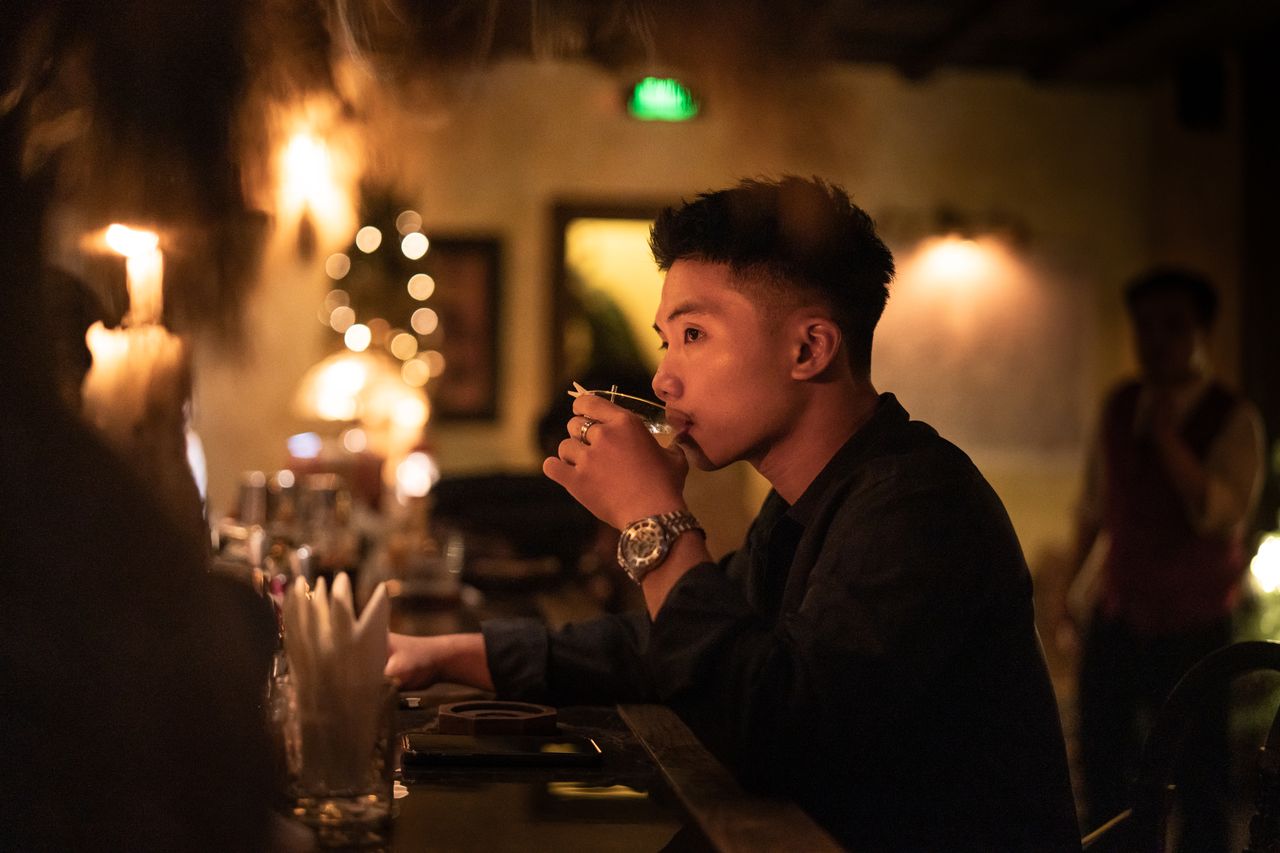
Drinking to cope happens when alcohol shifts from marking social occasions to managing difficult emotions like stress, loneliness, or anxiety, a pattern signaled by drinking alone, rising tolerance, and irritability when a drink is delayed, and licensed therapists can help identify these triggers through evidence-based approaches like cognitive behavioral therapy and mindfulness-based stress reduction.
What if that nightly glass of wine stopped being about the evening and started being about surviving it? Coping drinking rarely announces itself, it just quietly shifts from marking occasions to managing feelings. Here's how to spot the exact moment that shift happened for you.
Drinking that used to feel social can quietly turn into drinking to manage stress, conflict, or difficult feelings. This article is for anyone who has started to notice that shift in themselves or someone close to them. It covers how social and coping drinking differ, the signs to watch for, why coping drinking can make feelings worse over time, and what you can do next, from handling cravings to getting support.
Social drinking and coping drinking are not the same behavior
A glass of wine at a birthday dinner and a glass of wine after a fight with your partner can look identical from across the room. Same glass, same pour, same person. The difference is not in the liquid. It is in what the drink is being asked to do.
Social drinking is organized around an occasion. It has a start and an end tied to the event itself: dinner winds down, the wedding toast is over, the game ends, and the drinking ends with it. Coping drinking is organized around a feeling the person wants to change or stop feeling. It is not tied to a clock or a calendar, it is tied to an internal state, so it can show up on a random Tuesday with no occasion attached at all.
This is why quantity alone is a poor test for telling the two apart. Someone can have one drink to cope and someone else can have four drinks socially. The useful question is not how much, but what the drink is doing: is it marking a moment with other people, or is it managing something happening inside you?
A few terms are worth defining early, since they come up often. A trigger is the situation, memory, or feeling that sets off the urge to drink, such as conflict, loneliness, or stress. A craving is the pull toward a drink once that urge has started. Tolerance is needing more alcohol over time to get the same effect. Coping drinking describes using alcohol specifically to manage or numb an emotional state. Gray area drinking describes a pattern that sits between clearly fine and clearly a problem, which is a distinction explored further elsewhere.
Drinking to cope often looks completely ordinary from the outside, including to the person doing it. It can coexist with a full social life, a steady job, and no visible crisis. Nothing about it announces itself, which is exactly what makes it easy to miss.
The moment the shift becomes visible to you
The realization rarely shows up during a crisis. It tends to arrive in a quiet, almost forgettable moment: pouring a glass before anyone else has arrived, or feeling the relief land at the sound of the cork rather than the first sip. That gap matters. It tells you the relief was never about taste or company, it was about something settling in your body before the drink even touched it.
Another common entry point is resentment, the flicker of irritation at a plan that will not include alcohol. A dinner, a hike, a Tuesday night with nothing on the calendar. You notice you have started arranging your evening around whether a drink will be part of it, not the other way around. That reordering, drink first, plan second, is often the first real evidence of drinking to cope rather than drinking to connect.
What follows is usually an argument with yourself. You minimize it: it was one night, it was a hard week. You compare yourself to someone who drinks more, which makes your own pattern look manageable by contrast. You promise a rule, a dry weekday, a two drink limit, that you have already broken once before and quietly expect to break again. This loop is a form of alcohol and emotional avoidance in itself, a way of managing the discomfort of noticing without having to look at it directly. Sometimes what is underneath has more to do with anxiety than with the drink itself, a constant low hum that drinking temporarily quiets.
None of this requires a label to act on. Recognizing the pattern is information, not a verdict handed down about who you are. You do not need to decide tonight whether you have a problem. You only need to notice that the noticing happened, and that it happened for a reason.
The signs that drinking has become a coping tool
Some signs show up in behavior first, others are quieter and live in mood or physical sensation. Most people notice the behavioral ones before they notice the rest. Looking at all three together gives a clearer picture than focusing on any one alone.
Behavioral signs you may notice first
Drinking alone more often than you used to is one of the clearest early signals. So is having a drink before an event, not to enjoy it more, but to take the edge off beforehand. Other signs include hiding how much you have had, rounding the number down when someone asks, or changing plans so you can keep drinking uninterrupted. None of these on their own mean something is wrong, but a pattern of them is worth paying attention to.
Emotional signs that are easier to miss
The clearest emotional sign is drinking to end a feeling rather than to enjoy an evening: reaching for a drink because you want a feeling gone, not because you want to add something good to the moment. Irritability when a drink is delayed, even by a short wait, is another. So is anxiety the next day that feels bigger than whatever prompted the drink in the first place. These signs tend to get dismissed because they feel like personality or stress rather than a pattern connected to alcohol.
Physical signs and changing tolerance
Needing more alcohol to get the same effect you used to get from less is a physical sign, not just a willpower issue. Poor sleep after drinking, even when the amount seems moderate, is common. Morning shakiness or nausea that was not there before also points to a body adjusting to regular alcohol exposure.
These categories map onto how alcohol use disorder is assessed clinically, where a set of criteria across behavior, craving, and physical dependence determines severity based on how many are present. That overlap does not mean every item on this list adds up to a diagnosis. It means these are the categories worth paying honest attention to, which is also where you can read more about signs of alcohol use disorder in more detail.
Self-assessment here is harder than it sounds, because the same substance causing the pattern is also dulling the discomfort that would normally prompt you to look at it closely. A clearer approach than scoring yourself against a checklist is sitting with a few honest questions: What am I expecting the drink to do for me tonight? What happens in my body or mood if I don’t have it? Would I be comfortable telling someone exactly how much I drank this week? These questions do not need fast answers, just honest ones.
The gray area between a habit and a disorder
Alcohol use disorder is not a single category you either fall into or avoid. The NIAAA describes it as a spectrum, with mild, moderate, and severe levels based on how many diagnostic criteria a person meets. That framing matters because most people only picture the severe end: lost jobs, broken relationships, a body that cannot function without alcohol. A lot of real drinking problems never reach that point, and still deserve attention.
This is what gets called gray area drinking: patterns that cause genuine harm without matching the image most people hold of addiction. The nightly two glasses that stopped being a choice somewhere along the way sit here. So does the weekend that was supposed to be one dinner out and became something heavier, again, despite the intention going in. Nothing about these patterns looks dramatic from the outside, which is part of why they persist.
Further along the alcohol use disorder spectrum, the pattern changes shape. Drinking starts happening to head off withdrawal discomfort rather than for any pleasure in it. Attempts to cut back fail more than once. A consequence lands, something that actually mattered, and the drinking continues anyway.
The practical reason this spectrum matters is simple: a pattern caught earlier tends to respond to smaller changes than one left to grow. Waiting for things to get worse before taking a pattern seriously is not a requirement anyone has set. Nobody has to earn support by hitting a harder bottom first. Recognizing the pattern at the milder end counts as a legitimate reason to pay attention to it.
Why drinking to cope makes the feeling worse over time
The pattern has a shape, and the shape repeats. A drink brings relief, the relief fades, and what follows is a rebound that sits lower than where you started. That lower point creates a stronger pull toward the next drink than the one before it. This is the withdrawal craving cycle, and it runs quietly enough that most people only notice the pull, not the mechanics behind it.
Researchers use the term hyperkatifeia for the heightened emotional pain, anxiety, and irritability that shows up in the hours and days after drinking. It is not just a hangover. It is the nervous system overcorrecting for the calm the alcohol produced, and it tends to land harder than the original stress did. Over time, the drink stops producing pleasure and shifts to producing the absence of discomfort instead, which can mean you need it just to feel level rather than to feel good.
Why does social anxiety go away when I drink?
Social anxiety eases when you drink because alcohol dampens the physical signals of fear in the moment, but that relief is temporary and tends to come with a cost afterward. A study on using substances to cope with social anxiety found that people who drink specifically to manage social anxiety experience consequences in daily life tied to that coping pattern, not just to the drinking itself. The anxiety that felt manageable before drinking often becomes the main thing the drinking is treating, which is how occasional social drinking slides into something closer to maintenance. Alcohol and anxiety can interact in a loop where each drink makes the next anxious moment harder to sit through without one.
Sleep is usually one of the first casualties. Poor sleep lowers your tolerance for the exact feelings that prompted the drinking in the first place, so the same stress hits harder the next day. This is how “I only drink when I’m stressed” quietly becomes “I’m stressed more often,” without any single dramatic change marking the shift. It also explains why willpower framing fails here: the baseline distress is rising on its own, which is a physiological pattern, not a character problem.
What coping drinking costs over time
The consequences of drinking to cope rarely show up as one bad night. They build in places that are easy to miss until a pattern is already set.
Relationships quietly narrow
The first thing to go is often availability, not affection. You are present but half there, repeating a conversation you do not remember starting or forgetting one that mattered to someone else. Partners and close friends start adjusting without saying so: timing hard conversations around how much you have had, dropping plans they used to count you in on. Nothing dramatic happens, which is partly why it is hard to name.
Work shows up as flatness, not failure
At work, the cost is usually capacity, not collapse. You still show up, still meet deadlines, but the margin you once had for extra effort or creative thinking thins out. Colleagues might describe you as tired or disengaged rather than struggling. That flatness can sit underneath a functioning routine for a long time before anyone, including you, names it.
Health costs accumulate in the background
Sleep gets lighter and less restorative. Blood pressure and liver function shift in ways you cannot feel day to day. Mood becomes harder to stabilize, and alcohol and depression can feed each other in a loop that makes both worse. The Surgeon General’s Advisory on Alcohol and Cancer Risk also documents a causal link between alcohol and increased risk for several cancers, a cost with no immediate symptom at all.
The feeling that never finishes
The quieter cost is that whatever feeling sent you toward the drink in the first place never gets fully processed. It gets interrupted instead, over and over, which is a separate problem from the rebound that follows. Each individual night is easy to explain away. It is only in sum that the pattern becomes visible.
Handling cravings, triggers and the hours they arrive in
Mapping your triggers and riding out a craving
Alcohol cravings and triggers tend to cluster around specific points in the day rather than appearing at random. The drive home, the first hour after the kids are in bed, a call with one particular relative, the moment a work email lands after 6pm: these are predictable enough to write down. Before the craving shows up, name the time of day it usually arrives, the transition it follows, the person it involves, and the feeling underneath it. A craving mapped in advance is a craving you can meet with a plan instead of a scramble.
Once a craving hits, you can ride it out rather than fight it. Name it out loud or in your head: this is a craving, it will peak, and it will come down. Time it if that helps, most people find the intensity is shorter than it feels in the moment. The goal is not to make the craving disappear. It’s to notice it rise, hold, and recede, while you do something else with your hands and your attention.
Grounding helps most when it gives your body something concrete to do. Press your feet into the floor and notice the contact. Wrap yourself in a heavy blanket and feel the weight of it. Hold a warm mug in both hands. Name five objects in the room, out loud if you’re alone. Push your palms together and hold the tension for a few seconds, then release. None of these require anything other than your body and your attention, which is the point.