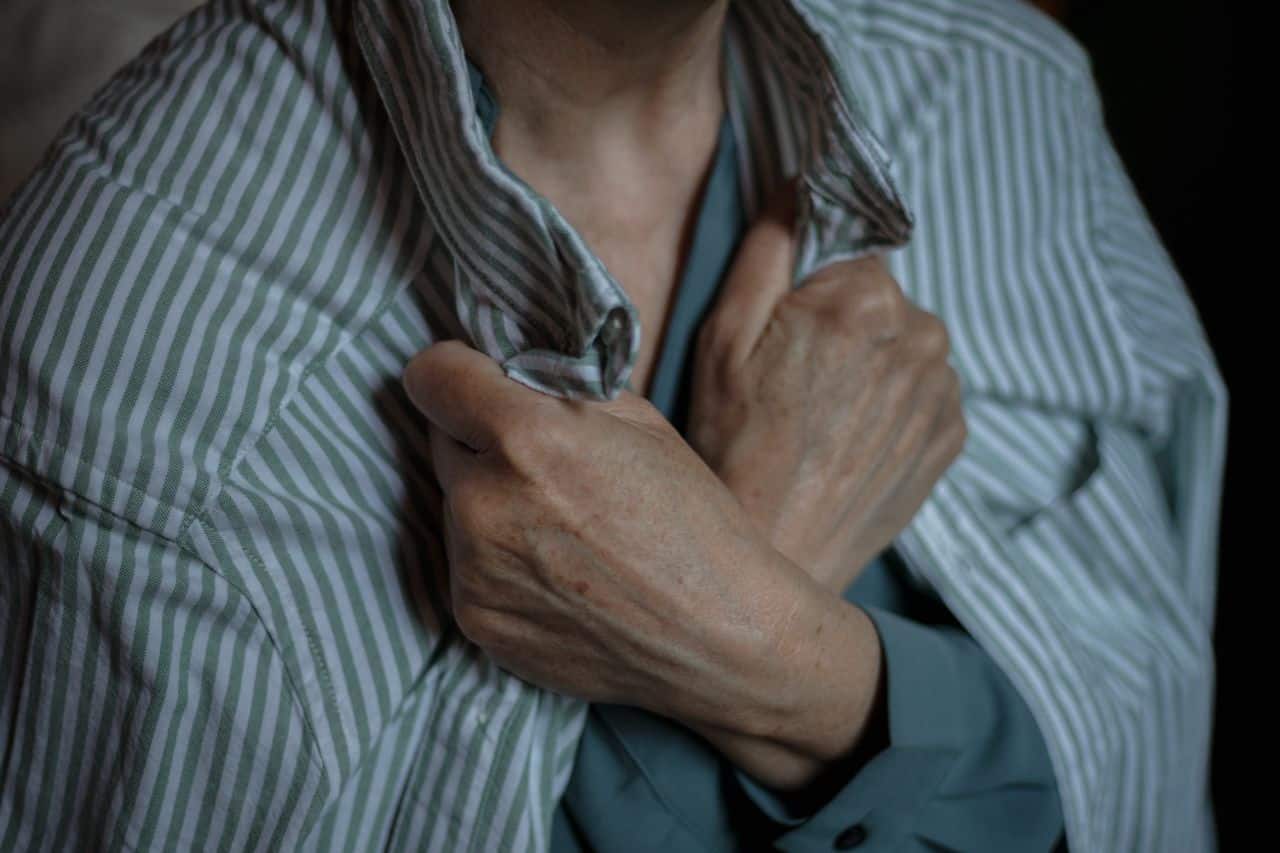
Body shaking after a frightening event is a normal physiological response driven by residual epinephrine and unspent muscular tension from the fight-or-flight response, and understanding the distinct types of post-stress tremor alongside evidence-based calming techniques like vagal nerve activation and motor discharge can help individuals recover faster and recognize when a licensed therapist's support may be beneficial.
The shaking that hits once the danger has passed isn't your body falling apart. It's actually proof your nervous system worked. An adrenaline dump triggers a chain of physical responses that peak after the threat is gone, and understanding exactly why that happens changes how you see your body's reaction to stress.
What happens in your body during a stress response
The shaking you feel after a frightening moment doesn’t come out of nowhere. It’s the tail end of a carefully coordinated chain of events your nervous system sets in motion the instant it senses danger. Understanding that chain makes the trembling make a lot more sense.
It starts deep in the brain. A small, almond-shaped structure called the amygdala scans your environment for threats constantly. The moment it flags something as dangerous, it fires a signal to the hypothalamus, the brain’s command center for automatic body functions. From there, two parallel pathways launch almost simultaneously, and each one plays a distinct role in your stress response.
The first is the SAM axis (sympathetic-adrenal-medullary). This pathway is fast. Within seconds, it triggers your adrenal glands to flood the bloodstream with epinephrine, commonly known as adrenaline. The second is the HPA axis (hypothalamus-pituitary-adrenal), a slower pathway that releases cortisol over the next several minutes. The neural circuitry behind this dual-pathway system is what allows your body to mount both an immediate reaction and a sustained one at the same time.
The adrenaline rush hits your body like a switch being thrown. Your heart rate spikes, your airways widen to pull in more oxygen, and your pupils dilate to sharpen your vision. Digestion halts entirely because it’s not a priority right now. Your liver converts stored glycogen into glucose to fuel your muscles, and blood flow redirects away from your core and toward your arms and legs. These cellular-level changes happen in a coordinated wave of nerve impulses and hormonal signals that your body executes without any conscious input from you.
Your muscles are also being primed at the fiber level. Epinephrine increases calcium release inside muscle cells, which prepares them for explosive contraction. This is a critical detail: those muscles are loaded and ready, even if you never run, fight, or physically act on the threat. That stored tension has to go somewhere, and that’s exactly what sets up the visible shaking that comes later.
Meanwhile, your prefrontal cortex, the part of your brain responsible for rational thought, fine motor control, and emotional processing, gets partially sidelined during peak threat. This is why people often describe feeling eerily calm or even numb in the middle of a crisis. Your brain is deliberately narrowing its focus to survival. Cortisol then extends this heightened alert state well beyond the initial adrenaline spike, which is why the effects of the fight-or-flight response don’t simply vanish the moment danger passes. To learn more about what this ongoing activation does to your health, stress and how it affects the body is a useful place to start.
Why the shaking happens after the threat is gone, not during
Most people assume that if their body is going to shake, it would happen during the scary moment. But that’s almost never how it works. The trembling tends to arrive once you’re already safe, which feels confusing and even alarming. There’s a precise neurological reason for this timing, and understanding it changes how you interpret what your body is doing.
The prefrontal override: why you feel calm during the crisis
When a real threat is present, your brain shifts into a highly focused operational mode. The prefrontal cortex, the region responsible for executive thinking and decision-making, works alongside your sympathetic nervous system to direct every available resource toward survival-relevant processing. Attention narrows. Reaction time sharpens. Peripheral sensations, including early tremor, get filtered out because they’re simply not useful right now. Research on cortical circuits linking the brain to the adrenal medulla supports this active role the prefrontal cortex plays in modulating adrenal output during threat, essentially keeping the system tightly coordinated while danger is present. You aren’t suppressing the shaking consciously. Your brain is just routing its bandwidth elsewhere.
Motor discharge: your muscles releasing what they never used
While your brain is locked in focus mode, your muscle fibers flood with calcium and prime themselves for explosive action, whether that’s sprinting, fighting, or climbing. But in many modern stressors, no physical action ever happens. You sit through the car accident. You freeze during the confrontation. You hold completely still. All that primed neuromuscular tension has nowhere to go. Once your brain’s threat-appraisal system determines the danger has passed, the parasympathetic nervous system, your “rest and digest” branch, begins coming back online. The transition isn’t clean or instant. Both systems overlap for a period, creating a turbulent neurological window where post-stress tremor, nausea, and emotional flooding can all surface at once. The shaking you feel is motor discharge: muscles offloading stored tension in the absence of a physical task, amplified by residual stress hormones still stimulating your muscle fibers.
Your nervous system is doing this on purpose
This pattern isn’t unique to humans. Mammals routinely shake after escaping predators, and researcher Peter Levine documented this as an adaptive self-regulation mechanism observed across species in his work on Somatic Experiencing. The shaking after stress is the body’s built-in method for completing the stress cycle and returning to baseline. People who notice this tremor pattern recurring after events that feel emotionally unresolved may find it useful to explore traumatic stress disorders and how stored survival energy can become a longer-term pattern in the nervous system.
The core reframe is this: the shaking is not a sign that something went wrong. It’s a sign that your nervous system regulation is working exactly as designed, clearing the charge that built up when your body prepared for an action it never had to take.
The three types of post-stress tremor and how to tell them apart
Not all shaking after an adrenaline rush is the same. Your body can produce at least three distinct types of tremor after a stressful event, each with a different physical cause and a different feel. Knowing which one you’re experiencing can make the whole thing a lot less alarming.
Adrenergic tremor
This is the most common type of shaking after an adrenaline rush, and it’s driven by chemistry. Circulating epinephrine stimulates beta-2 adrenergic receptors in your skeletal muscle, causing rapid, involuntary contractions. The result is a fine, fast tremor you’ll typically notice in your hands, legs, or jaw. It can look like you’re vibrating rather than shaking. The good news is that it’s self-limiting: as your body metabolizes the catecholamines (the chemical messengers like epinephrine and norepinephrine), the tremor fades, usually within 15 to 30 minutes. People who experience this type of tremor frequently may want to explore whether anxiety-related physical symptoms are playing a broader role in their lives.
Thermogenic shivering
During a stress response, adrenaline causes your blood vessels near the skin to constrict, pushing blood toward your core organs where it’s needed most. Once the threat passes and those vessels relax again, skin temperature can drop quickly. Your body responds by shivering to generate heat, exactly the way it would in a cold environment. The strange part is that you feel cold chills even when the room is perfectly warm. This type of shaking is your thermoregulation system catching up after the crisis, not a sign that something is wrong.
Neurogenic or trauma-release tremor
This type looks and feels different from the other two. The oscillations are deeper and slower, and they tend to originate in the psoas and core muscles rather than the extremities. The psoas is a deep hip flexor muscle that contracts strongly during survival responses. After prolonged or high-magnitude stress, the body appears to use these tremors to discharge stored survival energy, which is the principle behind David Berceli’s Tension and Trauma Releasing Exercises (TRE) framework.
When more than one type happens at once
You can experience all three types of tremor simultaneously, and many people do. You might notice fine hand trembling from adrenergic stimulation, cold chills from vasodilation, and deeper core shuddering after a particularly intense event. Layered as that sounds, each response is physiologically normal. Your body isn’t malfunctioning. It’s completing the stress cycle it was designed to run.
How long does the shaking last?
One of the first questions people ask after their body starts trembling is: when will this stop? The answer depends on which part of the stress response you’re tracking, because adrenaline clears your bloodstream much faster than its effects leave your body.
Epinephrine has a circulating half-life of roughly 2 to 3 minutes, meaning the hormone itself breaks down quickly. But the downstream signaling it triggers, including muscle activation and elevated heart rate, can persist for 15 to 30 minutes after the hormone is gone. This window is sometimes called the catecholamine clearance window (catecholamines are the chemical family that includes epinephrine and norepinephrine). The signals outlast the messenger.
For most people, visible shaking lasts somewhere between 5 and 25 minutes after the stressor resolves. You might also notice a residual internal vibrating sensation or jitteriness that lingers for up to an hour, even after the outward trembling has stopped.
Here’s a rough timeline of how it typically unfolds:
- Stressor onset: adrenaline peaks within 30 to 90 seconds
- Threat resolves: tremor often begins 1 to 5 minutes later
- Tremor peaks, then gradually subsides
- Catecholamine clearance at roughly 15 to 30 minutes post-resolution
- Full baseline recovery at 1 to 3 hours
That last stretch matters. Cortisol, the stress hormone released through a slower hormonal chain reaction, remains elevated for 1 to 3 hours after acute stress. This is why you might feel foggy, emotionally raw, or unusually tired well after the shaking has stopped. Your nervous system has quieted, but your body chemistry is still catching up.
How long this process takes also varies from person to person. Caffeine, dehydration, a high baseline anxiety level, and low physical fitness can all extend the recovery window. Being physically active during the stressful event, like running or fighting, actually helps metabolize adrenaline faster.
If shaking persists beyond 30 to 45 minutes or intensifies rather than gradually fading, that pattern is worth taking seriously. The section on when to seek professional support covers this in more detail.
How to calm down after an adrenaline rush
Knowing what’s happening in your body is only half the equation. The other half is knowing what to actually do about it. The techniques below each target a specific part of the adrenaline recovery process, giving your nervous system a concrete way to shift gears.
Breathing and vagal nerve activation
The vagus nerve is the main highway of your parasympathetic nervous system, the system responsible for calming your body down after a threat. Controlled breathing is one of the fastest ways to stimulate it. Research on slow-paced breathing shows that deliberate breathing patterns reduce state anxiety and improve emotional regulation by directly influencing brain activity tied to stress.
One technique worth knowing is the physiological sigh: take a double inhale through your nose (a full breath, then a short second sniff to fully expand the lungs), followed by a long, slow exhale through your mouth. Research from Andrew Huberman’s lab at Stanford found this pattern is more effective than box breathing for acute stress reduction because the extended exhale activates the vagus nerve more powerfully than an equal inhale-to-exhale ratio.
Cold water is another fast-acting tool. Running cold water over your wrists or splashing it on your face triggers the mammalian dive reflex, a built-in physiological response that activates the vagus nerve and rapidly lowers heart rate. It sounds simple, but the mechanism is real.
Movement and motor discharge
Your muscles were primed to fight or run. If neither happened, that physical preparation has nowhere to go, and that’s a big reason the shaking starts. Rather than fighting it, give your body a low-intensity outlet.
Gentle bilateral movement works well here. Walking, slowly swaying side to side, or lightly shaking out your hands gives those primed muscles a controlled task to complete. This facilitates motor discharge: a gradual release of built-up muscular tension that helps the body wind down on its own terms.
Grounding techniques like the 5-4-3-2-1 method (naming 5 things you can see, 4 you can touch, 3 you can hear, 2 you can smell, and 1 you can taste) redirect your prefrontal cortex from threat-scanning to present-moment awareness. This matters because your brain’s threat-appraisal system needs sensory confirmation that the danger has actually passed. Sensory anchoring gives it that signal. Practices like mindfulness-based stress reduction (MBSR) are built on this same principle, training the parasympathetic response over time through sustained present-moment awareness.
If the shaking isn’t distressing, letting it complete naturally may be the most efficient path to recovery. This aligns with somatic experiencing principles, a body-focused therapeutic approach that treats tremoring as a healthy, self-regulating discharge rather than a symptom to suppress.
What not to do after an adrenaline dump
Some instinctive responses actually slow recovery down:
- Suppressing the shaking interrupts the discharge cycle your body initiated on purpose. Tensing up or trying to hold still keeps the nervous system in a holding pattern.
- Consuming caffeine or stimulants prolongs the effects of catecholamines already circulating in your system, keeping your heart rate and alertness elevated longer than necessary.
- Immediately replaying the stressful event in detail reactivates the amygdala, your brain’s threat-detection center, which can restart the stress response before the first one has fully resolved.
If post-adrenaline episodes are becoming a pattern, a licensed therapist can help you understand your nervous system’s responses and build long-term coping strategies. You can create a free ReachLink account to explore your options at your own pace, with no commitment required.
Why some people shake more than others
If you’ve ever shaken visibly after a stressful moment while someone next to you seemed completely unfazed, you might have wondered what was wrong with you. The answer is: nothing. Stress response variation is real, well-documented, and shaped by a surprising number of factors. The same adrenaline dump can produce dramatic, minutes-long trembling in one person and a barely noticeable quiver in another.
Your nervous system’s recovery speed
One of the biggest factors is vagal tone, which refers to how active your vagus nerve is at rest. The vagus nerve acts as the main brake on your stress response, pulling your body back toward calm after sympathetic activation. People with higher vagal tone, often measured through heart rate variability (HRV), tend to recover faster and experience shorter or less intense post-stress tremor. Vagal tone isn’t fixed. Regular exercise, consistent breathwork practices, and working with a therapist on nervous system regulation can all improve it over time.
What you’ve consumed that day
Caffeine has a direct effect on adrenaline sensitivity. It works by blocking adenosine receptors, which in turn raises your baseline level of circulating catecholamines. When a stressor hits and your body releases another surge of adrenaline, it’s landing on top of an already elevated neurochemical state. The result is more pronounced shaking that lasts longer. Dehydration and low blood sugar compound this further. Both independently trigger tremor on their own, so when an adrenaline dump hits a body that’s already under-fueled or under-hydrated, the physical symptoms are amplified.
Your sleep and fitness baseline
Sleep deprivation reduces activity in the prefrontal cortex while simultaneously increasing amygdala reactivity. When the amygdala is running hotter than usual, stress responses are bigger and physical symptoms are more pronounced. Regular cardiovascular exercise works in the opposite direction: it improves your body’s efficiency at metabolizing catecholamines, which means you clear adrenaline from your system faster and return to a calm baseline more quickly.
The role of trauma history
People with histories of chronic stress or trauma often experience more intense and longer-lasting physical stress responses, and there’s a clear neurobiological reason for this. Research on how early-life stress shapes the HPA axis shows that repeated exposure to adversity can sensitize the body’s stress-response system, leading to larger cortisol surges and slower recovery. Studies on the neurobiological effects of childhood psychological trauma also demonstrate that trauma lowers the amygdala’s activation threshold, meaning the nervous system reaches high alert more easily and stays there longer. If your body shakes harder or longer than you think it should, this isn’t a character flaw. It’s a nervous system that adapted to protect you.
When post-stress shaking may need medical attention
Most adrenaline-related tremors are harmless and resolve on their own within 30 minutes. The shaking fades gradually, it connects clearly to a stressor you can identify, and you stay fully alert throughout. Knowing what falls outside that pattern can help you decide when to seek medical evaluation.
Signs that shaking is within the normal range
A typical post-stress tremor follows a predictable course. It starts shortly after the stressful event, gradually diminishes as your nervous system settles, and causes no confusion, chest pain, or loss of consciousness. You may feel shaky, drained, and emotionally raw, but your awareness stays intact the entire time.
Red flags that warrant medical attention
Some symptoms point to something other than a routine adrenaline dump and deserve prompt evaluation. Seek care if your shaking lasts more than 45 minutes without any improvement, if it comes alongside chest pain or breathing difficulty that goes beyond brief hyperventilation, or if you lose consciousness or feel close to fainting. Shaking that occurs with no identifiable stressor is also worth investigating. In rare cases, a condition called phaeochromocytoma (a tumor on the adrenal gland that releases hormones unpredictably) can cause adrenaline-like episodes without any clear trigger, making medical evaluation important.
Blood sugar is another factor to consider. If you haven’t eaten recently, low blood sugar (hypoglycemia) can compound post-stress shaking or mimic it entirely. Eating something with glucose and noticing whether the tremor improves quickly can help you tell the difference.
In rare cases, extreme physiological stress can lower the threshold for seizure activity. Shaking accompanied by loss of awareness, rhythmic jerking of the limbs, or confusion immediately afterward is a reason to call emergency services.
Panic disorder vs. adrenaline: knowing the difference
A single intense shaking episode after a clear stressor is usually a normal stress response. When episodes happen repeatedly, feel overwhelming, and arise without a proportionate external cause, that pattern may point to panic disorder rather than a standard adrenaline dump. Panic attacks can produce shaking, a pounding heart, chest tightness, and a sense of unreality that closely mirrors an adrenaline surge, but they follow their own pattern and respond well to therapeutic support.
If your shaking episodes are frequent and consistently tied to interpersonal conflict, work pressure, or specific memories, that pattern is worth exploring with a professional. It may reflect an underlying anxiety or trauma response that therapy can help you understand and manage. You can connect with a licensed therapist through ReachLink at no cost to get started, with no pressure to commit.
Your Body Was Trying to Protect You
Understanding what an adrenaline dump is and why your body shakes after a stressful moment has already passed can shift something important: instead of feeling frightened by your own trembling, you can recognize it as your nervous system doing exactly what it was built to do. The shaking, the cold chills, the emotional rawness that lingers, none of it means something is broken. It means your body took the threat seriously and is now working to find its way back to calm.
That said, knowing the biology does not always make the experience feel easier, especially if these responses happen often or feel overwhelming. If you find yourself wanting support in understanding your nervous system’s patterns, a licensed therapist can help you make sense of them at a pace that feels right for you. You can create a free ReachLink account and explore your options with no commitment required, whenever you feel ready.
FAQ
-
Why does my body keep shaking even after the scary thing is over?
When your body detects danger, it releases adrenaline to prepare you to fight or flee. This hormonal surge does not simply switch off the moment the threat disappears - it takes time for your nervous system to metabolize the adrenaline and return to a calm baseline. The physical shaking you experience is your body's way of burning off that excess energy, a process sometimes called an "adrenaline dump." Recognizing this as a normal nervous system function, rather than a sign that something is wrong, can help reduce the secondary fear that often follows.
-
Can therapy actually help if my body has a physical reaction to stress and anxiety?
Yes, therapy can be genuinely effective for managing the physical symptoms tied to stress and anxiety responses. Approaches like Cognitive Behavioral Therapy (CBT) help you reframe how you interpret your body's signals, which can reduce the intensity of physical reactions over time. Somatic-aware talk therapy can also help you build awareness of your nervous system patterns so you feel less caught off guard when reactions like shaking occur. Many people find that understanding the "why" behind their body's responses, paired with therapeutic tools, significantly reduces both the frequency and the distress of these episodes.
-
Is it normal to feel anxious or scared after the shaking starts, even if I know I'm safe?
It is very common to feel a second wave of anxiety triggered by the physical sensations themselves. When your body shakes or your heart races, your brain can interpret those sensations as a sign of ongoing danger, creating a feedback loop where the physical symptom becomes its own trigger. This cycle is well-documented in anxiety research and is sometimes called "anxiety about anxiety" or interoceptive fear. Learning to recognize that the shaking is a normal nervous system response - not a threat - is a key step in breaking that loop.
-
I think I need to talk to someone about how anxiety is affecting my body - how do I find the right therapist?
Finding the right therapist can feel overwhelming, but starting with a platform that takes time to match you thoughtfully makes a big difference. ReachLink connects people with licensed therapists through human care coordinators, not automated algorithms, which means someone actually considers your specific needs, preferences, and situation before suggesting a match. You can start with a free assessment to help identify what kind of support would be most helpful for you. All of ReachLink's therapists are licensed professionals who specialize in evidence-based approaches like CBT and talk therapy, so you can work on both the emotional and physical dimensions of anxiety.
-
How long does an adrenaline dump usually last, and when should I be worried?
An adrenaline dump typically lasts anywhere from a few minutes to about an hour, depending on the intensity of the trigger and individual differences in nervous system regulation. Most physical symptoms like shaking, rapid heartbeat, and sweating resolve on their own as the body naturally metabolizes the adrenaline. However, if these reactions happen frequently without an obvious trigger, feel very intense, or are significantly disrupting your daily life, it may be worth talking to a licensed therapist. A therapist can help you explore whether an underlying anxiety condition might be contributing and guide you through strategies to support nervous system regulation.