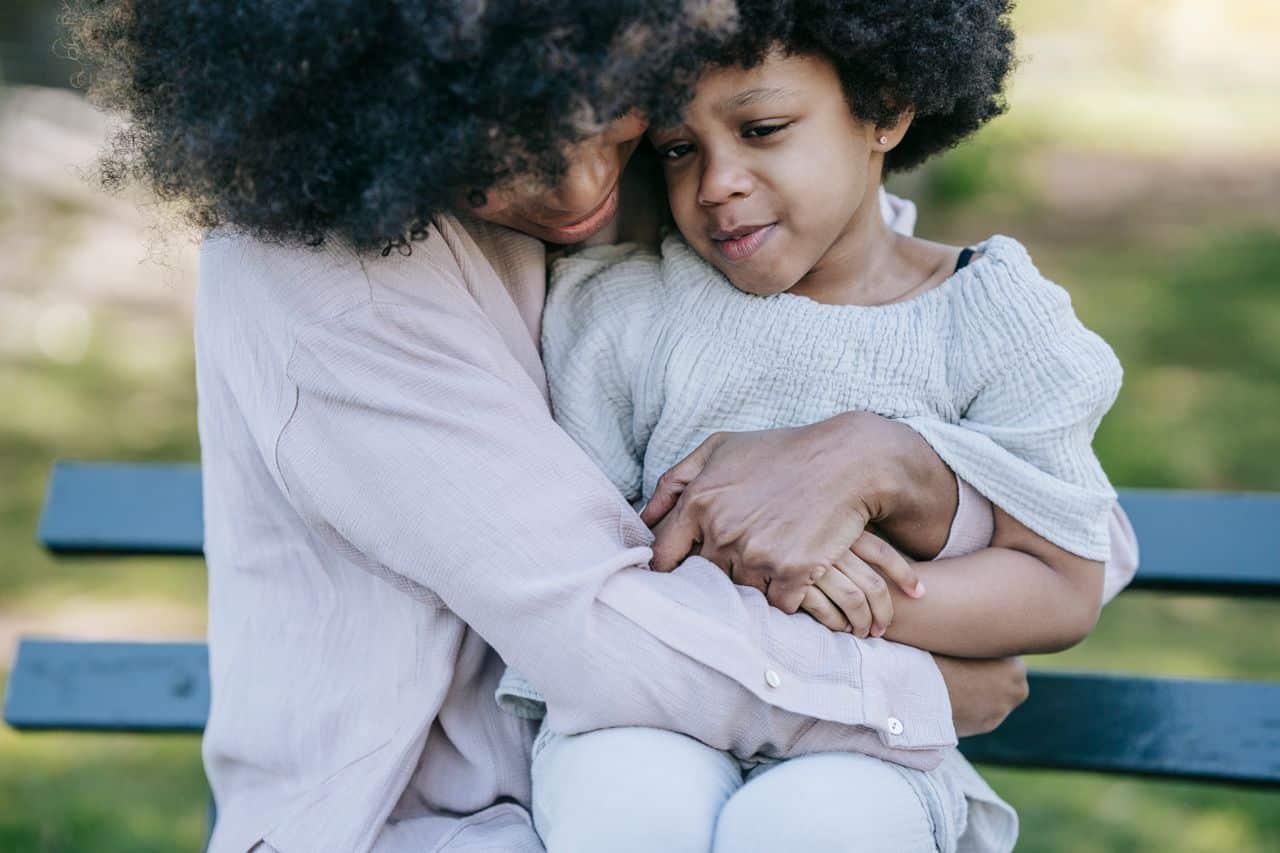
Eco anxiety in children appears differently at every age, from a young child's fear about a specific storm to a teenager's anger over climate inaction, and parents can ease it by validating feelings, answering only what was asked, and pursuing licensed therapy when worry disrupts sleep, school, or friendships for weeks.
What do you actually say when your child asks if the ocean is dying? Eco anxiety in kids rarely needs a science lecture, it needs a steady voice and the right words for their age. Here's how to respond in a way that comforts instead of overwhelms.
Eco anxiety in children often surfaces without warning: a question at bedtime about whether the ocean is dying, or a stomach ache on the morning a wildfire is in the news. It is a feeling to be met and shared, not a disorder to fix. Here is what to say at different ages, how to handle the hardest questions, and when worry may call for more support.
What eco anxiety is, and why it is not a disorder
Eco anxiety describes the dread, grief, or unease a person feels about environmental change and what the future holds for the planet. Some parents notice it in themselves first: a tightness that shows up during a heat wave or a wildfire season. Others notice it in a child who asks, out of nowhere, whether the ocean is dying. The term covers a wide range of feeling, and a multidisciplinary analysis of eco-anxiety and climate anxiety found that it spans non-clinical worry, more severe and paralyzing anxiety, and what researchers call “practical anxiety,” the kind that pushes someone toward gathering information or changing behavior rather than shutting down.
Eco anxiety is not a diagnosis. It does not appear as a disorder in any clinical manual, and treating a child’s climate worry as a symptom to be eliminated can leave that child feeling dismissed rather than helped. A narrative review of climate-related worry and grief found that these emotions are often normal and even constructive responses to a real problem, not malfunctions to correct. That distinction matters for how you respond to climate anxiety youth experience: the goal is not silence, it is a feeling that can be carried.
That is the reframe this article works from. The aim is not to make a child’s fear disappear. The aim is to make it bearable and shared, so the child is not holding it alone. Parents may also run into related terms: climate grief, the sadness tied to loss already happening, solastalgia, the distress of watching a familiar home environment change, and ecological grief more broadly.
Dismissive reassurance, the instinct to explain why a child should not worry, tends to shut the conversation down rather than resolve it. Worry becomes a clinical concern when it starts interfering with sleep, school, eating, or friendships, a threshold covered in more detail later. Reviewing general anxiety symptoms can help you tell the difference between a worried child and one who needs more support.
Why climate worry lands differently on a child
A child’s sense of time is not an adult’s. An adult hears about rising temperatures and does the math against a career, a retirement, maybe grandchildren. A child is doing that same math against their entire life, with almost no say in how the decades ahead unfold. That combination, a long personal time horizon paired with real powerlessness, produces a specific kind of helplessness rather than a milder version of adult concern.
Younger children add another layer. Before they can follow the content of a conversation about climate change, they can already read the tone in it: a parent’s clipped voice, a teacher’s pause, the volume at which the news plays in the next room. A child absorbs urgency before they absorb information. That is one reason “they are too young to understand” usually underestimates what has already landed. They may not understand the science, but they understand that something is wrong.
Older children and teenagers encounter the subject differently again, and often without an adult in the room to help them sort it. A classroom unit, a video that autoplays on a social feed, footage of a flood or a fire: all of it can reach a child directly, stripped of context. Among older kids, climate anxiety youth often carries a moral charge that younger children do not yet feel, turning worry into guilt or a sense of personal responsibility for a problem they did not create.
A global survey of young people across ten countries found that this distress is tangled up with how children see adults and governments responding, including a widespread sense of betrayal. A national survey of youth climate emotions in Canada similarly calls for understanding this worry on its own terms, shaped by a young person’s particular stake in a future they cannot yet control.
What to say at every age
Eco anxiety does not sound the same coming from a six year old as it does from a sixteen year old, and the right response changes with it. Across every age, three moves hold steady. Acknowledge the feeling before you address the content, answer only the question that was actually asked, and end on what your family does rather than what the world is losing. The rest is a matter of calibrating how much information a child’s age can hold.
Early childhood, ages three to six
At this age, fear is concrete and close. A young child worried about climate change is usually not worried about climate change as a concept. They are worried about a specific animal, a storm on the news, or whether your house is safe tonight. A short, true answer paired with physical reassurance, a hug, a hand held, the words “we are safe right now”, does more than any explanation of causes or consequences. You do not need to correct the scale of their fear, only its direction.
Elementary years, ages seven to ten
Somewhere in this range, children start to grasp that problems can be big and ongoing rather than solved in one scene, and the questions shift from “is the polar bear okay” to fact heavy questions about ice caps, carbon, and what happens next. This is the age where naming real adults and groups who work on these problems matters. A child who knows there are scientists, firefighters, and city planners already working on this has somewhere concrete to put the worry instead of carrying it alone.
Tweens, ages eleven to thirteen
By the tween years, most kids have their own access to information through phones, friends, and school, so the parent’s job shifts from gatekeeper to companion. Worry at this age can curdle into cynicism, or flip into sudden, intense interest in one issue, like plastic or deforestation. Either way, the useful move is to think alongside your child rather than explain down to them. This is also the stage where ordinary climate worry can be mistaken for defiance, especially when a tween refuses a family routine on principle, and it helps to know the difference between that and oppositional defiant disorder.
Teenagers
Climate anxiety youth report often arrives fused with anger and moral judgment, not just fear. A teenager might be furious at a generation, a company, or at you, and that anger is frequently doing the work that fear did at younger ages. Validating the anger, rather than trying to talk them out of the facts behind it, keeps the conversation open. Teenagers can usually tell when a parent is managing them instead of talking with them, and they tend to disengage from the second kind of conversation fast.
What to avoid at every age
A few phrases fail at every stage, for different reasons. “Scientists will fix it” oversells certainty you cannot promise. “Don’t be silly” dismisses a feeling that is often a reasonable response to real information. “It’s worse than you think” hands a child more weight than they asked to carry. And answering a one line question with a full adult briefing turns a moment of connection into a lecture. The goal at every age is the same: meet the feeling, answer what was asked, and land on what your family can do together.
The hardest questions kids ask
Some questions do not want a lecture. They want to know if they are safe tonight, or whether you will still be there tomorrow. Leslie Moya, LCSW calls the urge to jump in and fix an uncomfortable moment the righting reflex, and her framework holds that answering too fast, or answering before you have heard the full question, tends to backfire: the child ends up feeling unheard rather than reassured. The fix is not silence. It is slowing down enough to hear what is actually being asked before you respond.
“Will I get to grow up?”
This question is rarely about actuarial odds. A child asking this wants to know if you will be there to help them figure it out. You can say something like: “I don’t know everything that’s coming, but I’m not going anywhere, and we’ll face it together.” That is honest. It does not promise a specific future, but it promises presence, which is what the question is really reaching for.
“Are we all going to die?”
The literal words are enormous, but the real question is almost always smaller: am I safe right now. Before answering the big version, ask what prompted it, a news clip, an overheard conversation, something at school. Then answer the smaller question directly: “You’re safe tonight, and I’m here.” Avoid false certainty in either direction, both “nothing bad will ever happen” and “things are going to get very bad,” since neither is something you can actually promise.
“Should I even have kids someday?”
From a teenager, this is a values question, not a symptom. Treat it the way you would any serious question about the kind of life they want to build. You might ask what is behind the question rather than correcting it or rushing to reassure. It deserves to be sat with, not resolved on the spot.
“Why aren’t adults doing anything?”
There is a true answer here and it does not require defending every adult alive. You can acknowledge the gap: “Some adults are working hard on this, and some aren’t doing enough. That’s fair to be angry about.” What a child does not need is the full weight of that failure placed on their shoulders, as if their worry is the thing that will close the gap.
“Is it my fault for using plastic?”
A child who asks this is often showing a good instinct: a sense of responsibility toward the world. You can honor that instinct while moving them off personal blame: “Caring enough to ask that says something good about you. But this isn’t something any one kid, or any one family, caused.” Guilt is not accuracy, and separating the two protects the instinct while correcting the math.
“Does what we do even matter?”
Answer this at a scale a child can actually see: the family, the street, the classroom. “Our choices matter to the people around us, and that adds up.” This is not the moment to zoom out to the planet, since that scale is too large for any one action to feel meaningful inside it.
The rule underneath all of them
Do not answer a question your child did not ask, and do not fill a quiet moment with more facts. If a child asks about eco anxiety indirectly, through a question like these, resist the pull to turn it into a lesson on why not to worry about climate change in general terms. Avoid premature problem solving too, jumping straight to five things your family will do differently. Sometimes the most honest answer is short, true, and followed by nothing at all.
When the worry in the room is yours
Children read tone, pace and facial expression long before they understand the words attached to them. A phone scrolled in silence at the dinner table says something to a child even if nobody mentions the news. Eco anxiety does not need to be spoken out loud to reach a child. It travels through the body in the room.
A lot of that travel happens in ordinary moments nobody plans. An adult conversation overheard from the back seat of a car. The news left running while dinner gets made. A sigh during a heat wave or a flood warning on the radio. Household rules enforced with more urgency and fear than the situation seems to call for, even when the rule itself is reasonable. None of these are dramatic. That is exactly why they land.
Two patterns tend to go wrong in opposite directions. One is performing a calm you do not actually feel, which children tend to notice anyway because the mismatch between your face and your body is hard to hide. The other is processing adult sized distress out loud in front of a child, who does not have the context or the coping capacity to hold what you are handing them. On approaching a child from an activated state, Natasha D’Arcangelo, QS, LMHC, NCC, CCTP, CCFP says: “But if I approach her in a nervous system that’s on fire, her nervous system is now picking up on my anxiety and it’s not making the situation any better.”
A workable middle sits between those two failures. Naming your own feeling in one short sentence, without detail or elaboration, and then showing the child what you do with it. “I’m feeling worried about the storm, so I’m going to check the weather and make a plan” tells a child that worry is survivable and that it has a next step. That sentence does the work without making the child responsible for carrying the feeling with you.
The heavier processing, the real scale of your own grief about climate anxiety in 2026, belongs somewhere else. Other adults, a partner, a friend, a therapist, are the right audience for that conversation. A child is not positioned to hold it, no matter how much they seem to understand.
Mistakes here are not permanent. A parent who vented too much or faked too much calm last week can go back and say so. Natasha D’Arcangelo, QS, LMHC, NCC, CCTP, CCFP works from a model in which the goal is not a parent who never loses composure, since that is not realistic, but a parent who repairs afterward. In her framework, that means acknowledging you lost your cool, apologizing, and clarifying to the child that they are not responsible for the parent’s emotions. Modeling that kind of repair is, in her view, what teaches a child they remain loved even after a parent’s bad moment, and what makes that parent the person the child turns to when something hard comes up again.
Everyday practices that make the worry bearable
Eco anxiety does not resolve by talking it through once. It eases through small, repeated choices about what enters a child’s day, how their body gets a break, and who they get to stand next to. None of this erases the facts a child is worried about. It gives them a nervous system and a daily structure that can hold those facts without buckling.
Setting limits on what comes in
A household does better with an agreement about when and where climate news and content shows up, rather than no rule at all. A phone at the dinner table or a news segment playing right before bed gives a child’s brain no time to settle before sleep, so a wind down window with no news or doom scrolling in the hour before bed is worth protecting. When something difficult does come up, watching or reading it together tends to work better than blocking it outright. Kristen McLoud, LCSW describes why suppression backfires: “You can’t ignore the boiling kettle on the stove. It’s gonna go off and it’s gonna annoy you until you see it there and do something about it, right? So the more you put it off or tell yourself not to have the thought, the more you’re inviting it back in. Unfortunately, that’s how the brain is working. If I tell you not to think about something, you’re gonna probably go think about it more.” A child who is quietly curious about a wildfire story or a flood headline usually does better looking at it with you than finding it alone later.
Grounding and routines that steady the body
When eco anxiety shows up as a racing heart or a tight chest, the fastest relief usually comes through the body, not through more explanation. Firm pressure works for a lot of kids: a heavy blanket, a tight hug, or pushing hard against a wall. Naming five things they can see in the room, holding a warm cup in both hands, or breathing in slow counts all give an anxious body something concrete to do. A technique like this works best as a steady habit rather than something pulled out only in a crisis, which is part of what mindfulness-based stress reduction practices are built around. A regular, low stakes window to talk, a walk after school or a long car ride, matters just as much, because it means climate worry gets a routine place to land instead of only surfacing when something scary is in the news.
Connection and action sized to the child
Isolation makes eco anxiety heavier, and other people who share the worry make it lighter. A youth group, a school environmental club, or simply a cousin or older teen who takes the subject seriously can turn a private fear into something shared. Research on children’s coping strategies around global climate change points to engagement and connection as part of what supports a child’s well-being in the face of this kind of worry. Action helps for a similar reason: a garden bed, a beach clean, a letter to a local representative, or a class presentation turns an enormous, vague threat into a task with a clear start and finish. Let the child choose the project rather than assigning one, and watch for the point where it stops feeling like their idea and starts feeling like one more obligation they cannot put down. A child’s job is still to play, sleep, see friends, and have unstructured time to be bored, and guarding that ordinary life is itself a form of support, separate from any conversation about feelings or facts.
If you would like support of your own while you hold this for your child, a licensed therapist can help you with that too.
Child specific signs that worry has become something more
Eco anxiety in kids often looks different from the version adults carry. A child may not have the words for climate dread, so it shows up in the body and in daily routines instead. Watching for a cluster of changes, rather than one isolated moment, tells you more than any single behavior on its own.
School mornings are a common place this surfaces. Stomach aches with no medical cause, sudden refusal to go to school, or a pattern of climate-themed nightmares that disrupt sleep are worth paying attention to. Repetitive questioning about floods, fires, or extinction that reassurance never settles is another marker, especially when the same question returns within minutes of being answered.
Other signs build more slowly. A child might pull back from friends or drop activities they used to enjoy, eat noticeably more or less than usual, or start checking weather apps and news sites over and over during the day. Statements about the future being pointless, or rigid household rules the child insists on around water use, plastic, or electricity, can also signal that climate anxiety youth experience has moved past ordinary concern. These behaviors overlap with broader anxiety symptoms worth checking against.
How long something lasts, and how much it interferes with daily life, matters more than how intense a single episode feels. A rough two weeks after a wildfire or a flood in the news is a different situation than three months of avoiding school or withdrawing from friends. The second pattern is the one that usually calls for outside support.
Support for a child usually means talk based psychotherapy with a licensed therapist, often paired with separate sessions for parents. The focus stays on managing the anxiety itself, not on settling the facts of climate change. When you raise it with your child, frame it as extra help rather than something they did wrong: an extra person in their corner, not a consequence.
If a child talks about not wanting to be alive or about hurting themselves, that is not something to wait on. If you or your child are thinking about suicide or feel unable to stay safe, reach out to the 988 Suicide & Crisis Lifeline or your local emergency services now, and see our emergency resources. ReachLink is not an emergency service and is not a substitute for emergency care. For anything specific to your own child’s situation, a licensed professional who has actually met them is the right person to guide that decision.
Caring about the planet was never meant to feel this heavy
The grief you carry for a warming world, for species disappearing, for a future that feels uncertain, is not a flaw in your thinking. It is a sign of how much you care, and that kind of care deserves somewhere to go besides the loop in your own head. You do not have to carry it alone or figure out how to hold it by yourself.
Talking it through with someone trained to help you process this kind of pain can make the weight easier to live with, even when the world itself does not change. You can create an account at ReachLink and browse licensed therapists at your own pace to see what support might look like for you.
FAQ
-
How do I know if my child's climate worries are normal or something I should actually be concerned about?
Eco anxiety in children often shows up differently than adult worry - it can appear as stomach aches with no medical cause, disrupted sleep, or repetitive questions about floods and fires that reassurance never quite settles. The key signals to watch for are clusters of changes that persist over time, like pulling back from friends, refusing school, or talking about the future as pointless. A rough few weeks after a major news event is usually a different situation than months of daily disruption to eating, sleeping, or friendships. If the worry is consistently interfering with daily life, that is a good signal to bring in outside support from a licensed therapist.
-
Does therapy actually help kids with eco anxiety, or does it just sidestep the real problem?
Therapy for eco anxiety does not try to convince a child that their fears are wrong, because concern about climate change is often a reasonable response to real information. Instead, talk-based therapy with a licensed therapist focuses on building the skills to carry that worry without it taking over daily life, using approaches like cognitive behavioral therapy (CBT) to help reframe overwhelming thoughts and develop practical coping strategies. The goal is not to silence the fear but to make it manageable, so a child can still sleep, connect with friends, and enjoy daily life. For many children, therapy is also paired with separate sessions for parents, since how adults in the household respond to climate stress has a significant effect on how a child holds it.
-
What should I actually say when my child asks something like "Are we all going to die?"
Questions like this are almost always smaller than they sound - a child asking whether everyone will die is usually really asking whether they are safe right now and whether you will be there with them. The most helpful move is to pause before answering the literal words and ask what prompted the question, whether it was a news clip, something at school, or an overheard conversation. Then answer the smaller question directly, something like "You're safe tonight, and I'm here," without making promises in either direction about the distant future. Avoid the instinct to launch into a detailed explanation or immediately jump to a list of solutions, since what the child is reaching for is your presence, not a briefing.
-
I think my child needs to talk to someone about their climate anxiety - where do I even start?
Starting the process of finding a therapist for a child can feel overwhelming, especially when you are already managing your own worry alongside theirs. At ReachLink, the first step is a free assessment you can complete at your own pace, with no commitment required. From there, a human care coordinator - not an algorithm - reviews your situation and helps match your child with a licensed therapist who fits their needs and your family's circumstances. All care through ReachLink is therapy-based, using approaches like CBT or talk therapy, and sessions are conducted via telehealth, which removes the logistical barrier of getting a child to an in-person office.
-
Can my own eco anxiety affect my child even if I never talk about it in front of them?
Yes - children pick up on a parent's emotional state through tone of voice, body language, and subtle behavioral cues long before they understand the words attached to them. A parent scrolling climate news in tense silence, sighing during a heat wave, or enforcing household rules with a level of urgency that feels out of proportion all communicate that something is wrong, even without a single word being said. Approaching a child from an anxious, activated state tends to activate the child's own stress response, making their anxiety worse rather than better. The most protective move is not to perform a calm you do not feel, but to briefly name your own feeling and then model what you do with it - for example, saying "I'm worried about the storm, so I'm going to check the weather and make a plan."