Episode 27 · 33 min · Sep 2, 2026
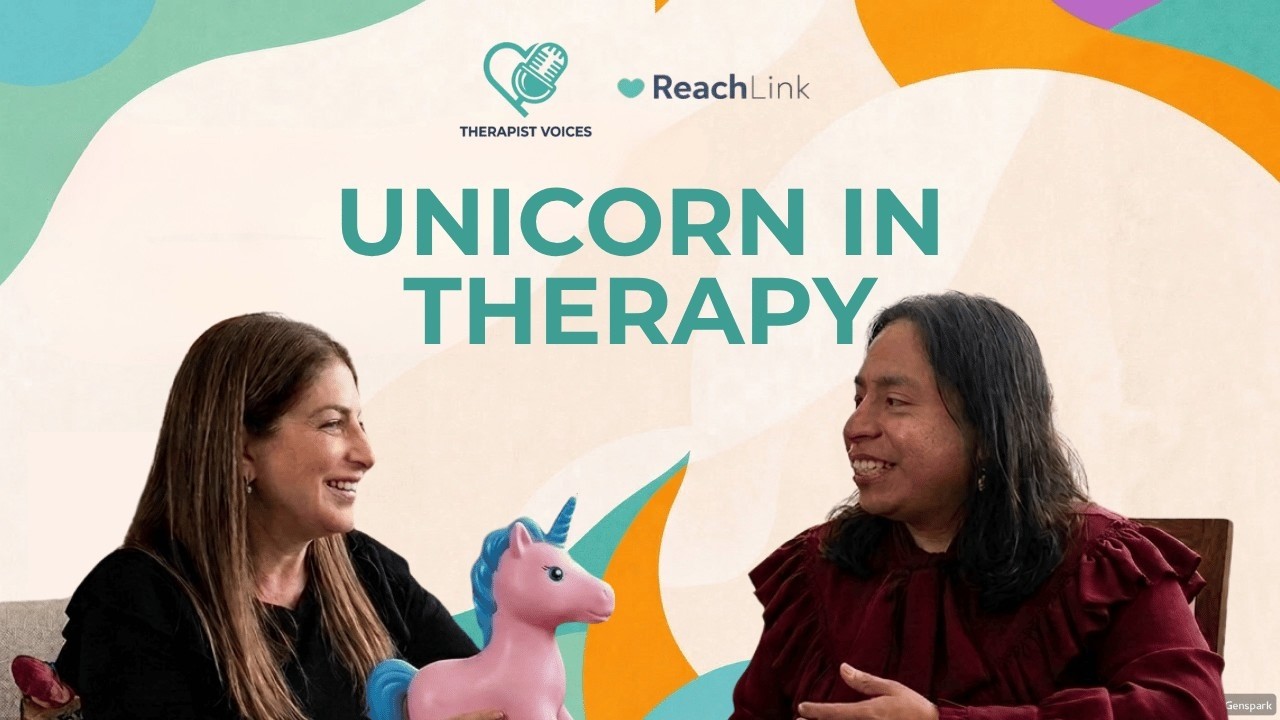
This Therapist Left Clinical Work to Fix Broken Systems | Dr. Mariah Maurice
with Mariah Maurice,
Dr. Mariah Maurice chose her dissertation topic almost against her will. Her doctoral program required students to research something inside their own wheelhouse, and at the time she was working as a hospital social worker, a role she calls the most rewarding of her career and also the one that forced her to face the thing she feared most: talking about death. So she studied patient autonomy at the end of life. What she found in those interviews with hospice social workers ended up redirecting her entire career, and it is the thread that runs through this conversation with host Jessica Hurwitz.
Mariah has spent more than a decade in the mental health field, and she has worked in nearly every setting a social worker can land in: substance abuse treatment, community mental health, private practice, hospital case management, and hospice. She loves clinical work and still enjoys sitting with clients. But a few years ago she reached a point where the problems she kept running into were out of her hands as a clinician. The systems around her clients were not built to carry out what those clients actually wanted. That realization pushed her toward a doctorate, research, and the kind of advocacy that aims at policy rather than one case at a time.
Her research revealed something both simple and uncomfortable. Nearly every social worker she interviewed believed deeply in patient autonomy and saw it as an ethical duty. Yet the barriers to honoring it were rarely about intention. They lived in systems. Family systems, where a seriously ill patient may quietly give up a wish to avoid conflict with loved ones. Healthcare systems, where families are not given enough education and providers can come across as too assertive at the worst possible moment. And the workplace itself, where high caseloads, rushed visits, and weekly interdisciplinary meetings leave social workers feeling undermined because the room defaults to the physician or the nurse as the expert.
One of the sharpest moments in the episode comes when Mariah describes how easily patients get labeled non-compliant. Someone misses an appointment and the chart says they failed to follow through. Her response is always the same question: why didn't they show up? Maybe there was no ride. Maybe something happened at home. The social determinants of health, she argues, are exactly where clinicians need to look, and applying that lens across every setting she has worked in convinced her this was not an isolated gap but a pattern.
Jessica asks what comes next, and Mariah is refreshingly honest. She loves talking about her research. What she dreads is the part where institutions have to change. Hospitals have functioned a certain way for a long time, and people are tired, behind on documentation, and wary of anyone who walks in announcing a new system to learn. Her answer is lived experience. She can stand in front of hospital case managers and say she has carried the same caseload and felt the same burnout. She believes that showing up as someone who has been boots on the ground earns a kind of trust that a title alone never will. She is now bringing her work to conferences, including an upcoming one focused on autonomy for adolescents in schools, and developing a framework to help organizations put the findings into practice.
The conversation widens into coordination of care and what happens when communication between providers breaks down. Mariah describes working in a clinic that integrated medical and behavioral health under one roof, the first time she saw that model actually work. She also challenges a common habit among helpers: handing someone a referral or a list of resources and considering the job done. A food pantry list is only useful if the pantries still exist and the client can actually reach them. Setting up an Uber ride home or helping with a benefits application can look small, but she asks clinicians to think one step further. If this support does not happen, what happens next? A family may go hungry. Someone may have to choose between food and staying alive.
In the new Voice Notes segment, Jessica asks what Mariah would tell her younger self. Her answer is to trust the gut feeling that a bigger problem exists, to have the uncomfortable conversations, and to find the people who think differently too, because the world will not always welcome what it needs to hear.
For any therapist who has ever felt that the paperwork was winning, Mariah offers a quiet reminder that the small task in front of you is often the only bridge a client has.
In this episode, you will learn:
- What research with hospice social workers reveals about the barriers to honoring patient autonomy at the end of life.
- How family dynamics, healthcare system gaps, and provider burnout quietly override what patients actually want.
- Why a client labeled non-compliant may simply be facing a missed ride, an unpaid bill, or a crisis at home.
- Why lived experience earns more trust than a title when asking organizations to change how they work.
- Practical ways to close referral gaps, like calling resources before handing a client a list.
- How thinking one step beyond a small task, such as a ride home or a food benefits application, changes outcomes for clients.
- What coordinated, multidisciplinary care looks like when medical and behavioral health work together.
- Why trusting your gut about a bigger problem and having uncomfortable conversations can shape a career in mental health.
Host
Welcome back everyone to Therapist Voices at ReachLink. I'm Jessica Hurwitz and I'm your host. Um, moving forward, if you've been following along, we're going to be focusing the podcast with more emphasis on the guest and their journey in the mental health field. So focusing on what they've learned by trial and error, from mentors, from their experiences overall, um, how they started and how they are now, where they are now, especially if where they are now isn't where they expected to be or planned to be. So today we have a perfect guest for this shift. Dr. Mariah Maurice discovered that many of the biggest barriers to healing fell within the systems that were designed to serve our clients. Dr. Maurice, thank you so much for being here. Can you tell us a little bit about how your career started and especially when that shift kind of happened for you?
Guest
Yeah, sure. Thank you for having me, first of all.
Host
Yes.
Guest
But, um, so I have been in the clinical health, um, space for over about 10 years. I started in substance abuse and mental health, and then I decided that that wasn't really for me. So I've kind of moved around. I've been pretty much in every space you could think of, um, as a social worker. I have been in, um, the medical field. I've been in private practice. I've been in the community. So I have kind of seen it from every angle that you would even consider within our faith. And so the shift happened pretty much a few years ago, but in that moment, I didn't decide to actually make a change because I felt as if, if I could get enough people on board in our faith that we could make a change that we really didn't have the ability to do. At that moment, which was probably about 2 or 3 years ago, that's when I decided that This system is too much for me. It was out of my hands within the space that I was serving in as a therapist, as a clinician. And so that's when I decided that I needed to get a doctorate and somehow get on an advocate level, on a level to make policy changes and dig deeper into the systems thinking. So that's when that shift took place for me. It wasn't until a few years ago, like I said, when I wanted to make a change.
Host
Mm-hmm.
Guest
And that's when I decided that this is not for me. I enjoy therapy. I really enjoy being in the clinical spaces. I enjoy helping my clients and my patients, but I am a firm believer that sometimes the systems just aren't built to, um, you know, carry out the wishes of patients and actually help them as if we really would like to help them.
Host
Was there a moment that you can remember that really sealed the deal for you where you felt like, all right, Yeah, I really need to look into this further. I need to make a shift.
Guest
So that moment actually was during my doctoral journey when I decided what my dissertation topic was going to be on. Our program wanted us to do a dissertation on what they considered your wheelhouse of expertise. So basically meaning that you have to have already had experience in this topic within whatever work that you were doing at the time. If I could be completely transparent, I was so upset about that. At the time, I was working as a hospital social worker. That actually was the most rewarding position I've ever had in the social work world, but it was one position that I was kind of skeptical because I was always a person who was just afraid of talking about death. So I was forced to confront something that made me uncomfortable. I came up with a topic, which was about patient autonomy at the end of life. I'll say very interesting. That's what led me to stick with the topic, but I found a lot of gaps after talking with a lot of social workers who could relate. I figured that that would be a good topic for me. So in the study, I interviewed social workers who worked with hospice patients. The goal was to try to figure out how basically their experiences of carrying out patient autonomy. What I revealed in that study Was that although social workers may approach a situation with a patient and have belief that patient autonomy is important, it's ethical, and that they really want to help with carrying out patient autonomy, there were major barriers. And the barriers were more often than not within systems. And we're talking about family systems because sometimes the patient may have a wish and then the family's like, oh no, I don't really, you know, I don't want that for you. At that stage when a patient is sick, they may just automatically go with what the family wants at that time, or they may not want to argue with the family or have disagreements. So that was one barrier. And then barriers within the system, with our healthcare system, not having enough education for families or being too assertive in those spaces. We're there for support, but when we go in and we're too assertive and we're not really educating or supporting, It may be overwhelming in the face with a patient and a family at that state. Other barriers that was really interesting to me, but it definitely resonated with what care that I have provided to patients, was social workers feeling burned out, social workers feeling like they didn't have enough time to actually sit down and have patient autonomy-related conversations. What do you mean?
Host
I don't know what you're talking about. You have all the time in the world.
Guest
Exactly. Feeling like they had to rush visits. Their caseloads being too high, being undermined in interdisciplinary spaces. So we would have meetings every Wednesday, and I'm pretty sure this is across the board. I don't know if it's the same as like down to the day, but there is like a once-a-week meeting per se in settings and such because we wanna make sure that everyone is on the same page about a patient's care. And so the social workers would feel like they were being undermined in cases because our voices aren't really always respected. as well in medical spaces. And that could be for several reasons, one being in hospice specifically, even in the hospital, because I've worked as a case manager in the hospital also, it's medical. So everyone automatically goes to the physician or the nurse. Everyone feels like they're the experts, not really considering the multilayers that we have in those settings. Just because a patient comes in with medical concerns doesn't necessarily mean they won't have family dynamic issues. Doesn't mean that they won't have any emotional issues related to their mental health or social issues. So it wasn't until recently when they incorporated the social determinants of health within the healthcare system, which I feel like is amazing because that's where we give it like that broad overview of like, okay, a patient comes in, they need some assistance with something going on medically, but they have transportation issues. So we look at it a lot of times like, oh, they're being non-compliant because they didn't show up for their appointment. And in that space, I'm the person that's like, well, let's figure out why they didn't show up. Like maybe something happened in the house. Maybe they don't have a way here. Maybe so many different things that we need to consider. When I was able to apply my research to every setting I've ever been in, I was like, this is a major issue. If I can apply this general research to every setting, then I think that I can't be the only one that has the same feeling about this. So that's where my shift started.
Host
And what you just described was literally a gap that this person wants help. They really need help. Oh, they're being non-compliant. Well, they can't get here. People don't necessarily want to be in that role of identifying that and helping to figure that out. Did you get kind of an overwhelming response from your community or your circle of, yes, this is— something we've noticed too, especially if you were able to apply it to all those settings that you worked in.
Guest
Yes. So I definitely dig it a lot. And to this day, I'm getting so much support. I've been having presentations at conferences. I spoke at the trauma conference in May. I've been doing some marriage and therapy counseling conferences. It's many different spaces, and I always try to tie it back to the research that I did because I feel like I can apply that Specifically to patient care or being there for our clients, showing up. And so I've been trying to sprinkle it here and there in the presentations, and it's always the hot topic. At the end of the presentation, someone will approach me and say, oh my gosh, like that, we need that. I've gotten feedback from social workers and counselors about how they need someone who can take the theory and apply it in practice, because that's something that we know. When a patient or a client comes in, we know that there is a problem. that we're trying to solve, but we're so focused on solving that one problem that we're not looking on a larger scale of what else is going on. They want me to apply it in different spaces. I had an overwhelming amount of participants. Even people after wanted to try to participate. And even, um, the participants who did participate wanted to have the results. They were like, please come back and tell me what happened. Please come back and tell me how this went and how you're going to apply it to What you're gonna do in the future.
Host
Do you feel a lot of pressure that, oh my gosh, now I have to tell all these people what I, what I did and what I accomplished?
Guest
I'm gonna tell you the real reason why I feel pressure. Good. So I love talking about my research. I love talking about what I might have missed in the research, what I can turn it into in the future. What I am not excited about is how do we change those systems? My research is amazing. But at the same time, if I can't apply it and actually make a change, then I'm feeling kind of like it's a little overwhelming because we know how the hospitals are sometimes. You know, they're amazing and I'm not here to bash them at all, but they have standards in ways where they have been functioning a certain way for a long time. And so they're not really always open to accepting like, hey, I found a gap. What can we do to fix that? That's the part that I'm a little overwhelmed about because I'm so passionate about taking my research. and turning it into something. Because I know from being in those spaces, like I said, substance abuse, mental health spaces, working with children, working with, you know, in geriatrics, this research can apply to every one of those spaces. No matter what population we're serving, there's always some sort of barrier there that stops us from being able to carry out their wishes.
Host
You know, something that makes someone like you If I may be so transparent, something that makes someone like you so relatable is the fact that you were just able to say, this is what I don't look forward to. And not because you don't want to do it, because you know what you're faced with. And that authenticity is like what makes the world go round, in my opinion. So you're ahead of the game. I mean, between the research that you've done, which I really would like to learn more about. Just what you were willing to say, okay, this is gonna be really challenging. Because if you weren't able to say that, then it's like, all right, well, go do it. Why didn't you do it yet, Mariah?
Guest
Right.
Host
You need, you need the support, you need the backing, and just being able to say, oh, this is gonna be the point that's gonna be really hard, says enough, you know, that says enough for people to be interested in your mission, what you were planning when you were going into your dissertation, and then what you found and how you kind of pivoted. What came next for you?
Guest
So after that, I wanted to focus on how can I get the word out? So I have this research, it's published, so you really can find it online. Thinking to myself, how can I put myself in spaces where I'm able to talk about it and relate it to other topics as well? I have a conference coming up in the education system with adolescents. That was interesting to the participants that will be at the conference because they wanna see how they can carry out autonomy in the education space as well. And that is very interesting because we are dealing with minors. So there is a give or take there where we want to make sure that we are legally taking all steps, that we're considering the parents. But at a certain age, I believe there is a gap where if we're not teaching our youth about patient, I mean, about autonomy and showing up for themselves and advocating, then we are creating something that will carry over into their future because we have to start here. We have to make them comfortable with being able to say, this is what I want, and know how to receive that care. Just kind of showing up in different spaces and trying to tie the research all in. Um, I'm thinking about coming up with like a framework or something for it so I can connect with the organizations and say, hey, I think you need this. But again, that kind of comes with some uncomfortable feelings because I have to kind of like show up and then prove to them why I believe they need it. But I think the, the best, um, part about what I do is that I have actual experience. So you can't really tell me I'm not an expert in this. Because I have the experience to back it up. I use it to my advantage. I can show up to a hospital and say, hey, social workers and case managers, I've been there before. I've been burned out. I've had a high caseload in a hospital. I've been there with you before. So I believe that these are some things that we can put in place to kind of bridge that gap for them. And I think that they will be receptive to it. And I've also gotten a lot of feedback about that because When we see the leaders in the hospital, not all of them, a lot of them don't have actual experience in these spaces. So my philosophy is I can't fully show up in a space where I have no experience. You may have experience as a leader, but if you have not been a part of that actual team that's doing the work, boots on the ground, then I believe you're kind of missing something. So in that way, I want to just expand and, and lead in spaces where I have been before so I can show up for people and be there for them and prove to them that like, I've been there, I can relate. Like I'm highly relatable. I'm always authentic. So I'm gonna look at like, I'm not gonna just present it like this is gonna solve the problem. Like you said, I'm gonna show up and say, we will have some barriers. We will have some things that we have to work through, but that makes this much more valuable. So that's kind of like what I'm working on right now, just Developing myself as a systems thinker, showing up on, you know, podcasts and conferences and doing things like that so I can get out there.
Host
And that, that just again is you being relatable and someone coming in someplace and saying, I'm going to tell you what to do. This is what my research says. I know everything. You know, these are the numbers that is not going to resonate with, with people, especially in the mental health field. They don't want to know that you can tell them what to do. They want to know what you just said, that you've been there and you identified these gaps and these needs, and you relate to them, and you want to figure it out together, that camaraderie that we've got this, I've done this research, let's bring it in so we can, we can all make use of it. And that, that tone changes everything, I think.
Guest
I agree. And especially in this world too, everyone shows up on social media and we look so perfect and like we post exactly what we want, but we're not really talking about what's underneath it. So I look at what I do in the same relation because, um, I don't wanna show up like I know everything. I have done the research. I do have a lot of experience. Yes. But I'm not perfect. Things aren't perfect. The system isn't perfect. And that's how I felt in all of those spaces. I can remember going back to saying, okay, my, my client came in, my client needs ABCs.
Host
Mm-hmm.
Guest
And then you feel like you kind of touched the surface, but you don't really feel like you solved the problem. And I've been there in almost all of the spaces. Like, what are we doing? You know, from seeing patients getting discharged too early because of insurance problems and patients be stuck in a hospital because they don't have a safe discharge. Like, where's the person that will show up and help us try to like solve those bigger problems that honestly is a huge barrier to our patients and our clients. So I could just remember like feeling that way.
Host
If you care deeply about mental health, whether as a therapist or someone seeking support, this message is for you. If you're a therapist listening and you're looking for more flexibility, more balance, or a way to expand your impact, ReachLink is growing. We've been building a community of thoughtful, dedicated clinicians who want to make care more accessible through telehealth without losing the human connection that matters most. With ReachLink, you can work from anywhere, set a schedule that fits your life, and let us handle the administrative work so you can focus on what you came to do— help your clients. And if you're looking for support, at ReachLink, we believe mental health care should meet you where you are, in how you feel and in how you live. Whether you're navigating stress, burnout, relationships, or major life changes, You don't have to go through it alone. With the ReachLink app, you can connect with licensed, experienced therapists through secure, convenient telehealth sessions from your space on your time. No commute, no waiting rooms, just real support when you need it. So whether you're ready to start therapy or ready to offer it, ReachLink is here. Download the app or learn more at reachlink.com, because better mental health should always be within reach. I really appreciate that you're, you're calling those the big problems because I think a lot of people who don't necessarily want to deal with that part would say, oh, like, that's, that's a little problem. That's for someone else to figure out. But you are willing to come here and say, no, that's the big problem. And I'm willing to immerse myself in that.
Guest
Yeah. Or they'll say, it's been that way for this long. There's nothing we can do about it. Insurance is insurance. We can't. And I get it, but I don't believe that we can't. I believe that, like you said, a lot of us, we've been functioning one way for so long that that's what we're used to. Afraid of change. They're afraid of having to learn new systems. And I've had that happen before as well in a space, in training spaces where social workers, for example, and I know I'm being specific because that's the experience that I have, Um, we don't want someone to come in and say, all right, time to do something new. We have this new system that you have to learn today because we believe that this would— I have a million and one things to do on my list already. I'm behind on my documentation. My client isn't receptive, so I'm having a hard time trying to get to them. So we have all these things that we're already, we're already where we're already applying ourselves and we don't want someone to just come in and say, learn something new. We want someone to come in and say, I have been there. Aside from just doing research, I've been there before. So I can, you know, give you tips on how to maximize your time without getting burned out. And, and I believe they will be more receptive to that because they can relate to the person and not just someone just handing something off that they're used to receiving in those spaces.
Host
It's so easy for someone to come in and say, this is what needs to be changed. Like, obviously, you figured that out. That's why you did all this research.
Guest
Right.
Host
Clearly, this needs to be changed, but people are hired for a job. They know the checklist. They know what they're there to do. There's not necessarily time to think outside the box in that way. And this keeps bringing me back in my head to, like, coordination of care amongst practitioners, of communication, of You know, working together to understand where the breakdowns are. And I think of current events. It is now August 25th. I don't know when this episode will show, but we're in the middle of Lindsey Clancy. We have a huge— think of it how you will, and who knows how things will end up, but we've got, obviously, I think everyone can agree, a breakdown in communication. communication in the mental health system. That's safe to say at this point. I think that I'll be okay making such an accusation, but that, that system part of everything is so poignant.
Guest
That is so true. That's so true. I think that it's multilayered. I love this specific job or position that I had before, um, actually functioned in a multilayer multidisciplinary faith Where it was a clinic that included medical care, behavioral healthcare. And that was the first time I've ever seen that play out in practice. But I really thought that it was important because, as we said, like someone may come in with one complaint and then you find out that there are several other things going on. So I believe that, I don't want to say any type of care specifically, but there may be a case where a patient comes in for a medical concern and then Not until you ask the right questions or you kind of, you know, review the right history where you may pull out that there are other, other things going on. And I'm not gonna point the finger or point the blame on anyone specifically, but I believe if we all kind of show up more like in a community space than we do, we're all just focused on just one thing and we don't always have the time to dig deeper into things. But I believe that within these systems, if we kind of function like we're holding hands, then we can all work together and try to like figure things out. Because a patient may come in with a concern in one space, but may share something with you that they haven't shared with anyone else. And if you're burned out or overwhelmed, or you feel like you're just here for one job, then you may not pay attention to something that was very vital that you could have caught At that time. I'm a systems thinker. Everyone doesn't think that way, but I do believe that we all have a duty to show up, especially if you're in a provider space, then I believe that we do need to show up in those ways. There's been cases where I have overextended myself in those spaces. Like as a counselor, if you're in a therapy space, it's not really on you to do things like help apply for government assistance or help with veteran benefits and things. But if they come to me and that's the time when they think about it, then I can't just hand it off and say, oh, well, I'll just, I'll just refer you to someone who can assist because that's where we have that gap because you're handing them another task. They're probably already overwhelmed about it. They don't know the systems. We do. At what point are we gonna take accountability for being able to, or having the time or the mental capacity or the space to show up for someone in a way that's not really in our position per se? Because I won't, I understand like there are ethical concerns with Something that is like outside of your expertise, that's different. But if you are capable of providing some type of support, then I believe that we have a duty to them. I wouldn't just send them anywhere because that's where we can drop the ball. They may not follow up. They may have complications getting in contact with someone. Unless we're taking them literally to the next point, then I believe that we could definitely run the risk of failing someone in a, in that type of way.
Host
There are so many resources to be sought out, but no one's born knowing how to navigate that system. It's its own job for social workers, let alone the patient or the client. And I just keep coming back to in my head that you are open to addressing the, no, this is where we are, this is what we need to help with. Yeah, it's great when someone's getting discharged and someone's feeling great and all of that. But that's not necessarily where this problem lies. It's sooner, and it's the work that some people, many people understandably don't want to do, don't have the time to do. What would you even say to someone that was in a position to help guide someone that was stuck in the system? What would you tell a fellow therapist of, okay, I know you're supposed to stick to this checklist, But it's glaring, this person really needs help with this. What would you even say to them? And I don't know what the answer is.
Guest
I would, let me see. Let's see what we can come up with. So when I think, and I realized that, oh, one of the questions at one of my recent conferences was, how do we show up and realize that we are all a part of, I don't wanna say world, but like a bigger system per se. Um, I believe that a, a lot of times we get caught in our daily duties. If I'm here to help discharge a patient from the hospital, my focus is on the discharge. I don't remember if she was a therapist or a social worker, but she appreciated the way that I talk about systems because she said it helped her realize that when she's doing the small things like setting up an Uber ride for a patient to return home, that it's something bigger. And I say, that's exactly how you have to approach all situations. You're not just helping a patient or a client apply for food support. If they don't have this food support, then what happens after that? What's outside of that? Their family may not get fed. They may have to choose between paying for food or paying for their life. If we are able to insert ourselves into that and help, then we should always think about if this doesn't happen, how can we prevent that from happening? prevent from dropping the ball at that time. So just kind of like try to expand your thinking. And even if it's like a small thing that you believe you're doing for someone, you never know the impact of what you're doing for someone and the large impact it could have on them. Not just saying they'll like truly appreciate you, but you just never, you honestly just never know.
Host
And it keeps going back to that gap that, you know, oops, sorry, we gave them all the food pantries. We gave them all the resources that we knew about. But did we know that they connected? Did we know that this is even something that's still in business? No, we checked it off our list. And just the bravery in this that you are willing to confront is probably kind of scary for a lot of people, but you don't seem scared of it at all.
Guest
I'm not. And I cannot sit here and say that I've ever been in a space where I have been burned out before. I'm gonna be honest. I have been burned out. in the social work space before, um, and I have been in a position where I'm just doing my job. Like, even if I don't know if they have benefits to provide at the time, this is what we were told to do. We were told to give out these resources. So I feel like it takes that extra passion and push to go beyond that. Like, okay, I have the list of resources. Let me call them before I start giving them to my patients and clients and make sure that there's something and I'm not just handing them a list of things.
Host
Okay.
Guest
We've accumulated over, we don't even know how long, because we just add to those running lists. In some spaces, I'm not going to just say that they're all that way, but in some spaces we do have someone checking to make sure that they're still functioning organizations and things like that. But if we could always think like, how can we go beyond that? Then I think that that would be very helpful in pretty much every space, every space. I'm not afraid of confronting that.
Host
Say it again. Let's hear it.
Guest
I'm not afraid of confronting that. Awesome.
Host
And I, and I know that, that's why I made you say it twice. Um, so my last question for you, this is our new voice notes segment. So I was told with this podcast, insider information, I was told use phrases that are youthful, that are relatable. A suggestion I got was to make a hot take section of this podcast, and I said, I am in my 40s. I am not saying hot take. I am not— I'm not doing that. There's no hot take. There's just none. So what I decided instead was, because I know that I like to leave voice notes for people, and I felt like that made me You know, not trying to be too young, but like, I know that others my age and my peers use these voice notes. So along came this voice notes segment that I'm starting on the podcast. If you could leave yourself a voice note, probably our generation would know that more as like a voicemail or something, but if you could leave a voice note for yourself, One thing you would like to tell yourself when you started all of this. So whether it's when you started grad school or your dissertation, what's something that you wish you could have told yourself then?
Guest
That is so good. Thank you. That's amazing. Let's see.
Host
So I had to come up with that.
Guest
Oh my gosh. That's amazing. So let's see, because I'm trying to see if I want to do my doctoral journey or if I want to do Even before then. If I go back to before the doctorate, I would probably say something like, if you feel uncomfortable or if you feel that there is a larger problem, a gut feeling, like if you have an instinct that there is a larger problem, then it's very likely that there is. Because that was the feeling that I had many years ago. You don't have to force to show up in certain spaces. If you believe that you could make something better, apply yourself, talk about it even when it's uncomfortable. Because I'm so authentic now, but I haven't always been this way, you know, in my social work experience. I've always been authentic, but I've never, I haven't been as vocal about it, I would say. Have the uncomfortable conversations, talk about the difficult things, because that is not common. People don't want What they're used to. They want real. So even if it's uncomfortable, that is the thing that will give them the greatest benefit. So I will probably tell myself something like that. And then at the beginning of the doctorate, I would probably, or before the doctorate, I would probably say something like, get ready. Um, prepare since you are, you think so differently. Um, the world may not always accept it, even though you know that it's needed. People are afraid to say the things that you say. So find your people, find your community, keep showing up. It'll all pay off.
Host
That was the best. And I know for a fact that you didn't plan that. So that was phenomenal. And I'm actually gonna pressure you to actually leave that voice note for yourself. Because, you know, you're doing it. You're pioneering the stuff people are not ready to face and say. Instead of saying someone else can do it, I can't do that, I've got my job, you are saying we have to do it, we have to, and here I am, I'll lead everyone. And your authenticity is just spectacular. And that's scary for so many people. So many people say, I'm authentic, I'm genuine. But are they willing to face what the gaps are and then willing to do something about it? And, you know, that's phenomenal. I'm so, so happy we got the chance to meet. And I think that hopefully maybe we can do some work together to really get the word out. When we connect afterward, because we'll have a debrief, if we will, I really want to find out some resources that you know about already because I suspect They're, they're plentiful, um, and we'll share them with the audience. Would you be willing to come on for a round 2?
Guest
I definitely would. I really enjoyed this. I love talking. I love talking about these types of things. Even if I show up and I don't know what to expect, it gets my brain going. So I am definitely a give me the hard problem type of person. So, yeah.
Host
And not everyone is. I'm not, I'm not a systems thinker. I'm not a, throw things at me in the moment. So we need more of you. We need more systems thinkers. Sounded weird how it came out, but you know what I meant. Thank you so, so much for being here and we'll connect soon. And everyone listening, whether it's my mom, my brother, anyone else, Mariah's friends, coworkers, we will link all the resources that we're going to gather and we're really excited to push this initiative forward and you have got our support. So say no more. Thank you for being here.
Guest
Thank you.
Subscribe to our newsletter
Get the latest episodes, mental health tips, and resources delivered straight to your inbox. No spam, just support.
Related Episodes

The Yoga Pose That Can Unlock Trauma Your Words Can't Reach | Chris McDonald, LCMHCS, RYT
Security Walked Him Out With a Box. He Says It Was the Best Day | Luis Cornejo, LMFT & CST

Why This Therapist Says Her Job Isn't To Fix You | Candida Crane, LMHC

Is Your ADHD Actually Rooted in Trauma? | Michael Drag, LPC
Ready to have your own conversation?
Every story on Therapist Voices started with one step. A care coordinator helps you find the right licensed therapist and stays with you from first hello to first session.
Talk to a Care Coordinator