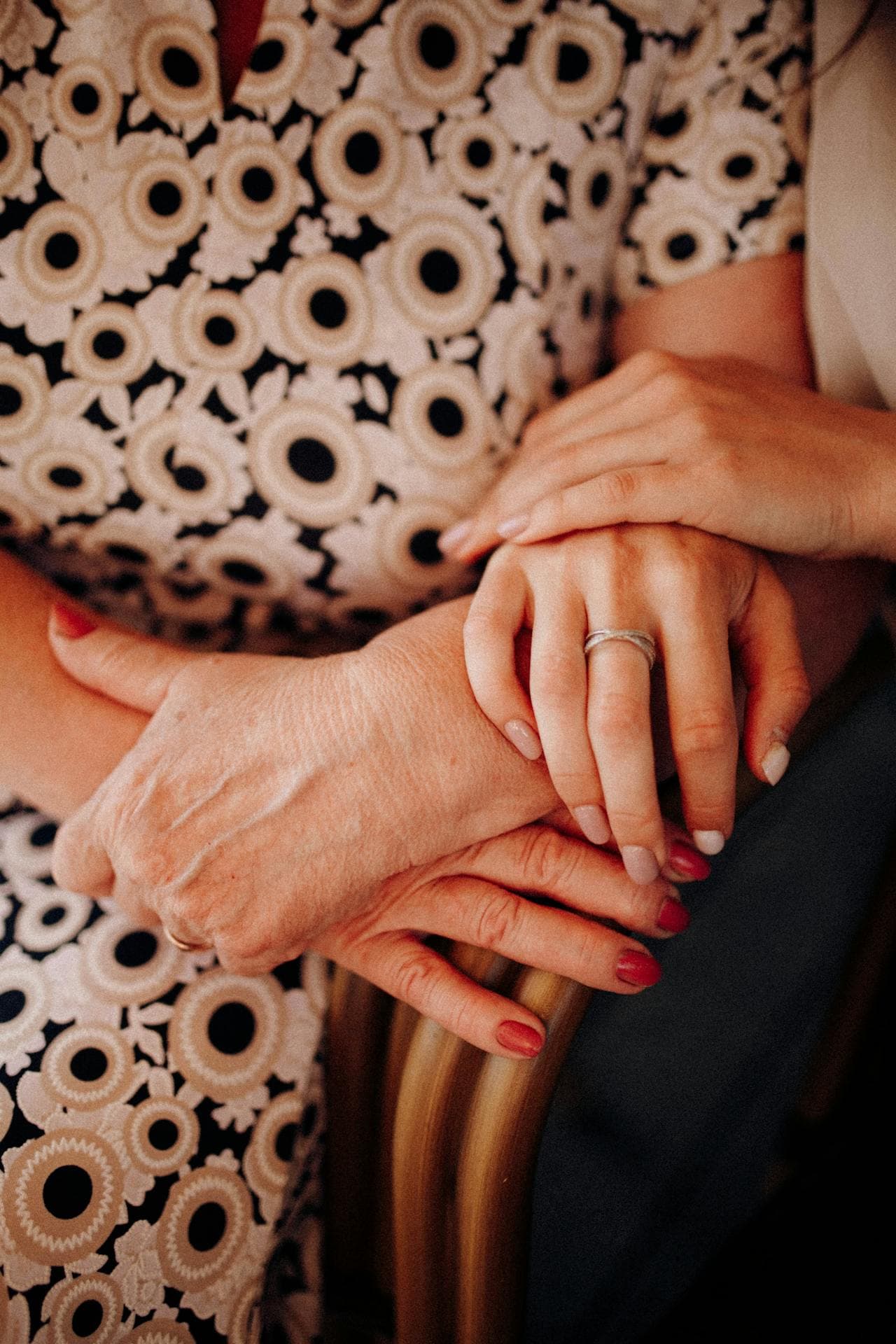
Intergenerational trauma transmits psychological and emotional effects of traumatic experiences across generations through unconscious family patterns, often disguised as normal traits like hypervigilance or emotional suppression, but evidence-based therapeutic approaches can effectively break these cycles and promote healing.
That anxiety you can't explain, the way your family avoids conflict, or your need to control everything - these aren't personality quirks. Intergenerational trauma disguises itself as normal family traits, passing silently through generations until someone finally recognizes the pattern.
What is intergenerational trauma? Definition and key distinctions
Intergenerational trauma refers to the psychological and emotional effects of traumatic experiences that get transmitted from one generation to the next. When your grandparents or great-grandparents lived through war, displacement, abuse, or other devastating events, the impact didn’t necessarily end with them. Those experiences can shape how they raised their children, who then carried certain patterns, beliefs, and emotional responses into their own parenting. The effects ripple forward, often without anyone consciously passing them along.
This type of trauma differs from individual trauma, which affects a single person based on their own direct experiences. It also differs from what researchers call historical trauma, a term describing collective trauma that affects entire communities or cultural groups. Historical trauma applies to large-scale events like genocide, colonization, or slavery, where whole populations experienced systematic harm. Intergenerational trauma, by contrast, focuses specifically on how traumatic effects move through family lines, whether the original trauma was collective or personal.
You might notice the terms “generational trauma” and “intergenerational trauma” used interchangeably. While they often describe the same phenomenon, intergenerational trauma specifically emphasizes the transmission pathway: how trauma moves between generations rather than simply existing across them. Think of it as the difference between noting that multiple generations experienced something versus examining how that something traveled from one generation to the next.
Is intergenerational trauma real?
This is a fair question, and the answer is yes. The American Psychological Association recognizes intergenerational trauma as a legitimate psychological phenomenon supported by growing research. Studies have examined descendants of Holocaust survivors, children of war veterans, and families affected by systemic oppression, finding measurable differences in stress responses, attachment patterns, and mental health outcomes.
The field continues to evolve as researchers explore exactly how transmission occurs, whether through learned behaviors, altered parenting styles, or even biological mechanisms. What’s clear is that the effects are real and observable, even when the people experiencing them have no conscious memory of the original trauma. This unconscious transmission sits at the heart of why intergenerational trauma can be so difficult to recognize. You may be living with patterns that started long before you were born, shaped by events no one in your family talks about, or perhaps even remembers.
Understanding how these patterns develop is the first step toward recognizing them in your own life. For those experiencing symptoms related to past trauma, learning about traumatic disorders can provide additional context for what you’re feeling.
How trauma gets passed down without anyone realizing
Trauma doesn’t announce itself when it moves from parent to child. It slips through in the way a mother tenses when she hears a loud noise, in the topics a family never discusses, in the rules everyone follows but no one can explain.
These transmission pathways operate largely outside conscious awareness. A parent doesn’t decide to pass down their fear responses. A child doesn’t choose to absorb their caregiver’s unprocessed grief. The transfer happens through daily interactions, nervous system attunement, and the powerful lessons embedded in what remains unspoken.
How does intergenerational trauma get passed down?
The most common pathway is normalization. Children have no external reference point for what’s typical, so they assume their family’s patterns are universal. If your household operated on constant high alert, anxiety doesn’t feel like anxiety. It feels like “just how life is.” If emotional distance was the norm, you might grow up believing that closeness is dangerous without ever forming that thought consciously.
This normalization extends to how families interpret behavior. Hypervigilance gets reframed as “being careful” or “being responsible.” Emotional suppression becomes “being strong” or “not making a fuss.” These positive labels disguise trauma responses, making them nearly impossible to question. After all, who would challenge something presented as a virtue?
Modeling plays an equally powerful role. Children learn to regulate their emotions by watching their caregivers. During early attachment formation, a child’s nervous system literally calibrates itself to match their caregiver’s stress responses. If a parent’s baseline includes chronic tension, shallow breathing, or constant scanning for threats, the child’s body learns to mirror these states. Research shows that epigenetic changes can influence behavior and stress responses, meaning these patterns can become encoded at a biological level.
Intergenerational trauma theory also points to loyalty-based blindness. Recognizing that your family’s patterns caused harm can feel like an act of betrayal. This creates a psychological barrier where questioning inherited behaviors triggers guilt and shame. Many people unconsciously protect their parents by refusing to see what was passed down, even when that inheritance causes them significant pain.
What is the intergenerational transfer of trauma?
The intergenerational transfer of trauma refers to the process by which traumatic stress responses, beliefs, and behaviors move from one generation to the next. This transfer doesn’t require the original traumatic event to be repeated. Instead, the adaptations developed in response to trauma become the content that gets transmitted.
Consider this: if your grandmother survived a famine, she might have developed intense anxiety around food scarcity. Your mother, raised by this anxious woman, might have absorbed messages about never wasting food and always preparing for the worst. You might find yourself hoarding pantry items or feeling disproportionate panic when supplies run low, all without knowing anything about the original famine.
Studies on epigenetic mechanisms suggest that trauma can actually alter gene expression in ways that affect subsequent generations. This biological pathway helps explain why trauma responses can feel so deeply embedded, so much a part of who you are rather than something that happened to you.
Pre-verbal learning: before memory forms
Some of the most powerful trauma transmission happens before a child can speak or form explicit memories. During the first years of life, the brain is rapidly developing its stress response systems. Infants are exquisitely attuned to their caregivers’ emotional states, picking up on tension, fear, and dysregulation through tone of voice, muscle tension, and the quality of touch.
This pre-verbal somatic encoding means trauma responses can become part of your baseline nervous system functioning. You might carry a sense of dread or a tendency toward hyperarousal that predates your earliest memory. Because these patterns were learned before language, they exist below the level of conscious thought. You can’t remember learning them because you had no capacity for that kind of memory yet.
This is one reason trauma-informed approaches often incorporate body-based techniques. When trauma lives in the nervous system rather than in narrative memory, talking alone may not reach it.
The power of silence and family secrets
What families don’t say often carries more weight than what they do. When significant events go unspoken, children sense the gaps. They notice the photograph that makes everyone uncomfortable, the relative whose name changes the room’s energy, the questions that get deflected.
These gaps in family knowledge create confusion. Children naturally try to make sense of their world, and when information is missing, they often fill the void with self-blame. “Something is wrong, and it must be because of me” becomes an unconscious conclusion when the real explanation remains hidden.
Silence also prevents processing. Trauma that can’t be discussed can’t be understood, contextualized, or integrated. It remains frozen in its original form, radiating influence without ever being examined. The family secret becomes a kind of gravitational center that shapes everyone’s orbit while remaining invisible.
The 7 disguises: how intergenerational trauma hides as ‘normal’ family traits
Often, the most persistent patterns are the ones families celebrate rather than question. These behaviors get woven into identity, passed down as family wisdom, and praised as virtues. Recognizing them requires looking beneath the surface of traits you may have always considered strengths.
1. Hypervigilance disguised as ‘carefulness’
Your family might pride itself on being prepared for anything. There’s always a backup plan, an emergency fund, a mental catalog of every possible thing that could go wrong. While genuine preparedness is healthy, trauma-driven hypervigilance is different. It’s exhausting. It means never fully relaxing, constantly scanning for threats, and feeling responsible for preventing disasters that may never come.
The difference lies in the body. Adaptive awareness allows you to enjoy the present moment while staying reasonably prepared. Anxiety-driven scanning keeps your nervous system on high alert, even during safe, ordinary moments like family dinners or quiet evenings at home.
2. Emotional suppression disguised as ‘strength’
Families often reward stoicism. “We don’t fall apart.” “We handle things.” “Don’t be so dramatic.” These messages teach children that emotions are problems to be managed rather than information to be understood.
The cost accumulates quietly. When feelings have no outlet, they don’t disappear. They show up as chronic tension, unexplained health issues, sudden outbursts, or a persistent sense of numbness. Generations can pass down the belief that vulnerability equals weakness, never realizing that true strength includes the capacity to feel.
3. Enmeshment disguised as ‘closeness’
Some families describe themselves as unusually tight-knit. Everyone knows everyone’s business. Loyalty is paramount. There’s a crucial difference between genuine closeness and enmeshment, though. Healthy intimacy includes room for individuality, privacy, and different opinions. Enmeshment demands sameness.
In enmeshed families, having your own thoughts or needs can feel like betrayal. Children learn that love requires giving up parts of themselves, a pattern they often carry into adult relationships.
4. Control behaviors disguised as ‘responsibility’
When past generations experienced chaos, whether through poverty, violence, or instability, control becomes a survival strategy. This can look like meticulous organization, rigid routines, or an inability to tolerate spontaneity.
The person controlling everything often appears highly capable. They’re the one who keeps the household running, manages every detail, and struggles to delegate. Underneath, there’s often a deep fear: if I let go, everything falls apart.
5. Avoidance disguised as ‘keeping the peace’
“Let’s not bring that up.” “Why dwell on the past?” “Don’t rock the boat.” These phrases maintain family harmony on the surface while ensuring difficult truths stay buried. Conflict avoidance feels like love, like protection. But it teaches children that honesty is dangerous and that their real feelings threaten relationships.
This pattern creates families where everyone knows the unspoken rules but no one acknowledges them. Important conversations never happen, and genuine connection becomes impossible.
6. Perfectionism disguised as ‘high standards’
Ambition and excellence are celebrated in most families. Trauma-rooted perfectionism has a different flavor, though. It’s driven by fear rather than genuine aspiration. Mistakes feel catastrophic. Good enough never is.
Children raised with this pattern learn that their worth depends on performance. They may achieve impressive things while feeling perpetually inadequate, always one failure away from losing everything.
7. Distrust disguised as ‘independence’
“I don’t need anyone.” “I can handle it myself.” “Never rely on others.” These statements sound empowering, but they often mask learned betrayal. When previous generations experienced abandonment or broken trust, self-reliance becomes armor.
The problem is that genuine independence includes the ability to depend on others when appropriate. Trauma-driven self-reliance is actually isolation dressed up as strength, making true intimacy feel dangerous rather than nourishing.
Each of these disguises serves a purpose. They protected someone, somewhere in your family’s history. Recognizing them isn’t about blame. It’s about understanding that what looks like personality might actually be adaptation, and that awareness creates the possibility of choice.
What causes intergenerational trauma: types of original trauma events
Intergenerational trauma can begin with many different types of experiences. Understanding these categories can help you recognize potential sources of inherited stress in your own family history.
War and displacement
Combat trauma affects not just veterans but entire family systems. Soldiers who return home carrying the weight of what they witnessed often struggle to connect emotionally with their children. Refugee experiences and forced migration create their own wounds: the loss of home, community, language, and identity. These ruptures echo through generations as families try to rebuild while carrying invisible grief.
Genocide and cultural destruction
Some of the most profound examples of intergenerational trauma stem from systematic attempts to destroy entire peoples. Holocaust survivors and their descendants have been extensively studied, revealing trauma patterns that persist across multiple generations. Research on historical trauma in Indigenous communities shows how residential schools, forced assimilation, and ethnic cleansing create wounds that affect entire cultures, not just individual families.
Systemic oppression
Ongoing discrimination, colonization, and the legacy of slavery create chronic stress that compounds over time. Unlike single traumatic events, systemic oppression represents continuous trauma that shapes how families learn to survive, trust, and relate to the world around them.
Family-level trauma
Not all intergenerational trauma begins with large-scale events. Abuse, neglect, sudden loss of a parent, or addiction in previous generations can alter family dynamics for decades. A grandparent’s unprocessed grief can shape how your parent learned to handle emotions, which then influenced how you were raised.
Community and environmental trauma
Natural disasters, economic collapse, and community violence leave lasting marks on entire neighborhoods and towns. When a community experiences collective trauma, the effects ripple outward through families and across time.
Why severity doesn’t tell the whole story
The intensity of the original trauma doesn’t always predict how strongly it passes to the next generation. What matters just as much is whether the person had support, whether they could process what happened, and whether they had space to grieve. A “smaller” trauma that goes completely unacknowledged can sometimes leave deeper marks than a major event that was openly discussed and mourned.
Examples of intergenerational trauma across cultures and communities
Intergenerational trauma shows up in real families, real communities, and real bodies across the world. While every family’s experience is unique, certain populations have faced collective traumas so widespread that researchers can trace their effects across multiple generations.
Holocaust survivors and their descendants
The children and grandchildren of Holocaust survivors represent the most extensively studied population for intergenerational trauma. Researchers have documented elevated rates of anxiety, PTSD symptoms, and depression in descendants who never directly experienced the Holocaust themselves. Research on Holocaust survivor descendants has shown measurable differences in stress hormone patterns, particularly cortisol regulation, in the children of survivors.
Many descendants describe growing up in homes where the trauma was ever-present yet rarely discussed directly. They absorbed their parents’ hypervigilance, their fear of authority, their need to stockpile food or resources. Some report feeling responsible for their parents’ emotional wellbeing from a young age, or sensing that normal childhood complaints felt trivial compared to unspoken horrors.
Indigenous communities and residential school trauma
For Indigenous peoples across North America, intergenerational trauma stems from centuries of colonization, forced removal from ancestral lands, and systematic cultural erasure. The residential school system, which forcibly separated children from their families for generations, created particularly deep wounds. Indian Residential Schools have caused profound intergenerational effects that continue to shape family dynamics, mental health outcomes, and community wellbeing today.
Children who were forbidden from speaking their languages or practicing their traditions often struggled to pass cultural knowledge to their own children. The disruption of traditional parenting practices, combined with the abuse many experienced in these institutions, created cycles of family disruption that persist across generations.
African American communities and cumulative trauma
The intergenerational effects of slavery, Jim Crow laws, and ongoing systemic discrimination have created cumulative trauma in African American communities. Unlike a single traumatic event, this represents layers of collective trauma spanning centuries. Each generation has faced its own traumas while also carrying the unprocessed grief of previous generations.