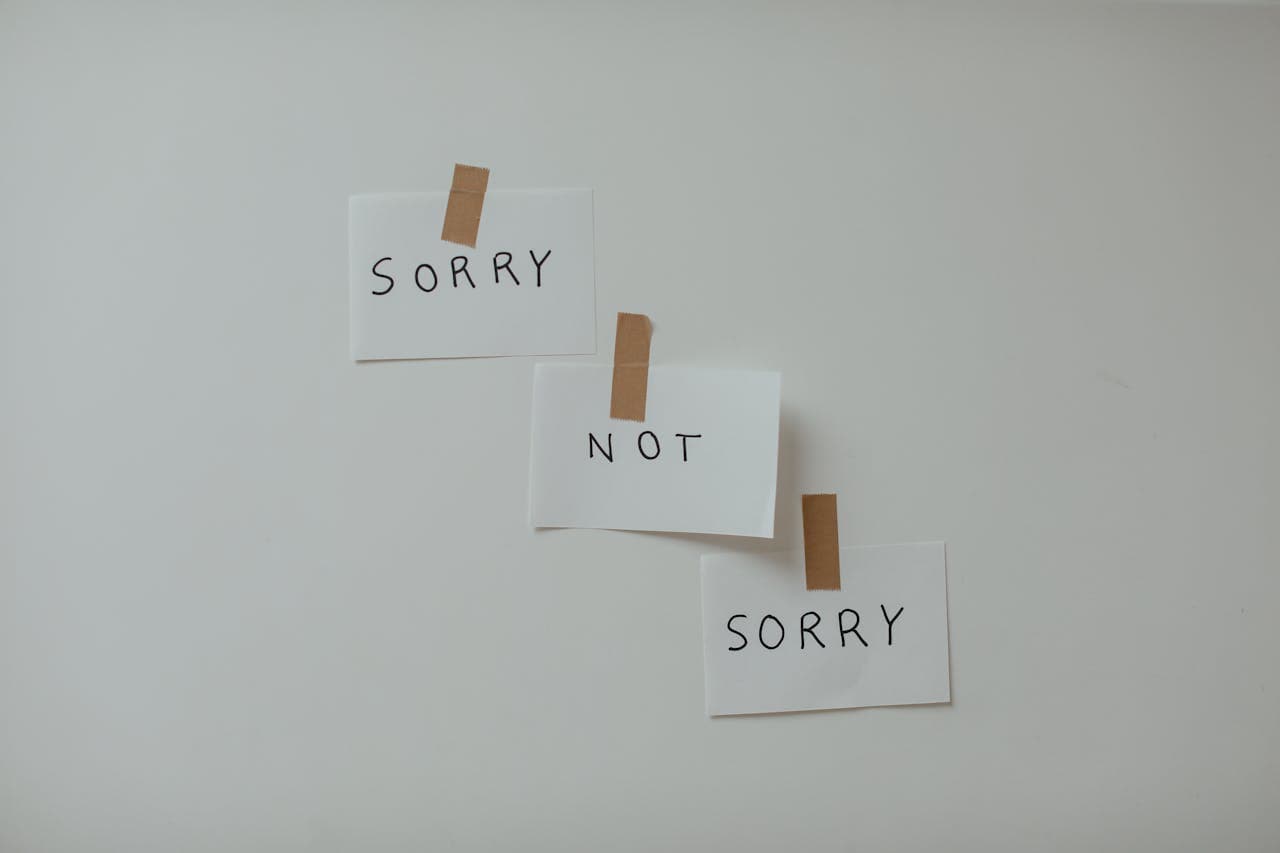
Apologies fail when they trigger the brain's threat detection system, causing defensive responses that prioritize self-protection over genuine accountability, but understanding these psychological mechanisms through therapeutic communication skills enables meaningful relationship repair and lasting behavioral change.
Have you ever received an apology that somehow made you feel worse than before? When apologies fail, it's rarely because the words weren't said - it's because the psychology behind meaningful repair was completely misunderstood.
What is the psychology behind apologizing?
At its core, an apology is a social repair tool. When you hurt someone, whether intentionally or by accident, you create a rupture in the relationship. An apology signals two things: you recognize that harm occurred, and you are committed to restoring what was damaged. This might sound simple, but the psychological machinery behind it is surprisingly complex.
Your brain treats social rejection and relationship threats much like physical danger. When you have wronged someone, your threat detection systems activate, creating discomfort that motivates you to make things right. At the same time, your self-concept feels under attack. Admitting fault means acknowledging that you, a person who likely sees yourself as good and reasonable, did something harmful. This tension between protecting your ego and repairing the relationship sits at the heart of why apologizing feels so difficult.
A genuine apology requires what researchers call temporary ego dissolution. You have to set aside your defenses long enough to truly see the situation from the other person’s perspective. This perspective-taking activates specific brain regions associated with empathy and social cognition. When it works, something remarkable happens: research on forgiveness and apology suggests that sincere apologies can trigger the release of oxytocin, a hormone linked to trust and social bonding, in the person receiving the apology.
Most developmental psychologists agree that children should be taught to apologize from a young age, but with an important caveat: children learn not just that they should apologize, but how apologies work by watching the adults around them. Cultural factors also play a significant role. Some cultures emphasize public acknowledgment of wrongdoing, while others prioritize private reconciliation. What feels like a complete apology in one context might seem insufficient or even excessive in another.
These cognitive, emotional, and social mechanisms work together to make apologies one of the most powerful tools we have for maintaining relationships. Understanding them helps explain why some apologies heal wounds instantly while others fall completely flat.
Why apologizing is so hard: the neuroscience of threat response
When you need to apologize, your brain often treats the situation like a physical threat. Admitting wrongdoing can activate your amygdala, the brain’s alarm system, triggering the same defensive responses you would have if facing actual danger. Your heart rate increases, your muscles tense, and your mind scrambles for ways to protect yourself. This is not weakness or stubbornness. It is neurobiology.
The threat feels real because it targets something precious: your self-concept. When research shows self-esteem plays a role in our resistance to apologizing, it reveals how deeply we are wired to protect our identity as good, capable people. Apologizing means acknowledging that you caused harm, which creates cognitive dissonance. Your brain struggles to reconcile “I hurt someone” with “I am a good person,” and that psychological discomfort can feel unbearable.
This is also why it is so hard to say sorry to parents and other close family members. The stakes feel higher with people who shaped your earliest sense of self. Family-of-origin patterns run deep, and if vulnerability was met with criticism or dismissal growing up, your nervous system learned that admitting fault equals emotional danger.
Shame makes apologizing especially difficult, and it works differently than guilt. Guilt says, “I did something bad.” Shame says, “I am bad.” When shame takes over, an apology feels like confirming your worst fears about yourself rather than simply addressing a mistake. People prone to shame often avoid apologies entirely because acknowledging harm feels like an attack on their core identity.
Power dynamics complicate things further. In parent-child relationships, apologizing can feel like surrendering authority or admitting incompetence. Your attachment style also shapes how safe vulnerability feels. Someone with anxious attachment might over-apologize to maintain connection, while someone with avoidant attachment might resist apologies to maintain emotional distance.
As writer Harriet Lerner observed, “More people need to apologize, and more people need to accept apologies.” Recognizing that your brain is trying to protect you, even when that protection backfires, is the first step toward changing the pattern.
The apology failure taxonomy: 5 types of apologies that don’t work
You have probably received an apology that left you feeling worse than before. The words sounded right, maybe even rehearsed, but something was missing. That hollow feeling is not your imagination. Most apologies fail not because people do not say “I’m sorry,” but because of how they say it.
Understanding these five common apology failures can help you recognize patterns in your relationships and identify when someone is not offering meaningful accountability, even when they technically use the right words.
The Deflector: avoiding responsibility
“I’m sorry you feel that way.”
This phrase might be the most frustrating non-apology in existence. The Deflector shifts the problem entirely onto you. They are not sorry for what they did. They are sorry about your reaction to it.
This fails because it denies any wrongdoing while simultaneously invalidating your experience. The message underneath is clear: the problem is not their behavior, it is your sensitivity. You are left defending why you are hurt instead of receiving acknowledgment for legitimate pain.
The Minimizer: downplaying the impact
“I’m sorry if I upset you.”
That tiny word “if” does enormous damage. The Minimizer questions whether harm even occurred. This approach dismisses the significance of what happened. Your hurt becomes hypothetical. The Minimizer often genuinely believes they are apologizing, which makes it harder to address. But an apology that questions reality is not an apology. It is a subtle suggestion that you might be overreacting.
The Conditional: the “but” that erases everything
“I’m sorry, but you have to understand where I was coming from.”
“I’m sorry, but you made me react that way.”
Everything before the “but” gets cancelled by everything after it. The Conditional apology attaches justifications that transfer fault back to you. Suddenly, the person apologizing becomes the real victim of the situation. Responsibility dissolves into a tangle of excuses, and you end up comforting the person who harmed you.
The Performer: emotional display without substance
Tears flow. Voices crack. Dramatic expressions of remorse fill the room. But the Performer puts on an emotional show without offering concrete acknowledgment of what went wrong. Their distress becomes the focus, pulling attention away from your pain and onto their feelings about having caused it.
This fails because it centers the apologizer’s emotions rather than the harmed person’s experience. You might find yourself saying “it’s okay” just to stop the display. The Performer’s tears can feel manipulative, even when they are genuine, because they demand emotional labor from the person who was hurt.
The Transactional: expecting forgiveness as payment
“I said I’m sorry. What more do you want?”
The Transactional apology treats “sorry” as currency that should immediately purchase absolution. When someone becomes frustrated that their apology did not instantly resolve things, they reveal their priority: ending their own discomfort, not addressing yours. The Transactional apologizer often escalates when forgiveness is not immediate, turning their apology into evidence of your unreasonableness.
Each of these apology types shares a common thread: they prioritize the apologizer’s comfort over the harmed person’s healing.
The REPAIR framework: what actually makes an apology work
Knowing why apologies fail is only half the equation. You also need a clear structure for getting them right. The REPAIR framework breaks down effective apologies into six components that address both the practical and emotional needs of the person you have hurt.
R: Recognize what you did
Start by naming your specific actions without hedging or generalizing. “I’m sorry if I hurt you” does not cut it. Neither does “I’m sorry for everything.” Try instead: “I’m sorry I interrupted you during the meeting and dismissed your idea in front of the team.” This precision shows you have actually reflected on what happened.
E: Express genuine remorse
Your remorse needs to center on the other person’s experience, not your own guilt or embarrassment. “I feel terrible about this” puts the focus back on you. A better approach: “I can see how much this hurt you, and I’m genuinely sorry for causing that pain.” One asks for comfort; the other offers it.
P: Perspective-taking
Demonstrate that you understand the impact from their viewpoint. This means articulating why they are upset in a way that shows you have truly considered their position. For example: “I understand that when I shared your news without asking, it took away your chance to tell people on your own terms. That moment belonged to you, and I took it.”
A: Accountability without excuses
Take full responsibility. Resist the urge to explain your behavior in ways that shift blame or minimize harm. Explanations like “I was stressed” or “I didn’t mean it that way” often function as excuses, even when that is not your intention. Simply own it: “There’s no excuse for what I said. I was wrong.”
I: Intention for change
State what you will do differently, and be specific. Vague promises like “I’ll be better” do not inspire confidence. “Going forward, I’ll ask before sharing anything about your personal life with others” gives the other person something tangible to hold you to.
R: Request their needs
Ask what they need from you and whether they are open to rebuilding the relationship. You might say: “What would help you right now? And is there anything else you need from me?” This step acknowledges that forgiveness is not yours to demand or expect. Interpersonal therapy can help you develop these communication skills and learn how to navigate relationship repair when the path forward feels unclear.
The REPAIR framework is not about following a script. It is about ensuring your apology addresses what the other person actually needs to hear.
How to receive an apology: the often-ignored half of the equation
Most advice about apologies focuses entirely on the person saying sorry. Receiving an apology is an active process, not a passive one. Research shows that receivers feel empowered when they approach apologies as something to thoughtfully evaluate rather than automatically accept.
You have the right to assess whether an apology is genuine before deciding how to respond. You do not owe anyone immediate forgiveness, and taking time to process what you have heard is healthy discernment, not pettiness.
The sincerity detection checklist
When someone apologizes to you, consider these questions:
- Does it name specific behavior? A sincere apology identifies exactly what happened. “I’m sorry for canceling our plans three times this month without warning” lands differently than “I’m sorry if I upset you.”
- Does it acknowledge your actual experience? The person should demonstrate understanding of how their actions affected you, not just that they did something wrong in the abstract.
- Is there defensiveness? Watch for crossed arms, interrupting, or a tone that suggests they are tolerating this conversation rather than engaging with it.
- Are excuses embedded? “I’m sorry, but I was stressed” is an explanation wearing an apology’s clothing.
- Is forgiveness being demanded? Phrases like “I said I’m sorry, what more do you want?” reveal that the apology is transactional, not transformational.
Your response options
You have more choices than simply accepting or rejecting. Consider these as points on a spectrum:
- Full acceptance: You believe the apology and feel ready to move forward
- Conditional acceptance: “I appreciate this, and I need to see changed behavior before I can fully trust again”
- Requesting more: “I hear you, but I need you to understand specifically how this affected my work”
- Declining to respond now: “I need time to process this”
- Declining the apology: Sometimes an apology simply is not enough, and that is your right
Recognizing manipulation tactics
A manipulative apology can be worse than no apology at all, because it masquerades as repair while causing additional harm. Watch for pressure for immediate forgiveness, guilt-tripping about your response, or claims that the apology “should be enough.” These tactics shift responsibility back onto you.
Your body often registers authenticity before your mind catches up. Pay attention to how you feel physically during an apology. Does your stomach unclench, or does it tighten further? That physical intuition is data worth honoring.
Context-specific apology protocols: one size does not fit all
The apology that repairs a workplace conflict would feel cold and transactional in a marriage. The vulnerable confession that heals a romantic rift might seem inappropriate between colleagues. Effective apologies require reading the relationship and adjusting your approach accordingly.
Workplace apologies: navigating power and professionalism
Professional apologies walk a tightrope between genuine accountability and appropriate boundaries. You need to acknowledge the impact of your actions without oversharing personal struggles or creating awkward emotional intimacy with colleagues.
Power dynamics matter enormously here. Apologizing to a subordinate requires extra care to avoid making them feel pressured to accept or minimize the issue. Apologizing to a superior means being direct without excessive groveling that undermines your professional standing. A simple “I was wrong about the deadline communication, and I have already updated the project timeline to prevent this confusion going forward” often works better than lengthy emotional explanations.