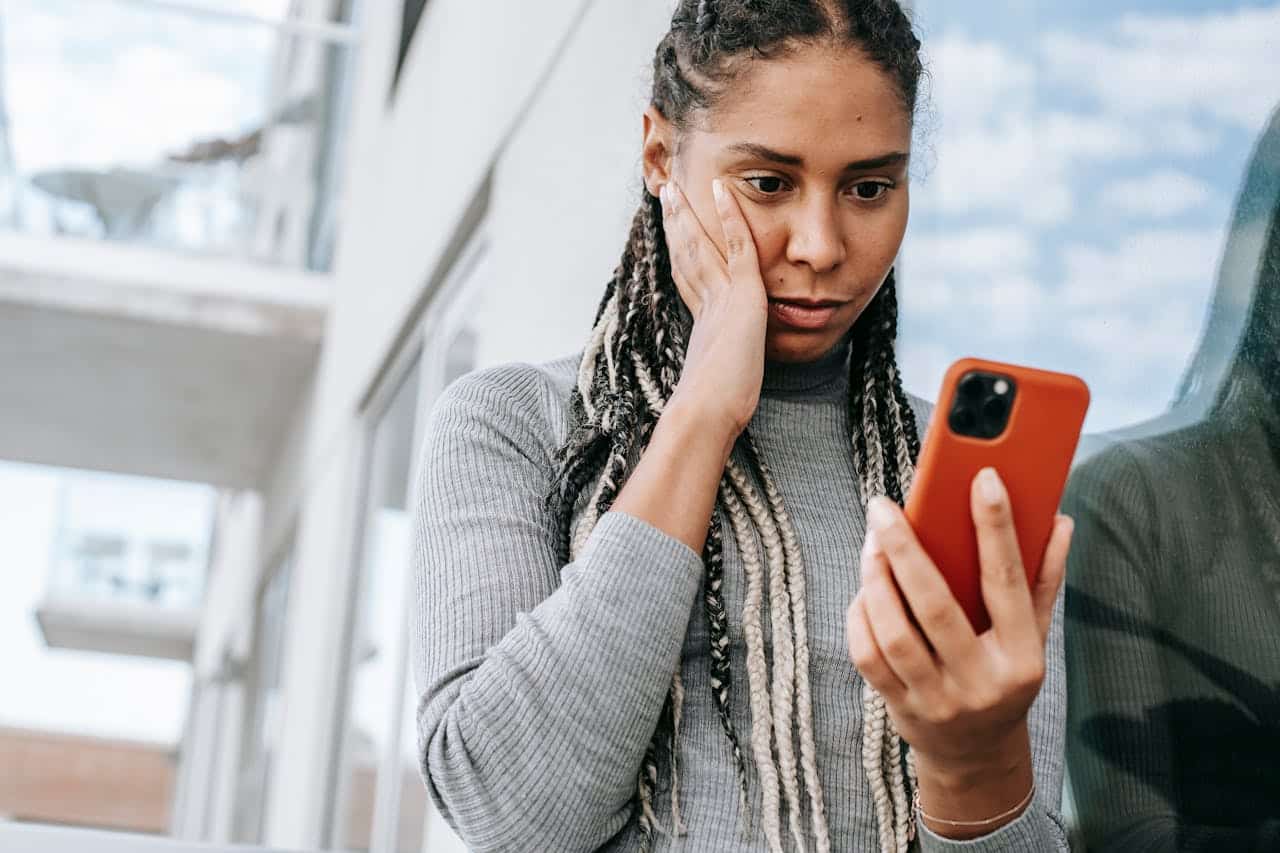
Phone anxiety (telephobia) is a recognized subtype of social anxiety disorder that causes physical and emotional distress during phone calls, but cognitive behavioral therapy and gradual exposure techniques provide effective treatment for reducing symptoms and improving daily functioning.
Does your heart race when the phone rings, or do you rehearse voicemails three times before calling? Phone anxiety isn't just a preference for texting - it's a real form of anxiety that affects millions, but you don't have to let it control your life.
What is phone anxiety? Understanding telephobia
Your heart races when your phone rings. You rehearse voicemails three times before calling. You’d rather send ten text messages than make one quick call. If this sounds familiar, you’re experiencing what’s known as telephobia, a specific form of anxiety triggered by making or receiving phone calls.
Telephobia isn’t just a preference for texting or a minor inconvenience. It’s a real anxiety response that can cause physical symptoms like sweating, rapid heartbeat, and nausea when you need to use the phone. The telephobia definition describes it as a subtype of social anxiety focused specifically on phone-based communication. While it’s not listed as a separate diagnosis in the DSM (the manual clinicians use for mental health diagnoses), mental health professionals recognize and treat it as a legitimate concern.
There’s a difference between mild phone discomfort and clinical-level anxiety. Occasional nervousness before an important call is normal. Phone anxiety becomes a clinical concern when it interferes with your daily life, like avoiding necessary medical appointments, missing job opportunities, or experiencing intense distress that lasts long after a call ends.
Telephobia relates closely to social anxiety disorder, but it’s more specific. While someone with general social anxiety might feel anxious in various social situations, a person with telephobia may function perfectly well in face-to-face conversations but panic at the thought of phone calls. The lack of visual cues, the pressure of real-time responses, and the inability to edit your words all contribute to this specific anxiety.
This experience is increasingly common, especially among younger adults who grew up with text-based communication. Studies show that 42% of medical students experience telephobia, demonstrating just how widespread this phenomenon has become. If you’re dealing with phone anxiety, you’re not being lazy or antisocial. You’re experiencing a recognized form of anxiety that responds well to treatment.
The neuroscience of phone dread: Why your brain treats calls as threats
Your racing heart before a phone call isn’t just nervousness. It’s your brain responding to what it perceives as a genuine threat. When you see an incoming call, your amygdala (the brain’s alarm system) starts firing warning signals before you even pick up. This ancient structure can’t tell the difference between a phone conversation and a predator in the bushes. Both involve unpredictability, and unpredictability equals danger in your brain’s risk assessment.
Phone call anxiety creates an unusually high cognitive load because your brain is working overtime to process information with limited data. During face-to-face conversations, you rely on facial expressions, body language, and environmental context to interpret meaning. On a phone call, you lose roughly 70% of these communication signals. Your brain has to fill in the gaps, constantly making split-second guesses about tone, intention, and emotional subtext. That’s exhausting mental work, and it happens entirely in real time with no pause button.
This processing challenge gets worse because phone conversations are inherently unpredictable. Your brain runs on prediction. It constantly forecasts what will happen next to keep you safe and efficient. But phone calls defy this system. You can’t predict when someone will speak, what they’ll say, how long pauses will last, or when the conversation will end. Each moment of uncertainty triggers a micro-stress response. String enough of these together, and you’ve got a full anxiety reaction.
The fear of phone calls also taps into a uniquely uncomfortable aspect of auditory self-monitoring. When you speak on the phone, you hear your own voice both internally (through bone conduction) and externally (through the phone’s feedback). This creates a disorienting doubling effect that heightens self-consciousness. You become hyperaware of every “um,” pause, and vocal quirk. Your brain splits its attention between listening to the other person and monitoring your own performance, which compounds the cognitive overload.
Texting and email feel safer because they remove most of these neurological stressors. You control the pacing completely. You can draft, revise, and delete before sending. You have time to think through your response without the pressure of real-time performance. There’s a written record, so you don’t have to rely on memory. Most importantly, there’s no ambiguity to interpret. The message sits there, stable and reviewable, until you’re ready to respond. Your amygdala stays quiet because the threat signals never activate.
Signs and symptoms of phone anxiety
Recognizing phone anxiety symptoms can help you understand what you’re experiencing and validate that your feelings are real. If you feel scared of phone calls, you’re not alone, and the symptoms you experience follow patterns that many others share.
Physical symptoms
Your body often reacts to phone calls before your mind fully processes what’s happening. You might notice your heart racing as soon as the phone rings or when you’re about to make a call. Sweating, particularly in your palms, is common. Some people experience nausea or a tight feeling in their chest. Your voice might tremble when you speak, even if you’re trying to sound calm. A dry mouth can make it harder to get words out smoothly, adding to the discomfort.
Cognitive symptoms
Phone anxiety affects how you think during and before calls. Catastrophic thinking takes over: you might imagine the worst possible outcomes, like saying something embarrassing or being judged harshly. Your mind can go completely blank mid-conversation, making it hard to respond naturally. Difficulty concentrating means you might miss important details or struggle to follow what the other person is saying. These anxiety symptoms are your brain’s way of responding to perceived threat, even when the actual risk is minimal.
Behavioral symptoms
The way you act around phone calls reveals a lot about phone anxiety. You might avoid making calls altogether, finding excuses to text or email instead. Voicemails pile up because listening to them feels overwhelming. Before important calls, you might spend excessive time rehearsing what you’ll say, writing scripts, or practicing out loud. Some people screen every call, only answering for specific people or in certain situations.
Emotional symptoms
The emotional weight of phone anxiety can be intense. Dread builds as a scheduled call approaches, sometimes starting hours or days ahead. During the call itself, you might feel panic or acute discomfort. When a call ends or when you successfully avoid one, relief washes over you, but it’s often temporary. Your symptoms may shift depending on context. Calling a friend might feel manageable, while calling a doctor’s office or potential employer triggers severe anxiety. The intensity varies, but the underlying pattern remains consistent.
Root causes and triggers of phone anxiety
Understanding the causes of phone anxiety can help you make sense of your reactions and point you toward effective support. Phone anxiety rarely appears out of nowhere. It typically develops from a combination of experiences, personality traits, and environmental factors that build up over time.
Past negative experiences shape your phone responses
Many people trace their phone anxiety back to specific uncomfortable moments. Maybe you blanked during an important call, stumbled over your words in front of colleagues, or received bad news unexpectedly. Perhaps you experienced rejection or conflict over the phone that left a lasting impression. Your brain remembers these experiences and tries to protect you by triggering anxiety when similar situations arise. Even a single embarrassing moment can create a pattern of avoidance that strengthens with each call you skip.
Perfectionism fuels the fear of saying the wrong thing
If you tend toward perfectionism, phone calls present a unique challenge. Unlike texts or emails, you can’t edit your words before they leave your mouth. You can’t revise a clumsy sentence or delete an awkward pause. This real-time pressure to perform flawlessly can feel overwhelming. You might rehearse conversations in your head, worry about saying something foolish, or replay calls afterward analyzing every word you said. The impossibility of achieving perfect spontaneous communication keeps the anxiety cycle spinning.
Social anxiety creates fear of judgment on calls
Phone anxiety often has roots in broader social anxiety, where the fear of negative evaluation extends to phone interactions. You might worry the other person is judging your voice, your pauses, or your ability to articulate thoughts quickly. Without visual cues to gauge their reactions, your mind may fill in the blanks with worst-case scenarios. This uncertainty about how you’re being perceived can make even routine calls feel like high-stakes performances.
Learned behaviors and decreased exposure reinforce avoidance
Sometimes phone anxiety is learned behavior. Growing up around family members who avoided phone calls or expressed anxiety about them can normalize these fears. Cultural factors may also play a role in how comfortable you feel with direct verbal communication.
The digital shift toward texting and messaging has added another layer to why you might be scared of phone calls. The less frequently you make calls, the more unfamiliar and difficult they feel. This creates a self-reinforcing cycle where avoidance leads to skill erosion, which increases anxiety, which drives more avoidance. For some individuals, past trauma can also create triggers around phone calls, particularly if traumatic events involved phone communication or unexpected distressing calls.
Phone anxiety across generations: Why different age groups experience it differently
Your relationship with phone calls might have more to do with when you were born than you think. The way we learn to communicate shapes our comfort level with different methods, and each generation has grown up in a distinctly different communication landscape.
Gen Z: When texting is the native language
For Gen Z, texting isn’t just preferred. It’s the default. If you grew up with a smartphone in your hand, phone calls can feel like someone barging into your room without knocking. Gen Z phone anxiety often stems from the fact that calls demand immediate attention and responses, which feels inefficient compared to crafting a thoughtful text you can send when you’re ready.
This generation learned to communicate asynchronously first. You could think before you type, edit before you send, and respond on your own timeline. A ringing phone disrupts that control. It’s not about laziness or poor social skills. It’s about fundamentally different communication training from the earliest years.
Millennials: Caught between two worlds
Millennial phone anxiety looks different because this generation straddles two eras. Many millennials remember landlines and calling friends’ houses. But they also came of age as texting and instant messaging exploded. This bridge position creates mixed feelings. You might have decent phone skills from your childhood but strongly prefer texting now. Or you might feel guilty about avoiding calls because you remember when they were just normal. The result is often a complicated relationship with phone communication that includes both capability and avoidance.
Older generations: New anxieties in a changed landscape
Gen X and Baby Boomers typically grew up phone-fluent. Calling was simply how you made plans, caught up with friends, or handled business. But that doesn’t mean they’re immune to phone anxiety. Some develop it later in life, particularly around new technologies like video calls or navigating complex automated phone systems. Others feel frustrated when younger colleagues or family members won’t answer calls, interpreting text-only communication as cold or dismissive.
When generational preferences collide
Workplace friction happens when these different communication styles meet. A Boomer manager might see an employee’s reluctance to call clients as unprofessional. A Gen Z employee might view that same manager’s insistence on phone meetings as inefficient and anxiety-inducing. Neither perspective is wrong. They’re products of different communication ecosystems. Recognizing that your generation’s communication norms aren’t universal truths is the first step toward reducing judgment and finding middle ground.
Phone anxiety in ADHD and autism: The neurodivergent experience
For people with ADHD or autism, phone conversations aren’t just uncomfortable. They’re neurologically demanding in ways that neurotypical phone anxiety advice rarely addresses. The challenges go beyond typical nervousness. They stem from how neurodivergent brains process information, manage attention, and navigate social demands in real time.
Why ADHD phone anxiety feels different
When you have ADHD, phone calls tax your working memory in multiple directions at once. You’re trying to track what the other person is saying, formulate your response, remember the points you wanted to make, and stay focused despite any background noise or internal distractions. Auditory processing difficulties make it harder to catch every word, especially if the connection isn’t crystal clear. You might find yourself asking people to repeat themselves, which adds another layer of self-consciousness to an already stressful interaction.
Rejection sensitivity dysphoria amplifies the stakes of every call. A neutral tone might feel like disapproval. A pause might seem like judgment. The emotional intensity can make even routine calls feel like high-stakes performances. Initiating calls presents its own executive function hurdle. The task sits on your to-do list, generating anxiety that paradoxically makes it harder to start. You know you need to call, but the mental energy required to begin feels insurmountable.
Autism phone calls and the missing information problem
For people with autism, phone conversations remove the visual information that makes social interaction manageable. You can’t see facial expressions, read body language, or use environmental context to interpret meaning. Real-time social processing becomes exponentially harder without these cues. You’re expected to interpret tone alone, navigate unwritten rules about turn-taking, and respond immediately without time to process what you’ve heard.
The sensory experience of phone audio can be genuinely uncomfortable. Certain frequencies, unexpected volume changes, or the artificial quality of voices through speakers may cause physical discomfort that has nothing to do with social anxiety. Unpredictable social scripts add cognitive load. Unlike structured interactions with clear beginnings and endings, phone calls can veer in unexpected directions, requiring constant social recalibration.
Accommodations that actually help
Start by giving yourself permission to communicate differently. Text or email aren’t inferior options. They’re valid alternatives that may work better with your neurology. When phone calls are necessary, external supports can reduce cognitive load. Keep a written outline of points you need to cover. Take notes during the conversation. Ask if you can follow up via email to confirm details.
Schedule calls for times when you have cognitive energy available. If mornings work better for your ADHD brain, don’t force yourself to make important calls at 4 PM. If you need recovery time after social interaction, don’t stack calls back-to-back. Consider body doubling for difficult calls. Having someone else present, even if they’re just working quietly nearby, can provide grounding and accountability that makes initiating the call easier.
Be direct about your needs when possible. Many people will accommodate requests like “Can you send me the main points in writing afterward?” or “I process information better over email. Could we use that instead?”
Choosing self-compassion over conformity
You don’t need to force yourself into neurotypical communication patterns to be professional or capable. The goal isn’t to make phone calls feel easy. It’s to find communication methods that work for your brain. Self-compassion means acknowledging that phone calls take more energy for you without judgment. It means recognizing that your struggles are valid, not character flaws that need to be overcome through willpower alone.