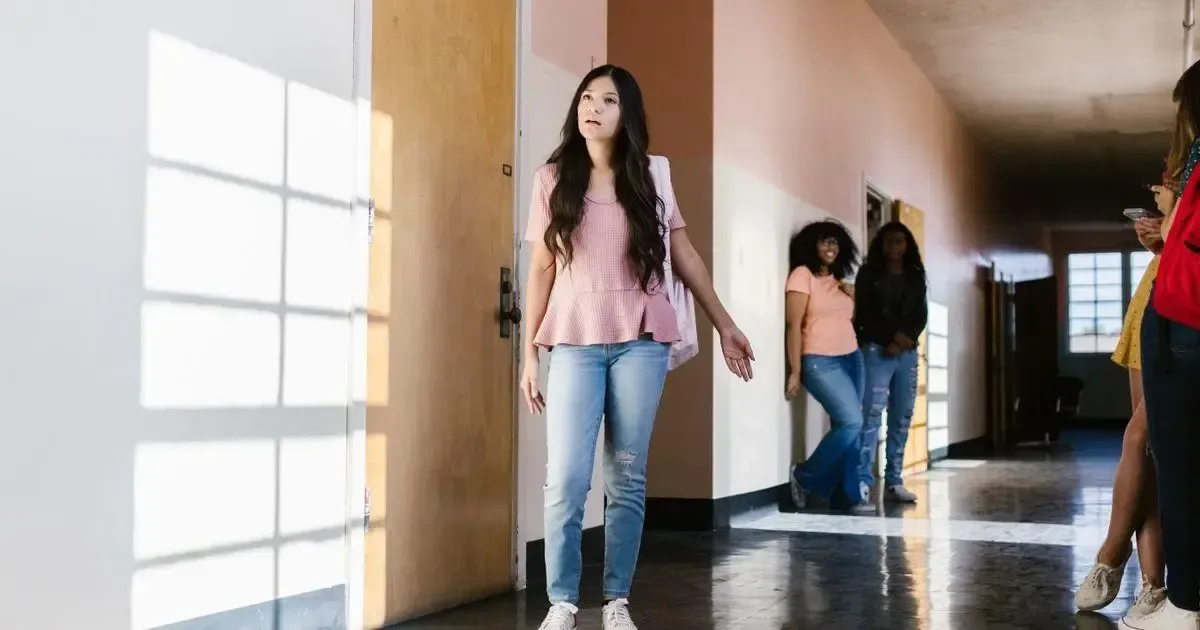
Returning to traditional school after homeschooling brings sensory overload, social recalibration, and academic format shifts that feel disorienting rather than reflecting ability, and most students adjust within weeks while cognitive behavioral therapy and family therapy offer effective support when transition anxiety or identity disruption lingers.
What does it actually feel like to trade self-paced learning for bells, hallways, and a room full of strangers? Returning to traditional school after homeschooling stirs up more than nerves, it reshapes identity, routine, and belonging all at once. Here is what that shift really involves, and how to move through it.
What the first few weeks actually feel like
What is it like to re-enter traditional school or college after years of homeschooling?
The honest answer is that it feels foreign in ways that have nothing to do with the material. A student who has spent years learning at home is used to setting their own pace, starting a math lesson at 10 a.m. because that is when their brain works best, or taking a break the moment they feel stuck. Traditional school runs on a different clock entirely. Bells, passing periods, and a fixed lunch window replace that flexibility, and the sudden loss of control over pacing is one of the first things students notice, often before anything academic registers at all.
There is also a physical layer to the adjustment that rarely gets named. Hallways are loud. Fluorescent lighting hums. Dozens of people move in your peripheral vision at once, and none of it slows down for you to catch up. After years in a quieter, more self-regulated environment, this volume of sensory input can be genuinely exhausting, separate from anything the coursework is asking of you. This kind of homeschool to public school transition touches the nervous system as much as the schedule.
How do students feel about re-entering traditional school after homeschooling?
Many describe feeling more tired than the workload alone explains, and a lot of that fatigue comes from being watched. In a classroom, you are observed almost constantly: by a teacher checking for attention, by classmates deciding who you are before you have said much. That steady low-grade awareness of being seen takes energy, even when nothing difficult is happening. On top of that sits a thicket of unwritten rules nobody hands you a guide for: where it is acceptable to sit, how you ask to leave the room, how much you are supposed to talk in class without seeming too quiet or too eager.
College re-entrants face a different version of the same disorientation. Self-directed time returns, which can feel like relief after a rigid high school schedule, but the social scaffolding is new and has to be learned from scratch. This kind of upheaval fits the broader pattern of life stressors and transitions, where the disruption is not any single event but the accumulation of small, constant recalibrations.
The parts that get easier faster than expected
The acute stretch, when everything feels foreign and nothing is automatic yet, tends to soften as routines start absorbing more of your attention. Walking to the right room stops requiring thought. The noise becomes background instead of an event. Students often name real reliefs they did not expect: not having to self-motivate completely alone, having classmates nearby to compare notes with, realizing someone else is sitting with the same confusion you are.
The social piece: why it is hard and what actually helps
What challenges do students face when transitioning from homeschooling to traditional school?
The main challenge is not a missing social skill. It is walking into a group that already has years of shared history, inside jokes, and unwritten rules a newcomer was not there for. Formerly homeschooled students commonly describe a specific fear: that not knowing a reference or a routine will mark them as different before anyone gets to know them. That worry about being seen as "the homeschool kid" can push a student toward one of two extremes, going quiet and trying not to be noticed, or overcorrecting by performing a version of themselves that feels louder or more confident than usual. Both are attempts to manage the same discomfort, and both tend to ease once the newness wears off.
How does re-entering traditional school impact social skills after homeschooling?
Re-entry does not expose a social deficit so much as a different kind of social experience. Many homeschooled students have spent more time talking with adults and with people across a wide age range than with a single grade's worth of same-age peers, which can make conversation with an adult feel easier than small talk with a 16-year-old. That is a difference in practice, not a lack of ability. A qualitative study of 140 formerly homeschooled adults found most described satisfactory social experiences during their homeschooling years and reported no meaningful gap in college attendance, income, relationships, or wellbeing compared to peers, pushing back on the idea that homeschooling leaves a lasting social cost. Social adjustment after homeschooling is a real, temporary learning curve, not a fixed trait. Missing a pop culture reference or not knowing a slang term that everyone else grew up with is friction, not a character flaw, and it closes with exposure.
Low-pressure ways to build a foothold socially
Unstructured time, like open lunch periods or passing time in hallways, tends to be the hardest place to connect because it has no built-in purpose. Structured shared activities, a club, a lab group, a team, give people something to do together, which takes the pressure off making conversation from nothing. One or two steady relationships tend to matter more than broad popularity, and a single anchor friendship can make an entire building feel navigable. In college, dorm proximity and club structures often accelerate that process faster than a high school hallway does, simply because people are thrown together more often and with a shared task already in place. It helps to expect a visible learning curve and let it be visible, rather than treating early awkwardness as proof that something is wrong. For some students, the social pressure of re-entry brings on something closer to social anxiety, and that is worth naming for what it is rather than pushing through silently.
Academic adjustment: where the gaps show up and where homeschoolers are ahead
Homeschool academic gaps rarely show up everywhere at once. They tend to cluster in subjects that build in sequence, where one missed concept makes the next three hard to follow. Math is the most common example: a student who covered algebra thoroughly but skipped a unit on functions can suddenly find geometry or pre-calculus confusing in a way that feels bigger than it is. Lab sciences work the same way, since they often assume a specific sequence of prior content. A gap in one of these subjects does not mean a gap everywhere else, and it is worth naming as a specific, fixable hole rather than a sign of falling behind in general.
For a lot of students moving through the homeschool to college transition, the harder adjustment is not content, it is procedure. Timed tests, several deadlines landing in the same week, taking notes from a lecture that will not pause for questions, group projects with people you did not choose, showing work in the exact format a rubric demands: none of this is about what you know. It is about the mechanics of a system you have not used before. Grading can be its own adjustment too, especially if your previous learning was mastery-based or evaluated through written feedback rather than a letter or number.
Where the strengths actually carry you
Independent reading, self-directed research, and a habit of following a question past where class discussion stops are genuine advantages, not just compensations for what you missed. Many homeschooled students also come in more comfortable asking questions in front of a group, since that was normal practice rather than a risk. Writing stamina tends to be strong too, which matters more than it sounds like it would. In college specifically, these strengths tend to surface in seminar discussion and in long independent projects, like a research paper or a thesis, while the friction shows up more in structured problem sets, multiple choice exams, and anything timed.
Reading an early low grade correctly
A rough grade in the first few weeks is information about format, not a verdict on ability. It usually means the format was new, not that the material was too hard. Catching up on a specific procedural skill or a content gap is normal and does not mean you were placed in the wrong class or the wrong school. Tutoring centers, office hours, and writing or math support services exist for exactly this, and plenty of students who did not come from homeschooling use them too. Treat the first set of grades as a diagnostic tool, not a conclusion, and use them to figure out which specific skill needs attention rather than deciding the whole adjustment is going badly.
Enrollment and documentation: what schools and colleges ask for
Before a student sets foot in a classroom, there is paperwork, and the paperwork tends to arrive in waves. K-12 schools generally ask for proof of residency, immunization and health records, a birth certificate or other age verification, prior homeschool records, and any withdrawal or notice-of-intent paperwork tied to the homeschool arrangement. Some of this exists because states define home schooling itself in specific legal terms. North Carolina law, for example, defines a home school as a nonpublic school serving children from no more than two households, which is the kind of distinction that shapes what a registrar expects to see on paper.
A homeschool transcript for enrollment usually needs course titles, credit hours, grades or evaluations, and a short description of the curriculum or evaluation method used. There is no single national template, and what counts as sufficient homeschool records for public school enrollment can differ from one district to the next, even within the same state. North Carolina's admission statute shows how specific these rules can get, down to age cutoffs and required documents like a certified birth certificate and immunization proof. Because of that variation, the registrar or admissions office is the only reliable source for what a specific family needs, not a general article.
College applications bring their own list: self-reported or parent-issued transcripts, course descriptions, standardized test scores where still required, and sometimes a portfolio or an additional essay to round out the academic picture. These requests exist because admissions staff cannot infer years of coursework from a transcript alone.
Timelines matter more than most families expect. Starting the document search well before the intended enrollment term, rather than the month before, prevents the delays that catch most new applicants off guard. If a student has prior evaluations or a disability diagnosis, bringing that documentation into the enrollment conversation early lets the school or college start discussing support services, separate from how the student is graded or placed, before classes begin.
Evaluation, testing and grade placement
Schools rarely place a formerly homeschooled student based on age alone. Most will combine a diagnostic or standardized assessment with a review of homeschool records, and some add a teacher interview or a writing sample before settling anything. Under North Carolina's statute on principal authority, a principal can grade and classify a student using classroom work and grades alongside test scores, but cannot rely on a single test score to make that call. That matters for homeschool student grade placement, because it means the first assignment is a judgment call built from several inputs, not a fixed outcome. Many schools label this placement provisional from the start, with a planned check-in after a grading period.
For high schoolers, the process shifts into homeschool credit evaluation. Some credits transfer as recorded, others need validation through a placement or subject exam, and a student can lose credit in one area while gaining it in another once the school reviews actual coursework. This is normal and does not reflect poorly on the years of homeschooling behind it.
College placement works differently. It usually comes down to math and composition placement exams, along with any dual enrollment credit or credit-by-exam scores already on file.
A placement, at any level, says something about fit with a sequence, not about a student's intelligence or long-term trajectory. Students do move up once they show they are ready. If a placement feels wrong, asking for a review calmly and bringing writing samples, prior assessment results, or a portfolio of completed work tends to move the conversation forward faster than arguing the number alone.