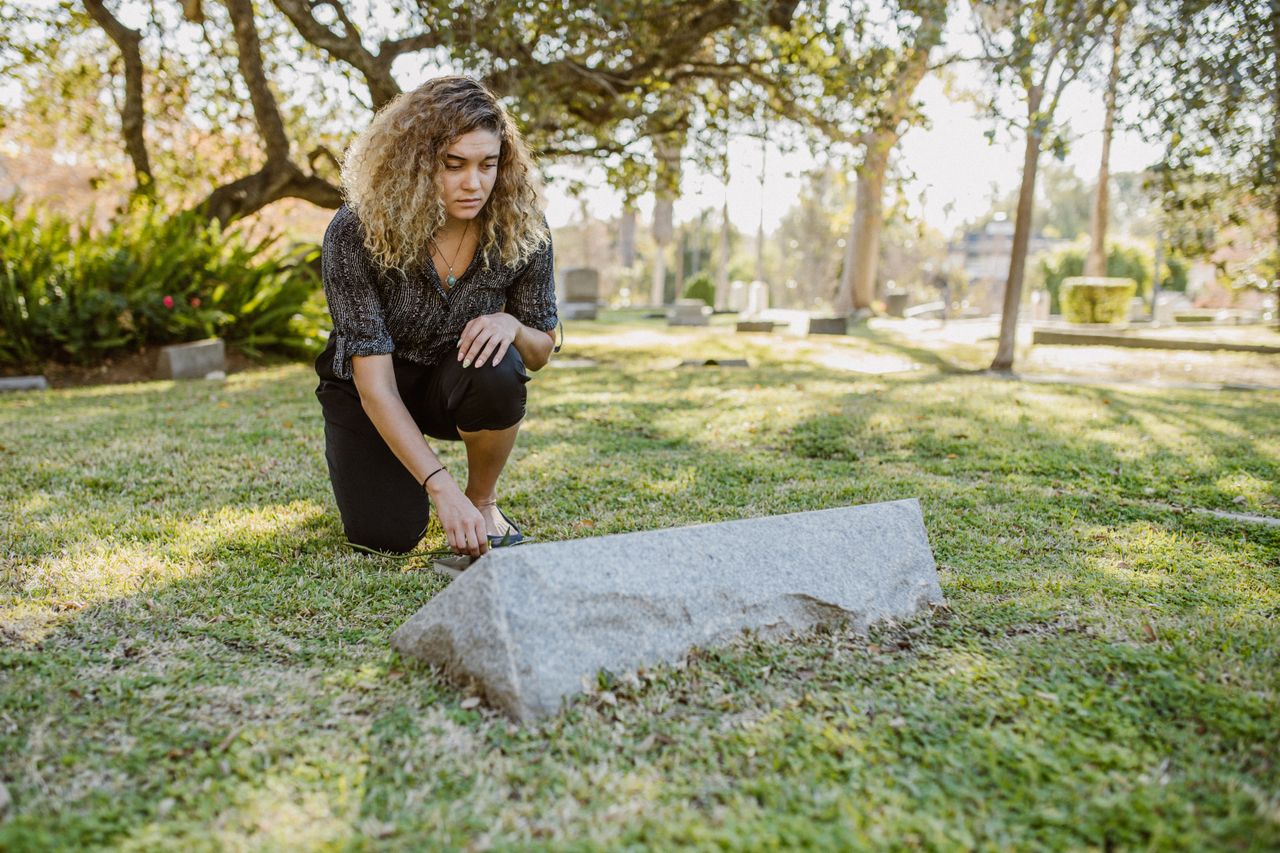
Sibling loss creates a uniquely overlooked grief in surviving children, often eclipsed by parental mourning, but recognizing childhood bereavement symptoms early and seeking licensed family therapy can help children process guilt, identity disruption, and long-term emotional risks in healthy, supported ways.
What if your child is grieving just as deeply as you are, but has learned to hide it? Sibling loss is often called the forgotten grief, quietly overshadowed while parents mourn. Here's why surviving children get overlooked, and how to finally see their pain.
What is sibling loss and why it’s called the ‘forgotten grief’
Sibling loss is the death of a brother or sister, experienced through the eyes of the child who survives. It is one of the most disorienting losses a young person can face, yet it remains one of the least studied forms of childhood bereavement. Research confirms that sibling death is both common and consequential, with approximately 1 in 20 children in the United States experiencing the death of a sibling before age 18. Despite how often it happens, surviving children consistently receive less clinical attention, less family acknowledgment, and less social support than bereaved parents or spouses.
This gap is precisely what researchers like Betty Davies and Helen Rosen identified when they began examining how families grieve together. Their work revealed a consistent pattern: the surviving child’s grief was not denied or dismissed outright, but it was quietly eclipsed. Adult grief, particularly a parent’s grief, tends to absorb the emotional oxygen in a household, leaving little room for a child’s loss to be named, witnessed, or supported. Over time, clinicians began calling this the forgotten grief, a term that captures both the experience of the child and the structural blind spot in how bereavement care is delivered.
The forgotten grief is related to, but distinct from, Kenneth Doka’s concept of disenfranchised grief, which describes losses that society refuses to openly acknowledge or validate, such as the death of an ex-partner or a pet. With sibling loss, the death itself is acknowledged. The problem is that the grieving child is overlooked. The loss is visible; the griever is not.
This distinction matters clinically. When a surviving child’s grief goes unrecognized for months or years, the consequences compound. Unprocessed grief in childhood is a well-documented pathway to depression and other long-term mental health challenges. The forgotten grief label does not assign blame to parents, who are themselves devastated. It describes a structural pattern in how families, communities, and care systems are organized around adult bereavement, often without realizing who gets left out.
The invisible mourner: why surviving children are sidelined in their own family’s grief
The sidelining of bereaved siblings rarely happens through cruelty. It happens through a thousand small, well-meaning decisions that add up to one loud message: your grief can wait.
It often starts at the funeral. Surviving children are told to be brave, sent to stay with a neighbor, or quietly steered away from the casket. Adults frame these choices as protection, and in the moment, they genuinely feel that way. But from a child’s perspective, each decision communicates something different: that their grief is something to be managed, contained, and kept out of sight. When a child is not allowed to speak at a sibling’s service, or is praised for holding it together while a parent weeps openly, they learn early that emotional expression is a privilege distributed unevenly in their family.
The behaviors that follow are just as instructive. A well-meaning aunt redirects a child’s tearful question with a snack and a cartoon. A family friend tells an eight-year-old, “You’re being so strong for your mom,” rewarding stoicism as though it were a virtue rather than a wound. Adults assign surviving children small caretaking roles, keeping them busy and useful, without once sitting down to ask how they are doing. Over time, these moments compound. Research shows that parents consistently overestimate their grieving child’s wellbeing, rating their child’s health significantly higher than the children report it themselves. The gap between what adults assume and what children actually feel is where surviving children’s grief quietly disappears.
The social network that surrounds a bereaved family reinforces this pattern. Meals arrive for the parents. Cards are addressed to the parents. Phone calls ask how the parents are holding up. Bereaved siblings receive sympathy in passing, if at all. No one sends a card to the seven-year-old who lost her brother.
School offers little relief. Teachers may be told about the death but are rarely trained to support a grieving sibling. Peers, uncomfortable and unsure, often avoid the topic entirely. The child spends six hours a day in a place where no one mentions the person they are missing most. That silence, repeated daily, teaches surviving children that their loss does not belong in public life. When grief has no sanctioned space, it does not disappear. It goes underground, quietly reshaping how a child understands connection and safety in ways that can affect their attachment styles for years to come.
The two-grief household: when parents and children mourn the same loss differently
When a child dies, the family doesn’t share one grief. It contains at least two fundamentally different ones. Parents grieve the loss of a child they raised, a future they imagined, a piece of their own identity. Surviving siblings grieve the loss of a peer, a roommate, a built-in companion, and often the person who helped define who they were. Both grief experiences are real, and both draw from the same limited pool of family emotional bandwidth. This is what’s known as the two-grief household, a family systems framework that helps explain why surviving children so often lose access to the support they need.
Parental grief, almost by structural default, wins the resource competition. It tends to be louder, more physically overwhelming, and far more socially recognized. Friends, extended family, and community members rally around the parents. Because parents control the emotional climate of a household, their grief sets the baseline for what the family can process at any given time. This isn’t a moral failure. It’s a structural reality that, left unnamed, quietly pushes sibling grief to the margins of family life.
The ‘replacement child’ pressure and how it silences grief
One downstream effect of sibling grief family dynamics is what researchers and clinicians call replacement child pressure. When a family loses a child, an unconscious pull builds on the surviving child to restore the family’s sense of equilibrium. This can look like pressure to excel academically, to adopt personality traits of the deceased, or to suppress behaviors that remind parents of their loss. The child learns, without being told directly, that certain versions of themselves are easier for the family to hold.
Parents can watch for specific patterns in themselves: comparing the surviving child to the deceased sibling, redirecting the child’s interests toward what the deceased enjoyed, or expressing relief with phrases like “at least we still have you.” These responses are understandable given the depth of parental pain, but they signal to the surviving child that their own identity is secondary to the family’s grief. Over time, this kind of pressure can quietly erode a child’s sense of self-worth, contributing to low self-esteem that persists long into adulthood.
Parentification: when the surviving child becomes the emotional caretaker
A second downstream effect is parentification, which happens when a surviving child senses their parents’ devastation and begins suppressing their own grief to manage the emotional temperature of the household. They check on their parents, monitor their own emotional expression, and perform “okayness” as a form of protection. From the outside, this looks like maturity or resilience. Inside the child’s experience, it is grief deferred, and deferral carries real developmental costs.
Children who parentify their grief don’t stop needing support. They learn to need it invisibly, which makes the need much harder to address. The weight of performing stability while privately grieving can shape how a child relates to their own emotions for years. Understanding the two-grief household framework isn’t about assigning blame. It’s about giving families a structural lens that makes intervention possible without shame.
How sibling loss affects children at every developmental stage
Children grieve differently, and sibling loss does not look the same at age 4 as it does at age 14. Cognitive development shapes not just what a child understands about death, but how that grief surfaces in behavior, school, and relationships. Research on age-differentiated bereavement responses in children and adolescents following sibling loss confirms that the stage of development at the time of loss directly influences how grief is expressed and processed. Understanding these childhood bereavement stages gives parents, educators, and clinicians a clearer map of what to look for.
Under age 3: sensing the absence
Infants and toddlers cannot understand death as permanent, but they feel the absence deeply. Grief at this stage shows up as separation distress: increased crying, disrupted sleep, clinginess, and regression in milestones like toilet training or speech. The child is responding less to the concept of death and more to the changed emotional atmosphere in the home, picking up on a caregiver’s distress, a quieter house, and a missing presence.
Ages 3–5: magical thinking and the wish to undo death
Preschool-aged children live in a world where thoughts feel powerful, which means they may secretly believe they caused the death through a wish or a moment of anger toward their sibling. This magical thinking can produce intense guilt. Behavioral signs include repetitive questioning like “When is she coming back?”, play-acting death and resurrection, nightmares, and somatic complaints such as stomachaches or headaches.
Ages 6–9: understanding death without the words for grief
Children in this age range are developing a concrete understanding that death is permanent and universal, but they often lack the emotional vocabulary to name what they feel. Instead, grief appears as shifts in school performance, social withdrawal or sudden aggression, morbid curiosity about how death works, and growing anxiety about the safety of surviving family members. When this grief goes unaddressed, it can cross into the territory of childhood trauma, shaping how a child relates to loss and safety for years to come.
Ages 10–12: the silent grievers
Pre-teens can think abstractly about death, but social pressure often pushes their grief underground. Many present as “fine” to avoid standing out among peers or burdening already-grieving parents. Beneath the surface, survivor guilt is especially common at this stage, alongside identity confusion and early existential anxiety about their own mortality and the fragility of family.
Ages 13–17: grief collides with adolescence
Adolescents carry the full cognitive weight of understanding death while navigating the emotional intensity of teenage development, a collision that makes this the highest-risk period for complicated grief. Research on bereaved adolescents found that 22% developed new clinically significant internalizing problems following family bereavement, compared to just 5.5% of non-bereaved peers. Grief may surface as risk-taking behavior, substance experimentation, academic disengagement, social isolation, or intense identification with the deceased sibling. Teenagers are also most likely to turn to peers rather than adults for support, which can make them harder for parents to reach at exactly the moment they need the most care.
Emotional and behavioral signs of grief in surviving children
Grief in children rarely looks like grief. A surviving child might explode in anger at dinner, stop finishing homework, or complain of stomachaches every morning before school. These signals are easy to misread as behavioral problems or simple adjustment. Recognizing them as childhood grief symptoms is the first step toward getting a child the support they need.
Research on personality, academic, and social changes in siblings following a sibling’s death found that 69% of families reported measurable personal changes in surviving siblings, and 47% reported relational changes. What looks like acting out is, in most cases, a recognized grief response.
Emotional signs
- Persistent sadness or crying that comes and goes without an obvious trigger
- Survivor guilt: feelings of “why them and not me” or believing they could have prevented the death
- Anger directed at the deceased sibling, at parents, or at themselves
- Anxiety about other loved ones dying, sometimes becoming clingy or hypervigilant
- Emotional numbness or flatness, appearing detached or unusually calm
Behavioral and social signs
- Sleep disruption, nightmares, or resistance to sleeping alone
- Appetite changes, either eating far less or significantly more
- Regression: bedwetting, baby talk, or other behaviors from earlier developmental stages
- Increased aggression, defiance, or risk-taking behavior in older children
- Withdrawal from friends, hobbies, and activities they previously loved
- Declining grades, difficulty concentrating, or reluctance to attend school
Somatic signs: when the body speaks first
Younger children especially lack the vocabulary to name grief, so it surfaces physically. Unexplained stomachaches, headaches, and persistent fatigue are common signs of grief in children, not fabrication. Studies on somatic health consequences in bereaved siblings documented 207 illnesses and 674 health service visits among surviving siblings in just 13 months, confirming that physical complaints are a measurable grief signal.
When ‘handling it well’ is its own warning sign
A child who appears completely fine after a sibling’s death may not be fine at all. Children sometimes suppress their grief to protect already-devastated parents. The absence of visible signs is itself a signal worth paying attention to. Prolonged suppression, grief that intensifies rather than gradually eases, or signs that significantly impair daily functioning may indicate complicated grief requiring professional support.
Long-term effects of sibling loss on surviving children
Sibling loss does not end when childhood does. Research on long-term mortality risk following childhood sibling loss confirms that the consequences are measurable and lasting, extending well into adulthood. The loss reshapes a child at the level of identity, relationships, and mental health in ways that compound over time.
Identity and the shadow of the sibling who is gone
Siblings are not just family members. They are mirrors. A child’s sense of self is built partly through birth order, family role, and shared history with a brother or sister. When that sibling dies, the surviving child loses a piece of the story they were using to understand who they are. Psychologist Betty Davies described this experience as living in the “shadow” of the deceased sibling, where the surviving child quietly measures themselves against an idealized version of who their sibling was or might have become. This identity reconstruction is a profound psychological task, and most children are not developmentally equipped to manage it alone.
Relationship patterns and mental health vulnerabilities
Unprocessed sibling grief can quietly reshape how a child relates to others for decades. Many surviving siblings develop anxious attachment styles, a persistent fear that people they love will disappear without warning. Others move in the opposite direction, avoiding deep emotional connection altogether as a way to protect themselves from future loss. Longitudinal research on psychosocial outcomes in bereaved siblings documents elevated rates of depression, anxiety disorders, PTSD, and complicated grief disorder in adulthood, particularly among those whose childhood grief went unsupported or minimized.
Survivor guilt is another thread that can run beneath the surface for years. The question “why them and not me” does not always fade with time. For some adults, it quietly shapes major life decisions: career paths, whether to pursue relationships, even whether to have children of their own.
Grief that is supported can lead to growth
The long-term effects of sibling loss are not fixed. With consistent, compassionate support, many surviving siblings develop deep empathy, emotional maturity, and a resilience that shapes them in meaningful ways. The difference between lasting harm and meaningful growth is rarely about the loss itself. It is almost always about whether that grief was seen, named, and supported at the time it happened.
How parents can support a surviving child while grieving themselves
Parenting a grieving child while carrying your own grief is one of the hardest things a person can do. The two-grief household framework makes clear that this tension is structural: two legitimate, consuming grief processes are competing for the same limited emotional resources. That is not a parenting failure. It is the reality of sibling loss, and recognizing it is the first step toward navigating it with intention.
Name the grief aloud. Surviving children often need explicit verbal permission to grieve. Tell your child directly: their feelings are valid, their grief matters, and the relationship they had with their sibling was unique and irreplaceable. Do not assume they know this.
Share grief rather than shielding from it. Letting your child see age-appropriate expressions of your own sadness normalizes the experience. The goal is not to burden them but to show that grief is something your family moves through together, not something adults do behind closed doors while children wait outside.
Maintain routines where possible. Predictability is a primary source of safety for grieving children. Keeping bedtimes, meals, school schedules, and family rituals as stable as feasible gives your child a reliable structure when everything else feels uncertain.
Watch for replacement child dynamics. Gently self-monitor for comparisons between your surviving child and the sibling who died. Resist projecting the deceased child’s qualities or unlived potential onto them. Your surviving child needs to be seen as fully themselves.
Accept help, and direct some of it toward your child. When community support is offered, ask specifically for help that reaches your child: a trusted adult who can spend consistent time with them, a grief-informed school counselor, or a peer support group for bereaved siblings.
Acknowledge your limited capacity without guilt. Seeking outside support for your child, including family therapy to navigate parental grief and child support together, is not an admission of inadequacy. It is an act of informed, deliberate care for everyone in the household.
When to seek professional help for a grieving child
Not every grieving child needs therapy, but some do. Knowing the difference can be hard when you are grieving the same loss. A few clear signals suggest that a child’s grief has moved beyond what time and family support alone can address.
Warning signs that warrant professional evaluation include grief that intensifies rather than fluctuates over several months, a persistent inability to function at school or in social settings, expressed wishes to die or to join the deceased sibling, and complete emotional shutdown. These are not signs of weakness. They are signs that the child’s grief needs more structured support than any single family system can provide, especially one that is mourning the same loss.
When looking for help, seek grief-informed therapists who specialize in childhood bereavement. Not all therapists are trained in pediatric grief work. Approaches like trauma-informed care and interpersonal therapy are among the evidence-based frameworks shown to support bereaved children effectively, and research on interventions for bereaved children and adolescents confirms that therapeutic support produces meaningful outcomes. For older children and adolescents who may resist the idea, frame grief therapy as something they deserve, not something being done to them. Knowing when to seek help for a grieving child is one of the most protective decisions a parent can make.
If you are a parent navigating your own grief while trying to support your child, talking to a licensed therapist can help you find your footing. You can create a free ReachLink account to explore therapy options at your own pace, with no commitment required.
Your Child’s Grief Is Real, and So Is Yours
If you have read this far, chances are you are holding something heavy: the weight of a loss that has touched everyone in your home differently, and the quiet worry that your surviving child may be carrying more than they are showing. That worry is not unfounded, and the fact that you are asking these questions matters more than you might realize. Sibling loss is one of the most overlooked forms of grief precisely because it happens inside a household that is already overwhelmed, and recognizing that is not a small thing.
You do not have to have all the answers to make a difference for your child. Sometimes the most protective thing a parent can do is simply reach out for support, for themselves and for their family. If you are ready to explore what that might look like, you can create a free ReachLink account and connect with a licensed therapist at your own pace, with no commitment required.
FAQ
-
How do I know if my child is actually grieving after losing a sibling, or just acting out?
Grief in children rarely looks like sadness - it often shows up as sudden anger, declining grades, stomachaches, sleep problems, or withdrawal from friends and activities they used to love. Research shows that 69% of families report measurable personal changes in surviving siblings after a sibling's death, and what looks like defiance or regression is usually a recognized grief response. Children, especially younger ones, lack the emotional vocabulary to name what they feel, so the body and behavior become the primary language. If these changes persist for more than a few weeks or begin to interfere with daily life, they deserve attention rather than discipline.
-
Does therapy actually help kids who've lost a sibling, or do they just need time?
Time alone is rarely enough for a child who has lost a sibling, especially when grief goes unacknowledged within the family. Research on therapeutic interventions for bereaved children and adolescents confirms that structured support produces meaningful outcomes - evidence-based approaches like trauma-informed care and interpersonal therapy are shown to help children process loss in ways that prevent long-term mental health challenges. A grief-informed therapist can give a surviving child a dedicated space to name their experience at a pace that works for them, which is something even the most loving family often cannot provide while mourning the same loss. Seeking therapy is one of the most protective decisions a parent can make for a grieving child.
-
Why does my surviving child seem totally fine after their sibling died - should I be worried?
A child who appears completely fine after losing a sibling may actually be suppressing their grief to protect parents who are already devastated. Children are perceptive and often pick up on the message that emotional expression is unevenly distributed in a household, which can lead them to perform "okayness" as a form of caretaking for grieving adults. The absence of visible grief is itself a warning sign worth paying attention to, particularly if a child was very close to the sibling who died. Gently opening the door to conversation - letting your child know their feelings are welcome and their grief matters - can make it safer for them to express what they are actually carrying.
-
How do I find a grief therapist for my child after losing a sibling - where do I even start?
Finding the right therapist for a grieving child can feel overwhelming, especially when you are navigating your own loss at the same time. A good starting point is looking for a licensed therapist who specializes in childhood bereavement and uses evidence-based frameworks like trauma-informed care or interpersonal therapy. ReachLink connects families with licensed therapists through human care coordinators - real people who assess your needs and help match you with a therapist who fits your situation, rather than leaving you to sort through an algorithm. You can create a free ReachLink account to start the process at your own pace, with no commitment required.
-
Is it normal to feel like I have nothing left to give my surviving child because I'm so deep in my own grief?
Yes, and this is one of the most common but least talked-about experiences in families who have lost a child. Grief researchers describe this as the "two-grief household" dynamic, where a parent's grief and a surviving child's grief compete for the same limited emotional bandwidth, and parental grief almost always absorbs the most resources because it tends to be louder and more socially recognized. This is not a moral failure - it is a structural reality of sibling loss. Seeking outside support, whether individual therapy for yourself or family therapy that holds both your grief and your child's, is not an admission of inadequacy; it is one of the most deliberate and caring things you can do for your whole family.