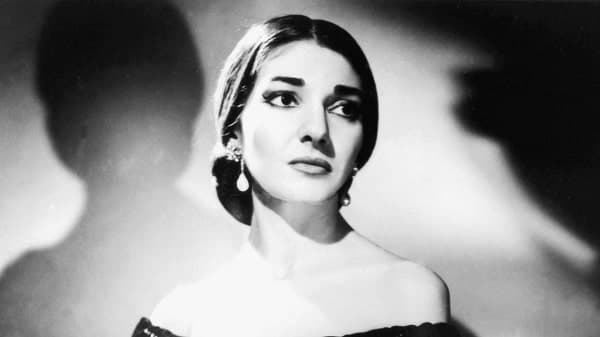
Maria Callas's legendary opera career illustrates how intense public pressure, relationship challenges, and performance anxiety can impact mental well-being, highlighting the importance of professional therapeutic support for managing similar emotional struggles in today's high-pressure environments.
Ever felt the weight of others' expectations crushing your spirit? The story of Maria Callas - opera's most celebrated voice - reveals how even legendary performers wrestle with perfectionism, relationship struggles, and emotional burnout. Her journey offers powerful insights into managing life's pressures while staying true to yourself.
Who Was Maria Callas? Exploring Her Life And Legacy
Maria Callas was one of the most celebrated opera singers of the 20th century, renowned for her vocal versatility and dramatic interpretations. Her career unfolded on some of the world’s most prestigious stages and was marked by both professional triumphs and personal challenges. Here, we’ll explore her life, her contributions to the world of opera, and her legacy as an artist and pop culture icon.
Maria Callas: An overview
Maria Callas was an opera singer known for her exceptional vocal versatility and ability to deliver deeply dramatic interpretations. While many of her contemporaries focused on more modern operatic styles, Callas revitalized the bel canto tradition, a type of operatic singing known for its lyrical beauty and expressive ornamentation.
Callas performed at prestigious venues like La Scala and the Metropolitan Opera. She attained iconic status as La Divina, or the Divine One, for bridging the gap between traditional opera audiences and mainstream culture with her extraordinary performances.
Throughout Callas’ career, she faced significant hardships associated with her fame, including relentless public scrutiny, intense pressure to maintain her vocal and artistic standards, and the personal toll of being in the spotlight. Her celebrity, combined with her technical prowess as a performer, elevated her to a level of cultural prominence rarely achieved by opera singers.
Early life and rise to fame
Maria Callas, born Sophie Cecilia Kalos, was born in New York City in 1923 to Greek immigrant parents. Her mother recognized her musical talent at a young age and pushed her into rigorous training. When she was 13, her mother took her and her sister to Athens following a divorce from her father.
There, Callas studied under Maria Trivella at the Greek National Conservatoire, where she developed her voice and honed her talent. After three years under Trivella’s guidance, Callas enrolled at the prestigious Athens Conservatoire and continued her training under Elvira de Hidalgo.
During this time, Callas appeared in several operas as a student before taking on roles at the Greek National Opera. In 1941, she made her professional debut in a supporting role in Franz von Zuppé’s Boccaccio, where her exceptional skill intimidated some of her more established colleagues. In 1942, she secured her first leading role in Giacomo Puccini’s Tosca, garnering critical acclaim and marking the beginning of her rise to prominence.
Rise to international stardom
After establishing the foundations of her career in Greece, Maria Callas sought to expand internationally. Her breakthrough came in 1947 when she made her Italian debut in La Gioconda at the Arena di Verona. Her marriage to Giovanni Battista Meneghini in 1949 provided financial and emotional support, allowing her to establish herself in Italy.
A pivotal moment in her career occurred when she performed Bellini’s I Puritani on short notice, showcasing her extraordinary ability to balance the demands of bel canto and dramatic roles. This performance solidified her reputation and set her on a path to reviving long-neglected operas by composers like Bellini, Donizetti, and Rossini.
Maria Callas’ career was defined by her performances at some of the world’s most prestigious opera houses. At La Scala in Milan, she delivered unforgettable interpretations of works like La Traviata, earning her a reputation as a master of the bel canto style. In London, she captivated audiences at the Royal Opera House, while in the United States, she helped establish Chicago’s Lyric Opera. Among her most celebrated roles was in Lucia di Lammermoor, which became a hallmark of her legacy.
Personal life: Relationships with her mother and with shipping magnate Aristotle Onassis
Maria Callas’ personal life was the subject of intense public scrutiny and, occasionally, scandal. She was often portrayed as a diva with a difficult temperament, with the media frequently publishing sensationalized stories that recalled Callas in an unflattering light. In one incident, for example, Callas made headlines for walking out of the opera house during a performance attended by Italy’s president after completing only the first act. The abrupt departure was due to vocal strain caused by respiratory illness, but it sparked significant controversy and public criticism.
Callas also experienced strained family relationships, particularly with her mother, who had pushed her into a rigorous career path from a young age. The tension between them was widely reported, including in a Time magazine profile that highlighted their difficult dynamic.
Callas’ marriage to Giovanni Battista Meneghini, a wealthy industrialist, provided stability during the early years of her career. However, the marriage dissolved in 1959 after Callas began a widely publicized affair with shipping magnate Aristotle Onassis. Their relationship, marked by glamour and controversy, captivated the media and became a defining chapter in her personal life. Onassis left Callas in 1968 for Jacqueline Kennedy.
End of career and later life
Maria Callas’ career decline began in the early 1960s, with her voice exhibiting noticeable strain and inconsistency. Theories about the cause range from her rigorous early repertoire to her dramatic weight loss, which some believe weakened her diaphragm and breath support. Others attribute her vocal deterioration to emotional turmoil, early menopause, or even dermatomyositis, a muscle disorder diagnosed shortly before her death.
Despite attempts at a comeback, including masterclasses at Juilliard and a concert tour with Giuseppe Di Stefano, her later performances were met with mixed reviews. Callas herself attributed her struggles to a loss of confidence and physical strength. Her final operatic performance was in 1965 at Covent Garden, where she portrayed Tosca, a role closely associated with her legacy. Callas died in Paris in 1977 at the age of 53 from a heart attack.