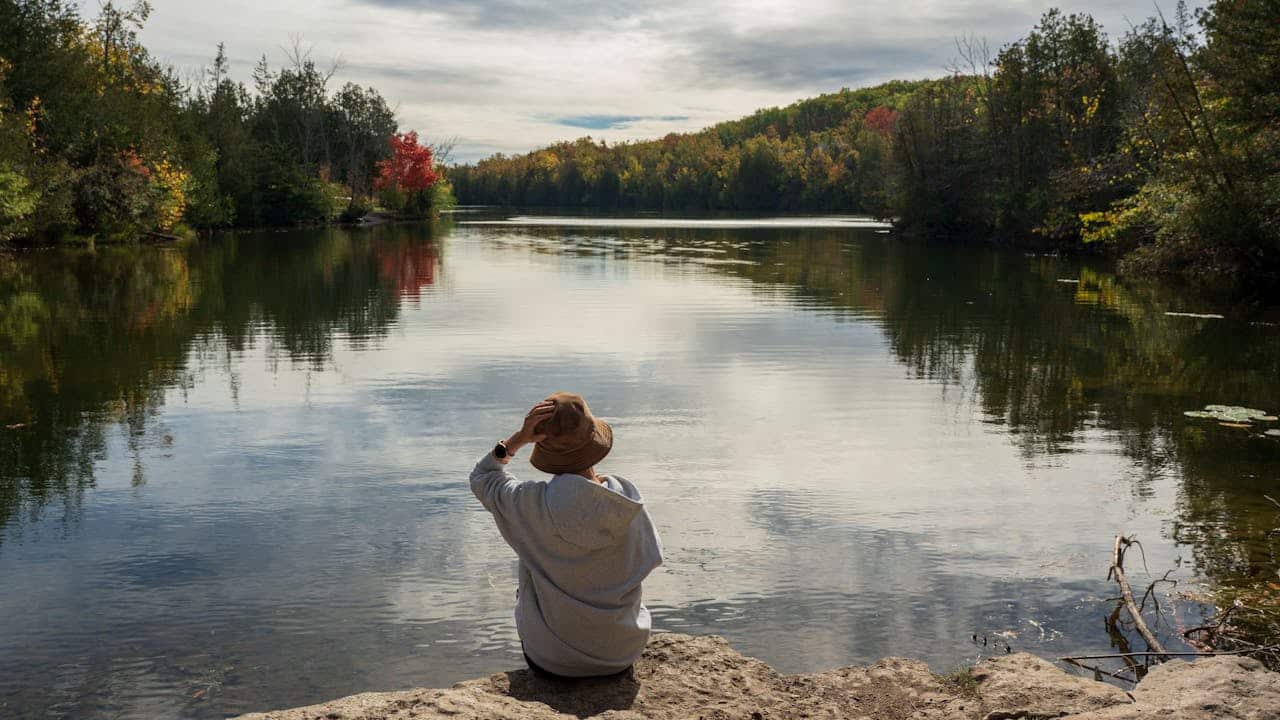
Blue space research demonstrates that water environments produce measurable mental health benefits, including significant stress reduction, mood enhancement, and cognitive restoration, with studies showing clinically meaningful effects when individuals spend 20-30 minutes near oceans, lakes, rivers, or urban water features as part of comprehensive therapeutic wellness strategies.
What if something as simple as spending time near water could measurably reduce your stress and improve your mood? Blue space research now provides concrete evidence that lakes, rivers, and coastlines offer genuine therapeutic benefits, with studies documenting lower cortisol levels and improved mental wellbeing after water exposure.
What blue spaces are: Defining therapeutic water environments
Blue spaces refer to any visible bodies of water, both natural and human-made, that people can access or view. This includes vast oceans and coastlines, rivers winding through cities, tranquil lakes nestled in forests, babbling streams in parks, and even constructed features like fountains, canals, and swimming pools. What unites these diverse environments is their common element: water that you can see, hear, or interact with in your daily life.
Researchers categorize blue spaces into three main types based on location and characteristics. Coastal blue spaces encompass beaches, cliffs overlooking the sea, and shoreline areas where land meets ocean. Inland freshwater environments include rivers, lakes, ponds, and streams found away from coastlines. Urban blue spaces bring water into city settings through features like decorative fountains, constructed waterways, public pools, and revitalized waterfronts. Each type offers distinct sensory experiences, from the rhythmic crash of ocean waves to the gentle trickle of a city fountain.
The study of how these water environments affect human health has given rise to an emerging interdisciplinary field called blue health. This comprehensive exploration of blue spaces examines the psychological and physical benefits people experience near water. Researchers from fields including environmental psychology, public health, neuroscience, and urban planning collaborate to understand why water seems to have such profound effects on wellbeing, particularly for stress reduction and mental restoration.
Your relationship with blue spaces can take different forms depending on how you engage with them. Immersive interactions involve direct physical contact, such as swimming in the ocean, kayaking down a river, or surfing coastal waves. Proximity-based interactions require no physical contact but still provide benefits through activities like walking along a beach, sitting by a lake, or simply viewing water from a window. Both types of engagement show measurable effects on psychological wellbeing, though they may influence your mental state through different mechanisms.
The research evidence: measured psychological benefits of blue space exposure
Scientists have moved beyond asking whether water environments affect mental health to measuring exactly how much they help. The research uses controlled experiments, longitudinal tracking, and real-world monitoring to quantify the psychological benefits of blue space exposure. These studies reveal consistent patterns across different populations, geographic regions, and types of water environments.
Stress reduction and cortisol response
Meta-analytic reviews of blue space research show moderate to large effects on stress reduction, with Cohen’s d values typically ranging from 0.4 to 0.6. This means that exposure to water environments produces measurable decreases in stress markers that are clinically meaningful, not just statistically significant. Studies measuring physiological stress responses have documented reduced cortisol levels, lower heart rate variability, and decreased blood pressure following blue space visits.
A large-scale international study across 18 countries found consistent associations between coastal proximity and lower psychological distress across diverse cultures and climates. The research controlled for socioeconomic factors, access to healthcare, and other environmental variables that might explain the relationship. People living within 1 kilometer of the coast showed significantly better mental health outcomes than those living further inland, even after accounting for these confounding factors.
Mood enhancement and positive affect
Blue spaces don’t just reduce negative feelings. They actively boost positive emotions and general wellbeing. Real-time data from over 20,000 participants using smartphone-based ecological momentary assessment showed that people reported significantly higher happiness levels when in marine and coastal environments compared to urban settings. The effect remained robust across different times of day, weather conditions, and whether visits were planned or spontaneous.
The BlueHealth project, a pan-European research initiative, documented mood improvements across multiple countries using standardized psychological assessments. Participants showed increases in positive affect scores and reductions in negative mood states following structured blue space interventions. These improvements persisted for several hours after leaving the water environment, suggesting a residual protective effect.
Attention restoration and cognitive recovery
Blue spaces appear particularly effective at restoring depleted attention resources. Comparative studies show that water environments produce stronger attention restoration effects than green spaces or urban parks, though all natural settings outperform built environments. People perform better on cognitive tasks requiring sustained attention after spending time near water, with improvements in both accuracy and reaction time.
Intervention studies examining people experiencing anxiety symptoms have found that regular blue space exposure correlates with measurable symptom reduction over time. One longitudinal study tracking participants over 12 weeks showed that those who visited coastal or freshwater environments at least twice weekly experienced a 15 to 20 percent reduction in anxiety symptom severity compared to control groups. Depression symptom scores also showed modest but significant improvements, particularly for mild to moderate symptoms.
How blue space affects mental health: Psychological and physiological mechanisms
Understanding why water environments improve mental health requires looking beyond simple preference. Research has identified specific psychological theories and measurable biological pathways that explain how blue spaces produce their effects. These mechanisms range from how our attention systems work to concrete changes in stress hormones and nervous system activity.
Attention Restoration Theory and soft fascination
Attention Restoration Theory (ART) provides one of the most compelling explanations for why water environments feel mentally restorative. The theory suggests that our directed attention, the kind we use for focused work or navigating busy environments, becomes depleted throughout the day. Natural environments, particularly water, offer what researchers call “soft fascination,” meaning they capture our attention effortlessly without demanding mental effort.
Water embodies soft fascination perfectly. Watching waves roll in, observing reflections shift across a lake’s surface, or following a stream’s movement holds your attention gently. You’re engaged but not exhausted. This allows your directed attention systems to rest and recover. Neurological evidence using EEG technology shows that natural environments increase alpha wave activity in the brain, patterns associated with relaxed alertness and attention restoration. The dynamic yet predictable nature of water creates an ideal balance for this restorative process, similar to how mindfulness-based approaches work by directing attention to present-moment experiences without judgment.
Stress recovery and physiological pathways
Stress Recovery Theory (SRT) explains the biological mechanisms behind blue space benefits. When you’re near water, your body shifts from sympathetic nervous system dominance (the stress response) to parasympathetic activation (the rest and digest state). This isn’t just a feeling. It’s measurable.
Research documents specific physiological changes during blue space exposure. Cortisol levels, your body’s primary stress hormone, decrease. Blood pressure drops. Heart rate variability improves, indicating better stress regulation capacity. A waterfront intervention study measuring heart rate variability demonstrated these changes directly, showing improved HRV markers during time spent near water compared to urban environments.
The biophilia hypothesis offers an evolutionary perspective on these responses. This theory suggests humans have an innate affinity for natural environments, particularly those with water, because they signaled survival resources throughout our evolutionary history. Water meant hydration, food sources, and fertile land. Our nervous systems may be primed to relax in these settings because they represented safety and abundance to our ancestors.
Sensory mechanisms: Sound, light, and air quality
Water environments engage multiple sensory pathways simultaneously, creating layered effects on mental state. The soundscape near water plays a significant role. Water sounds, whether ocean waves, rainfall, or flowing streams, typically fall within low to mid-frequency ranges. These frequencies mask jarring urban noises and create what acoustics researchers call a natural masking effect. Your brain processes these sounds as non-threatening background, allowing mental quieting.
Light quality near water differs from other environments. Water surfaces reflect and diffuse light, creating softer, more varied illumination patterns. This dynamic lighting may reduce visual stress compared to harsh artificial lighting or static natural scenes.
The negative ion hypothesis suggests that water environments, particularly moving water like waterfalls or ocean surf, produce higher concentrations of negative ions. Some studies show correlations between negative ion exposure and mood improvements, though the mechanisms aren’t fully established, and effects appear modest compared to other blue space pathways.
Types of blue space and their different effects on wellbeing
Not all water environments offer the same psychological benefits. Research reveals meaningful differences in how various blue spaces affect mental health, with some environments showing stronger therapeutic potential than others.
Coastal environments lead in research support
Population-level analysis of coastal proximity demonstrates that people living near coastlines report better psychological wellbeing compared to those in non-coastal areas. These environments combine multiple therapeutic elements: expansive visual horizons, rhythmic wave sounds, negative ions in sea air, and opportunities for both active and passive engagement. Coastal blue spaces also tend to offer more consistent sensory experiences, with the predictable patterns of tides and waves creating a reliable source of natural stress reduction.
Inland freshwater offers intimate connections
Lakes, rivers, and streams provide different but valuable psychological benefits. These environments often feel more accessible and less overwhelming than vast ocean views. Many people report feeling a sense of calm when following a winding stream or sitting beside a quiet lake. Inland waters frequently exist within forested or green areas, creating combined benefits from both blue and green spaces. Rivers offer dynamic movement and sound without the intensity of ocean waves, while lakes provide stillness and reflection opportunities that some find more conducive to contemplation.
Urban blue features increase accessibility
Canals, fountains, decorative pools, and urban waterways make blue space benefits available to people who cannot easily reach natural water environments. While these features may seem less powerful than wilderness settings, research shows they still provide measurable stress reduction and attention restoration. Urban water features work particularly well for brief exposure during daily routines. A lunch break beside a canal or a few minutes near a fountain can offer meaningful mental relief. For individuals experiencing depression, these accessible options remove barriers to regular blue space contact.
Quality and naturalness shape perception
Water quality significantly affects psychological benefits. People experience less stress reduction and may feel anxiety near visibly polluted or neglected water bodies. Clear, clean water enhances feelings of safety and restoration. Wild, natural waterscapes generally produce stronger restoration effects than highly manicured settings, though well-maintained urban water features still outperform no water access at all. Seasonal changes also influence effectiveness, and many people find water environments most restorative in moderate weather, though winter coastlines offer their own stark beauty and solitude.
The dose-response relationship: How much blue space exposure do you need?
One of the most practical questions about blue space is how much time you actually need to spend near water to see mental health benefits. While researchers are still working to establish precise guidelines, emerging evidence points to some useful benchmarks.
Minimum effective dose for measurable benefits
Research suggests that spending 20 to 30 minutes near water may be enough to trigger measurable physiological changes. Studies tracking biomarkers like cortisol levels and heart rate variability have found shifts within this timeframe, indicating a stress response reduction. The quality of your engagement matters as much as the clock. Actively noticing the water, listening to waves, or watching light patterns on the surface appears more beneficial than simply being near water while distracted by your phone. You’re not just logging time. You’re creating conditions for your nervous system to shift into a more relaxed state.
Optimal weekly exposure targets
When it comes to cumulative exposure, 120 minutes per week emerges as a meaningful threshold. This target aligns with established recommendations for green space contact and appears in preliminary blue space research as well. You might achieve this through a single two-hour beach visit, four 30-minute lakeside walks, or daily 20-minute sessions by a river. The evidence suggests that regular, shorter visits may offer advantages over infrequent longer ones, providing repeated opportunities for stress recovery and helping maintain more stable mood patterns.
Proximity and accessibility thresholds
Large-scale epidemiological studies have found that people living within one kilometer of water environments show significantly better mental health outcomes compared to those living farther away. This proximity threshold likely reflects both ease of access and the psychological comfort of knowing water is nearby, even when you’re not actively visiting. Proximity alone doesn’t guarantee benefits, though. You still need to actually spend time near the water, and accessibility matters beyond just distance: safe, welcoming spaces with clear pathways and minimal barriers encourage the kind of repeated visits that support wellbeing.