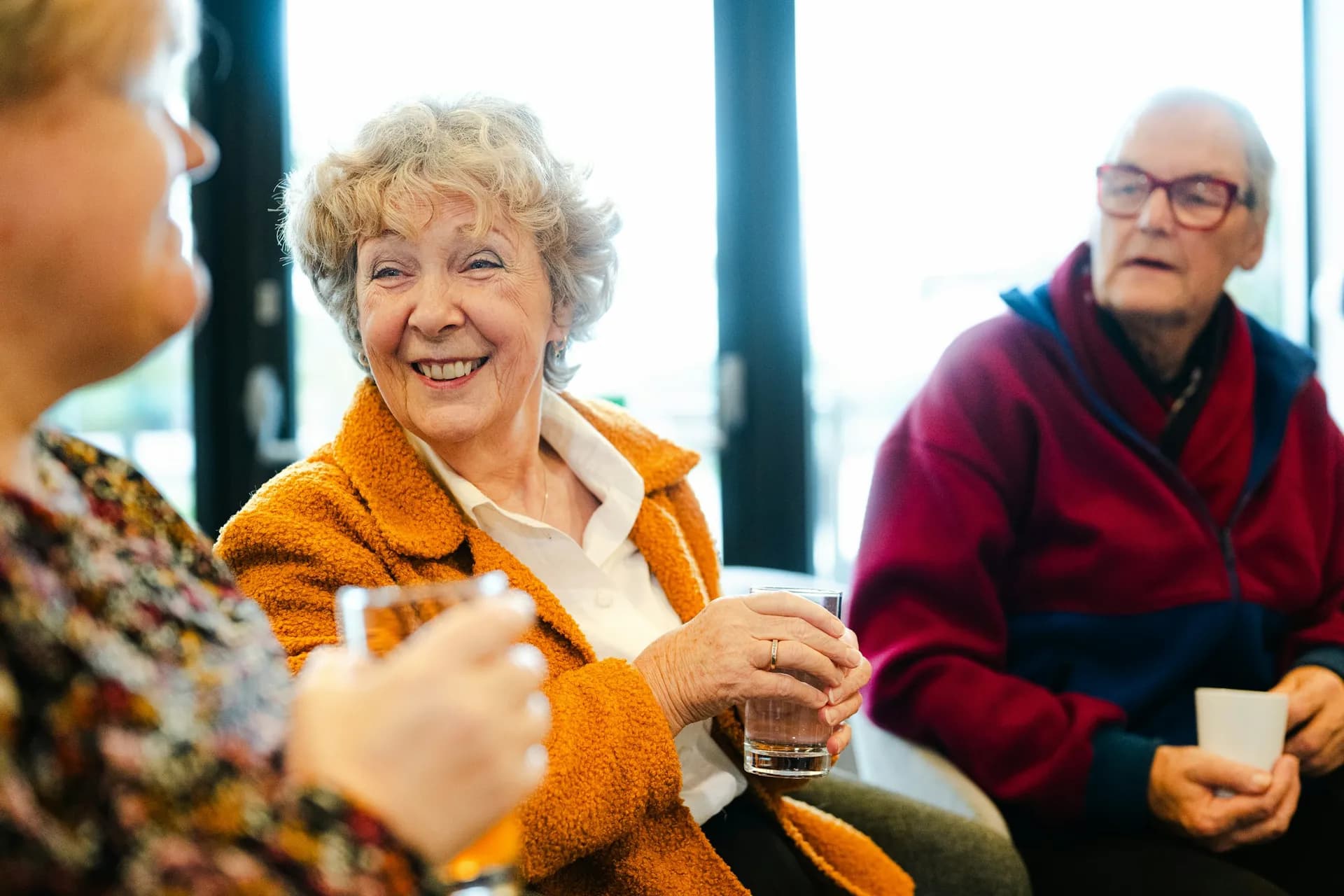
Chosen family becomes essential for people aging without a spouse or children, since reliable, reciprocal bonds with friends, neighbors, and community provide emotional support, practical help, and health advocacy, and formalizing these relationships through legal documents and therapeutic guidance ensures that support holds strong when a crisis actually arrives.
Who would doctors call if something happened to you tomorrow? For people aging without a spouse or kids, that question has no automatic answer. Chosen family can fill that gap, but only if you name it out loud and put it in writing before a crisis forces the issue.
What is chosen family, and who counts as one?
Chosen family describes the people you treat as kin by mutual agreement rather than by birth, marriage, or adoption. No legal document makes it official and no biological tie is required. What makes it real is a pattern: these are the people who show up, and who you show up for in return. That pattern can include longtime friends, former partners, neighbors, housemates, people from a congregation or community group, and even relatives you chose to stay close to rather than ones assigned to you by family tree alone.
The defining features are not how often you talk or text. They are reliability over time, reciprocity, and a shared expectation that when something goes wrong, someone comes. A chosen family member is the person you list as an emergency contact, not just the person you see most. This distinction matters more as family caretakers roles shift later in life, when the question of who actually shows up becomes practical rather than sentimental.
Family of origin is not automatically gone from this picture. Many people keep both, with each playing a different role. A sibling might remain central for holidays and history while a close friend becomes the one you call from the emergency room.
A few terms come up often in discussions of aging without a partner or children. A solo ager is someone navigating later life without a spouse or adult children to rely on by default. Elder orphan and kinless older adult describe similar situations, though many people reject those labels because they sound like something happened to them, rather than describing a life they built deliberately, often with people they chose on purpose.
Why chosen family matters when you are aging without children or a partner
Most systems built around aging assume someone specific is standing by. A hospital discharge planner asks who is picking you up. A Medicare form asks for a contact. An assisted living intake asks who to call if something changes. These forms are written with a spouse or an adult child in mind, and when neither exists, the form does not fail, you do.
This is the real shape of solo aging. It is not a single dramatic gap, it is dozens of small ones: who drives you home after a colonoscopy, who gets the call if you miss three days of answering your phone, who notices your mail piling up or your voice sounding off. None of these moments require tragedy to matter. They require a name in a blank space, and if that space stays empty, the moment becomes a crisis instead of a plan.
People reach this point by many different roads. Some never married. Some divorced, some were widowed, some are estranged from family they once counted on, some outlived a child, and some chose, deliberately, not to have children. None of these paths mean a person is isolated or friendless. The term elder orphan describes a structural gap, not an emotional one, and aging without children does not by itself predict loneliness. What it does mean is that the usual systems have no default answer for who stands in that role, and someone has to decide and write it down before it is needed.
This is the article’s central point: closeness is not the same as standing. A close friend who calls every week has warmth but no legal authority to make a decision if you cannot. Chosen family only functions as family inside these systems when it is named out loud and documented, not simply felt. Building that structure deliberately, rather than discovering its absence during a medical emergency, is the work this kind of life stressors and transitions asks of you.
Where the idea came from, chosen family in LGBTQ+ communities
The phrase found family grew out of LGBTQ+ communities, where many people faced rejection or distance from their families of origin and built kinship networks to replace what was lost. These networks were not symbolic. They provided the practical support, caregiving, and daily presence that relatives often did not. This chosen family history matters for anyone aging without a spouse or children, because LGBTQ+ elders have the longest practical track record of making these bonds hold weight.
LGBTQ+ elders are more likely than their peers to grow older without a spouse or adult children, and research applying the Convoy Model of Social Relations to LGBT older adults describes chosen families as an adaptive network that develops specifically to offset that isolation and buffer against discrimination. Decades of exclusion from hospital rooms, funerals, and inheritance taught many of these networks to put relationships in writing long before it was common advice. A friend named as next of kin only mattered if the hospital or the court recognized the document, not just the relationship.
That history produced habits that transfer to anyone aging solo, regardless of orientation. Name roles out loud rather than assuming someone will know what is expected of them. Do not assume an institution will recognize a bond just because it is real and long standing. Build support in layers, so no single person carries the full weight alone.
Discrimination in senior housing and long-term care remains a live concern, and it is one reason some elders still choose to stay closeted in care settings. Research on LGBTQI+ family and social relationships across the life course points to stigma and rejection as recurring threats to the supportive ties people depend on for health and resilience. That calculation, about who is safe to lean on and who is not, shapes who ends up inside the circle at all.
What chosen family actually provides as you age
Chosen family benefits break down into four distinct functions, and naming them makes it easier to see which ones you actually have covered. Emotional support, practical logistics, health advocacy, and a sense of belonging rarely come from the same single person. Most people assume they have this handled because they have one close friend or one sibling they trust. A useful exercise is to run through each function in your head and name who would fill it today. If the same name shows up every time, or a line stays blank, that is worth noticing now rather than during a crisis.
Emotional continuity and being known over time
This is the person who remembers the names of people you have lost, who notices when your voice changes on the phone before you have said anything is wrong. Research on family relationships and well-being finds that the quality of these connections affects health through psychosocial and physiological pathways, not just mood. A 28-year study of the Whitehall II cohort found that frequent social contact at age 60, particularly with friends rather than relatives, was linked to better cognitive trajectories and lower dementia risk over the following decades. That distinction matters for anyone building support outside a traditional family structure: the protective effect came from friendship, not bloodline. Emotional support of this kind overlaps with what interpersonal therapy addresses directly, since the quality of close relationships is often central to how people cope with change and loss.
Practical help, rides, keys, and the day after a procedure
This function is the least glamorous and the most tested in an actual emergency. It looks like someone who has a key to your house, who can drive you home after a colonoscopy, who feeds the cat while you are in the hospital. Caregiving support also covers the unglamorous paperwork: sitting with you to open mail, sorting through forms, helping after a fall when you cannot reach the phone yourself. This is the function people without children or a partner most often discover is missing only when they need it.
Health advocacy and being a second set of ears
A health advocate is someone who sits in the appointment with you and remembers what the doctor actually said. Medical conversations move fast, and stress makes details slip. Having someone who can repeat what the discharge nurse explained, or ask the question you forgot, changes what you walk away understanding. This role does not require medical training, only presence and attention.
What ties these four functions together is redundancy. A network of several people who each cover a piece is more durable than one devoted person covering everything, because a single point of support can get sick, move away, or burn out. Belonging also runs in both directions: being someone’s first call, having a role in another person’s life, matters as much as receiving help yourself.
What to put in place before a crisis
Close relationships do not come with legal authority attached. A friend of thirty years, a chosen sibling, a neighbor who has driven you to every appointment for a decade: none of them has standing to make a decision for you unless a document says so. This is the gap that catches people off guard, usually at the exact moment they can least afford it. The fix is not complicated, but it has to happen before it is needed.
Who the law assumes will speak for you
Most states default to a fixed order when someone cannot speak for themselves: a spouse first, then adult children, then parents, then siblings. A friend, a partner you never married, or a chosen family member you have relied on for years does not appear on that list at all. If you have no spouse and no children, decisions about your care can fall to a parent or sibling you are estranged from, simply because they are next in line. The only way around that default is to name someone yourself, in writing.
The core documents and what each one authorizes
A few specific documents do the work that closeness alone cannot:
- Healthcare proxy or medical power of attorney: names a specific person to make medical decisions when you cannot. This is the single document that puts a non-relative in the room instead of the next person on the default list.
- Durable power of attorney for finances: authorizes someone to handle banking, bills, and property on your behalf, and stays in effect after incapacity, which a standard power of attorney often does not.
- HIPAA authorization: separate from the proxy, this permits providers to share medical information with the people you name, and it can apply even before any incapacity occurs.
- Advance directive or living will: records your own treatment preferences in writing, so the person making decisions is carrying out your instructions rather than guessing at them.
- Will, beneficiary designations, and transfer-on-death titling: a beneficiary form on a retirement account or life insurance policy typically overrides whatever your will says, so an outdated form can send assets to a former spouse no matter what you intended.
- Hospital visitation and funeral or disposition authorization: these are often separate instruments from the healthcare proxy, and they are the ones chosen families most commonly find out about too late, usually at the hospital door.
Falls alone send millions of older adults to emergency departments every year, and a hip fracture or head injury can leave someone unable to communicate within hours. That is the ordinary, unglamorous scenario these documents are built for, not a rare catastrophe.
Where state rules differ and how documents actually get used
Requirements for witnessing, notarization, and whether a document is honored if you are hospitalized in a different state from where you signed it all vary. A form that works perfectly in one state can be questioned or rejected in another, so a generic downloaded template is a starting point, not a finished plan. Check the specific rules for your state rather than assuming a document is automatically portable.
None of this helps if the paperwork sits in a drawer no one knows about. Give a copy to the person you named, give a copy to your medical providers, and write down where the originals are kept, including who else has that information. The goal is not just that the documents exist, but that someone can produce them at two in the morning without having to search.
Talking about money, time, and limits before anyone is in crisis
Chosen family caregiving tends to run on goodwill until the goodwill runs out. The friend who drives you to every appointment, the neighbor who picks up groceries, the person who lets you stay in their guest room during recovery: none of this is free, even when no one says the word money out loud. The conversations that prevent resentment later are specific, not general. “Let’s communicate openly” asks for nothing and gets nothing. Here are the actual questions worth asking while everyone involved is healthy and clear-headed.
What gets reimbursed, and how
Gas, parking, groceries bought on someone else’s card, the cost of a meal picked up on the way over: decide upfront whether these get repaid or absorbed, and if repaid, whether receipts get saved and submitted or just estimated and settled monthly. A running tab nobody tracks becomes a running resentment nobody names.