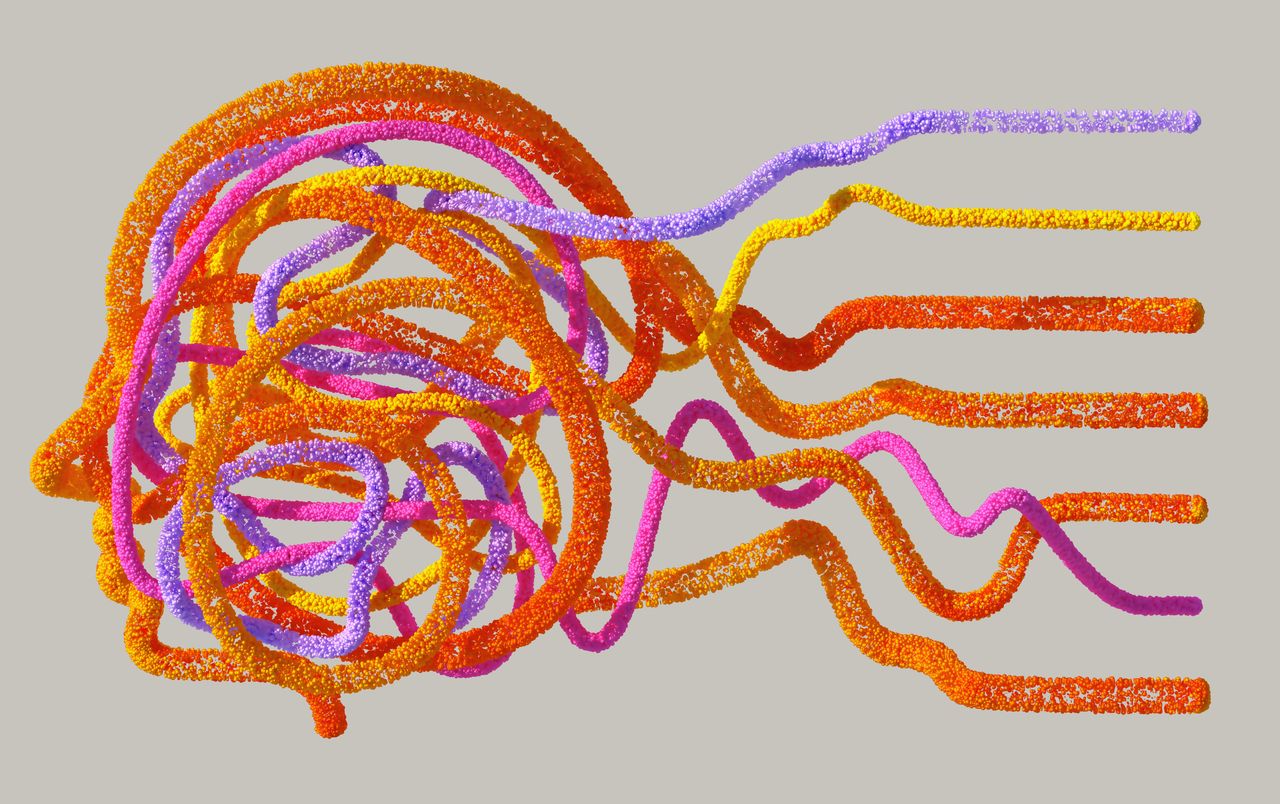
Neurodivergent is a descriptive adjective, not a clinical diagnosis, that identifies individuals whose neurological functioning diverges from societal norms, with autism, ADHD, and dyslexia at its established core, and understanding the term's precise meaning, misuse patterns, and competing clinical frameworks helps people pursue accurate evaluation and meaningful therapeutic support.
Have you ever used the word neurodivergent and quietly wondered if you were using it right? You are not alone. The term has spread across social media, workplaces, and healthcare spaces, often carrying different meanings. This article unpacks exactly what it means, what it does not, and why that distinction genuinely matters.
What does neurodivergent actually mean?
The word “neurodivergent” gets used constantly, and it gets used incorrectly almost as often. You’ll see it applied to entire groups, treated as a diagnosis, and swapped interchangeably with words that mean something different. Before exploring why the term gets misused, it helps to start with what it actually means, where it came from, and how it differs from three closely related terms that people routinely confuse with it.
At its core, neurodivergent is a descriptive adjective applied to an individual whose neurological functioning diverges from what society considers typical. That’s it. It is not a diagnosis, not a medical category, and not something any clinical body formally defines or assigns. A doctor cannot diagnose you as neurodivergent the way they diagnose ADHD or autism. The term lives in descriptive and sociopolitical language, not in the DSM or ICD.
The four terms you need to know: neurodivergent vs. neurodivergence vs. neurodiversity vs. neurodiverse
These four terms are related but distinct. Using one when you mean another changes the meaning of what you’re saying, sometimes significantly. Here’s how each one works:
Neurodivergent is an adjective that describes a person. Kassiane Asasumasu, an autistic activist, coined the term specifically to describe individuals whose neurological development or functioning differs from the dominant social standard. Correct use: “She is neurodivergent.” Incorrect use: “That is a neurodivergent group.”
Neurodivergence is the noun form. It refers to the state or trait of being neurodivergent. Correct use: “His neurodivergence affects how he processes sensory information.” Incorrect use: “The neurodivergence of the population is increasing.” (That sentence describes a population-level pattern, which is a different concept entirely.)
Neurodiversity refers to the natural variation in neurological functioning across all human brains in a population. Judy Singer, a sociologist, introduced this concept in 1998 to frame neurological differences as a normal dimension of human diversity rather than as deficits. Critically, neurodiversity cannot apply to a single person. A population is neurodiverse. One person is not. Correct use: “Neurodiversity is a feature of the human species.” Incorrect use: “She has a lot of neurodiversity.” (This sentence is meaningless.)
Neurodiverse is the adjective form of neurodiversity, and it describes a group or population that contains neurological variation. It is not a synonym for neurodivergent. Correct use: “Our team is neurodiverse.” Incorrect use: “He is neurodiverse.” (He is neurodivergent. The team is neurodiverse.)
The distinction between neurodiverse and neurodivergent trips up even careful writers. One describes a group containing variation. The other describes the individual who varies from the norm. Keeping that difference clear is the foundation for everything else covered here.
How the term evolved and how it got distorted
The word “neurodivergent” has a surprisingly precise origin story. In 1998, Australian sociologist Judy Singer introduced “neurodiversity” in her sociology thesis as a framework modeled on biodiversity. The concept was explicitly political and philosophical, not clinical. Singer argued that neurological variation across a population is a natural feature of humanity, and that conditions like autism should be understood through a lens of difference rather than deficit. As research on neurodiversity as a philosophical and ethical framework has noted, this framing was always meant to challenge social structures, not replace diagnostic medicine.
But “neurodiversity” described a population-level concept. It could not do the work of a personal identity label. Disability advocate and autistic self-advocate Kassiane Asasumasu recognized that gap and coined the term “neurodivergent” to fill it. The distinction matters: neurodiversity is a characteristic of groups, while neurodivergent is something an individual can be. Asasumasu intended the term to apply to people whose neurological development diverges from what is statistically or socially dominant, including autistic people, people with ADHD, epilepsy, and similar conditions.
Institutional adoption flattened the meaning
Through the 2010s, organizations including the NHS and the Chartered Institute of Personnel and Development (CIPD) began embedding “neurodivergent” into workplace policy and healthcare guidance. This institutional uptake gave the term real authority and helped reduce stigma in professional settings. The trade-off was precision. Policy documents often grouped a wide range of conditions under a single umbrella without defining where the boundary sat, and that ambiguity became load-bearing.
Social media accelerated the drift
Post-2020, the term’s reach expanded faster than any policy document could have managed. On platforms like TikTok and Instagram, content tagged with “neurodivergent” grew exponentially. Algorithmic incentives on these platforms reward relatability and broad appeal, which pushed creators toward framing the term in ways that felt personally resonant to the widest possible audience. Precision is rarely viral.
The result was a predictable pattern of boundary creep. Each wave of adoption shifted the term outward: from neurodevelopmental conditions with strong neurobiological evidence, to broader cognitive differences, and eventually to personality traits and temporary mental states like burnout or anxiety during stressful periods. No single actor caused this drift. It was the cumulative effect of a concept moving through communities with different needs, incentives, and levels of familiarity with its origins.
The three frameworks: why experts disagree on what counts as neurodivergent
Ask a clinical psychologist, an NHS occupational therapist, and a disability justice advocate whether PTSD is a neurodivergent condition, and you may get three different answers. That is not because one of them is wrong and the others are right. It is because they are each working from a different definitional framework, and the framework you use determines which conditions fall inside or outside the term.
Three broad frameworks have emerged across research, clinical practice, and advocacy communities. Each has legitimate organizational backing. Each draws the boundary in a different place.
The narrow framework: neurodevelopmental conditions only
The narrowest definition limits neurodivergence to conditions classified as neurodevelopmental disorders in the DSM-5 (the Diagnostic and Statistical Manual of Mental Disorders, Fifth Edition, which is the standard diagnostic reference used by clinicians across the US). Under this framework, the list includes autism, ADHD, dyslexia, dyscalculia, dyspraxia, and Tourette syndrome.
Organizations like the American Psychological Association (APA) and CHADD (Children and Adults with Attention-Deficit/Hyperactivity Disorder) operate within this space. Their definitions emphasize conditions with documented neurobiological and genetic origins. Research on the shared genetic heritability of ADHD and autism illustrates exactly why these conditions anchor this framework: they share overlapping neurological profiles and are among the most thoroughly studied neurodevelopmental conditions in clinical literature.
This framework is precise, clinically grounded, and easy to apply consistently. Its limitation is that it excludes many conditions that meaningfully affect how people think, perceive, and process the world.
The moderate framework: cognitive and sensory differences
The moderate framework keeps the neurodevelopmental core but extends outward to include conditions involving cognitive and sensory variation that do not fit neatly into DSM-5 neurodevelopmental categories. Synesthesia (a neurological trait where stimulation of one sense triggers automatic experiences in another), hyperlexia, sensory processing differences, and epilepsy are examples of conditions that enter the picture here.
Some NHS resources and UK workplace inclusion bodies occupy this middle ground. The reasoning is that neurodivergence describes how a brain processes information differently, and sensory or cognitive differences qualify even when they do not meet the threshold for a formal neurodevelopmental diagnosis. Research exploring the tension between medical and neurodiversity frameworks supports this approach by showing that the two models overlap rather than contradict each other, making room for a broader but still bounded definition.
This framework resonates strongly in professional inclusion and workplace accommodation contexts, where the focus is on functional difference rather than diagnostic category.
The broad framework: brain-based divergence including mental health
The broadest framework extends neurodivergence to include mental health conditions when they are understood as brain-based differences rather than purely situational or psychological responses. Under this view, PTSD, bipolar disorder, OCD, and anxiety disorders can all fall within the neurodivergent umbrella.
Disability justice coalitions and social media communities have driven much of this expansion. The underlying logic is that if neurodivergence means a brain that operates differently from the statistical norm, then conditions that persistently reshape how a person thinks, perceives threat, regulates mood, or processes experience should qualify. This framing prioritizes lived experience and self-identification over clinical taxonomy.
Critics of this framework argue that it stretches the term to the point of losing analytical usefulness. Proponents counter that a narrow definition risks gatekeeping and leaves many people without language for their experience.
Where the frameworks agree and where they split
Autism, ADHD, and dyslexia appear in every framework. Their inclusion is as close to universal as this conversation gets. Conditions like anxiety and depression occupy contested ground: defensibly included under the broad framework, reasonably excluded under the narrow one. Giftedness sits at the edges of all three, with some advocates including it and most clinical bodies declining to.
There is no single correct framework. There are, though, positions that are better supported by evidence and organizational consensus than others.
Neurodivergent vs. neurotypical: what the distinction actually means
The word neurotypical describes neurological functioning that aligns with societal and statistical norms. It is not a compliment, and it is not an insult. It simply identifies the majority pattern, the kind of brain that existing systems, schools, and workplaces were largely built around. Calling someone neurotypical says nothing about their character, creativity, or worth.
The distinction between neurodivergent and neurotypical is also more fluid than it first appears. These are not two airtight biological categories with a clear line between them. A person who struggles significantly in a rigid, fast-paced office environment might thrive in a flexible, sensory-friendly one. The same brain can read as “different” in one context and perfectly unremarkable in another. This is why researchers and advocates frame the neurodivergent/neurotypical divide as socially constructed, shaped by what a given culture decides counts as normal functioning.
So why use the terms at all? Because they do important work. Research on neurotypical norms and systemic inequality confirms that the distinction exists to name a real power dynamic: whose brains get treated as the default, and whose get treated as the problem to fix. Naming that dynamic is the first step toward changing it.
What the terms are not meant to do is sort people into permanent, ranked boxes. One of the most common misuses is treating neurotypical as a synonym for “boring” or “basic,” and neurodivergent as shorthand for “gifted” or “more interesting.” This framing trivializes both groups. It romanticizes real challenges that many neurodivergent people face daily, and it dismisses the genuine complexity of neurotypical experience. The goal of the distinction is equity, not a new hierarchy.
What neurodivergent does not mean: a misuse taxonomy with real consequences
Most misuse of the word neurodivergent comes from genuinely good places: wanting to connect, wanting to reduce stigma, wanting to feel seen. But impact matters more than intent, especially when definitional drift leaves real people without the recognition or support they need. Below are four documented misuse patterns, each with a mechanism, a consequence, and a more accurate framing.
Misuse type 1: using neurodivergent as a synonym for autistic
The pattern: In many online spaces, neurodivergent functions as a polite stand-in for autistic, as if the two words mean the same thing.
Why it happens: Autism advocacy was central to the neurodiversity movement’s early growth, so the association stuck.
Who it harms: People with dyslexia, dyscalculia, ADHD, and Tourette syndrome get quietly erased from the conversation. When accommodation frameworks are designed with only autism in mind, they miss the distinct needs of everyone else under the umbrella.
More accurate framing: Autistic people are one community within a broader group. Using the specific term when you mean autistic, and the broader term only when you mean the full umbrella, keeps both visible.
Misuse type 2: labeling personality traits as neurodivergence
The pattern: Introversion, high sensitivity, and creativity get described as neurodivergent traits, sometimes with pride, sometimes as explanation for social friction.