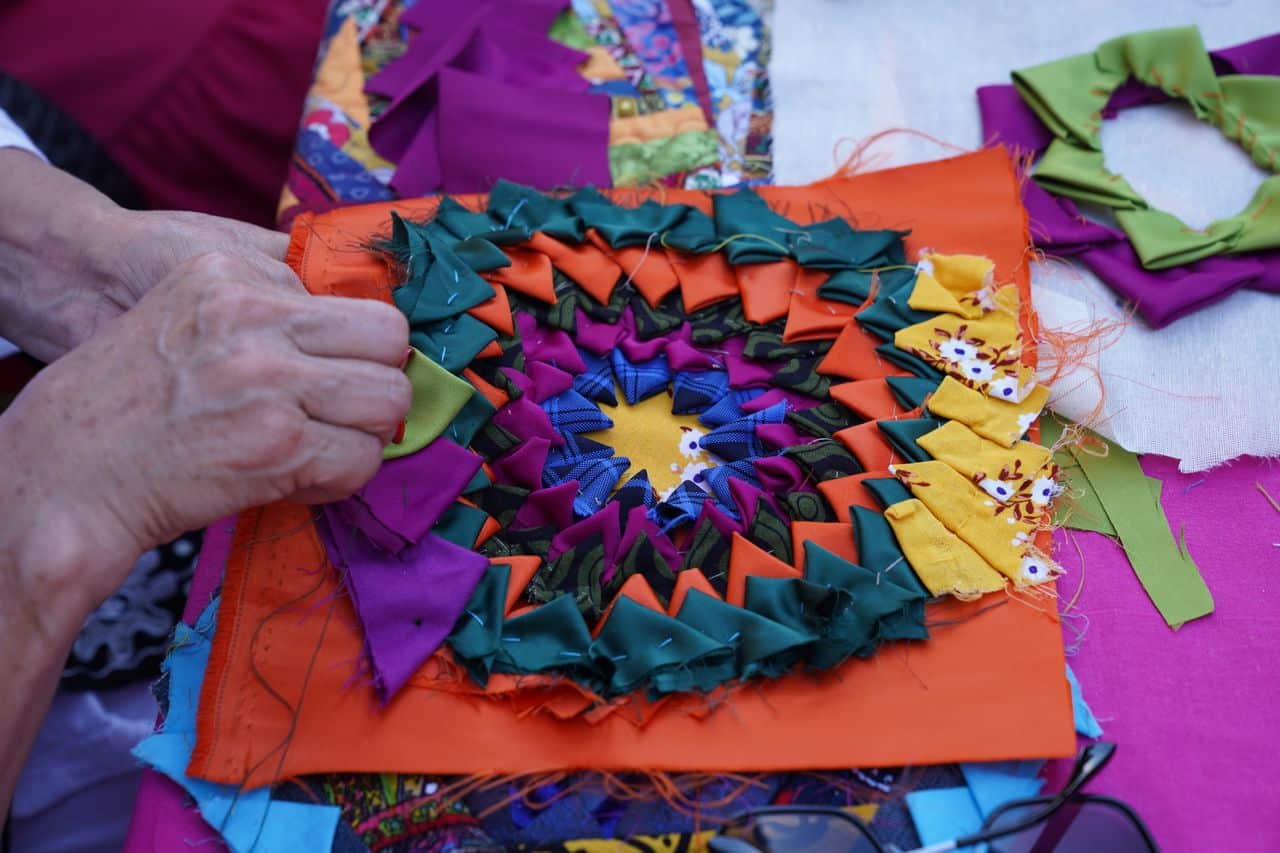
Repetitive crafting, such as knitting, weaving, or embroidery, calms the anxious brain by activating the somatosensory cortex and prefrontal cortex to send inhibitory signals that down-regulate the amygdala, reducing cortisol and stress within 15 to 20 minutes, and works best alongside licensed therapy for lasting emotional regulation.
What if the racing thoughts you can't think your way out of could be calmed by your hands instead? Therapeutic crafting taps a real neurological pathway, quieting the brain's anxiety alarm through simple, repetitive motion. Keep reading to learn how a ball of yarn might do what willpower alone cannot.
What is therapeutic crafting? Defining handwork as mental health practice
Therapeutic crafting is the intentional use of repetitive handwork, such as knitting, weaving, embroidery, or woodcarving, to regulate emotions, lower stress, and actively support mental health. What separates it from ordinary hobby crafting is purpose and structure. When you pick up needles to pass the time, that is leisure. When you engage with the same rhythmic motion as a deliberate practice for calming your nervous system, that is therapeutic crafting. The distinction matters because the research, and the results, follow the intentional approach.
This is not a new idea dressed up in modern language. Craft activities have been a core part of occupational therapy since World War I, used by practitioners who observed, often before they could explain why, that repetitive handwork helped patients recover a sense of agency and calm. What has changed is that neuroscience can now describe the biological mechanisms behind effects that clinicians noticed for over a century.
One clarification worth making early: therapeutic crafting is not the same as art therapy. Art therapy is a separate, licensed clinical discipline facilitated by credentialed professionals. Therapeutic crafting, as covered here, refers to evidence-informed, self-directed or group-based handwork practices that anyone can access.
Evidence summary: what the research shows
Below is a consolidated snapshot of the key findings this article draws on:
- Cortisol reduction: Knitting studies report measurable reductions in cortisol, the body’s primary stress hormone, with regular practice.
- Wellbeing score improvements: UK social prescribing craft programs using the Warwick-Edinburgh Mental Well-Being Scale (WEMWBS, a validated tool measuring positive mental health) have recorded significant score improvements in participants.
- Stress-reduction onset: Measurable stress reduction typically begins at around 15 to 20 minutes of continuous repetitive handwork.
- Flow state threshold: The psychological state of flow, defined as absorbed, effortless focus, tends to emerge around 20 to 25 minutes into a session.
- Population-level evidence: A large-scale study of 7,182 adults establishing crafting as a measurable public health intervention found consistent associations between creative handwork and higher subjective wellbeing across diverse groups.
These numbers give therapeutic crafting a credible evidence base, and the sections that follow explain exactly why the brain responds the way it does.
Mental health benefits of crafting and handwork
Crafting does more than fill time. Across multiple psychological domains, handwork produces measurable changes in how you feel, think, and connect with others. The benefits are not incidental, and they are not placebo. They follow from the specific demands that craft tasks place on your brain and body.
Emotional and mood regulation
Repetitive handwork gives your nervous system something concrete to do with difficult emotions. Rather than suppressing or analyzing feelings, your hands stay busy while your mind quietly processes what words often cannot reach. Studies on knitting and crochet show reduced self-reported anxiety symptoms and improved mood within single sessions, making these activities one of the more accessible tools for emotional regulation available. For people experiencing depressive symptoms, the act of making something tangible creates a non-verbal outlet that complements formal depression treatment by offering daily, low-barrier relief.
Cognitive engagement and rumination relief
Craft tasks are cognitively demanding in a productive way. Sequencing a pattern, holding a stitch count in working memory, and sustaining attention across a project all impose a structured mental load. That load matters because it occupies the same cognitive space where ruminative thought loops tend to run. Research on quilting and wellbeing supports this, finding that craft activities engage sustained attention and can produce flow states, the kind of absorbed focus that crowds out worry and self-critical thinking.
Social connection and loneliness
Group crafting formats, from knit-and-natter circles to community quilting bees, do something that solo hobbies often cannot: they create low-pressure, shared-purpose environments where conversation happens naturally. UK social prescribing programs have reported improved social engagement scores among participants in group craft activities. This matters clinically because social connection is a critical factor for mental health, with loneliness and social isolation now recognized as significant public health concerns on par with other chronic risk factors.
Self-efficacy, meaning, and mindfulness
Finishing a handmade object builds something beyond the object itself: a felt sense of competence. That sense of self-efficacy, the belief that you can set a goal and see it through, is particularly protective against depressive symptoms. Crafting also mirrors the core mechanisms of mindfulness practice. The focused, present-moment attention that handwork requires produces many of the same psychological effects as formal meditation, without requiring you to sit still or follow a script.
The Hand–Brain–Emotion Axis: how repetitive handwork restructures anxious thinking
There is a specific three-step neurological pathway that explains why knitting a row, folding paper, or pulling a crochet stitch can quiet a racing mind. Researchers and clinicians sometimes describe this chain of events as the Hand–Brain–Emotion Axis. It is not a metaphor. It is a sequence of brain regions activating in a particular order, each one influencing the next, until the part of your brain that generates fear and anxiety receives a clear signal to stand down.
Step one: your hands send a message to your brain’s sensory hub
Every time your hands move in a repetitive, rhythmic pattern, they flood a region called the somatosensory cortex with sensory data. The somatosensory cortex is essentially your brain’s touch-and-movement processing center. It registers texture, pressure, temperature, and the position of your fingers in space. What makes repetitive handwork distinctive is the predictability of that input. Your brain is not scrambling to interpret surprising or threatening sensations. Instead, it receives the same organized signal again and again, creating a steady, low-intensity rhythm of neural activity.
Step two: the prefrontal cortex tunes in without working hard
That rhythmic sensory input draws in the prefrontal cortex, the region at the front of your brain responsible for planning, decision-making, and regulating your emotional responses. The key distinction is this: pattern monitoring requires far less cognitive effort than active problem-solving. When you follow a simple stitch sequence, your prefrontal cortex is engaged just enough to track the pattern, but not so taxed that it triggers stress. Think of it as the mental equivalent of a light jog rather than a sprint. Research on prefrontal cortex and amygdala activity in emotion regulation confirms that when the prefrontal cortex is engaged in this moderate, structured way, it is well-positioned to send inhibitory signals downstream.
Step three: the amygdala receives the ‘all clear’
The amygdala is your brain’s threat-detection alarm. When you feel anxious, it is often because the amygdala is firing rapidly, interpreting your environment as dangerous. The combined activation of the somatosensory cortex and the prefrontal cortex sends inhibitory signals directly to the amygdala, essentially telling it to lower the alarm. The result you actually feel is a reduction in physical tension, a slower heart rate, and a quieter mental loop. That is amygdala down-regulation translated into lived experience.
Why this is different from meditation or cognitive reappraisal
Most calming strategies work from the top down. Cognitive behavioral techniques ask you to consciously reframe a thought. Meditation asks you to deliberately redirect attention. Both require mental effort and a degree of cognitive control that can feel impossible when anxiety is already high. The Hand–Brain–Emotion Axis works from the bottom up. The calming signal originates in the body and travels upward through the nervous system, bypassing the need for deliberate thought control entirely. This is why people who struggle to quiet their minds through meditation often find repetitive crafting surprisingly effective. The mechanism does not ask your thinking brain to lead. It lets your hands do the work first.
This three-step framework synthesizes findings across multiple studies into a unified model. No single study labels it the Hand–Brain–Emotion Axis by name, but the pathway it describes reflects a consistent pattern in the neuroscience literature on sensory input, prefrontal engagement, and emotional regulation.
Five neurological pathways that explain why repetition calms the brain
Repetitive handwork does not calm the brain through one single mechanism. It works through at least five distinct neurological pathways, each operating on a different timescale. Understanding these pathways helps explain why even a short crafting session can shift your mental state almost immediately, while deeper benefits build across weeks and months.
Parasympathetic activation and vagal tone
Within two to five minutes of rhythmic hand movement, your autonomic nervous system begins to shift. The vagus nerve, which runs from your brainstem down through your chest and abdomen, responds to the steady rhythm of repetitive motion. This stimulation nudges your body from sympathetic activation (the fight-or-flight state) toward parasympathetic activation, often called rest-and-digest. Heart rate variability, a key marker of nervous system flexibility and resilience, shows measurable improvement within this same short window. You do not need to craft for an hour to feel the difference.
Cortisol suppression through sustained repetition
Cortisol is the body’s primary stress hormone, and its levels respond to sustained repetitive motion in a meaningful way. Research on reduction of cortisol levels following art making provides biological evidence that creative handwork measurably reduces cortisol output, a concrete physiological marker of stress reduction. This pathway takes longer to engage than vagal activation, with significant suppression appearing after roughly 15 to 20 minutes of continuous handwork. This is one reason a brief crafting session feels pleasant while a longer one feels genuinely restorative.
Serotonin, dopamine, and the reward of making
Repetitive fine motor activity is associated with serotonin modulation, the neurotransmitter most closely linked to mood stability and a sense of calm well-being. Evidence on repetitive craft activity and serotonin release specifically connects the rhythmic repetition in knitting and crochet to serotonin activity and mood improvement. Completing discrete stages of a craft project, finishing a row, casting off a section, completing a motif, also triggers dopamine reward signals. These signals reinforce the behavior over time, which is part of why people who craft regularly often describe it as something they genuinely crave rather than a chore.
Quieting the default mode network
The default mode network (DMN) is the brain’s background processing system, most active when you are not focused on a task. It is the network responsible for self-referential thinking, the mental loop of replaying conversations, worrying about the future, and critiquing yourself. Focused handwork suppresses DMN activity in the same way meditation does, though through a different entry point. This quieting typically begins within 10 to 15 minutes of engaged crafting and is one reason repetitive handwork is so effective at interrupting rumination without requiring you to empty your mind.
Bilateral stimulation and emotional processing
Crafts that require alternating hand movements, knitting, weaving, and cross-stitch among them, produce bilateral motor activation: rhythmic, alternating engagement of the left and right sides of the body. This pattern closely resembles the mechanism behind EMDR (Eye Movement Desensitization and Reprocessing), a trauma-focused therapy that uses guided bilateral stimulation to reduce the emotional intensity of distressing memories. The bilateral activation in handwork appears to operate continuously throughout a session, which may help explain why many people find repetitive crafting particularly useful during periods of emotional distress or anxiety.
Craft Rx: which handwork for which mental health need
Not every craft works the same way for every person. The mechanisms behind repetitive handwork are specific enough that certain activities pair more naturally with certain mental health needs. The matches below are grounded in research and clinical practice, with notes on evidence strength, typical session length, and how accessible each craft is to start.
Knitting and crochet for anxiety and stress
The primary mechanism here is rhythmic bilateral movement, meaning both hands work in a coordinated, alternating pattern while the brain tracks stitch counts and pattern sequences. This combination occupies just enough cognitive bandwidth to quiet anxious rumination without overwhelming you. Research on knitting in clinical settings found measurable reductions in anxiety and intrusive thoughts, making this one of the strongest evidence bases in craft therapy. Sessions of 20 to 30 minutes are enough to notice a shift. Knitting and crochet are also among the most accessible options: low cost, highly portable, and easy to pick up in short windows. For people managing anxiety symptoms, this pairing is a practical starting point.