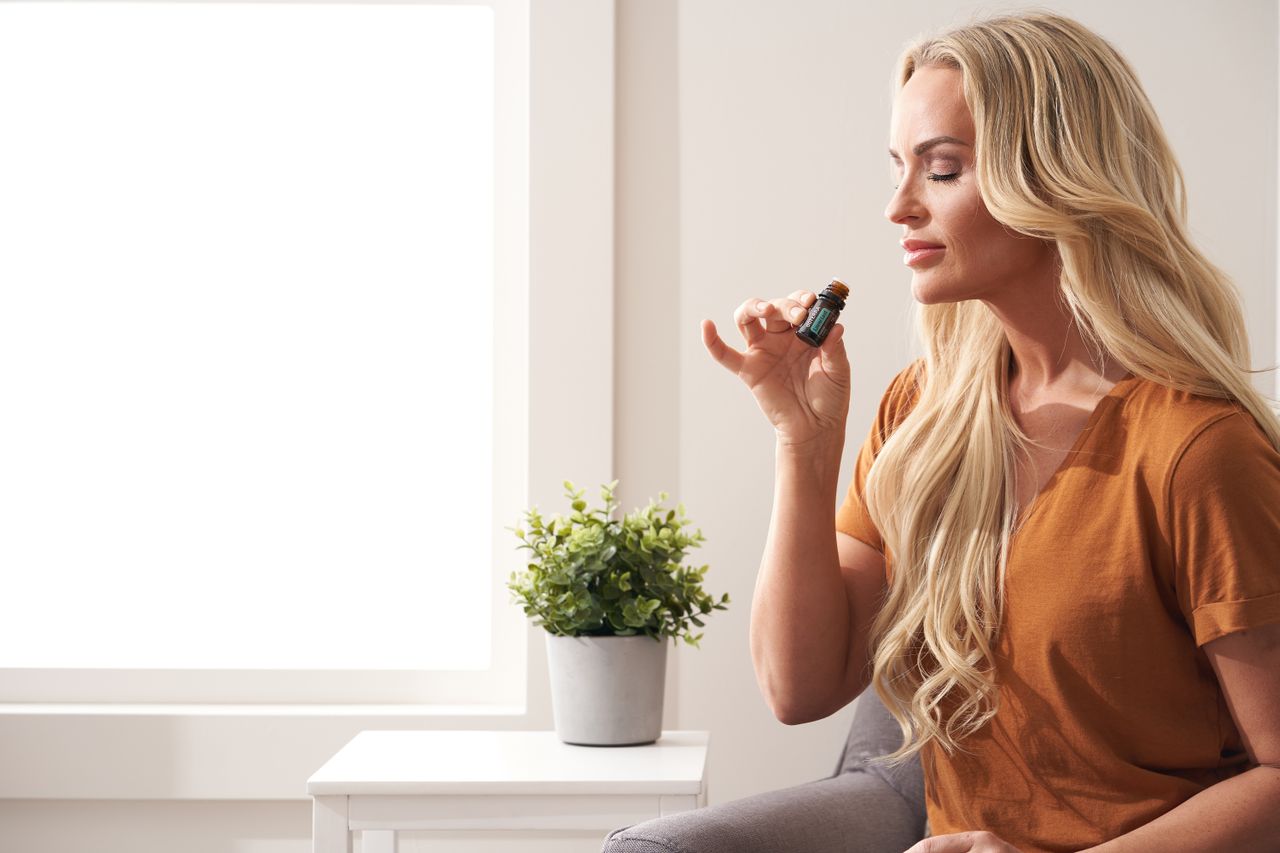
Essential oils for anxiety, particularly lavender inhaled before a specific stressor, show measurable short-term calming effects backed by clinical trials, though only oral Silexan capsules carry strong evidence for generalized anxiety disorder, while cognitive behavioral therapy remains the most effective, evidence-based treatment for lasting relief from diagnosed anxiety conditions.
Does that diffuser on your desk actually calm your nervous system, or just your nose? Essential oils for anxiety have real science behind a few specific uses, and real gaps everywhere else. Here's exactly what the research supports, what it doesn't, and where a scent stops being enough.
The evidence grade card: every oil rated by anxiety type
Not all essential oils are created equal, and not all anxiety conditions respond to the same ones. To cut through the noise, each oil below is rated using a transparent rubric borrowed from clinical research standards. Grade A means multiple large randomized controlled trials (RCTs) with low risk of bias. Grade B means small RCTs or a single adequately powered trial. Grade C means observational studies or pre-post designs only (no control group). Grade D means evidence exists only in animals or cell cultures. Grade F means no human evidence was found at all. Think of this the same way you might evaluate mindfulness-based stress reduction (MBSR), another complementary approach with its own tiered evidence base. Knowing the grade helps you set realistic expectations before you ever open a bottle.
This matrix draws on the first network meta-analysis ranking essential oils by anxiety-reducing efficacy, which compared oils head-to-head across study designs, making meaningful differentiation possible for the first time.
The evidence matrix
Lavender (Lavandula angustifolia)
Lavender oil anxiety research is the most robust in this category by a wide margin.
- Preoperative anxiety: A — Multiple RCTs, including Braden 2009 and Franco 2016, support this top-tier rating, with consistent reductions in pre-surgery anxiety scores across independent research teams.
- Generalized anxiety disorder (GAD): B+ — Oral Silexan capsules (a concentrated lavender extract) showed meaningful effects in the Kasper 2014 and Woelk 2010 trials. This grade applies to that specific delivery method, as Silexan is ingested, not inhaled.
- Dental anxiety: C — Inhalation studies exist but rely on pre-post designs without adequate control conditions.
- Panic disorder: D — Evidence is limited to animal models only.
- PTSD: F — No qualifying human trials found.
Bergamot (Citrus bergamia)
- Preoperative anxiety: B — Ni 2013 and Watanabe 2015 both reported reduced anxiety with inhalation before procedures.
- General stress reduction: C — Observational data suggest a calming effect, but controlled trials are lacking.
- GAD: D — Animal and in-vitro work only.
- Panic disorder / PTSD: F — No human evidence found.
- Safety note: Bergamot contains bergapten, a compound that increases skin sensitivity to sunlight. Topical use requires a furocoumarin-free (FCF) formulation to avoid phototoxic burns.
Bitter orange / Neroli (Citrus aurantium)
- Preoperative anxiety: B — Namazi 2014 demonstrated reduced anxiety in women before cesarean delivery using neroli inhalation.
- Labor anxiety: C — Small observational studies show promise, but replication in controlled trials is needed.
- All other conditions: D to F — Evidence does not yet extend to clinical anxiety disorders.
Roman chamomile (Chamaemelum nobile)
- Preoperative and general anxiety (inhalation): C — Some inhalation studies report calming effects, but designs are weak. One important clarification: the stronger chamomile trials (Amsterdam 2009, Keefe 2016) tested oral chamomile extract, not essential oil aromatherapy. These are chemically and mechanistically distinct. Citing those trials as proof that chamomile essential oil treats GAD is a common and misleading error.
Ylang-ylang (Cananga odorata)
- Acute stress: C — Hongratanaworakit 2006 measured autonomic markers like heart rate and blood pressure and found modest reductions, but this is a single small study.
- Clinical anxiety disorders: D to F — No controlled human trials in diagnosed populations.
Frankincense (Boswellia)
- Anxiety (any type): D — Research on incensole acetate, a compound found in frankincense smoke, is promising in animal models but has not translated to human clinical trials.
- Specific clinical conditions: F — No qualifying human evidence found for any diagnosed anxiety disorder.
When you scan this matrix, one pattern stands out: lavender is the only oil among the best essential oils for anxiety that reaches Grade A evidence, and only for a specific condition. Every other oil sits at Grade B or below for every application listed. That context matters when weighing aromatherapy as a complement to, not a replacement for, evidence-based care.
Silexan (Lavela WS 1265): the only aromatherapy product that passed pharmaceutical-grade testing
Most lavender essential oil products have never been tested in a clinical trial. Silexan is the exception. It is a standardized oral capsule containing 80mg of lavender oil (Lavandula angustifolia) with precisely defined concentrations of its two active compounds, linalool and linalyl acetate. Manufactured by Schwabe Pharmaceuticals and sold in the US as Lavela WS 1265 or CalmAid, Silexan has gone through the kind of rigorous testing normally reserved for pharmaceutical drugs.
What the clinical trials actually showed
Two trials stand out:
- Woelk & Schläfke 2010: This randomized controlled trial enrolled 77 adults with generalized anxiety disorder (GAD), a condition defined by persistent, difficult-to-control worry, and compared Silexan 80mg per day against lorazepam 0.5mg per day over six weeks. Silexan showed non-inferiority on the HAM-A scale, a standard clinical measure of anxiety severity. Two caveats apply: 0.5mg of lorazepam is a low clinical dose, and the sample size was small.
- Kasper et al. 2014: This 10-week trial enrolled 539 adults with sub-threshold anxiety (defined as a GAD-7 score of 9 or higher) and compared Silexan at 80mg and 160mg against placebo. Both doses produced statistically significant improvement over placebo. With 539 participants, this is the largest and most rigorous aromatherapy trial ever conducted.
These results are genuinely meaningful. They place Silexan in a different category from nearly every other product marketed under the “aromatherapy” label.
Why this does not validate your diffuser
Oral Silexan works because swallowing the capsule achieves sustained linalool levels in the bloodstream, where linalool can modulate voltage-dependent calcium channels and serotonin transporter activity. These are measurable pharmacological mechanisms. Inhaling lavender from a diffuser delivers orders of magnitude less linalool into circulation. The delivery method, the dose, and the bioavailability are fundamentally different.
To put it plainly: the clinical evidence for Silexan does not prove that diffusing lavender oil in a room produces equivalent anxiolytic effects. Lavender essential oil for anxiety research and Silexan lavender research are not interchangeable bodies of evidence, even though both involve lavender.
Regulatory status
Silexan is approved as a prescription medicinal product in Germany under the brand name Lasea. In the US, it is sold as a dietary supplement, meaning it is not FDA-approved as a drug. That distinction matters when weighing how to use this evidence: the trials are real, but the product sits outside the US prescription drug framework.
Acute relief vs. long-term treatment: what the research timeline actually shows
One of the most common mistakes people make with essential oils is assuming that because something works in a single session, it will work as an ongoing treatment. With aromatherapy for anxiety, the evidence does not support that leap.
Where the evidence is strongest: single-session use
The clearest, most consistent findings come from short, controlled exposures before a specific stressor. A meta-analysis confirming aromatherapy’s strongest evidence base in single-session preoperative settings found that inhaling essential oils in the 5 to 30 minutes before a stressor, such as surgery, a dental procedure, or an exam, produced measurable reductions in state anxiety compared to control scents or no intervention. These studies used standardized tools like the State-Trait Anxiety Inventory (STAI), a validated self-report scale that measures anxiety at a specific moment in time. A broader systematic review of inhalation aromatherapy across 76 clinical trials reinforced this pattern: the strongest signal consistently appears in acute, procedural contexts, not in studies tracking chronic anxiety over time.
Where the evidence gets complicated: long-term use
As for daily inhalation aromatherapy used over weeks or months for chronic anxiety, the evidence base is thin. The few longer-duration inhalation studies that exist tend to be small, lack proper blinding, and produce inconsistent results. No large, well-controlled RCT has established inhalation aromatherapy as an effective ongoing treatment for anxiety disorders.
What this means in practice
Essential oils stress relief is best understood as a situational, acute tool. Using lavender or bergamot before a stressful meeting, a medical appointment, or a difficult conversation is where the evidence points. This does not mean daily use is without value. It means the research to support that claim simply has not been done yet. Treating essential oils as a calming ritual before specific events is both honest to the science and genuinely practical.
How to use essential oils for anxiety: administration methods and their separate evidence bases
The delivery method matters as much as the oil itself. Each approach has its own mechanism, its own evidence base, and its own limitations worth understanding.
Inhalation: direct and diffused
Inhalation is the most-studied aromatherapy method for acute anxiety, and it is the one used in the majority of clinical trials, including preoperative and dental anxiety studies. The standard protocol involves inhaling directly from a cotton pad or personal inhaler for roughly 5 to 15 minutes before a known stressor. This method gives researchers a controlled, repeatable dose, which is why the evidence here is more reliable than for other approaches. Room diffusion is far more common in everyday practice, but it is harder to standardize in studies, so the research base for diffusers is thinner and less controlled.
For the most evidence-aligned approach at home, use direct inhalation of Lavandula angustifolia specifically for 10 to 15 minutes before a situation you know triggers anxiety. The species distinction matters because most trials used this variety, not generic lavender blends.
Topical application and aromatherapy massage
Topical application works through two simultaneous pathways: dermal absorption of the oil and inhalation of its vapors as you apply it. The problem is that research on topical aromatherapy massage shows these pathways cannot be isolated from one another, making it genuinely difficult to know which one is driving any observed effect. The evidence base for topical use is smaller overall and comes largely from massage studies, which introduce another major confound: touch itself reduces anxiety. When researchers compare aromatherapy massage against massage with an inert oil, the differences in outcome tend to be small and inconsistent.
If you use essential oils topically, always dilute them in a carrier oil such as jojoba or sweet almond oil. A 2 to 3% dilution is the standard safe range for adults, meaning roughly 12 to 18 drops of essential oil per ounce of carrier oil.
Oral capsules: a different category entirely
Oral essential oil preparations, most notably Silexan, operate through completely different pharmacokinetics than inhaled or topical aromatherapy methods. Silexan is a pharmaceutical-grade oral lavender capsule studied in controlled clinical trials, not a product you replicate at home. Ingesting undiluted essential oils is unsafe and is not what the clinical evidence tested. This is not a DIY approach and should only be considered under medical supervision.
The blinding problem: why aromatherapy studies have built-in limitations
Most people trust clinical research because of a concept called double-blinding: neither the participant nor the researcher knows who received the active treatment. Aromatherapy research has a structural problem that makes true double-blinding almost impossible. You can smell the intervention. The moment a participant inhales lavender, the blind is broken.
This matters more than it might seem. If you know you received lavender and you associate that scent with calm and relaxation, your expectation of feeling better can produce a measurable effect all by itself. This is the placebo effect in action, and it is not trivial. Across many fields of medicine, studies with inadequate blinding consistently report larger benefit sizes than properly blinded trials of the same treatment.
Researchers have developed workarounds. Some studies introduce a pleasant but non-therapeutic control scent, such as sweet almond oil or sunflower oil, rather than using a no-treatment comparison group. The strongest designs compare lavender against another pleasant essential oil while telling all participants that either scent might be therapeutic. Even this approach cannot fully eliminate expectancy effects, but it does get closer to an honest test of whether the scent itself is doing something pharmacological.
The aromatherapy research is real and worth taking seriously, but it deserves more caution than evidence from properly blinded drug trials. The measured benefits likely overstate the direct pharmacological effect of the oils and understate how much context, ritual, and expectation contribute to the outcome. Both effects are real. They are just different things.
Safety, contraindications, and drug interactions
Essential oils are potent, concentrated plant compounds, and using them incorrectly can cause real harm. Understanding aromatherapy contraindications before you start protects you, your family, and your pets.
Dilution and skin safety
Never apply an essential oil directly to your skin without diluting it first. For adults, a 2 to 3% concentration in a carrier oil (such as jojoba, almond, or coconut oil) is the standard safe range, working out to roughly 12 to 18 drops of essential oil per ounce of carrier oil. Skipping this step risks skin irritation, sensitization over time, or in severe cases, chemical burns.
Phototoxicity risk
Bergamot and other cold-pressed citrus oils contain natural compounds called furanocoumarins. When these oils are applied to skin and then exposed to UV light, they can trigger severe burns and lasting discoloration. If you use bergamot topically, stay out of direct sunlight for at least 12 hours, or choose a bergapten-free (FCF) version specifically processed to remove furanocoumarins.
Pregnancy, children, and pets
Safety data for most essential oils during pregnancy is limited, and a conservative approach is warranted. Clary sage, rosemary, and cinnamon are among the oils most commonly flagged by practitioners. Limit topical use entirely and keep any diffusion to well-ventilated spaces. For children under 6, avoid undiluted oils and strong diffusion altogether. Eucalyptus and peppermint both contain a compound called 1,8-cineole, which can cause respiratory distress in young children. Cats and dogs metabolize terpenes differently than humans do, and many common essential oils are toxic to them.
Drug interactions and ingestion warnings
Linalool and related terpenes may amplify the sedative effects of benzodiazepines, barbiturates, and other central nervous system depressants. Theoretical interactions with liver enzymes (CYP enzymes) also exist, though these are not yet well-studied in humans. If you take any psychiatric medication, speak with your prescriber before adding essential oils to your routine. Swallowing essential oils outside of a standardized pharmaceutical product is unsafe. Recommendations to add drops of oil to drinking water have no credible safety evidence behind them and should be avoided.
When aromatherapy isn’t enough: recognizing the need for professional support
Essential oils can be a calming addition to your daily routine, but they are not a treatment for anxiety disorders. Conditions like generalized anxiety disorder (GAD), panic disorder, social anxiety disorder, PTSD, and OCD are clinical diagnoses that require evidence-based care. Anxiety disorders are among the most common mental health conditions in the U.S., yet most people experiencing them never receive professional treatment. Aromatherapy has no established capacity to address the underlying mechanisms of these disorders.
Signs it may be time to see a therapist for anxiety
Some forms of anxiety go beyond everyday stress and call for professional support. Consider reaching out if you notice any of the following:
- Anxiety that persists most days for several weeks or longer
- Avoiding situations, places, or activities because of fear or worry
- Physical symptoms like chest tightness, chronic muscle tension, or disrupted sleep
- Anxiety that interferes with your work, relationships, or daily responsibilities
What effective anxiety treatment actually looks like
Cognitive behavioral therapy (CBT) has the largest evidence base of any psychological treatment for anxiety disorders, with effect sizes that far exceed those of any aromatherapy intervention. For specific anxiety subtypes, exposure-based therapies are also highly effective. On the medication side, SSRIs and SNRIs are standard pharmacological options, with buspirone commonly used for GAD and benzodiazepines reserved for short-term relief. A licensed therapist can help you understand which approaches fit your situation.
That said, essential oils do not have to disappear from your routine once you start therapy. Using lavender inhalation as a grounding tool before a session or during exposure exercises is a reasonable complementary practice, and your therapist can help you integrate it thoughtfully.
If anxiety is showing up in your daily life and you are wondering whether it is time to talk to someone, you can start with a free assessment at ReachLink, no commitment required, and entirely at your own pace.
You Already Know More Than You Did Before
Reading through all of this, you may be sitting with something that feels both clarifying and a little heavy: the thing you hoped might help has real limits, and the anxiety you are managing is real too. That is a lot to hold. What you have done here, looking honestly at the evidence rather than just reaching for the nearest comfort, says something about how seriously you take your own wellbeing. That matters. Essential oils for stress and anxiety can have a genuine place in your routine, especially in those acute, high-stress moments, but they work best alongside care that actually addresses what is underneath. If anxiety has been showing up in ways that feel bigger than a calming scent can reach, you do not have to figure out the next step alone. You can explore what support might look like by trying a free assessment at ReachLink, with no commitment and entirely at your own pace.
FAQ
-
Do essential oils actually work for anxiety, or is it just a placebo?
The honest answer depends on which oil, which delivery method, and what kind of anxiety you have. Lavender has the strongest research behind it, reaching Grade A evidence specifically for preoperative anxiety through inhalation, but evidence for other oils and for chronic anxiety disorders is much weaker. A core limitation in all aromatherapy research is that studies cannot truly blind participants - you can smell the intervention - which means expectation and ritual likely contribute to the calming effect alongside the oil itself. Essential oils can serve as a useful situational tool before specific stressors, but they have no established capacity to treat diagnosed anxiety disorders like generalized anxiety disorder, panic disorder, or PTSD.
-
Can therapy actually help with anxiety, or do I just have to learn to live with it?
Therapy, especially cognitive behavioral therapy (CBT), has the largest evidence base of any psychological treatment for anxiety disorders, with effect sizes that far exceed those of aromatherapy or most other complementary approaches. Unlike calming rituals or supplements, CBT and exposure-based therapies work by addressing the underlying patterns of thinking and avoidance that keep anxiety going. Most people who engage consistently with evidence-based therapy see meaningful improvement, not just in symptoms but in how anxiety affects their work, relationships, and daily life. If anxiety has been showing up for weeks or longer and interfering with your routine, reaching out to a licensed therapist is one of the most evidence-backed steps you can take.
-
I keep hearing that lavender is the most proven essential oil for anxiety - what does the research actually say?
Lavender does have the strongest evidence of any essential oil for anxiety, but the details matter a great deal. For preoperative anxiety (anxiety before surgery or medical procedures), inhaled lavender reaches Grade A evidence, meaning multiple large randomized controlled trials support it. However, there is an important distinction between inhaling lavender from a diffuser and taking Silexan, a pharmaceutical-grade oral lavender capsule - the capsule has been tested in clinical trials for generalized anxiety disorder with meaningful results, but that evidence does not apply to home diffusion because the delivery method, dose, and absorption are completely different. Treating these as equivalent is one of the most common and misleading errors in how lavender research gets discussed online.
-
My anxiety feels like more than everyday stress - where do I even start with getting help?
A good first step is connecting with a licensed therapist who specializes in anxiety, someone who can help you understand what you are dealing with and what kind of support fits your situation. At ReachLink, the process starts with a free assessment, and if therapy feels like the right fit, you are matched with a licensed therapist through human care coordinators, not an algorithm, so the match is thoughtful and personalized rather than automated. ReachLink therapists use evidence-based approaches like CBT and other therapies with strong track records for anxiety disorders. You can start the free assessment entirely at your own pace with no commitment required.
-
Is it safe to use essential oils while I'm already in therapy or taking medication for anxiety?
Essential oils can complement therapy in practical ways, and using lavender inhalation as a grounding tool before a session or during a stressful moment is a reasonable practice that your therapist can help you integrate thoughtfully. That said, if you take any psychiatric medication, including benzodiazepines or other sedatives, it is worth checking with your prescriber before adding essential oils to your routine, since compounds like linalool found in lavender may amplify sedative effects. You should also never ingest essential oils outside of a standardized pharmaceutical product, as this carries real safety risks. Both your therapist and your prescriber are good resources for making sure everything you are using works together safely.