Episode 14 · 19 min · Apr 8, 2026
Cultural Competence, Trauma-Informed Care, and Expanding Access for Underserved Communities
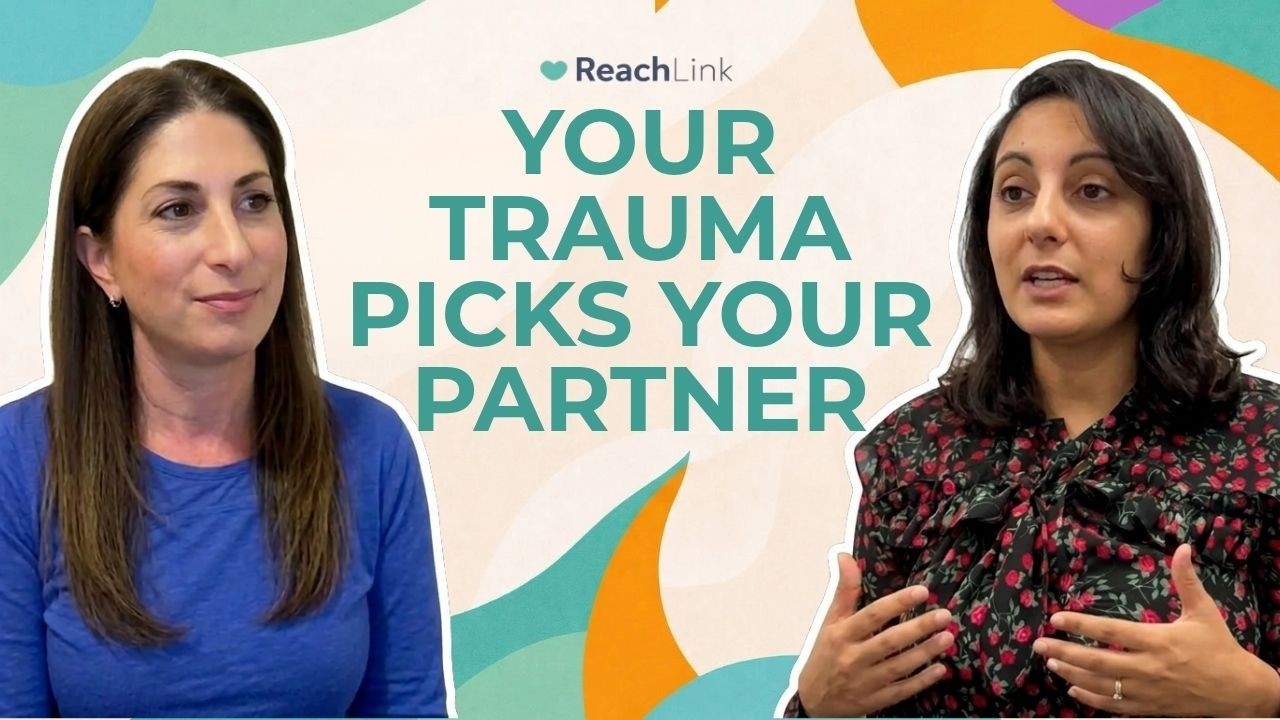
with Meghan Sunayna Mehta, LCSW
Meghan Sunayna Mehta didn't set out to become a therapist — she was pre-med, then a data analyst, and it wasn't until she watched her younger sister face a borderline personality disorder diagnosis amid painful stigma from within their South Asian community that the path forward became clear. Now a licensed clinical social worker and the clinical director and owner of Little Brown Therapy, Mehta has built her practice around a conviction that shaped her long before she had the language for it: therapy, as it has traditionally been practiced, was not built for everyone.
At the heart of the conversation is Mehta's commitment to decolonizing her clinical work. She speaks directly about the reality that therapy has historically centered white Western frameworks, and how that legacy quietly communicates to many people of color that the space was never meant for them. Mehta grew up hearing that therapy was "for white people" — a message she knows is far from unique to her experience. Rather than work around that barrier, she chose to become the therapist she never had, one who actively questions inherited frameworks and centers each client's own wisdom and resilience instead.
Mehta also opens up about the moment that redirected her life: watching family members and community figures shun her sister following her diagnosis. The stigma she witnessed firsthand wasn't abstract — it was immediate, personal, and devastating. That experience ground her understanding of how deeply cultural context shapes a person's relationship to mental health, and why trauma-informed care must account for the communities clients come from, not just the symptoms they present with. Her path from data analyst to clinician wasn't a detour; it was a recalibration toward work that felt, as she puts it, genuinely meaningful.
What makes this conversation so compelling is its honesty. Mehta doesn't frame cultural competence as a specialty add-on or a diversity checkbox — she treats it as fundamental clinical practice, the kind of work that determines whether a client ever returns after the first session. For anyone who has felt unseen in a therapy room, or who has hesitated to seek help because it didn't feel like a space that understood them, her perspective offers both validation and real hope. Tune in to hear a clinician whose work is quietly reshaping what accessible, affirming mental health care can look like.
In this episode, you will learn:
- What genuine cultural competence requires beyond basic training modules
- How EMDR can be adapted for clients from communities that distrust Western clinical frameworks
- Why insurance acceptance is a racial and economic justice issue in mental health
- What therapists from dominant cultures must understand before working with communities of color
Welcome back to Therapist Voices at ReachLink. I'm Jessica Hurwitz, ReachLink's Network Manager. Today, I'm so happy to be joined by Megan Sunana Mehta. She is the LCSW and the clinical director and owner of Little Brown Therapy. Um today we're going to be talking a little bit about the importance of cultural competence in therapy. A very important one. Welcome Megan. So thank you so much for being here. I'm really excited to hear what you have to say, what what your practice is like. I wanted to actually, if I could, read something off of your website and then I'll stop interrupting you. I just loved this so much that this really grabbed my attention and I suspect it will others. Therapy has historically centered white Western perspectives. I intentionally work to decolonize my practice by questioning those frameworks and centering each client's wisdom and resilience.
Who's attention does that not grab? That grabs everyone, especially someone that that might resonate with. So this is a big a big part of your of your practice, right Megan? Yeah, it definitely is. I realized really early on with my own experience in therapy that there's a lot of white female therapists for white people and there's stuff that's just falling through the cracks. I at least was raised being told that therapy was for white people and I know that this is not unique to my experience. I know a lot of people of color who grew up hearing the same thing. So I really thought that if we saw more people of color as therapists, it wouldn't feel like therapy was just for white people. Um and I wanted to be that need I saw in the world and that's really where it's comes from. So Megan, tell me a little bit about, if you could, how you got into this line of work specifically.
Did you want to be a therapist? Were you Were you sure that's where you were headed? No, actually, it's a really funny story. Like most South Asian kids, I was told that I was supposed to be a doctor. And I was really good at school, so it made sense. So, I was pre-med in undergrad. Um I finished pre-med actually within 3 years, and I still had a year of undergrad left, so I decided to also get an econ major. And I graduated with that. I decided to rebel by not going to medical school, and instead I was a data analyst for a couple years. Um but I absolutely hated it because I felt like my job wasn't helping people, and it felt like it was really meaningless, to me at least. And I just needed to find something where I was hands-on working with people. While all of this was happening and I was figuring out my life, my younger sister got diagnosed with borderline personality disorder, which is a pretty scary diagnosis for a lot of therapists.
A lot of therapists actually don't even work with people with borderline personality disorder. And I personally saw just how bad the stigma against mental health in the South Asian community was when a bunch of people, including family members, were shunning my sister and refusing to talk to her, treating her like something was wrong with her, instead of helping her get access to care, which is what she really needed. That really is what motivated me to switch fields and become a therapist. I went into it with the mindset of I want to destigmatize mental health in my community, and that's really what I set out to do, which is why my whole practice is focused on cultural competency and trauma-informed care, because I think there are a lot of white therapists who do things like EMDR, which is also what I do, but they're They don't accept insurance, and they're mostly accessible to other rich white people.
So, a lot of people of color who also have very traumatizing lives are not getting access to trauma care. So, that's really what motivated me to do this. That's amazing. How How's your sister How's your sister now? Did we get her some help? Well, she did get some help, but unfortunately, this is kind of sad. She took her own life a couple years ago. It's been 6 years since then. If you you probably don't Borderline Personality is has the highest suicidality rate of any other mental illnesses. So, it's pretty common. At least 80% of people diagnosed with BPD attempt suicide at least once in their life. It's a really sad story, but I am really happy to be able to honor her in the work that I do every day. I'm so sorry, Megan. What what was your sister's name? Her name was Serena. I actually have a tattoo.
You can't see it, but it's a it's a I drew it of her. It's an angel. And the wing has her name Serena on it. She was only 22 when she died. It's beautiful. It's beautiful. I I understand even more even more why this work is so so important to you. How things were when you looked for support and then on top of that what you've personally gone through with with family. That talk about a driving force to really make things make things happen. So, how how is your practice? Do you find that people are seeking you out kind of word of mouth? They know that you you work with with different populations. I find that a lot of people come to me specifically for trauma-informed care. Like I said, EMDR is a big thing that I do. Most therapists who are trained in EMDR don't take insurance. So, it's I do get a lot of people reaching out just specifically for that.
I mean, I work with five big insurance companies and it's really important to me to be accessible to people who can't afford to do private pay for $250 a session. So, I have a lot of people reaching out from word of mouth specifically for EMDR. I have recently over the last few months hired three clinicians to work under me so far. They're not all South Asian, but they are all people of color of different communities and I am trying to train them and model them to be able to do the same work that I've been doing that's so meaningful to me. Amazing. Did you say, correct me if I totally misheard this or maybe it was wishful thinking, that you are able to see clients through insurance and and provide EMDR? Yes, I actually accept um United, Aetna, Cigna, Northwell Direct, and uh Carelon, which is a behavioral health insurance specific to New York.
And so this for EMDR as well? for yes. Wow. Okay, well guys, heard it here first. That's amazing. That is amazing and I'm going to make sure at the end of our episode people know how to get in touch with you because that's incredible. You're doing you're doing an amazing thing, as you know. Um tell me a little bit more about how the practice evolved when you when you first started, did you know what to do? Or did you think you knew that you were going to have this niche? Or did you I mean, I guess you knew from what you had gone through in your life, but then it seems like you do focus on a lot a lot of trauma work, too. Mhm. Yeah, so I was very lucky. The practice I worked at before I got my LCSW, my boss and mentor, her name is Sarah, she really supported me. So even while I was still working for her and I only had my LMSW, she really was encouraging with me seeing the clientele that I wanted to work with.
So I saw a lot of South Asian people, a lot of different people of color, mostly trauma cases even while I was working with her. Um she also allowed me to take the clients with me when I left to start my own practice and she supported me a lot in that. In all honesty, for the first few months I was kind of just oh, I'm the grown up. Like I have to I have to ask myself these questions. I don't have anyone else to call. And it was mostly running the business aspect of it because running a private practice isn't just the clinical work anymore. You now are in charge of figuring out the business side effect business decisions. Talking to insurance companies was actually very difficult. It was probably the hardest part of all of this, but I am lucky that I have now found medical billers to manage that for me.
And I now feel like I really know what I'm doing. It took a year, but a year in I do feel like I know what I'm doing now and I am very grateful to Sarah for helping me get to this place. I feel like a year is such a short amount of time with what I understand starting a practice and all of that to to entail. So, that's amazing. And Sarah, if you're listening, thank you. Thank you for giving us Megan. And I I wonder if you ever call back on her with a with a quick consult. I do. I have her number that I use very frequently. She's really busy running her own practice, but she always makes time to answer my questions, which is amazing. Amazing. Do you do any Do you do any group work? So, we we do. I'm currently recruiting for three separate groups that my the clinicians I hired are going to be running.
One of them they took over for me. I was running a group called Healing Hearts, which was specifically a breakup group for people grieving the loss of a long-term relationship. That one was really important to me because I think there are a lot of grief groups when it comes to losing a partner to death or losing a parent or losing a friend who dies. But the idea of losing someone who's still alive is also grief. So, I thought it was really important to connect people through that and help them through their healing journey. Another group that we're running is a DBT skills group, which I think is also really helpful. A lot of people could use dialectical behavior therapy skills. It teaches emotional regulation and how to navigate interpersonal relationships better. That's being run by another one of my clinicians.
And lastly, we are starting to run a new group, which is for formerly undocumented people. So, people who were dealing with asylum process or just dealing with being undocumented in America and how traumatic that in itself is and are now like seeking support through peers um and other immigrants who can share their experiences. We just started recruiting for that group as well. At ReachLink, we believe that mental health care should meet you where you are, literally and emotionally. Whether you're navigating stress, burnout, relationships, or life transitions, you don't have to do it alone. With the ReachLink app, you can connect with licensed therapists through secure, convenient telehealth sessions on your time from your space. No commute, no waiting rooms, just real support when you need it most.
And for the therapists listening, if you're passionate about making care more accessible, if you want the flexibility to work from anywhere while focusing on what matters most, your clients, ReachLink is growing. We're building community of dedicated, compassionate clinicians who are ready to expand their impact through telehealth. So whether you're seeking support or ready to provide it, join us at ReachLink. Download the app or learn more at reachlink.com because better mental health should always be within reach. So you started Okay, I'll be so curious to hear how that goes. That's obviously such a need and you're really answering that. Will you have one of your clinicians run run that group? Yeah, that's my plan. Um I'm supervising them all very closely and I trust the people I've hired so far.
I am still hiring actually. I'm looking for some more South Asian clinicians ideally and I'll continue to expand over the next couple years. That's my plan. Anyone listening who would be appropriate for this, let's make this practice really get out there. I'm sure it already is. I know that you're doing great, but it's such an awesome mission and and something so specific to those who need it. When people when people reach out to you, are they often referrals from from previous clients or are you known as as someone okay, this is who I have to go to. I think both. I do get a lot of people who refer me to their friends. Unfortunately, I told them if I'm currently working with them, I can't work with their friends. It is a conflict of interest. But now that I've hired other clinicians, they can work with other clinicians and it works out.
So, I get a lot of referrals from people who I've worked with. I also get clients who reach out who I'd worked with years ago and they find me on Psychology Today and I'm like, "Where are you now? I want to work with you again." And I really love that and it makes me feel like I'm in a relationship and it really special to me. And you are. That's absolutely what you're doing. Do you do Do you do any online, any video work, or is everything in person? So, I'm in person 2 days a week as of now and virtual 3 days a week. Um, I work evenings from home mostly, but the office I have is in Midtown. It's on East 54th Street, so it's pretty accessible to most people. I found that a lot of people say they want in-person care, but they'll start in person and then like in a couple weeks decide that they want to switch to virtual.
So, I keep the option open for both of them. That's great. That is It's always so interesting when someone's sure that that's what, you know, they need or want and then it just doesn't always necessarily end up that way. Yeah. That's amazing. So, the importance of cultural competence in therapy is obviously very big to you. How can we educate other people? Are there resources that you can share with us? What's something that we can do to kind of shout this from the rooftops a little bit more? I think to start people need to know that there are therapists of color that exist and we are looking to work with other clients of color. Um, and we want to support the minority communities in understanding that mental health isn't just for white people, it's for all of us and we all deserve trauma-informed care that makes you feel safe.
Cultural competency is really important in that safety feeling and building rapport with clients because they need to know that we're not going to shame them for their culture or tell them that their culture is bad um, just because it doesn't fit western standards. So even the concept of setting boundaries with family for example, the way a white person would go about setting boundaries with their parents is probably very different than the way a brown person would go about setting boundaries with their parents. That doesn't mean we can't set boundaries, it just means we have to do it in a culturally competent way that's not going to offend our parents or harm our relationship. And I think it's very a unique experience that only certain people will understand when you're in that close-knit community.
Respecting your elders is very big in the South Asian communities. So if I use the word boundary with my mom, we're not going to go past the word boundary. She's not going to hear anything else I said, she's going to be upset that I even used the word boundary. And I think a lot of white therapists would be encouraging of being very direct with setting boundaries and it just doesn't work that way. And they just might might completely not understand even if you know, I know a lot of therapists would be so open and want to be educated, but it's probably not not the same when you have to to explain what the norm what the norm is. When when people are looking for care and they might have a referral from someone who knows you already, if they don't, you know, I've been on so many sites through my career of of finding how you find therapists um you know, on the insurance websites everywhere.
How how do people use those filters cuz I'm thinking I know they've gotten so specific with filters we can use, but what do you what do you advise people? So if you're using Psychology Today, which is a a big platform that most people use to seek therapists, something that I do when I'm looking for another South Asian therapist is obviously I filter for race, but under race you can only click as far as to Asian, you can't go South Asian or Desi. So I would click Asian as the race and then I would look at the languages. And even if you don't particularly need therapy in Hindi or in Punjabi or in any of these other languages, if you filter by those languages, you're going to find a therapist of the same community who also happen to speak those languages. And I think it makes it a little bit easier.
I also think that, of course, we want people who accept insurance, and for that, it's harder, but you have to go through your insurance websites to really ensure you're getting someone who's able to do that. The way you explained it sounded so simple, like how you click this, and then this would make sense for this, but I'm sure that was such trial and error when, you know, you know that the companies are trying so hard to make everything accessible and searchable, and they think that it's the right thing, but perhaps consulting somebody would would be more beneficial, cuz who who who has to feel like they're having to think, well, it might mean this, and I don't really this part wouldn't really matter in my situation. That should just not be. Yeah, I think that, unfortunately, our experiences are not the same.
So, the experience of a first-generation versus a second-generation immigrant versus experience of an African-American person who's been here for centuries or their parents and grandparents have been here, it's all so different that just looking for a therapist of color alone doesn't really fit the bill. That's so interesting. So, they're probably so relieved by the time they end up at your practice. Do you this few things that you were saying made me think about this. Do you Do you do any work with families? So, I'm not currently working with families. I do do couples work. And some of the clinicians who are working under me, they also do family work. I have brought family members into sessions before, and I do think it's a very important part of individual therapy, to sometimes bring someone in and help my client be able to talk to their parent or their partner or anyone else who they're trying to communicate with, and support them in doing so.
I'm not going to talk to them for them, obviously, but I just support them in being able to communicate something they're struggling to communicate. And I think that's a very important part of individual therapy when we want to support people as a part of their own communities. Absolutely. Absolutely. Well, that will be something that I think people will really be checking out on your website. Is the best is the best resource for you going to be your website? Little brown therapy.com It has a contact page on there. It has blurbs about me and all the therapists who work under me. Um I updated it. I also have an Instagram that is connected to the website. I update it pretty frequently. I would love for people to look me up. Perfect. What is the Instagram handle? It's the same thing, little brown therapy.
Perfect. All one word. So, we're going to find you. Everyone's going to find you. I'm really excited to get to get this out there and and you know, people to see that it can be there can be a process. You don't have to feel like, "Oh my gosh, I'm not going to find anyone." Um so, I really appreciate what you've shared with us. I'm going to make sure that we include how people can get in touch with you, how they can learn more, how they can work with you, especially that EMDR through insurance. That is that's a winner. So, thank you so much for being here. It was so so nice to meet you. It was great being here. Thank you so much for having me. Absolutely. We'll talk to you soon.
Subscribe to our newsletter
Get the latest episodes, mental health tips, and resources delivered straight to your inbox. No spam, just support.
Related Episodes

Why This Therapist Says Her Job Isn't To Fix You | Candida Crane, LMHC

Is Your ADHD Actually Rooted in Trauma? | Michael Drag, LPC
Why Couples Therapy Fails When You're Not Ready | Lara Asous, MA, MFT, CCTP

What Qualifies as Intrusive Thoughts? | Kristen McLoud, LCSW
Ready to have your own conversation?
Every story on Therapist Voices started with one step. A care coordinator helps you find the right licensed therapist and stays with you from first hello to first session.
Talk to a Care Coordinator