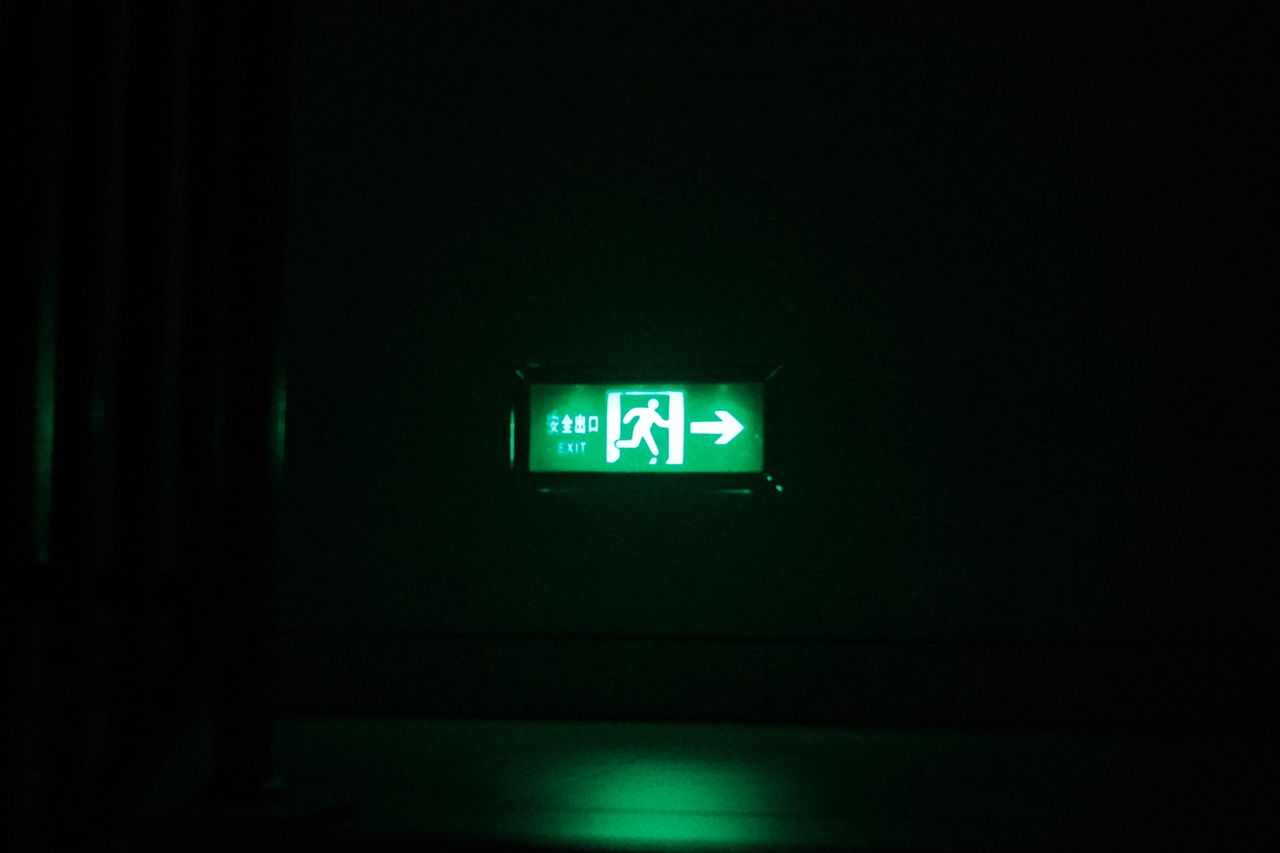
Why You Stop Trying Even When the Exit Is Real

June 29, 202619 min de lectura
Why You Stop Trying Even When the Exit Is Real

Learned helplessness develops when repeated uncontrollable adversity locks the brain into its default passivity state, making available exits genuinely invisible, but evidence-based therapeutic approaches including cognitive behavioral therapy and structured micro-mastery exercises rebuild the neural pathways for agency, helping individuals recognize and act on real opportunities for change.

You didn't learn to give up. Neuroscience now tells us that passivity under prolonged, uncontrollable stress is the brain's biological default, not a habit you formed. Learned helplessness is real, but a landmark revision to the original theory changes what recovery actually looks like.

What is learned helplessness?

Learned helplessness is a psychological state in which a person stops trying to improve or escape a difficult situation, not because escape is impossible, but because experience has taught them that nothing they do makes a difference. It was first identified through animal research in the 1960s and has since become one of the most studied concepts in mental health psychology. The core idea is deceptively simple: when your actions repeatedly fail to change an outcome, your brain begins to generalize that lesson far beyond its original context.

That generalization is where the real damage happens. A person who grows up in a chaotic environment where effort goes unrewarded may carry that same sense of futility into relationships, work, and health decisions as an adult, even when the circumstances are completely different. The brain, wired for efficiency, essentially files away the rule: «trying doesn’t work.» Over time, this erodes personal agency and contributes directly to low self-esteem, making it harder and harder to recognize when a situation actually is within your control.

This is the paradox at the heart of why people stop trying: the door may be wide open, but learned helplessness makes it invisible. A person isn’t being lazy or weak. They have been conditioned, through repeated uncontrollable adversity, to stop perceiving escape as a real option.

What makes this topic especially worth examining is a significant 2016 revision to the original theory. For decades, researchers assumed that helplessness was something people learned. The newer model flips that assumption entirely, suggesting that passivity in the face of adversity may actually be the brain’s biological default, and that what we truly learn is control. That distinction changes everything about how we understand recovery.

The research origins: Seligman’s experiments and the triadic design

To understand learned helplessness, it helps to go back to where the concept was first proven. In 1967, psychologist Martin Seligman and his colleagues designed a now-famous experiment that would reshape how psychologists think about motivation, control, and behavior. The setup was methodical, and the results were striking.

The study used what researchers call a triadic design, meaning three groups of dogs were exposed to different conditions. Group 1 received mild electric shocks that they could stop by pressing a panel with their nose. Group 2 received the exact same shocks, at the exact same times, but had no panel and no way to stop them. Group 3 received no shocks at all. The key detail: Groups 1 and 2 experienced identical physical discomfort. The only difference was control.

In Phase 2 of the Seligman experiment, all three groups were placed in a shuttle box, a chamber divided by a low barrier. When a shock began, any dog could end it simply by jumping over the barrier. Groups 1 and 3 figured this out quickly and escaped. Group 2 dogs did something different: they lay down, whimpered, and endured the shocks without trying to escape, even though the solution was right in front of them.

This is the heart of learned helplessness. The shock itself was not what caused the passivity. It was the prior experience of having no control. Group 2 dogs had learned, through repeated exposure, that their actions didn’t matter, and that belief carried over into a completely new situation where their actions very much did matter.

Researchers extended this work to humans in the 1970s, replacing shocks with unsolvable cognitive tasks like logic puzzles with no correct answer. People who worked through those uncontrollable failures showed the same pattern: when given solvable problems afterward, they gave up faster and performed worse than people who had never encountered the unsolvable tasks. The mechanism crossed species, and it crossed the line from the lab into everyday human experience.

The 2016 revision: what Seligman revised and why it changes everything

For nearly 50 years, the story of learned helplessness seemed settled: animals and people learn to be passive when they repeatedly face uncontrollable stress. Then, in 2016, Seligman and his longtime collaborator Steven Maier published a landmark revision that flipped the entire model. According to Maier and Seligman’s 2016 revision of learned helplessness theory, they had the causal direction backwards. Passivity in the face of prolonged adversity is not something the brain learns. It is the brain’s factory default.

The original experiments assumed that helplessness was the outcome that required an explanation. The new model argues the opposite: the brain’s first response to uncontrollable stress is to shut down. This is not weakness or cognitive distortion. It is a deeply conserved mammalian survival circuit doing exactly what it was built to do.

What the brain is actually doing

At the center of this revision is a brain region called the dorsal raphe nucleus, a structure that sits in the brainstem and plays a major role in regulating serotonin, a chemical messenger that affects mood, motivation, and behavior. During prolonged, uncontrollable stress, the dorsal raphe nucleus floods serotonin pathways in ways that automatically inhibit escape behavior. The animal does not decide to stop trying. A neurological circuit makes that call first.

This reframes what the dogs in the original shuttle-box experiments were actually demonstrating. The dogs that gave up were not displaying something they had learned. They were displaying the brain’s default passivity response, uninterrupted.

So what made the other group of dogs different, the ones who kept trying to escape? They had prior experience with controllable stress. That experience activated the medial prefrontal cortex, the brain region responsible for higher-order thinking and decision-making, which then actively suppressed the dorsal raphe nucleus’s shutdown signal. What those dogs learned was not helplessness. They learned control, and that learning overrode the default.

Why this changes the goal of therapy

This distinction is not just academic. It fundamentally reshapes what recovery looks like in practice.

If passivity is the brain’s default under uncontrollable stress, then therapy does not need to undo a learned belief. It needs to build new experiences of genuine agency, real moments where a person detects that their actions produce outcomes. Those experiences activate the prefrontal circuits that override the default passivity response.

The therapeutic goal shifts from «stop believing you’re helpless» to «create conditions where the brain learns that control is possible.» That is a meaningfully different approach, and it points toward structured, agency-building interventions rather than simply challenging negative thoughts.

The escape door paradox: why available exits go unseen

Here is the part of learned helplessness that confuses most people from the outside: the door is unlocked. The opportunity is real. The exit exists. And yet the person does not move toward it. This is the escape door paradox, and it explains exactly why people stop trying even when trying would actually work. It is not stubbornness. It is not laziness. It is what happens when the brain has learned, at a deep level, that exits are not real, and then applies that lesson even when the situation has changed.

Three specific psychological mechanisms drive this paradox. Each one quietly blocks a person from seeing or acting on the escape that is right in front of them.

Attentional narrowing: when stress shrinks your field of vision

Under chronic stress, the brain does something predictable: it narrows its focus to the most immediate threat. This is useful in a genuine emergency. It is deeply unhelpful when you are trying to notice a new opportunity. Psychologists call this attentional narrowing, and it literally reduces the cognitive bandwidth available to scan for exits. Consider the person who stays in a harmful relationship despite having their own income, their own support network, and real options for leaving. Their attention is not scanning the horizon for possibilities. It is locked onto managing the next difficult moment.

Confirmation bias under duress: why evidence of escape gets filtered out

After repeated failure, the brain begins to work like a filter. Information that confirms the belief that nothing will work gets through easily. Information that challenges that belief gets quietly discounted or reinterpreted. A qualified employee who has been passed over for promotions multiple times will often stop applying for roles at other companies, even when their skills are genuinely competitive. A job listing that fits them perfectly might be dismissed as «probably not realistic» before they even finish reading it. The brain is not lying to them. It is doing what confirmation bias always does: protecting a well-worn belief from contradiction.

Threat-focused cognition: when the exit looks like another trap

The amygdala, the brain’s threat-detection center, is designed to protect you from danger. In a state of chronic helplessness, it begins to treat unfamiliar options as threats rather than possibilities. Approaching an unknown door, even one that is unlocked, requires exploratory behavior. That kind of openness feels dangerous when the brain is locked in a protective state. The student who has failed enough tests may genuinely experience studying as futile or even threatening, not because they lack ability, but because trying and failing again feels worse than not trying at all.

These three mechanisms are not character flaws. They are the default brain doing its default job. As the 2016 revision of learned helplessness theory clarified, what is missing is not willpower or motivation. It is a history of experiences where control was real and felt. Without those experiences, the prefrontal override that would allow a person to say «this time might be different» simply does not get activated. The exit stays invisible, not because it is hidden, but because the brain stopped looking.

The neuroscience of giving up

Learned helplessness is not a character flaw or a lack of willpower. It has a measurable biological basis, and understanding the neuroscience behind it can make the experience feel far less personal.

When you are exposed to stress you can’t control, a brainstem region called the dorsal raphe nucleus releases a surge of serotonin into circuits that govern movement and motivation. According to neuroscience research on helplessness and resilience, this serotonin activity actively suppresses escape-related motor responses. In plain terms: the signal to act is being blocked at a neurological level. You are not choosing to stay still. Your brain is inhibiting the impulse before it can fully form.

At the same time, the prefrontal cortex takes a significant hit. This is the region responsible for planning, weighing options, and overriding automatic reactions. Chronic stress reduces its activity, which is why advice like «just think positive» tends to fall flat. The very brain machinery needed to reframe a situation and choose a different response is running below capacity.

Then there is the HPA axis, the hormonal system that regulates your stress response. As studies on the neurobiology of learned helplessness show, prolonged uncontrollable stress keeps cortisol elevated for extended periods. High cortisol damages neurons in the hippocampus, the region central to learning and memory. This matters because the hippocampus is exactly what you need to recognize that a new situation is different from a past one.

The result is a self-reinforcing loop. Elevated cortisol weakens prefrontal function, making it harder to detect when you actually have control. Passivity continues, stress stays high, and cortisol keeps rising. This is why stress management strategies that target the body’s physiological state, not just thoughts, are so relevant to breaking the cycle. The brain and body are not separate players here. They are driving the pattern together.

Signs and symptoms of learned helplessness

Recognizing learned helplessness in yourself can be difficult, partly because the condition distorts the very thinking you would use to assess it. Knowing what to look for across cognitive, emotional, behavioral, and physical dimensions makes that recognition more possible.

Cognitive and emotional signs

On the cognitive side, the most telling sign of learned helplessness is a pervasive belief that effort is simply pointless. You may find it hard to imagine alternative outcomes, even when circumstances have genuinely changed. A specific failure gets overgeneralized into a sweeping conclusion: «I failed this, so I’ll fail everything.» You may also struggle to notice when a situation has actually shifted in your favor, because your mind has already decided the result.

Emotionally, learned helplessness often shows up as a chronic low mood that isn’t tied to any single event. There can be a flatness or numbness to daily life, a quiet erosion of curiosity, and little interest in exploring new possibilities. Shame and self-blame are common companions, reinforcing the belief that the problem is you rather than the circumstances.

Behavioral and physical signs

Behaviorally, signs of learned helplessness include passivity in situations where action is genuinely available, avoidance of challenges even when the risks are low, and fewer attempts at problem-solving. Withdrawal from social support is also common, cutting off the outside perspectives that might otherwise challenge distorted thinking.


¿Algo te genera curiosidad?

Pregúntale a tu IA favorita sobre este artículo

Physically, the body reflects the burden. Fatigue that seems disproportionate to your activity level, disrupted sleep, and changes in appetite are all associated with the chronic stress response learned helplessness triggers. Prolonged activation of the HPA axis can also increase vulnerability to illness over time.

The 3P explanatory style: personal, pervasive, permanent

One of the clearest frameworks for understanding learned helplessness comes from explanatory style theory, which identifies three cognitive attributions that determine whether helplessness becomes chronic and wide-ranging. Researchers call these the 3Ps: personal («It’s my fault»), pervasive («It affects everything»), and permanent («It will never change»). When all three are present, a single negative experience can harden into a worldview, making it far harder to recognize real opportunities for change or control.

Causes and risk factors: how learned helplessness develops

Learned helplessness rarely appears out of nowhere. It builds over time through repeated experiences that teach a person, at a deep level, that their actions simply do not matter. Understanding the causes of learned helplessness means looking at where those experiences come from, and being honest about the fact that some of them have nothing to do with the individual at all.

Childhood and early life origins

The groundwork for learned helplessness is often laid in childhood. When caregiving environments are unpredictable or unresponsive, children learn that their signals, whether crying, asking for help, or trying to solve a problem, produce no reliable result. Authoritarian parenting that consistently punishes a child’s initiative sends a similar message: trying leads to negative consequences, so it’s safer not to try. Research on adverse childhood experiences shows that these early environments create lasting patterns that can carry into adult life, shaping how a person responds to challenge and setback for years afterward.

Adult triggers and situational factors

Learned helplessness can also take root in adulthood when circumstances consistently punish effort or ignore legitimate attempts to change a situation. In abusive relationships, attempts to set boundaries are often met with punishment, which teaches the person to stop trying. Workplaces with arbitrary or inconsistent management can produce the same effect. Chronic illness is another common trigger: when treatment after treatment fails to bring relief, stopping the search for solutions can feel like the only rational response. Persistent financial hardship, where every exit seems blocked, can produce the same quiet resignation.

People with a pessimistic explanatory style tend to be more vulnerable in these situations. This style involves interpreting setbacks as permanent, pervasive, and personal, meaning the person sees failure as something that will always happen, will affect every area of life, and is fundamentally their fault. Each new difficulty becomes confirming evidence of a story they already believe.

The systemic dimension: when helplessness is an accurate perception

Not all learned helplessness is rooted in distorted thinking, and this distinction matters enormously. When institutions consistently fail to respond to legitimate grievances, when discriminatory systems create bureaucratic dead ends, or when entire communities lack access to basic resources, the sense of helplessness people develop is not a cognitive error. It is an accurate read of a broken system. Framing all learned helplessness as an individual psychological problem risks blaming people for correctly perceiving that the structures around them are not designed to respond to their needs. Recognizing the systemic causes of learned helplessness is not just intellectually honest; it is an ethical necessity.

Learned helplessness vs. depression, burnout, PTSD freeze response, and apathy

Learned helplessness, depression, burnout, the PTSD freeze response, and apathy can all look similar from the outside. A person may seem withdrawn, unmotivated, or stuck in each case. The underlying causes, mechanisms, and paths forward are meaningfully different, even when these states overlap.

Learned helplessness develops after repeated experiences of uncontrollable failure. The core belief driving it is «nothing I do matters.» It can exist without clinical depression, and it tends to ease when a person genuinely regains control over outcomes in their life.

Depression is a clinical condition with a neurochemical basis, not just a response to circumstances. It brings pervasive low mood, anhedonia (loss of pleasure), and cognitive changes that can occur without any clear external trigger. Research shows that learned helplessness and depression share connections, including the capacity for learned helplessness to experimentally induce anhedonia, making the two constructs related but distinct. Depression requires professional treatment.

Burnout follows prolonged overwork in situations that felt controllable. The hallmark experiences are exhaustion and cynicism, usually tied to a specific domain like work or caregiving. Rest and boundary changes can meaningfully resolve it.

The PTSD freeze response is an acute, trauma-triggered state of immobility with a dissociative quality. It is episodic rather than chronic and tied to specific threat cues. While it shares surface features with learned helplessness, learned helplessness and the PTSD freeze response represent distinct behavioral and neurobiological states that call for different treatments, particularly trauma-focused therapy for PTSD.

Apathy involves reduced motivation but lacks the distress or negative self-attribution that defines learned helplessness. It can have neurological origins, such as frontal lobe damage, and its defining feature is an absence of emotional charge rather than a belief that effort is futile.

These categories are not always cleanly separable. Learned helplessness can contribute to depression, coexist with burnout, and mimic the freeze response. Professional assessment helps clarify what is actually driving the pattern.

How to overcome learned helplessness

Recovery from learned helplessness is not about erasing what you have learned. According to the 2016 revision of the original theory, the brain doesn’t unlearn helplessness so much as it builds new neural pathways that recognize when control is available. That distinction matters because it changes the entire goal of treatment. You are not trying to forget the past. You are building a new evidence base, one small, concrete experience at a time.

Building evidence of agency: micro-mastery and graded exposure

The most direct way to counter learned helplessness is to give your prefrontal cortex proof that the «action leads to result» connection still exists. Micro-mastery experiences do exactly that. These are small, deliberate tasks where the outcome is clearly tied to your effort: making a phone call you have been avoiding, completing one item on a to-do list, or preparing a meal from scratch.

The goal isn’t the task itself. The goal is the felt experience of cause and effect. Once that connection starts to register, you can apply graded exposure, which means systematically choosing slightly harder challenges as your confidence builds. Each completed step adds to a growing body of personal evidence that effort produces results. Over time, this progressive evidence base begins to replace the old pattern of passive resignation.

A key principle here is behavioral activation: action precedes motivation, not the other way around. Waiting until you feel ready will reinforce passivity, because readiness comes from doing, not from thinking about doing.

Rewiring the 3P style: cognitive restructuring

Learned helplessness is maintained by a specific way of explaining bad events, one that treats them as personal («it’s my fault»), pervasive («this affects everything»), and permanent («it will never change»). Cognitive restructuring, a core technique in cognitive behavioral therapy, teaches you to examine those explanations directly and ask whether they are actually accurate.

Is this failure really about who you are, or is it specific to this situation? Is it truly affecting every part of your life, or does it feel that way? Is it permanent, or is it changeable given different circumstances? These structured challenges, practiced consistently, begin to shift the explanatory style that keeps learned helplessness in place.

When to seek professional help

Self-directed strategies can move the needle, but there are situations where professional support is necessary. Consider reaching out to a licensed therapist if:

  • Learned helplessness is co-occurring with depression or persistent low mood
  • Passivity is affecting multiple areas of your life, such as work, relationships, and self-care
  • You have made sustained efforts to shift the pattern on your own without meaningful change
  • The root cause involves ongoing or past trauma or abuse

A therapist provides something self-help cannot: an accurate, external perspective on which challenges are appropriate for where you are right now, and genuine validation of your agency when your own self-perception is distorted. When learned helplessness is rooted in chronic trauma, trauma-informed care offers a treatment framework specifically designed to rebuild safety and a sense of control without retraumatizing you in the process.

If you are recognizing these patterns in yourself, you can start with a free assessment at ReachLink, no commitment required, completely at your own pace.

What You Are Carrying Makes More Sense Than You Think

If you have read this far, something in this material probably landed close to home. The experience of trying, failing, and eventually stopping is not a personal failing. It is what a brain under prolonged uncontrollable stress is wired to do, and recognizing that can be the first real shift. The exit may have been there all along. The fact that you could not see it does not say anything about your character.

Building back a sense of agency takes time, and it is genuinely easier with someone in your corner who understands how these patterns form. If any of this resonated with you, you can explore therapy at ReachLink for free, with no commitment and completely at your own pace, or find the app on iOS or Android. You get to decide what the next step looks like.


FAQ

  • Why do I keep giving up even when I know things could get better?

    This pattern is often rooted in something called learned helplessness - a psychological state where repeated experiences of feeling stuck or out of control teach your brain that trying is pointless, even when real options exist. Over time, your mind stops registering exits or opportunities because it has learned to expect failure or futility. Recognizing this pattern is the first step toward reclaiming your sense of agency. The good news is that this response is learned, which means it can also be unlearned with the right support.

  • Does therapy actually help when you feel too exhausted to even try anymore?

    Yes, therapy can be genuinely effective for people who feel stuck in a cycle of giving up - even when that exhaustion feels total. Therapists trained in approaches like Cognitive Behavioral Therapy (CBT) or Acceptance and Commitment Therapy (ACT) help you identify the thought patterns and past experiences that have conditioned your brain to shut down before trying. You don't need to arrive at therapy feeling motivated or hopeful, because a good therapist meets you where you are and works with you to rebuild a sense of possibility at a pace that feels manageable. Many people find that simply naming the pattern in a safe space begins to loosen its grip.

  • Is it possible that I'm not lazy or weak - I just stopped believing the exit is real?

    Absolutely, and this distinction matters enormously. What looks like laziness, avoidance, or lack of willpower is often the mind protecting itself from the pain of trying and failing again. When your brain has learned through repeated experience that effort doesn't lead to change, it conserves energy by not engaging, even when the situation has objectively shifted. This isn't a character flaw - it's a survival response that made sense at one point but is now working against you. Therapy helps you separate past conditioning from present reality, so you can start to trust the exits that actually exist.

  • I think I need to talk to someone about feeling stuck - where do I even start?

    Starting can feel like the hardest part, especially when reaching out requires the very energy you feel you don't have. ReachLink makes the first step easier by connecting you with a licensed therapist through a human care coordinator, not an algorithm, so you're matched with someone who fits your specific needs and situation. You can begin with a free assessment that helps the care team understand what you're going through before any matching happens. From there, you work with a real licensed therapist through telehealth sessions you can attend from wherever feels most comfortable for you.

  • Can anxiety make it harder to take action even when you really want things to change?

    Yes - anxiety is one of the most common reasons people freeze or disengage even when they genuinely want a different outcome. Anxiety can cause the brain to perceive any step forward as risky or unsafe, which triggers avoidance as a protective response. Over time, that avoidance reinforces the belief that you can't act, creating a loop that feels impossible to escape from the inside. Therapists who specialize in anxiety use structured, evidence-based methods to help you gradually build tolerance for uncertainty and take small, sustainable actions toward change.

¿Tienes alguna pregunta sobre este tema?

Escribe tu pregunta y la enviaremos al asistente de IA que prefieras.

Tu pregunta será enviada a un asistente de IA externo. Si estás en crisis, por favor comunícate con [CRISIS_LINE_ES].

Compartir este artículo
Da el primer paso

Comienza hoy tu transformación

Da el primer paso hacia una mayor claridad, bienestar emocional y crecimiento personal.

Herramientas basadas en pruebas, apoyo privado y accesible que se adapta a tu vida.

Descargar en la App StoreDisponible en Google Play

Apoyo privado · En español · Sin listas de espera

Why You Stop Trying Even When the Exit Is Real