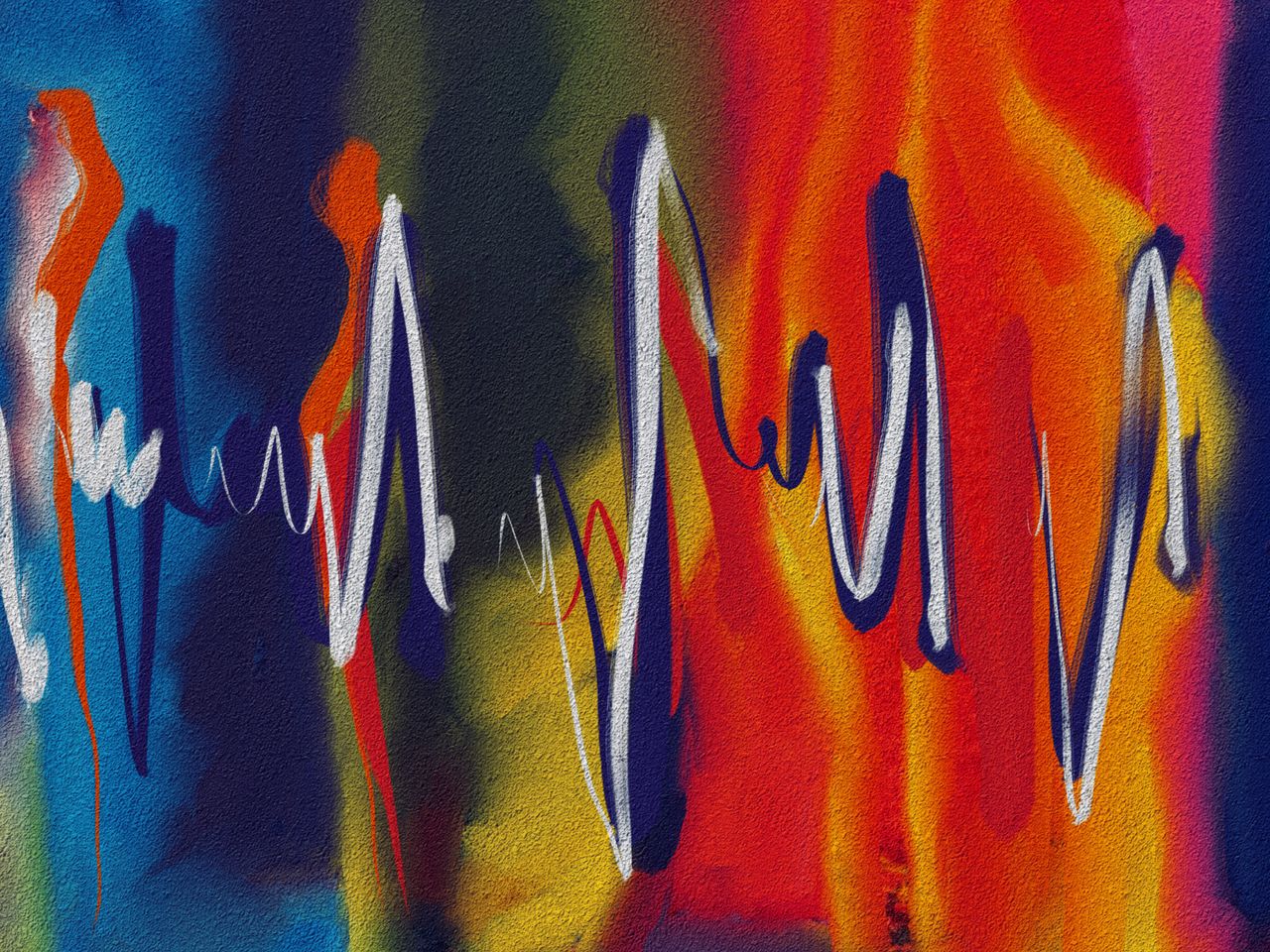
Synesthesia is a verified neurological phenomenon affecting roughly 4% of people, where one sensory pathway automatically triggers a vivid, involuntary experience in another, revealing how the brain actively constructs reality through cross-modal wiring that all humans share to some degree, and when related sensory sensitivity contributes to anxiety or overwhelm, licensed therapy offers practical, evidence-based support.
Your brain has been blending your senses your entire life - you just never noticed. Synesthesia is not a rare perceptual quirk. It is science's clearest lens into how every human brain actively builds reality, and what it reveals about your own perception may surprise you.
What is synesthesia?
Synesthesia is a neurological phenomenon where stimulation in one sensory or cognitive pathway automatically triggers an experience in a second, unstimulated pathway. A person with synesthesia might hear a trumpet and instantly perceive the color burnt orange, or read the number 7 and feel a quiet sense of melancholy. These pairings are involuntary, meaning they arise without effort or intention. Synesthesia is not a disorder, a hallucination, or a sign of an overactive imagination. It is a stable feature of how certain brains are wired.
Research has found that roughly 4% of the population experiences some form of synesthesia, a figure far higher than the old estimate of 1 in 25,000 people. That earlier number came from studies that relied on self-reporting, which missed the many people who assumed everyone perceived the world the same way they did.
Three core properties set synesthesia apart from simple metaphor or creative association. First, consistency: a synesthete who sees the letter A as red will see it as red years later, with test-retest reliability often exceeding 90%. Second, automaticity: the concurrent experience (the triggered perception, called the “concurrent”) cannot be switched off, much like you cannot unsee a visual illusion once you recognize it. Third, affective valence: synesthetic percepts carry emotional tone, so a color or texture triggered by a sound often feels pleasant, unsettling, or somewhere in between.
Synesthetes also differ in where they experience their concurrent. Projector synesthetes see colors physically overlaid on a letter or number in the outside world. Associator synesthetes experience the same color internally, in their mind’s eye, without it appearing to float in space. Both are equally real to the person experiencing them.
Synesthesia is not a single experience. Researchers have documented over 80 distinct subtypes, and many people with synesthesia live with several forms at once, a pattern sometimes called polysynesthesia. Each variant pairs a different “trigger” sense with a different “response” sense, which matters because those pairings likely reflect different underlying neural pathways.
Grapheme-color and chromesthesia: seeing what you hear
Grapheme-color synesthesia is the most studied form. People with this type automatically see specific colors when they read letters or numbers. The number 7 might always appear burnt orange; the letter A might be a vivid red. Estimates suggest it affects roughly 1.4% of the population, and research on grapheme-color and mirror-touch synesthesia subtypes places it firmly within the broader science of multisensory perception. Closely related is chromesthesia, where sounds trigger color experiences. This form is especially common among musicians. The composer Alexander Scriabin built entire orchestral works around his personal sound-to-color mappings, treating the two senses as inseparable parts of a single artistic language.
Mirror-touch and lexical-gustatory: feeling what others feel, tasting what you read
Mirror-touch synesthesia sits at a striking intersection of perception and empathy. When a person with this form watches someone else being touched, they feel that same touch on their own body. It affects an estimated 1.6% of people and is associated with heightened activity in the brain’s empathy-related circuits. Lexical-gustatory synesthesia sits at the opposite end of the rarity scale. Words trigger genuine taste experiences, so hearing the name “Philip” might produce a strong flavor of pickled onion. It is one of the rarest well-documented forms, studied extensively by psychologist Jamie Ward, whose research helped establish the field’s scientific credibility.
Spatial sequences and personification: the stranger subtypes
Some forms of synesthesia are so woven into everyday thinking that people rarely question them. In spatial-sequence synesthesia, numbers, months, or days of the week occupy fixed locations in mental space. A person might always “see” January at the bottom left of an invisible arc and December at the top right. Studies on time-space synesthesia and spatial sequence perception confirm this is a genuine cognitive phenomenon with measurable effects on how people process order and time. Then there is ordinal-linguistic personification, where numbers and letters carry persistent personalities. The number 3 might feel bossy and female; the letter Q might seem gentle and shy. These traits stay stable across years, arriving uninvited every time the character appears.
You are already a mild synesthete: the cross-modal wiring every brain shares
Your brain is already blending its senses constantly. Research on cross-modal sensory interactions shows that synesthesia is not a glitch in an otherwise orderly system. It is the same cross-modal wiring every brain uses, simply turned up louder.
The experiments that reveal your hidden cross-modal wiring
Look at two shapes: one rounded and bubbly, one jagged and spiky. Now pair them with two made-up words: bouba and kiki. Around 95% of people, across cultures and languages, match the round shape to bouba and the jagged one to kiki. This finding, first described by Ramachandran and Hubbard in 2001, points to a hardwired coupling between sound and shape that lives deep in the human brain.
The McGurk effect makes the case even more forcefully. When you watch a video of a mouth silently forming the syllable ga while your ears hear ba, your brain perceives a third sound entirely: da. Vision literally overrides what your ears deliver. Your sensory channels are not running parallel, independent streams. They are constantly negotiating with each other to produce a single, unified experience.
The rubber hand illusion drives the same point home from a different angle. When a rubber hand is stroked in sync with your hidden real hand, your brain begins to claim the fake one as its own. Body ownership, it turns out, is not a fixed fact. It is a cross-modal construction your brain assembles and can be fooled into reassigning.
Even language evolution carries fingerprints of this wiring. Across unrelated languages, words meaning “small” tend to cluster around high-pitched vowel sounds. That pattern reflects the same innate sound-meaning mappings that make kiki feel sharp and bouba feel soft.
If you have ever felt a physical tingle crawl across your scalp while listening to a whispered voice or a crisp tapping sound, you already know ASMR. That auditory stimulus producing a bodily sensation follows the exact same inducer-concurrent logic that defines synesthesia.
Synesthesia, then, is not a defect or a superpower. It is the volume knob on cross-modal integration turned up, exposing the wiring every brain quietly uses to stitch fragmented sensory data into one coherent reality.
The neuroscience of synesthesia: named pathways and what brain imaging reveals
For decades, synesthesia was dismissed as imagination or metaphor. Brain imaging changed that. Researchers can now watch synesthetic perception happen in real time, tracing it through specific structures and white matter highways that differ measurably from non-synesthetic brains.
Structural differences: white matter pathways and the inferior longitudinal fasciculus
The brain’s regions are physically connected by bundles of nerve fibers called white matter tracts. One tract in particular keeps appearing in synesthesia research: the inferior longitudinal fasciculus (ILF), a long-range pathway running between the occipital lobe (visual processing) and the temporal lobe (where meaning and language live).
In a landmark 2007 study using diffusion tensor imaging (DTI), a technique that maps the physical architecture of white matter, Rouw and Scholte found that people with grapheme-color synesthesia showed significantly increased structural connectivity in the ILF compared to non-synesthetes. This was a measurable difference in the brain’s wiring. The pathway connecting visual areas to language and color-processing regions was, quite literally, more robust. This finding helped shift the field from asking “what are synesthetes doing differently?” to asking “what are synesthetes built differently?”
Functional activation: what lights up and when
Structure tells part of the story. Function tells the rest. When people with grapheme-color synesthesia look at a black letter, research on color-selective areas in the fusiform gyrus shows that V4 and V8, the brain’s color-selective areas located in the fusiform gyrus, activate even though no physical color is present. The brain is not pretending to see color. It is actually processing it.
Timing matters here, too. EEG and event-related potential (ERP) studies show that synesthetic color activation begins roughly 100 milliseconds after a stimulus appears. That is faster than conscious thought can form. The response is not deliberate, reasoned, or constructed after the fact. It is automatic at the neural level, which is exactly why synesthetes describe their perceptions as involuntary.
Mirror-touch synesthesia follows a different pathway entirely. Research by Blakemore and colleagues in 2005 found that when people with this type observe someone else being touched, their premotor cortex and somatosensory cortex, the regions that process physical sensation on your own body, show hyperactivation. Watching becomes feeling, neurologically speaking.
Different types, different neural signatures
One of the most important insights from imaging research is that synesthesia is not a single mechanism with variations. It is a family of distinct neural phenomena that happen to share a surface-level description.
Even within grapheme-color synesthesia, there are meaningful differences. People who experience their colors as projected outward onto letters (projectors) show stronger activation in V4, the primary color area. People who experience colors as internal mental associations (associators) show greater involvement of the hippocampus and parietal regions, areas linked to memory and spatial processing. Dixon and colleagues identified this distinction in 2004, and Rouw and Scholte extended it with structural data in 2010.
The superior temporal sulcus (STS), a region known as a hub for multisensory integration, shows altered connectivity across multiple synesthesia types. Research linking color synesthesia to neural perception and consciousness reinforces that these perceptual crossings also carry emotional weight, with synesthetic percepts sometimes triggering distinct affective responses tied to the colors or sensations produced.
Taken together, the imaging evidence points to a clear conclusion: there are multiple routes through which the brain’s reality-construction system can be altered, and synesthesia has revealed several of them.
The 5-stage reality construction pipeline: where synesthesia intervenes
Your brain does not simply receive reality. It builds it, step by step, through a layered process that transforms raw physical energy into the rich, meaningful world you experience. Synesthesia is so scientifically valuable because it does not disrupt just one step in this process. It can intervene at nearly every level, which is why it produces such wildly different experiences across different people.
Stages 1 and 2: from transduction to feature binding
Stage 1, sensory transduction, is where physical stimuli become neural signals. Light hits your retina. Sound waves vibrate your cochlea. Your sensory organs convert these physical events into the electrical language your brain understands. Synesthesia can intervene here in a striking way: some people who lose their sight later in life develop acquired synesthesia, where the brain appears to reroute signals through newly underused pathways. When Stage 1 input disappears, the pipeline does not shut down. It reorganizes.
Stage 2, feature binding, is where the brain begins extracting and grouping the raw ingredients of perception: edges, colors, pitches, textures. This is where grapheme-color synesthesia appears to insert itself. Research using visual search tasks has shown that synesthetes can spot a target letter among distractors faster than non-synesthetes, a phenomenon called a pop-out effect. This suggests that color features are being added early in processing, before conscious attention is even applied. Early activation in V4, the brain’s primary color-processing region, supports this interpretation.
Stage 3: cross-modal integration
Stage 3 is where features from different senses get woven together into unified objects. In most brains, this integration is moderate. You hear a dog bark and you see a dog, and these two streams of information merge smoothly into one coherent experience. In synesthetic brains, the integration appears turned up. A musical note does not just produce sound; it floods the visual field with color. A texture does not just feel rough; it may trigger a taste. The integration is not subtle. It is excessive, producing vivid fusions between senses that most people experience as entirely separate.
Stages 4 and 5: meaning, consciousness, and the semantic surprise
Stage 4, semantic assignment, is where the brain attaches meaning, category, and identity to what it has built so far. Bilingual synesthetes sometimes assign different colors to the same phoneme depending on which language’s alphabet they are reading. The raw sound is identical, but the meaning-layer shifts, and so does the synesthetic color. This proves that some synesthetic pairings are not driven by raw sensation at all. They are driven by meaning, a finding that connects directly to research on semantic associations and brain network connectivity in synesthetic consciousness, which frames synesthesia as deeply embedded in higher cognitive processing rather than a simple sensory misfiring.
Stage 5, conscious experience, is the final output: the fully integrated, meaning-tagged percept that enters your awareness as reality. For synesthetes, the concurrent percept, the color, the taste, the shape, does not feel like an add-on. It feels as real and immediate as any other part of their experience. Synesthesia is not layered on top of consciousness. It is woven into it.
The key insight across all five stages is this: synesthesia is not a single glitch at a single location. It is a family of interventions scattered across the entire pipeline, which is precisely why no two synesthetes experience it the same way.
Causes and origins of synesthesia
Synesthesia does not appear randomly. It clusters in families, emerges in predictable developmental windows, and can be triggered by specific neurological events. Understanding where it comes from reveals something striking: the wiring for cross-modal experience may already exist in every human brain.
It runs in the family, but no single gene is responsible
The genetic footprint of synesthesia is hard to ignore. Roughly 40% of people with synesthesia report a first-degree relative who shares the trait, pointing clearly to a hereditary component. Researchers have identified several candidate genes involved in neural connectivity and axonal growth, but no single “synesthesia gene” has been found. The inheritance pattern also shifts across family members, meaning one person might experience color with sound while a sibling connects taste with shape. What appears to be inherited is a general tendency toward cross-modal connectivity, not a fixed perceptual formula.
The neonatal hypothesis: were we all synesthetic once?
One of the most compelling explanations comes from developmental psychologists Daphne Maurer and Catherine Mondloch, who proposed in 2005 that all newborns may begin life in a synesthetic state. In early infancy, the senses are not yet fully separated. Newborns show undifferentiated cross-modal responses, reacting to stimuli across sensory channels in ways that suggest the brain has not yet drawn firm boundaries between them. Between ages two and five, the brain undergoes massive synaptic pruning, eliminating excess neural connections to sharpen and specialize each sensory pathway. The leading hypothesis is that people with synesthesia simply retain cross-modal connections that most brains prune away.
When synesthesia is acquired later in life
Not everyone with synesthesia was born with it. The condition can emerge after sensory deprivation, traumatic brain injury, or intensive meditation practice. Psychedelic compounds like psilocybin and LSD are also well-documented triggers, temporarily reducing inhibitory signaling in the brain and allowing cross-modal “leakage” that closely mimics developmental synesthesia. This supports what researchers call the disinhibited feedback theory: the cross-modal wiring is not created from nothing but is unmasked from circuitry that was always present. Research on synesthesia developing in congenitally blind individuals reinforces this point, showing that cross-modal connections can form and surface even without any prior visual input. The pipeline reroutes when the usual sensory signals are altered or absent.
Taken together, the evidence points to one core idea: synesthesia is either preserved from a universal infant state or unmasked from latent wiring that exists in all of us.
Do you have synesthesia? A self-assessment based on the consistency test
The gold standard for identifying genuine synesthesia is test-retest consistency. According to research on the standardised consistency-based test battery for synesthesia diagnosis, true synesthetes reproduce nearly identical color-letter or color-number mappings when tested months or even years apart. Eagleman’s Synesthesia Battery at synesthete.org uses exactly this criterion to distinguish genuine synesthesia from imagination or learned association.
Ask yourself these questions:
- Do specific letters, numbers, or sounds always trigger the same color or sensation, without variation?
- Has this been true for as long as you can remember?
- Is the experience automatic? Can you suppress it if you try?
- Does it feel completely obvious and unremarkable to you?
- Are you genuinely surprised when others do not experience the same thing?
If you answered yes across the board, taking Eagleman’s online battery is a worthwhile next step for a more formal self-assessment.
A few red flags suggest imagination rather than synesthesia: associations that shift over time, associations that require active concentration to produce, or associations that appeared in adulthood without any clear trigger event.
Synesthesia itself is not a clinical condition and rarely requires treatment. That said, heightened sensory sensitivity can sometimes co-occur with anxiety symptoms, sensory overload, or emotional reactivity. If that resonates, solution-focused therapy offers a practical, forward-looking way to build coping strategies around sensory overwhelm. If heightened sensory experiences ever contribute to anxiety or emotional overwhelm, you can start with a free assessment at ReachLink to explore what you are experiencing and connect with a licensed therapist at your own pace, no commitment required.
Whether you experience synesthesia or not, you have just glimpsed something true about how your mind works: perception is not passive, and the reality you inhabit is something your brain actively builds, moment by moment, by weaving your senses together in ways you rarely notice. For those who do experience synesthesia, there can be something quietly relieving about understanding that what you perceive is real, measurable, and rooted in the architecture of your brain. For everyone else, the science offers its own kind of wonder. The boundaries between your senses were never as firm as they seemed.
If reading this stirred something, whether curiosity about your own perceptual experiences, a sense of finally being understood, or awareness that sensory sensitivity sometimes makes daily life harder than it needs to be, you do not have to sit with that alone. You can explore what you are experiencing with a free assessment at ReachLink, where connecting with a licensed therapist happens at your own pace, with no commitment required.
FAQ
-
How do I know if what I'm experiencing is actually synesthesia?
Synesthesia is a neurological phenomenon where stimulation of one sense automatically triggers an experience in another - for example, hearing a sound and simultaneously seeing a color, or reading a letter and perceiving a specific taste. It tends to be consistent over time, meaning the same trigger reliably produces the same secondary sensation. Most people with synesthesia don't realize it's unusual because it has always been part of how they experience the world. If you consistently associate certain sounds, letters, numbers, or other stimuli with colors, textures, or other sensory experiences, that pattern is worth exploring further with a professional.
-
Can therapy actually help with synesthesia, or is it just the way my brain is wired?
Therapy doesn't change the underlying neurology of synesthesia, but it can be genuinely valuable for working through any emotional or psychological impact that comes with it. Some people with synesthesia feel isolated, misunderstood, or overwhelmed by intense sensory experiences, and a therapist can help with those feelings using approaches like cognitive behavioral therapy (CBT) or mindfulness-based therapy. Therapy also offers a space to better understand how your unique perceptual style shapes your relationships, creativity, and sense of self. If synesthesia is affecting your daily life or mental wellbeing, talking to a licensed therapist is a meaningful first step.
-
Does having synesthesia mean something is wrong with my brain?
No - synesthesia is not a disorder or a sign of dysfunction. It is a variation in how the brain processes and connects sensory information, and research suggests it may actually be linked to heightened creativity and strong associative thinking. Many artists, musicians, and writers have described synesthetic experiences that inform their work. That said, the unusual nature of synesthesia can sometimes lead to feelings of confusion or otherness, especially if you grew up not knowing there was a name for what you were experiencing.
-
I think synesthesia might be affecting my mental health - how do I find a therapist who actually gets it?
Finding a therapist who understands the intersection of neurological differences and mental health can feel daunting, but you don't have to search alone. ReachLink connects people with licensed therapists through human care coordinators - not an algorithm - who take the time to understand your specific situation before making a match. You can start with a free assessment that helps the care team understand what you're looking for, so the therapist you're paired with is genuinely suited to support you. From there, you can meet with your therapist online from wherever you are, making it easy to get consistent, personalized support.
-
Can synesthesia make anxiety or sensory overload worse?
Synesthesia and sensory processing sensitivity are distinct experiences, but they can sometimes overlap in ways that affect how a person navigates daily life. Some people with synesthesia report that their cross-sensory perceptions become more intense during periods of high stress or anxiety, which can make already vivid experiences feel more overwhelming. While synesthesia itself is not classified as a mental health condition, the emotional and psychological layers around it, such as feeling different, overstimulated, or unheard, are very real and worth addressing. A licensed therapist can help you sort through those layers and develop practical strategies for managing any associated stress or anxiety.