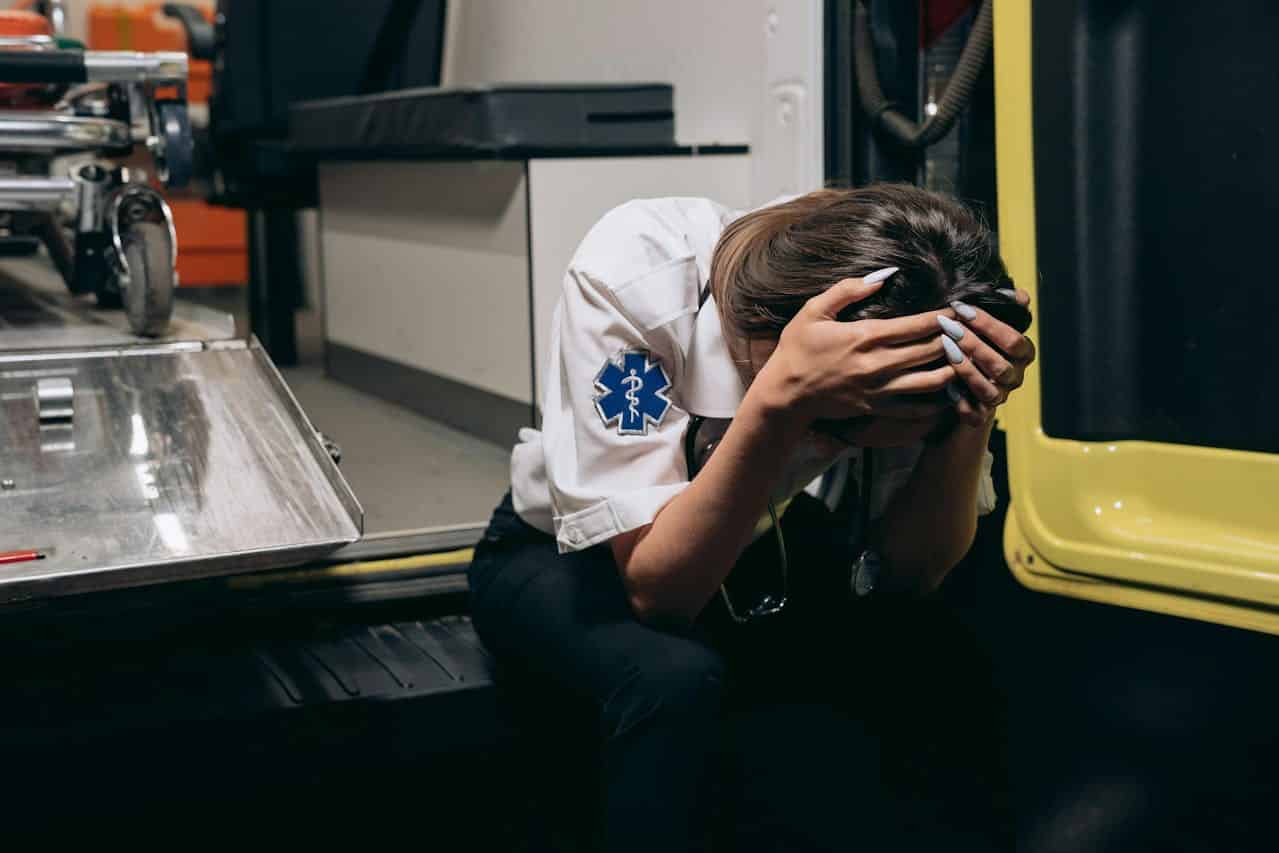
Secondary traumatic stress affects healthcare workers, therapists, social workers, and other helping professionals who absorb emotional distress from clients' traumatic experiences, but evidence-based therapies like trauma-focused CBT and EMDR provide effective healing and symptom relief.
Have you ever found yourself carrying a client's trauma long after they left your office? Secondary traumatic stress affects nearly half of all helping professionals, yet most don't recognize the symptoms in themselves until they're already overwhelmed.
What is secondary traumatic stress?
Secondary traumatic stress (STS) is the emotional distress that develops from hearing about, witnessing, or being exposed to another person’s traumatic experiences. Unlike directly experiencing trauma yourself, STS occurs through indirect exposure: absorbing the details of someone else’s pain, fear, or suffering. This phenomenon is recognized by SAMHSA as a significant occupational hazard for helping professionals and caregivers who regularly encounter others’ trauma.
What makes secondary traumatic stress particularly striking is how quickly it can develop. While burnout tends to build gradually over months or years of workplace stress, STS can emerge rapidly, sometimes after just a single intense exposure. A therapist might feel fine after years of clinical work, then find themselves deeply affected after one client’s detailed disclosure of abuse. A nurse might develop symptoms after treating a single accident victim whose injuries were particularly disturbing.
These reactions are not signs of weakness or professional failure. They reflect the natural human capacity for empathy, which allows us to connect deeply with others but also makes us vulnerable to absorbing their pain.
Understanding the clinical classification
While STS does not have its own standalone diagnosis, it is recognized within the diagnostic criteria for PTSD. Specifically, Criterion A4 acknowledges that PTSD can develop from “repeated or extreme exposure to aversive details of traumatic events,” or from learning that a traumatic event happened to a close family member or friend. This classification validates what clinicians have long observed: you don’t have to be the direct victim of trauma to be profoundly affected by it.
In clinical literature, you may see this condition referred to as secondary trauma, secondary traumatic stress, or secondary traumatic stress disorder. Research on secondary traumatic stress continues to refine our understanding of how indirect trauma exposure affects the brain and body.
Concrete examples help illustrate how STS develops across different professions. A social worker investigating child neglect cases absorbs disturbing details day after day. An emergency room physician hears repeated accounts of violence and loss. A 911 dispatcher listens to callers experiencing their worst moments. In each case, the professional is not experiencing the trauma directly, but their nervous system may respond as though they were.
Who is at risk for secondary traumatic stress?
Secondary traumatic stress does not discriminate, but certain people face significantly higher risk based on their work, their personal history, and the nature of their exposure to others’ pain. Understanding these risk factors helps explain why some professionals struggle more than others, even when doing similar work.
High-risk professions and exposure patterns
Healthcare workers and emergency medicine professionals encounter trauma daily through direct patient care. Research shows that up to 48% of nurses experience secondary traumatic stress, with rates climbing even higher in intensive care, emergency, and oncology settings. The combination of witnessing suffering, making life-or-death decisions, and forming bonds with patients creates conditions ripe for emotional absorption.
Child welfare workers and social workers face a different but equally intense form of exposure. They experience cumulative trauma through case documentation, home visits, and listening to detailed accounts of abuse and neglect. Each case file represents a real child’s suffering, and that weight accumulates over months and years of service.
Mental health professionals, especially those specializing in trauma therapy, absorb detailed trauma narratives session after session. Studies examining trauma exposure in professional settings confirm that repeated empathic engagement with traumatized clients creates measurable psychological effects in therapists themselves.
Other high-risk groups include:
- Victim advocates and legal professionals working with abuse survivors, who navigate intense emotional labor while helping clients recount painful experiences
- Journalists covering violence, war, and disasters, as well as content moderators who review disturbing material for hours each day
- Educators and school personnel who respond to student disclosures of abuse or witness the aftermath of school crises
Secondary traumatic stress spans nearly every helping profession. Risk is shaped not just by the type of work, but by how frequently someone encounters traumatic material and how little recovery time exists between exposures.
Personal vulnerability factors that increase risk
Beyond profession, individual factors shape who develops secondary traumatic stress. A personal history of trauma significantly increases vulnerability, as new exposure can reactivate old wounds and blur the line between past and present pain.
People with naturally high empathy, while often drawn to helping professions, may absorb others’ distress more deeply. This sensitivity makes them excellent caregivers but also more susceptible to emotional overwhelm.
Limited social support compounds risk further. Without trusted people to process difficult experiences with, helpers carry their emotional burdens alone. Isolation, whether physical or emotional, removes a critical buffer against secondary trauma’s effects.
Symptoms and signs of secondary traumatic stress
Secondary traumatic stress symptoms often mirror those of direct trauma, which can make them confusing to recognize. You might find yourself reacting to events you only heard about as if you experienced them firsthand. These symptoms can appear suddenly after a single intense exposure or build gradually over months of cumulative cases.
What are the symptoms of secondary traumatic stress?
The symptoms of secondary traumatic stress typically fall into three main categories: intrusive thoughts, avoidance behaviors, and hyperarousal. You may experience unwanted thoughts about your clients’ trauma that surface during quiet moments. Some people have nightmares featuring their clients’ experiences or find themselves mentally replaying disturbing details they have heard. These intrusive symptoms can feel alarming, especially if you have never struggled with them before.
Avoidance symptoms show up as dreading appointments with certain clients or steering conversations away from difficult topics. You might notice yourself skipping trauma-related news stories or feeling emotionally numb when you used to feel deeply. This numbness is not a character flaw. It is your mind trying to protect itself from overwhelming content.
Hyperarousal symptoms overlap significantly with anxiety and include a heightened startle response, difficulty sleeping, irritability with loved ones, and constant vigilance for danger. Your nervous system essentially gets stuck in alert mode.
Emotional and cognitive warning signs
Beyond the core symptom clusters, secondary traumatic stress can reshape how you think and feel about the world. You might develop cynicism about humanity or lose faith that people can heal. The boundary between work and personal life becomes harder to maintain, with clients’ stories following you home.
A creeping sense of hopelessness about your work, your clients, or society in general often emerges. These cognitive shifts reflect the mind struggling to process repeated exposure to human suffering.
Physical and behavioral indicators
Your body keeps score of secondary trauma exposure. Common physical manifestations include persistent fatigue that sleep does not fix, frequent headaches, gastrointestinal problems, and a weakened immune system. Behavioral changes can be equally telling. These stress responses sometimes escalate to serious consequences including increased risk of substance use as people attempt to cope with overwhelming symptoms. Withdrawing from friends, canceling plans, or losing interest in activities you once enjoyed are warning signs worth paying attention to.
How STS differs from PTSD, burnout, and compassion fatigue
Secondary traumatic stress shares symptoms with several related conditions, which often leads to confusion. Understanding the distinctions matters because each condition requires a different treatment approach.
STS versus PTSD: Both conditions share core symptom clusters: intrusive thoughts, avoidance behaviors, negative mood changes, and heightened arousal. The critical difference lies in exposure type. PTSD develops after direct experience or firsthand witnessing of trauma. STS emerges from indirect exposure, typically through hearing detailed accounts of another person’s traumatic experiences. A therapist who develops symptoms after working with trauma survivors has STS. A first responder who was present during a violent incident and develops symptoms has PTSD.
STS versus burnout: Burnout develops gradually from chronic workplace stressors, accumulating over months or years. It manifests as emotional exhaustion, cynicism, and reduced professional effectiveness. According to the National Academy of Medicine’s research on burnout in healthcare professionals, systemic workplace factors play a significant role in its development. STS, by contrast, can onset rapidly after exposure to a single client’s trauma narrative. Someone experiencing burnout feels depleted by their workload. Someone experiencing STS carries specific trauma-related symptoms tied to their clients’ experiences.
STS versus compassion fatigue: These terms are often used interchangeably, but compassion fatigue research clarifies an important distinction. Compassion fatigue functions as an umbrella term encompassing both STS and burnout, with STS representing the trauma-specific component within that broader category.
Vicarious traumatization refers to cumulative cognitive shifts in how helpers view themselves, others, and the world. It typically develops over longer periods than acute STS and involves deeper changes to belief systems and sense of safety.