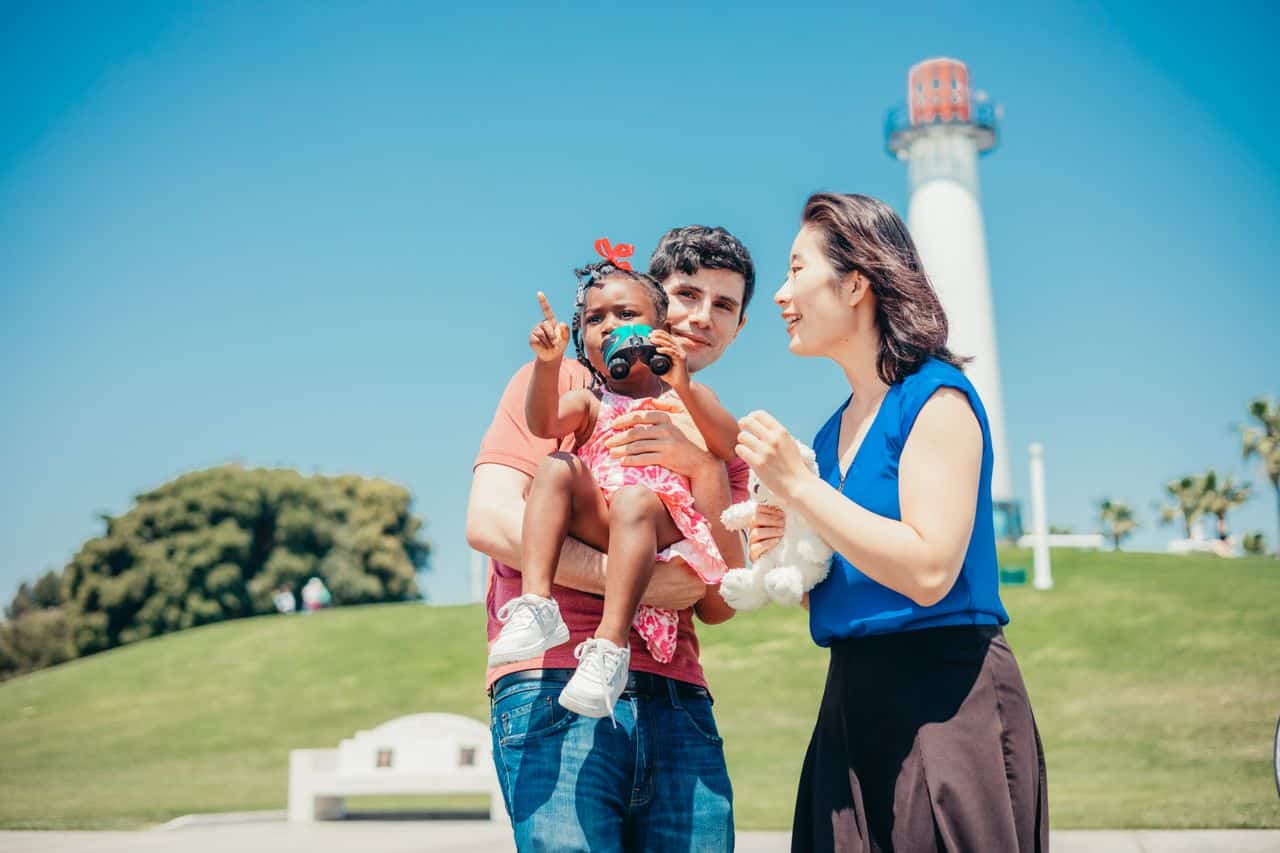
Transracial adoptees often carry unspoken experiences of racial identity confusion, split belonging, and adoption-related grief that adoptive parents may unknowingly dismiss, but evidence-based therapies including trauma-informed care and narrative therapy equip families to address racial mirroring deficits, sustain authentic cultural connection, and support their child's identity at every developmental stage.
What if your child's silence isn't gratitude, but grief they've never felt safe enough to share? For transracial adoptees, the distance between lived experience and what gets spoken aloud can span years. This article uncovers what's often left unsaid, and what every adoptive parent truly needs to hear.
Every child builds a sense of self by looking outward first. They scan their family, their community, and their culture for reflections of who they are and where they belong. How children develop personal and social identity is deeply tied to this process of mirroring, and for transracial adoptees, that mirror is fundamentally incomplete. When a child’s face does not reflect the faces around them, the work of identity formation becomes more complex, more layered, and often more painful.
Developmental frameworks like Erik Erikson’s stages of psychosocial development and Jean Phinney’s ethnic identity model were built around a shared assumption: that children grow up surrounded by people who share their cultural and racial background. Cross’s Nigrescence model, which maps the stages of Black racial identity development, offers a closer lens for transracial adoptees, but even it shifts when applied to a family context where no one else in the home shares that identity. Research applying Cross’s theory to transracial adoption shows that when primary attachment figures are of a different race, the stages of racial awakening can be delayed, disrupted, or thrust upon a child all at once by a single outside event.
That event looks different for every adoptee. For some, it is a classmate’s careless question. For others, it is a stranger’s surprised look when they introduce their parents. Whatever the trigger, many adoptees describe the same experience: a sudden, disorienting awareness that the world sees them differently than their family does. Before that moment, race may have felt invisible. After it, race becomes impossible to ignore.
This is where the “love is enough” belief quietly fails adoptive families. Parents who approach race with warmth but without tools leave their children to process these moments alone. Love matters enormously, and it is not sufficient on its own. Children need language, context, and ongoing conversations to make sense of their racial experiences. Supporting that process, especially when it surfaces as grief or confusion, calls for the kind of attunement that trauma-informed care can offer both families and adoptees.
Racial identity is not a milestone a child reaches and moves past. It is a lifelong, iterative process that resurfaces at each new life stage, from adolescence through adulthood. Parents who understand this early are far better positioned to walk alongside their child rather than being caught off guard when the questions deepen.
The Racial Mirror Deficit: Growing Up Without Seeing Yourself in Your Family
Most people take for granted something quietly powerful: looking at a parent, a sibling, or a cousin and seeing their own face looking back. For transracial adoptees, that experience is often entirely absent. With the rise in transracial adoption in the United States, a growing number of children are navigating this invisible gap, sometimes as the only person of their race in their entire family, school, and neighborhood combined.
What Racial Mirroring Is and Why It Matters
Racial mirroring is the psychological experience of seeing your physical features reflected in the people around you. Skin tone, hair texture, facial structure, body type: these are features that family members typically share, and that shared reflection sends an unconscious but powerful message that you belong, that your body is normal, that you are seen. For transracial adoptees, that message is never sent. No one in the family shares their features, which means no one can offer that quiet, wordless affirmation that says you look like us.
How the Absence of Racial Mirrors Affects Self-Image and Daily Life
The effects of this deficit run deeper than most parents expect. Many adoptees report feeling disconnected from their own bodies or uncertain about their appearance, not because anything is wrong with how they look, but because nothing around them ever reflected or affirmed it. This disconnect can contribute to low self-esteem and a fragile sense of physical identity that persists well into adulthood. The absence also creates very practical gaps: parents who don’t share their child’s hair texture or skin tone may not know how to care for those features, and that lack of care can itself feel like a form of erasure. Even the books and media available to children often fall short, as research on the representation of transracial adoptees in children’s literature suggests that authentic reflections of their experience are rarely found on the page either.
Building Mirrors: Strategies for Filling the Gap
Parents can actively seek out the mirrors their family cannot naturally provide. Some concrete places to start:
- Cultural mentors: Connect your child with trusted adults of the same racial background who can offer lived experience, perspective, and visible affirmation.
- Intentional media choices: Prioritize books, films, and shows that center characters who look like your child, not as a token gesture, but as a consistent, everyday practice.
- Hair and skin care as affirmation: Learning to properly care for your child’s hair and skin is not just practical. It communicates that their body is worth understanding and celebrating.
- Community diversification: Seek out neighborhoods, schools, and social spaces where your child is not the only person of their race.
None of this happens automatically. Parents must take the lead rather than assuming their child will find these mirrors independently, because without that effort, many never do.
The Split Belonging Experience: Feeling Like an Outsider in Both Worlds
Many transracial adoptees describe living in a persistent in-between space: too shaped by their adoptive family’s mannerisms and cultural references to feel fully accepted by their racial community, yet visibly too different to feel seamlessly woven into their adoptive family’s world. This is not a phase or a perception problem. It is a real, recurring experience that shapes how an adoptee understands themselves across every stage of life.
This split often sharpens during adolescence, when peer identity becomes everything. Teenagers are wired to seek belonging, and when a transracial adoptee cannot find a clear group to belong to, the isolation cuts deep. The belonging gap can contribute to genuine adjustment difficulties, including the kind of emotional and social strain associated with adjustment disorders, especially when the people closest to them fail to acknowledge what they are experiencing.
That failure often sounds like reassurance: “You’re just part of our family, race doesn’t matter.” Parents who say this mean well, but the message lands differently than intended. It tells the adoptee that their experience of not fitting in is wrong, invisible, or inconvenient. It does not close the belonging gap. It widens it.
Some adoptees find real relief in adoptee-specific communities, spaces where the split itself becomes the common ground. When everyone in the room understands what it feels like to exist between worlds, the in-between stops feeling like a flaw.
Adoptive parents can make a meaningful difference by naming the split openly, without trying to fix it or compete with birth culture for their child’s loyalty. The goal is not to resolve the tension but to hold space for it. Belonging, for many transracial adoptees, is something they define on their own terms over time, and that process deserves room to breathe.
Grief, Loss, and Adoption: What Love Cannot Fix
Every adoption, even one filled with warmth and intention, begins with loss. Before a child ever settles into their new home, they have already lost their birth parents, their birth culture, their language, and sometimes even their name. These are not abstract losses. They are foundational pieces of identity, and their absence leaves a real mark. Research on adoption-specific trauma recognizes that the experience of being adopted can itself be a source of ongoing grief that no amount of love alone can resolve.
The dominant cultural story about adoption centers on rescue. The child is saved; the family is completed; everyone is grateful. That narrative is not wrong, exactly, but it is incomplete. It leaves no room for the adoptee’s grief, and worse, it creates a silent rule: you should feel lucky. This is what researchers and adoptee advocates call the gratitude mandate, the unspoken expectation that adoptees must perform happiness to justify their place in the family. When grief surfaces, as it always does, it arrives wrapped in shame.
Adoption-related grief does not follow a straight line. It resurfaces at milestones: the first day of school, puberty, graduation, a first relationship, becoming a parent. Each stage can reopen questions about origin, belonging, and identity. A large-scale study published in eClinicalMedicine found elevated mental health risks in international adoptees linked to early loss and adversity, evidence that unprocessed grief carries real, long-term consequences.
What many adoptees need their parents to understand is this: loving your adoptive family and grieving what was lost are not contradictions. A child can hold both truths at once. The parents who create the safest emotional environment are the ones who can say, genuinely, I love you, and I honor what you lost.
For adoptees navigating grief during identity-intensive periods, working with a therapist experienced in adoption loss can be transformative. Narrative therapy, for example, helps adoptees build a coherent life story that includes their grief rather than hiding it, which is often the first step toward genuine healing.
The Developmental Identity Map: What Your Transracial Adoptee Needs at Every Life Stage
Identity doesn’t arrive all at once. It builds in layers, shaped by age, experience, and the people around your child. For transracial adoptees, each developmental stage brings its own set of internal questions, and the support you offer at each one matters more than you might expect. Research on building resilience in children facing adversity shows that targeted parental support at each phase can meaningfully reduce the long-term impact of racial identity challenges.
Ages 0–7: Laying Racial Awareness Foundations
Ages 0–3 are rarely thought of as a time for racial identity work, but infants and toddlers absorb racial cues from their environment far earlier than most parents expect. Diverse books, dolls that reflect your child’s skin tone and features, and regular exposure to people who look like them are not optional extras. They are the first building blocks of a healthy self-concept.
Ages 4–7 bring the first direct questions. Your child will notice that they look different from you, from their classmates, or from the families they see on TV. When that happens, answer honestly. Colorblind responses like “we don’t see color in this family” don’t reassure children; they teach them that a real part of who they are is too uncomfortable to discuss. A simple, warm, and truthful answer goes much further.
Warning signs at this stage: persistent avoidance of mirrors or photos, distress when race is mentioned, or a reluctance to be seen in public with the family.
Ages 8–17: Navigating Belonging Crises and Identity Exploration
Ages 8–12 are when peer comparison intensifies. Your child is measuring themselves against classmates, and many will encounter overt racism for the first time. Your role shifts here: you need to become a reliable racial debriefing partner. That means creating space after hard days, asking open questions, and resisting the urge to minimize what happened.
Ages 13–17 can look like rejection, and it can sting. Some adolescents pull away from their birth culture; others pull away from their adoptive family’s culture entirely. Both are forms of identity exploration, not a sign that you’ve failed. Holding steady, staying curious, and not taking the distance personally is genuinely difficult work, but it is the work.
Warning signs at this stage: complete withdrawal from both cultural communities, escalating shame around adoption, or signs of depression and social isolation.
Ages 18 and Beyond: Reclamation and Intergenerational Identity
Ages 18–25 often bring a powerful drive toward independent reclamation. Your adult child may seek out birth family, travel to their birth country, or immerse themselves in a culture you never shared. Your job is to support that process without directing it. Offering unsolicited opinions or treating their exploration as a rejection of you can cause real harm to your relationship.
Ages 25 and beyond introduce a layer that surprises many families: when adoptees become parents themselves, they face entirely new questions about which cultural identities to pass on and how. This can resurface unresolved feelings from earlier stages.
If your adult adoptee, or you as a parent, is navigating identity questions that feel overwhelming, working with a therapist who understands adoption-related identity work can make a meaningful difference. You can start with a free assessment at ReachLink to explore support at your own pace, with no commitment required.
Warning signs at this stage: complete estrangement without prior conflict, identity crises that interfere with daily functioning, or grief that feels unmanageable alone.
Beyond Cultural Tourism: Building Authentic, Sustained Cultural Connection
Many adoptive parents are doing something. They attend a heritage festival in the spring, cook a traditional dish for a birthday, maybe hang a piece of cultural art in the hallway. These gestures come from a real place of love. For transracial adoptees, though, they often land as performance rather than presence, a reminder that their culture is a special occasion, not an everyday reality.
Cultural socialization, the active, ongoing process of teaching a child about their racial and ethnic heritage, is recognized as essential, not optional, for transracial adoptees. Research consistently identifies it as the strongest predictor of positive racial identity outcomes. That is a significant finding, and it raises a direct question for parents: where does your family actually fall on the spectrum of cultural engagement?
The Cultural Connection Spectrum: From Tokenistic to Genuinely Immersive
Think of cultural connection as a spectrum with three broad zones. At the tokenistic end, you find heritage nights, ethnic food, and cultural artifacts displayed at home. These aren’t harmful on their own, but they stay at the surface. The transitional zone includes more sustained efforts: language classes, cultural school enrollment, regular engagement with cultural media. At the genuinely immersive end, you find families who have diversified their neighborhoods, built real friendships across racial lines, established relationships with cultural mentors, and made birth country visits a real priority.
Most families cluster near the tokenistic end and genuinely believe they are doing enough. The gap between intention and impact is where adoptees often feel most unseen.
Authentic cultural connection requires parents to change their own lives, not just add activities to their child’s schedule. That means examining your neighborhood, your friend group, your media habits, and your community involvement. If your child is the only person of their race in most rooms they enter, a yearly festival cannot compensate for that daily experience of difference. Real community membership means your family shows up consistently, builds relationships over time, and becomes known, not just present.
Finding and Engaging Cultural Mentors Without Tokenizing
Cultural mentors are adults who share your child’s racial and cultural background and can serve as mirrors, guides, and identity anchors across the years. Finding them matters enormously, and so does how you approach it. Recruiting someone to be “the diversity friend” reduces a whole person to a function. Instead, build genuine relationships first: join organizations, attend community events regularly, and let mentorship develop naturally from authentic connection. The goal is not to perfectly replicate a birth culture your child may never have lived in. It is to ensure they have consistent, meaningful access to people, spaces, and knowledge that reflect who they are.
What Adoptive Parents Get Wrong: Common Mistakes and How to Correct Them
Love is not the same as preparation. Many adoptive parents enter transracial adoption with open hearts and the best intentions, and still cause real harm, not out of cruelty, but out of blind spots that go unexamined for years. Naming these mistakes clearly is the first step toward doing better.
Colorblindness. Saying “I don’t see color” feels kind, but it erases your child’s lived reality. When a child faces a racist comment at school and has no language for what just happened, that silence came from somewhere. Instead, try: “I see your full self, including your race, and I want to understand what that experience is like for you.”
The gratitude mandate. Expecting your child to feel lucky or grateful for being adopted centers your feelings and shuts down theirs. Adoption involves real loss, and your child deserves space to grieve it. When they express pain, resist the urge to remind them of what they have. Try: “It makes sense that you feel sad about that. I’m here, and I want to hear it.”
Racial gatekeeping. Limiting your child’s access to their birth culture, racial community, or birth family, even with protective intentions, communicates that that part of them is a problem. Actively create connections instead of passively allowing them.
Defensive fragility. When your child names a racial hurt and you respond with “But I’m not racist,” you have made their pain about you. Pause. Listen. Repair later. Try: “Thank you for telling me. Help me understand what that felt like.”
Unaddressed family racism. Tolerating racist comments from grandparents or relatives to preserve family harmony tells your child exactly where they rank. Address it directly, in the moment, every time. Try: “We don’t talk about our family that way. I need you to stop.”
The single most important shift any adoptive parent can make is moving from “my love is enough” to “my love is necessary, but not sufficient.” The work of learning, listening, and staying uncomfortable is not optional. It is part of parenting this child.
Supporting Your Transracial Adoptee’s Identity: Where to Start Today
Understanding your transracial adoptee’s identity needs is not a single conversation. It is an ongoing commitment that grows as your child grows. Seeking support through family therapy isn’t a sign that something has gone wrong. It’s a proactive way to give your whole family the tools to navigate race, belonging, and identity together. Adoption-competent therapists who understand racial identity development can make a meaningful difference, and reaching out for help is an act of love, not an admission of failure.
If you’re looking for a therapist who can support your family through identity and belonging work, you can create a free ReachLink account to get matched with a licensed therapist at your own pace, with no commitment required.
Understanding the Journey of Transracial Adoptees
Transracial adoptees often navigate complex feelings around identity and belonging. It’s essential for parents to stay present and open during these conversations. This journey is rooted in love, which provides a solid foundation for growth. If your family seeks guidance in addressing issues related to race and adoption, consider connecting with a professional who understands these dynamics better.
Create a free ReachLink account to access support tailored for your needs.
FAQ
-
How do I know if my transracially adopted child is struggling with their racial identity?
Transracial adoptees, children adopted into families of a different race, often face unique challenges around racial identity, belonging, and cultural connection that may not always be visible on the surface. Signs that a child may be struggling include withdrawing from conversations about race or culture, expressing shame about their heritage, feeling caught between two worlds, or seeming disconnected from their identity. These struggles can show up as behavioral changes, social withdrawal, or a reluctance to discuss their adoption or background. If you notice your child avoiding these topics or seeming distressed around them, it may be worth creating more intentional space for open, honest conversation.
-
Does therapy actually help transracial adoptees work through identity issues?
Yes, therapy can be genuinely helpful for transracial adoptees navigating identity, belonging, and the emotional complexity of growing up in a family that looks different from them. Approaches like narrative therapy, culturally informed CBT, and family therapy can help adoptees process grief, explore their cultural identity, and build a stronger sense of self. Therapy also gives adoptees a private, judgment-free space to say things they may feel they cannot say to their adoptive parents. Many adoptees find that working with a therapist who has experience in adoption-related identity issues makes a significant difference in how supported they feel.
-
Why might a transracial adoptee feel like they can't talk to their adoptive parents about race?
Transracial adoptees often stay silent about their racial experiences to protect their adoptive parents' feelings, worrying that bringing up race will seem like ingratitude or will hurt the family. Many adoptees internalize the message that talking about race is uncomfortable or divisive, especially in families where the topic was rarely discussed openly. This silence can build over years, leaving adoptees feeling isolated in their experiences even within a loving home. Understanding this dynamic is an important first step for adoptive parents who want to create a relationship where their child feels truly safe to be honest.
-
I'm an adoptive parent and I think my child needs to talk to someone - where do I even start?
If you're an adoptive parent looking for support for your child or your family, a good first step is connecting with a licensed therapist who has experience with adoption, identity, and multicultural family dynamics. ReachLink makes this process straightforward - instead of a cold algorithm, a human care coordinator works with you to understand your situation and match you with a therapist who fits your family's specific needs. You can start with a free assessment, which helps the care team get a clear picture of what kind of support would be most helpful. There's no pressure, and the goal is simply to connect your family with the right licensed therapist from the start.
-
What's the difference between individual therapy for my adopted child and family therapy for all of us?
Individual therapy and family therapy serve different but complementary purposes for transracial adoptive families. Individual therapy gives the adoptee a private space to explore their identity, process difficult emotions, and develop their own voice without worrying about how their parents will react. Family therapy brings the whole family together with a therapist to improve communication, address misunderstandings about race and culture, and build shared tools for navigating these conversations. Many families find that a combination of both - individual sessions for the adoptee and periodic family sessions - offers the most complete support.