Scrupulosity is a clinically recognized OCD subtype in which religious, spiritual, or moral obsessions create relentless cycles of doubt and guilt that prayer and confession alone cannot resolve, but evidence-based therapies like Exposure and Response Prevention (ERP) and Acceptance and Commitment Therapy (ACT) offer effective, faith-sensitive paths to lasting relief.
The more you care about being good, the harder scrupulosity hits. This OCD subtype turns your faith, your morals, and your deepest values into a source of relentless torment, not because something is wrong with your soul, but because your brain's error-detection system is misfiring.
What is scrupulosity? Clinical definition and core symptoms
Scrupulosity is a subtype of obsessive-compulsive disorder in which intrusive thoughts revolve around religious, spiritual, or moral themes. A person experiencing scrupulosity might be tormented by relentless doubts about whether they have sinned, whether they are fundamentally immoral, or whether God has abandoned them. These thoughts are not simply a sign of deep faith or a sensitive conscience. They are unwanted, distressing, and nearly impossible to quiet through reason alone.
Clinically, scrupulosity does not appear in the DSM-5 as a standalone diagnosis. Instead, it falls under the OCD umbrella, with the content of the obsessions, specifically religion or morality, serving as the distinguishing feature. According to scrupulosity as a recognized OCD subtype, the same obsessive-compulsive disorder diagnostic criteria apply: intrusive obsessions that cause significant distress, paired with compulsions designed to reduce that distress, even temporarily. Those compulsions might look like excessive prayer, repeated confession, seeking reassurance from clergy, or mentally reviewing past actions to confirm one’s moral standing.
What separates scrupulosity from ordinary religious guilt or moral reflection is a specific clinical quality called being ego-dystonic. This means the thoughts feel foreign and wrong to the person having them, not like genuine spiritual conviction. The distress is also disproportionate to any actual wrongdoing, and crucially, it resists reassurance. A priest’s absolution, a friend’s comfort, even the person’s own logic rarely brings lasting relief.
Prevalence estimates vary widely depending on cultural and religious context, but research suggests that between 5% and 33% of people with OCD present with primarily religious or moral obsessions. That range reflects just how much community and upbringing can shape the specific content of OCD symptoms.
A condition with a 500-year name: what church history tells us about scrupulosity
The word scrupulosity comes from the Latin scrupulum, meaning a small, sharp stone. Think of a pebble lodged in your sandal: too small to stop you walking, but impossible to ignore. Catholic moral theologians borrowed this image as early as the 15th century to describe a spiritual state where doubt and guilt grind away at a person’s conscience, long after any reasonable cause for concern has passed.
This was not a fringe observation. Some of history’s most prominent religious figures lived it. Ignatius of Loyola, founder of the Jesuits, documented his own scrupulous episodes in his autobiography, describing cycles of repetitive confession and paralyzing uncertainty about whether past sins had ever been adequately addressed. Alphonsus Liguori, an 18th-century Doctor of the Church, wrote about scrupulosity as a distinct spiritual affliction, one that confessors should manage by actually limiting how often a person with scrupulosity could confess. His reasoning: more confession was feeding the problem, not resolving it.
Martin Luther’s anguished relationship with confession and his desperate search for assurance of salvation is widely interpreted by modern scholars through this same lens. His torment was not a sign of weak faith. It was a recognizable pattern that religious communities had already named.
This history matters for one clear reason. Recognizing scrupulosity as a clinical condition today does not dismiss or medicalize faith. It honors a distinction that pastors, priests, and theologians have drawn for centuries: the difference between genuine spiritual conviction and a relentless, irrational cycle of doubt that no amount of prayer or confession can quiet.
Scrupulosity vs. devout faith: how to tell the difference
One of the most painful aspects of scrupulosity is the uncertainty about whether your religious intensity is a virtue or a symptom. Family members often wonder the same thing. The distinction matters, and there are concrete markers that clinicians and researchers use to tell them apart.
Devout faith, even when it demands real sacrifice, tends to produce a net sense of meaning, connection, and purpose. Scrupulosity produces the opposite: escalating dread, shame, and a paralysis that makes ordinary life increasingly difficult. As research on confusing scrupulosity with genuine religious experience highlights, this confusion between authentic faith and OCD-driven fear is itself a central source of suffering for people with the condition.
A key clinical marker is what happens after a religious practice is completed. In healthy devotion, prayer or ritual tends to bring relief, grounding, and a sense of closeness to God or community. In scrupulosity, finishing a prayer often triggers a new wave of doubt: Was I sincere enough? Did I say it correctly? Does it count? The practice meant to provide comfort instead opens the door to more anxiety.
Reassurance also works differently. A devout person who receives pastoral guidance or scriptural clarity generally feels settled. For someone with scrupulosity, that relief evaporates quickly, and the doubt returns, often stronger than before. This reassurance-seeking cycle is one of the OCD diagnostic criteria that clinicians look for when evaluating the condition.
Two additional signs point strongly toward scrupulosity rather than devotion. First, the person holds themselves to standards far stricter than what their own religious community considers necessary or reasonable. Second, religious practice begins consuming hours of each day, straining relationships, or crowding out basic functioning. Sacrifice is part of many faith traditions; impairment is not.
Common obsessions in religious and moral OCD across faith traditions
Scrupulosity does not look the same in every person. The specific fears, rituals, and intrusive thoughts that define it are shaped by a person’s deepest beliefs, whether those come from a religious tradition or a secular moral framework. Research on how religious affiliation shapes scrupulosity symptom presentation confirms that while the underlying OCD architecture is consistent, the content of obsessions reflects the values and practices that matter most to each individual. Recognizing what scrupulosity looks like in your own tradition is often the first step toward understanding what you are dealing with.
The Catholic experience: confession loops and state-of-grace anxiety
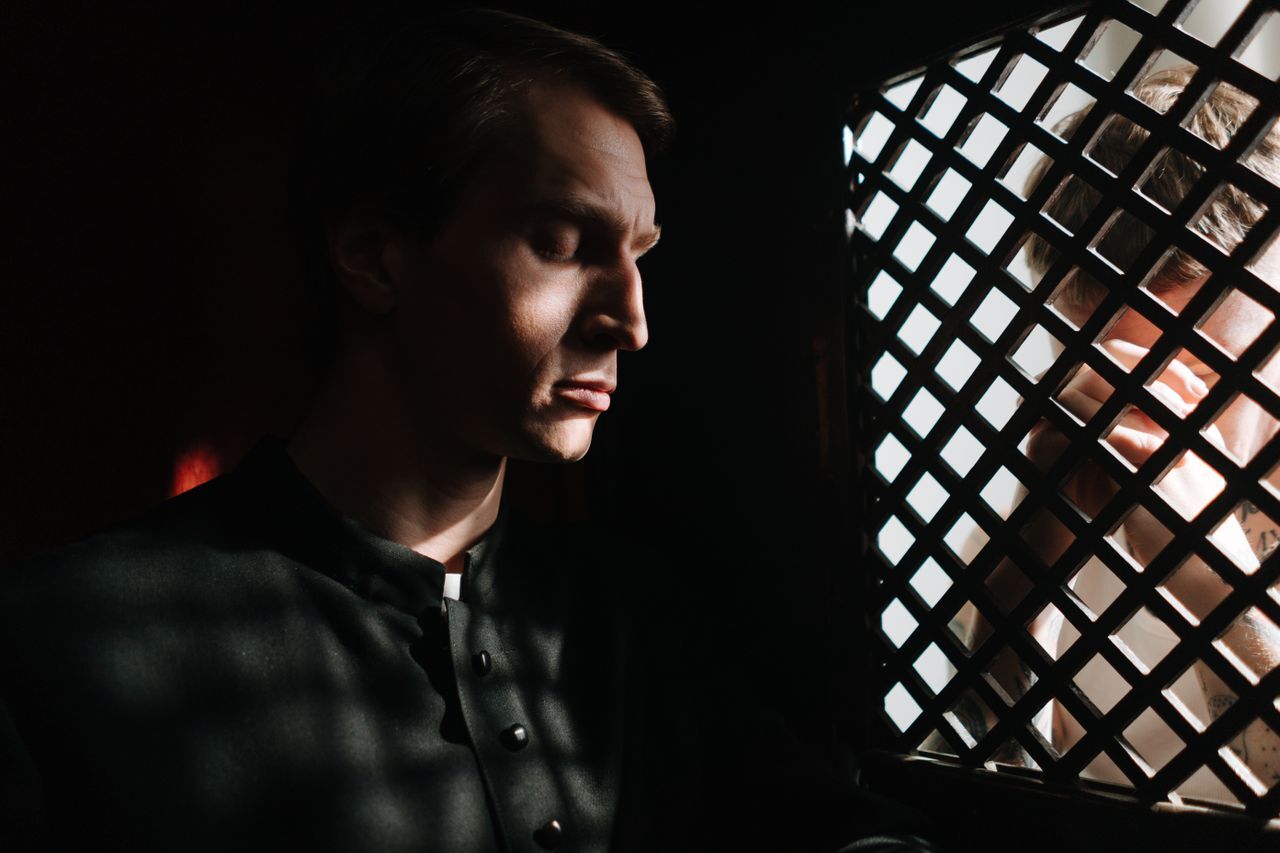
For many Catholics with scrupulosity, the sacrament of confession becomes a trap rather than a relief. A person may confess the same sin multiple times in a single session, convinced they did not phrase it correctly or feel sufficient remorse. Fear of receiving communion in a state of mortal sin can lead to avoiding Mass entirely, or to agonizing over whether a passing thought constitutes a serious offense. The line between mortal and venial sin becomes a source of constant, exhausting classification anxiety, with no amount of priestly reassurance ever feeling quite enough.
The Evangelical experience: salvation doubt and the unforgivable sin
Evangelical scrupulosity often centers on the terrifying question: Am I truly saved? A person may respond to altar calls repeatedly, re-dedicate their life to God, and spend hours searching scripture for proof that their salvation is real and secure. One of the most distressing obsessions in this context is the fear of having committed the “unforgivable sin,” which most traditions define as blasphemy against the Holy Spirit. The very fact that a person fears this sin deeply is, ironically, strong evidence they have not committed it, but OCD does not respond to logic.
Scrupulosity in Judaism and Islam: ritual law and purity obsessions
In Jewish practice, scrupulosity often takes the form of halachic perfectionism. A person may obsessively fear that they violated kashrut rules, desecrated Shabbat through an unintentional act, or recited a blessing incorrectly. This can lead to extreme avoidance of situations where a violation might occur, or to endless repetition of rituals until they feel right.
In Islam, this experience is recognized within the tradition itself. The Arabic term waswas refers to intrusive, whispered doubts, and Islamic scholars have written about it for centuries. A person may repeat wudu (ritual washing before prayer) many times, convinced it was incomplete, or become paralyzed by fear that a stray thought constitutes shirk (associating partners with God), one of the gravest sins in Islamic theology.
Secular and moral scrupulosity: when ethics become the obsession
Not everyone who experiences scrupulosity holds religious beliefs. Secular moral scrupulosity is increasingly recognized as a distinct presentation, where a person becomes consumed by fear of being a bad or harmful person. This can look like compulsively replaying past conversations to check for unintentional cruelty, feeling hyper-responsible for harm that was never caused, or mentally reviewing every decision for evidence of selfishness or wrongdoing.
Across all of these frameworks, the obsessions share a common structure: an intrusive thought that violates the person’s most deeply held values, followed by a catastrophic interpretation of what that thought means about them. The content changes. The suffering does not.
Common compulsions: what scrupulosity looks like in practice
Obsessions are only half the picture. What keeps scrupulosity going are the compulsions, the behaviors and mental acts people use to relieve the distress those obsessions cause. Recognizing these responses is often the first step toward understanding why the cycle is so hard to break.
Repeated rituals and prayer
For many people with scrupulosity, prayer becomes an exhausting performance rather than a meaningful practice. A prayer that should take five minutes stretches into an hour because any perceived distraction or wrong word triggers a restart. Religious rituals get repeated until they feel right, a feeling that rarely arrives and never lasts.
Confession and reassurance-seeking
Confessing the same sin multiple times, asking a priest, pastor, or loved one whether a thought was truly sinful, or seeking repeated confirmation that a moral line was not crossed are all common patterns. The temporary relief reassurance provides is real, but it fades quickly, which is exactly what drives the next round of seeking.
Mental compulsions
Not all compulsions are visible. Many people with scrupulosity engage in silent neutralizing prayers, mentally reviewing past actions for evidence of wrongdoing, or deliberately replacing an intrusive thought with a good one. Internal theological debates can run on a loop for hours. Because these compulsions happen entirely inside someone’s mind, scrupulosity can go unrecognized for years, even by close family members.
Avoidance and compulsive research
Some people avoid church services, sacred texts, or moral conversations entirely to prevent triggering obsessions. Paradoxically, this avoidance tends to deepen guilt over time. Others go in the opposite direction, compulsively searching online forums or theological texts for reassurance that their thoughts or actions measure up to a moral standard.
All of these responses share one thing in common: they provide short-term relief while reinforcing the obsessive cycle long-term. This is precisely why exposure and response prevention is designed to interrupt these patterns rather than accommodate them.
Why your most sacred commitments become the target: the neurology behind scrupulosity
OCD is not random. It does not latch onto things you barely care about. It zeroes in on the values, relationships, and beliefs that matter to you most. This is why a deeply religious person develops obsessions about blasphemy rather than, say, traffic laws. The more sacred something is to you, the more threatening a potential violation feels, and the more fuel OCD has to sustain itself.