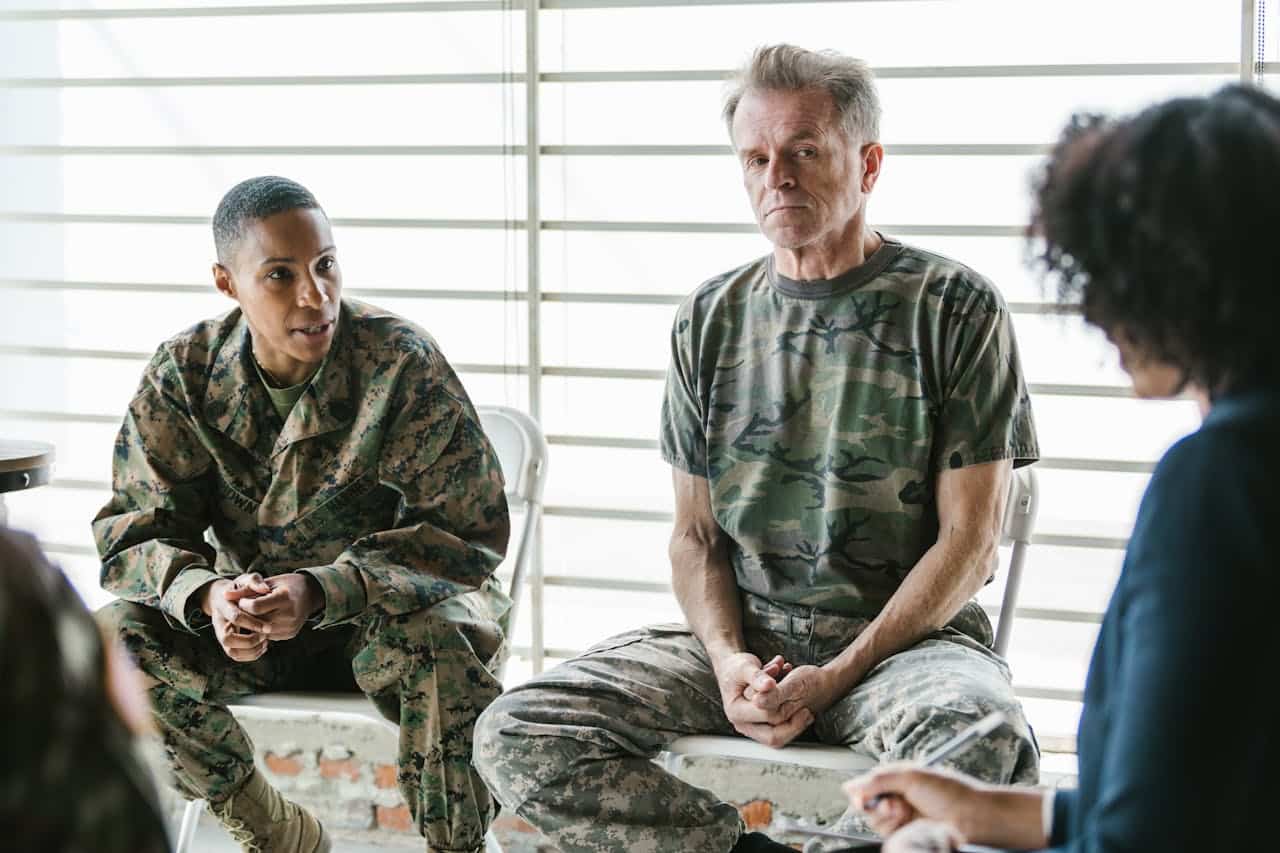
Veteran mental health challenges during military-to-civilian transition include PTSD, depression, anxiety, and moral injury, stemming from identity loss and structural disruption, but evidence-based therapy and professional counseling provide effective treatment for these service-connected conditions.
Why does coming home from military service feel harder than being deployed? Veteran mental health challenges don't just stem from combat trauma - they emerge from profound identity loss, moral injury, and the overwhelming psychological work of rebuilding purpose without military structure.
Understanding Veteran Mental Health Challenges
Transitioning from military to civilian life brings more than logistical changes. For many veterans, this shift can trigger or intensify mental health conditions that stem from their service experiences. While each person’s experience is unique, certain conditions appear more frequently in veteran populations, often with distinct presentations shaped by military culture and combat exposure.
PTSD in Veterans
Post-traumatic stress disorder remains one of the most common mental health challenges facing veterans. Research shows that 11–20% of post-9/11 veterans experience PTSD, though rates vary depending on deployment history and combat exposure. The condition manifests through four core symptom clusters: intrusive memories like flashbacks or nightmares, avoidance of trauma reminders, negative changes in thoughts and mood, and heightened arousal such as being easily startled or constantly on guard.
For veterans, these symptoms often connect directly to combat experiences, military sexual trauma, or witnessing casualties. A veteran might experience intense physiological reactions to crowded spaces that resemble combat zones, or struggle with hypervigilance that once served as a survival mechanism. Understanding PTSD recovery requires recognizing how military training and operational stress create specific trauma patterns that differ from civilian PTSD.
Depression After Military Service
Depression in veterans frequently looks different than it does in civilian populations. Rather than presenting primarily as sadness or withdrawal, veterans often experience depression through irritability, anger outbursts, or physical complaints like chronic pain and fatigue. This masked presentation can delay recognition and treatment, as both veterans and their loved ones may not immediately connect these symptoms to a mood disorder.
Military culture’s emphasis on stoicism and self-reliance can make it particularly difficult for veterans to acknowledge depressive symptoms or seek help. Many veterans describe feeling disconnected from civilian life, losing their sense of purpose after leaving structured military roles, or struggling with guilt about experiences during service. These factors contribute to depression rates that exceed those in the general population, and depression treatment for veterans often needs to address these service-connected elements.
Anxiety Disorders in the Veteran Population
Anxiety disorders affect a significant portion of veterans, with research indicating that nearly 30% experience anxiety symptoms, including 7.9% with generalized anxiety disorder and 22.1% with mild anxiety symptoms. These conditions encompass generalized anxiety disorder, characterized by persistent worry across multiple areas of life, panic disorder with sudden intense fear episodes, and social anxiety that can make civilian interactions feel unpredictable or threatening.
For veterans, anxiety often connects to specific military experiences. A person who experienced improvised explosive devices might feel intense anxiety while driving. A veteran who relied on unit cohesion for safety might struggle with social anxiety when navigating civilian workplaces without that same trust structure. These conditions frequently overlap with PTSD and depression, creating complex clinical presentations that require comprehensive assessment and treatment approaches tailored to the veteran experience.
Why Military-to-Civilian Transition Is Psychologically Difficult
Leaving military service isn’t just a career change. It’s a fundamental disruption of identity, community, and the psychological structures that governed daily life for years or even decades. Research shows that transition stress affects most veterans, with 44% of veterans reporting difficulty adjusting to civilian life. Understanding why this transition is so psychologically challenging requires looking beyond surface-level adjustments to the deeper ways military service shapes how people see themselves and navigate the world.
For many service members, military identity becomes inseparable from core identity. You’re not just someone who serves in the military. You’re a Marine, a soldier, an airman. That identity comes with clear values, a sense of purpose, and a defined role in something larger than yourself. When you leave service, you lose more than a job title. You lose the framework that organized your understanding of who you are and what you’re meant to do. Rebuilding a sense of self outside that structure requires psychological work that most civilian career changes don’t demand.
The loss of unit cohesion compounds this identity crisis. In the military, your unit provides belonging, purpose, and social support all at once. You know your role, you trust the people beside you, and you share a common mission. Civilian life rarely offers that same intensity of connection or clarity of purpose. You might have coworkers, but they’re not the people who depended on you in life-or-death situations. This shift represents a profound loss that many people experience as grief, even when they’re relieved to be out of service.
Civilian environments also lack the psychological structure that military life provides. There’s no clear chain of command to tell you what’s expected. There’s no defined mission to organize your efforts. The rules are often unspoken, inconsistent, or contradictory. For someone accustomed to operating within strict hierarchies and explicit protocols, this ambiguity can feel destabilizing. What looks like freedom to someone who has always been a civilian can feel like chaos to someone adjusting from military service.
Perhaps most challenging, the skills that kept you safe in combat often work against you in civilian settings. Constant vigilance made sense when threats were real and immediate. Emotional suppression helped you function under pressure. Rapid threat assessment kept you alive. But in civilian life, these same responses can damage relationships, create chronic stress, and make everyday situations feel dangerous. Your nervous system learned what it needed to learn. Unlearning those responses while navigating life stressors and transitions requires time, support, and often professional help.
The same research showing that 44% of veterans struggle with adjustment also found that 48% experience strains in family life and 47% have sudden feelings of anger or irritation. These aren’t separate problems. They’re interconnected symptoms of a transition that functions as both loss and change, grief and stress, all at once.
The Transition Timeline: What to Expect and When
Leaving military service doesn’t follow a single path, but it does follow patterns. Understanding the psychological phases most veterans experience during the first two years can help you recognize what you’re going through and prepare for what’s ahead. These phases aren’t rigid stages, and you might move through them differently than someone else. Some veterans cycle back through earlier phases, while others skip certain experiences entirely.
First 30 Days: The Honeymoon Period
The first month after separation often feels surprisingly good. You might wake up without an alarm, spend time with family you’ve missed, or simply enjoy the freedom to make your own schedule. Many veterans describe this period as feeling like a long-overdue vacation.
This honeymoon phase serves an important psychological function. It gives you space to decompress from years of high-tempo operations and constant readiness. But it can also create false expectations. The relief you feel might convince you that civilian life will be easier than you anticipated. When that changes, the contrast can feel jarring.
Months 1–6: Reality Sets In
Somewhere between the first and third month, most veterans hit their first wall. Civilian workplace norms start feeling foreign. Small talk with coworkers who’ve never served feels exhausting. The lack of structure that felt freeing now feels directionless.
Months three through six represent peak vulnerability for many veterans. Initial savings start running low if you haven’t found stable work. The novelty of civilian freedom has worn off. Isolation begins setting in as you realize how few people understand what you’re experiencing. This is the period when mental health challenges often surface most intensely.
Months 6–12: Crisis or Breakthrough
The second half of your first year typically brings a turning point. Some veterans hit crisis during this window, struggling with depression, anxiety, or substance use that requires professional intervention. Others experience breakthrough moments where civilian life finally starts making sense.
What determines which path you take? Often it’s whether you’ve found sources of connection and purpose. Veterans who’ve built new support networks, found meaningful work, or sought help when they needed it tend to move toward breakthrough. Those who’ve isolated or tried to push through alone often face deeper struggles.
Years 1–2: Finding Your New Normal
The second year brings gradual identity reconstruction. You start developing a sense of who you are beyond your military service. The constant mental comparison between military and civilian life becomes less automatic. You find new sources of purpose, whether through work, family, community involvement, or other pursuits. The grief over what you’ve lost doesn’t disappear, but it shares space with appreciation for what you’re building.
By the end of year two, most veterans report feeling more settled, not because civilian life has become easy, but because they’ve developed strategies for navigating it. They know their triggers, they’ve built coping skills, and they’ve created a life that reflects their values.
Common Transition Challenges Veterans Face
The psychological difficulty of military-to-civilian transition is amplified by a cascade of practical challenges that affect nearly every aspect of daily life. When you’re simultaneously navigating a new job market, rebuilding family relationships, and questioning your identity, the stress compounds in ways that can feel overwhelming.
Employment and Career Challenges
Finding meaningful civilian work often proves more complicated than veterans expect. Translating military skills into civilian job qualifications requires learning an entirely new language. A logistics specialist might struggle to explain how coordinating supply chains in combat zones translates to corporate operations management. Civilian workplaces operate with different communication styles, decision-making processes, and hierarchies. Many veterans also face a disconnect between their level of responsibility in service and the entry-level positions available to them. While veteran unemployment rates have improved, with post-9/11 veterans at 3.6% unemployment in 2025, finding the right fit rather than just any job remains a significant challenge.
Family Reintegration
Coming home means entering a family system that evolved without you. Spouses who managed households independently during deployments don’t automatically relinquish that autonomy. Children developed routines, relationships, and ways of coping with your absence that won’t simply reset when you return. Renegotiating these roles requires patience and communication that can feel foreign after years of clear command structures. You might feel like a guest in your own home, unsure of your place in daily decisions. These tensions can trigger anxiety symptoms in both veterans and their loved ones as everyone adjusts.
Identity and Purpose After Service
For many veterans, the transition reveals an uncomfortable truth: being a service member wasn’t just what you did, it was who you were. When that identity no longer applies to your daily life, a profound sense of loss can set in. This identity challenge intensifies when civilian work feels less meaningful than military service. The question “who am I now?” can linger for years, especially when the answer feels like it should be obvious but remains frustratingly unclear.
Navigating Life Without Military Structure
The military provides external structure for nearly every aspect of life: when to wake up, what to wear, where to be, what to accomplish. Civilian life offers freedom but removes that framework. Without it, many veterans struggle with time management and motivation. The absence of clear objectives can make even simple decisions feel paralyzing, and this lack of structure often leads to social isolation, particularly when civilian friends can’t relate to military experiences or the specific challenges of transition.
Moral Injury: The Wound Beyond PTSD
When a Marine watches a civilian die in crossfire, when a soldier follows an order that feels fundamentally wrong, when a medic loses a patient despite doing everything right, something breaks inside that no diagnosis fully captures. This is moral injury, a psychological wound that cuts deeper than fear and lingers long after the danger has passed.
Moral injury happens when you participate in, witness, or fail to prevent actions that violate your core moral beliefs. You might have caused harm you never intended. You might have watched leadership make decisions that cost lives. You might have been unable to save someone who depended on you. The event itself creates a fundamental conflict between what happened and who you believe yourself to be.
This isn’t the same as PTSD, though the two often occur together. PTSD stems from fear-based trauma, your brain’s response to life-threatening danger. Moral injury, by contrast, centers on shame, guilt, and a profound sense of betrayal. You’re not reliving a terrifying moment. You’re wrestling with the belief that you’ve become someone you can’t respect, or that the institution you trusted betrayed everything you stood for.
The sources of moral injury in military service are painfully common: civilian casualties, following orders that felt ethically wrong, losing fellow service members despite your best efforts, and leadership failures that put troops at unnecessary risk. The symptoms look different from typical traumatic disorders. You might withdraw from religious faith or the values that once defined you. Self-punishment becomes a way of life, whether through isolation, substance use, or deliberately sabotaging relationships. Many people experiencing moral injury feel a deep existential despair, a sense that life has lost meaning or that they don’t deserve happiness.