ReachLink is now hiring licensed therapists. Apply to join the current cohort before August 31. Apply now →

What Hair Loss Actually Does to a Man’s Identity

Mental Health Of Men And BoysAugust 14, 202619 min read
What Hair Loss Actually Does to a Man’s Identity

Hair loss in men is a genuine mental health concern backed by research linking androgenetic alopecia to identity disruption, social anxiety, depression, and reduced self-esteem, and licensed therapists trained in cognitive behavioral therapy and body image work can help men process the grief and shame that male pattern baldness produces across every life stage.

Hair loss isn't just about hair. For men, losing it quietly dismantles identity, self-worth, and belonging, while everyone around them insists it's no big deal. That dismissal is exactly what makes it worse. This article names what most men have been carrying alone, and what can actually help.

The silent weight: why hair loss hits men’s identity at its core

When a man notices his hairline shifting or his crown thinning, the first thing he typically does is say nothing. Maybe he adjusts his lighting. Maybe he changes how he styles what’s left. What he almost never does is tell someone how much it bothers him. That silence is not indifference. It is the first sign that something deeper is happening, something that cuts straight to the core of how he understands himself.

Hair is not just hair. Research on the psychological and social significance of hair shows it functions as a powerful signal of identity, status, and social belonging. In the context of male identity specifically, hair carries meaning tied to youth, physical vitality, and attractiveness. When it starts to go, it does not just change how a man looks. It disrupts the internal story he has built about who he is and how the world receives him. That disruption is the psychological core of hair loss for men, and it is far more significant than most people, including the men experiencing it, are willing to acknowledge.

One of the most damaging forces in hair loss psychology for men is the cultural reflex to dismiss it. “It’s just cosmetic.” “Plenty of men go bald.” “It’s not a big deal.” These responses, well-intentioned as they may be, actively silence a legitimate grief response. Losing a feature so tied to self-concept is a real loss, and treating it as shallow vanity only adds shame to an already painful experience. That shame pushes the distress inward, where it tends to grow.

Studies on the psychological consequences of androgenetic alopecia (the clinical term for pattern baldness) consistently show that men with hair loss report significantly lower self-esteem, increased social anxiety, and reduced body image satisfaction. The psychological impact tends to be disproportionate to the physical change itself, precisely because hair serves as a proxy for qualities men feel socially evaluated on. It is not really about the hair. It is about what the hair represented.

This is why hair loss self-esteem concerns rarely surface in conversation. Most men carry this distress privately, cycling through self-consciousness and forced acceptance without ever naming what they are actually feeling. That isolation does not make the burden lighter. It makes it heavier. Understanding this as a men’s mental health issue, not a cosmetic one, is the first step toward addressing it honestly.

The masculinity paradox: how the most “masculine” hormone causes the thing men fear will make them less masculine

Here is one of the more quietly brutal ironies in male biology: the hormone most culturally synonymous with masculinity, testosterone, is directly responsible for male pattern baldness. Not as a side effect. Not as a fluke. As a core part of its biochemical process.

The mechanism is straightforward. Testosterone converts into a more potent androgen called DHT (dihydrotestosterone) through an enzyme called 5-alpha-reductase. DHT binds to receptors in hair follicles and, in men with a genetic sensitivity to it, gradually miniaturizes those follicles. Over time, the follicles produce thinner, shorter strands until they stop producing hair at all. This is DHT hair loss, and it is the engine behind androgenetic alopecia, the clinical term for male pattern baldness.

The higher your androgen sensitivity, the more responsive your body is to testosterone and its derivatives, and the more susceptible you are to this process. In a purely biological sense, the men most prone to baldness are the men whose bodies are most engaged with androgenic hormones. The very thing society has coded as a loss of masculinity is, at the molecular level, an expression of it.

That contradiction creates a specific kind of psychological friction. Research on automatic social stereotyping of bald men shows that people form rapid, largely negative impressions of bald men, associating baldness with diminished attractiveness and social status. Men absorb these signals constantly. So when DHT hair loss begins, many men are caught between a biological reality and a social narrative that reads that reality as a deficiency. That gap, between what is actually happening in the body and what culture says it means, is the cognitive dissonance at the heart of male pattern baldness psychology. It is dissonance most men have no language for, so it quietly feeds into shame, withdrawal, and, for some, patterns that look a lot like mood disorders.

Reframing this does not erase the grief. Losing your hair still hurts, and that response is legitimate. Disrupting the shame narrative matters, though: baldness is not your body failing at masculinity. Biochemically, it is your body doing exactly what androgens do. The story society tells about what that means is the problem, not the biology itself.

The five stages of hair loss grief: a psychological roadmap

Men don’t just lose hair. They lose it in stages, each with its own emotional signature, behavioral patterns, and hidden costs. The framework below maps that trajectory from first discovery to identity reconstruction, naming what most men are already living through but have never seen described.

One important note before diving in: intensity is not the warning sign. Duration is. Feeling devastated in Stage 1 is normal. Being stuck in Stage 2 or Stage 4 for months at a time is when the stages of hair loss grief tip from a natural response into something that warrants real support.

Stage 1: Discovery shock — when you first notice

It usually isn’t gradual. It’s a photo someone tagged you in. A comment from a relative. A bathroom mirror at an angle you’ve never paid attention to before. The first conscious recognition of hair loss tends to arrive suddenly, and the psychological response is immediate.

Denial kicks in fast. You retake the photo. You adjust the lighting. You tell yourself it’s just the angle. Alongside denial, anxiety symptoms spike, a low-grade but persistent alertness that something is wrong and can’t be unfixed. Research on the emotional and quality-of-life burden of androgenetic alopecia shows that emotional wellbeing is among the most heavily impacted domains for men experiencing hair loss, which helps explain why this first moment can feel disproportionately destabilizing. Discovery shock typically lasts days to a few weeks. The primary coping tool at this stage is psychoeducation: understanding that hair loss is a medical reality, not a personal failure, can interrupt the shame spiral before it deepens.

Stage 2: Obsessive monitoring — the mirror trap

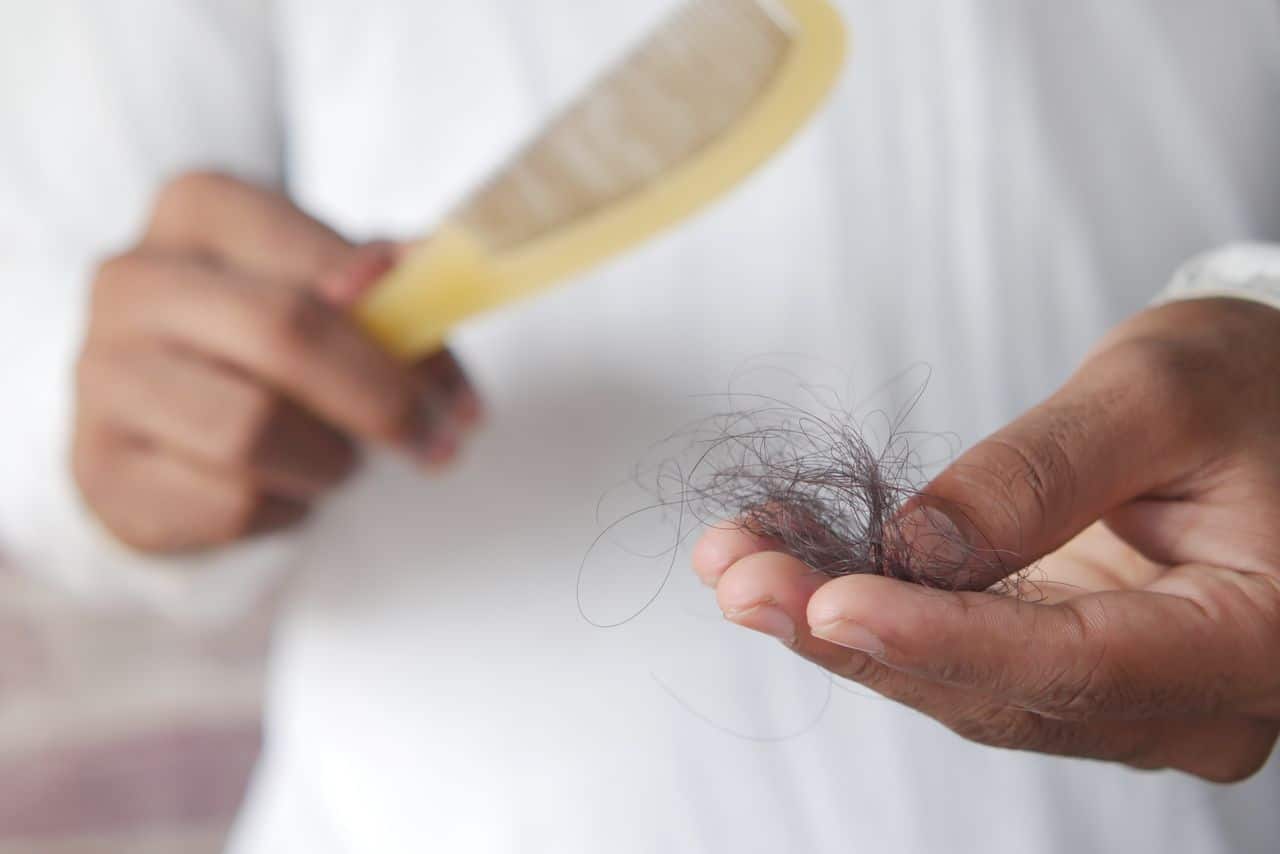
Once awareness sets in, attention narrows. Men in this stage count hairs in the shower drain. They photograph their hairline weekly, sometimes daily, and compare images side by side. They study old photos with the focus of a forensic analyst looking for the exact moment it started.

This is hypervigilance, and it becomes self-reinforcing. The more you monitor, the more salient the hair loss becomes, and the more anxious you feel, which drives more monitoring. Anxiety symptoms at this stage are no longer just reactive; they start shaping daily behavior. Stage 2 can last months, and this is where the pattern becomes entrenched. Behavioral interruption is the most effective coping strategy here: setting concrete limits on mirror-checking, deleting photo comparison folders, and redirecting the monitoring impulse into something constructive.

Stages 3 through 5: bargaining, withdrawal, and rebuilding

Stage 3: Bargaining with products. The logical next move, for many men, is to spend. Supplements, thickening shampoos, laser combs, topical serums — the hair loss industry is built on Stage 3. This phase is driven by a belief that the right product, if found in time, can reverse or at least halt progression. The financial investment escalates alongside the emotional one, and each product that underdelivers deepens the sense of loss. Setting clear financial boundaries before entering this stage, deciding in advance what you will and won’t spend, is the most protective coping move available.

Stage 4: Withdrawal and depression. This is the stage where clinical thresholds are most commonly crossed. Men in Stage 4 decline social invitations, wear hats in situations where they previously wouldn’t, and pull back from dating or intimacy. The avoidance feels protective but compounds isolation. If Stage 4 lasts more than a few weeks, or if the withdrawal is significant, professional support is the appropriate level of care, not another coping strategy to try alone. Therapy, and in some cases a clinical assessment for depression, is the right intervention here.

Stage 5: Identity reconstruction. This is not passive acceptance. Men who reach Stage 5 are actively rebuilding how they see themselves, redefining attractiveness on their own terms, investing in attributes that aren’t tied to appearance, and sometimes making a deliberate choice like shaving their head as an act of agency rather than defeat. Values-based identity work, often done in therapy, is the engine of this stage. The goal isn’t to stop caring about hair. It’s to build a self-concept that doesn’t depend on it.

The anticipation window: why the fear of going bald is often worse than baldness itself

There is a psychological phase that almost no one talks about, partly because it has no official name and partly because the men living through it feel they have no right to discuss it. It begins long before a receding hairline is visible to anyone else. It lives in bathroom mirrors checked at unusual angles, in fingers quietly pressed against temples to measure thickness, in the quiet dread of stepping outside on a windy day. This is the anticipation window, and for many men, the hair loss anxiety during this phase is more psychologically corrosive than the visible loss that eventually follows.

The brain does not wait for loss to be confirmed before it starts grieving. Research on anticipatory grief, a concept most commonly studied in people caring for terminally ill loved ones, shows that the mind processes potential future loss through many of the same emotional and neurological pathways as actual loss. Dread, preoccupation, and a quiet sense of mourning can all begin before there is anything concrete to mourn. Men experiencing the fear of going bald are, in a very real psychological sense, already grieving.

The compulsive behaviors that emerge during this window are telling. Checking every reflective surface, from shop windows to phone screens, becomes automatic. Some men begin avoiding swimming, rain, or any situation where wet or windswept hair might reveal what they are privately terrified of. These are not vanity rituals. They are anxiety-driven safety behaviors, the same kind documented in clinical anxiety research across entirely different contexts.

What makes this phase uniquely isolating is its invisibility. A man cannot easily tell his partner, his friends, or even his doctor that he is distressed about hair he has not yet lost. The fear of being dismissed, or worse, mocked, is real. So the anxiety compounds in silence, week after week, sometimes for years. By the time the loss becomes visible to others, many men have already been carrying its weight alone for a very long time.

Hair loss at 22, 32, and 45: why the same biology creates three different psychological crises

Androgenetic alopecia (AGA), the most common form of male pattern baldness, follows the same hormonal script regardless of when it starts. The psychological experience of losing hair at 22 looks almost nothing like losing it at 45, though. The life stage you’re in when hair loss begins shapes what it means, what it threatens, and how deeply it cuts.

At 22: when hair loss arrives before your identity is finished

For men experiencing hair loss in their early twenties, the timing is particularly difficult. Identity is still forming at this age. You’re navigating the dating world for the first time, establishing yourself professionally, and measuring yourself constantly against peers. Hair loss lands in the middle of all of that. Research on age-related differences in the psychological impact of hair loss found that younger men with AGA experience significantly greater stigmatization, emotional instability, and daily life impairment than older men with the same degree of hair loss. The biology is identical. The psychological weight is not.

The primary fear at this stage is premature aging and romantic rejection. The deeper risk is something psychologists call identity foreclosure, where a person locks in a negative self-concept before they’ve had the chance to fully develop one. Hair loss in young men is shaped by this collision: losing a visible trait at the exact moment you’re still figuring out who you are. What helps most at 22 is identity diversification, actively building self-worth across multiple domains, and peer normalization. Understanding that early-onset hair loss affects roughly 16% of men between 18 and 29 can offer meaningful perspective.

At 32: the quiet erosion during career and relationship building

By 32, most men have a clearer sense of who they are. That clarity comes with higher stakes, though. Career trajectories are forming, relationships are deepening, and the pressure to appear competent and vital is real. Hair loss at this stage tends to work quietly, chipping away at confidence in boardrooms and bedrooms alike.

Curious about something here?

Ask your favorite AI about this article

The primary fear here is looking older than peers and losing a competitive edge. The psychological risk is subtler than at 22: it shows up as hesitation before a big presentation, a reluctance to initiate intimacy, or a creeping sense that something has shifted in how others see you. Cognitive reframing, the practice of actively challenging distorted beliefs about appearance and worth, tends to be the most effective tool here. Professional support from a therapist can help interrupt the quiet erosion before it becomes something harder to address.

At 45 and beyond: when hair loss meets midlife reckoning

At 45 and older, hair loss is more socially expected. “Expected” does not mean painless, though. This is often the stage when men are simultaneously renegotiating their sense of purpose, facing aging anxieties, and sometimes re-entering the dating world after divorce or loss. Hair loss doesn’t arrive alone at this age. It arrives alongside a broader set of questions about relevance and vitality.

The primary fear is accelerated aging and invisibility. The deeper risk is that hair loss becomes a proxy for existential concerns that have nothing to do with hair at all. When a man at 47 fixates on his receding hairline, he may actually be grappling with mortality, shifting relationships, or a career that no longer feels meaningful. What helps most at this stage is existential meaning-making and body image recalibration, learning to locate identity and value in ways that aren’t dependent on physical appearance.

The thread that connects every age

The loss is never just about hair. At 22, hair represents youth and belonging. At 32, it represents competitiveness and desirability. At 45, it represents vitality and visibility. The biology stays the same. What changes is everything that hair is standing in for.

The silence and stigma: why men won’t talk about it

Men won’t talk about hair loss, and that silence is not accidental. From early on, male gender role socialization sends a clear message: expressing distress about your appearance is vain, insecure, or unmasculine. Hair loss sits in an especially awkward space, because it is simultaneously visible to everyone and culturally expected to be shrugged off. The result is private suffering that rarely finds a voice.

Then there is the “just shave it” response. Friends, partners, and even healthcare providers offer this with genuine goodwill, but the effect is dismissive. When a man shares something that genuinely troubles him and the reply is essentially “stop worrying about it,” the message he receives is that his distress is not legitimate. Research on men’s experience of baldness stigma and demasculinization confirms that men associate hair loss with a loss of masculine identity and social standing, feelings that go far deeper than vanity. Telling someone to simply shave does not resolve that grief. It just teaches him to hide it.

Social media compounds the problem from both directions. Algorithmically curated feeds full of full-haired peers quietly intensify the pressure, while the near-total absence of honest male appearance grief in online spaces signals that this is not something men are supposed to discuss. There is no normalized discourse here, no cultural script that makes it acceptable to say, “this is genuinely affecting me.”

The consequences show up in behavior. Large-scale multinational data on men’s reluctance to seek treatment for hair loss reveals a striking gap between the psychological burden men carry and the help they actually seek, with men far less likely than women with equivalent concerns to disclose distress to friends, partners, or clinicians. Male hair loss stigma does not just cause suffering. It actively suppresses the pathways that could relieve it.

This creates a self-reinforcing loop: men stay silent, so no one grasps how common or severe the distress is, so support structures never develop, so men have nowhere to turn and stay silent. Breaking that loop requires cultural change at scale, but it begins somewhere more immediate. It begins with recognizing that the psychological weight of hair loss is real, it is well-documented, and feeling it does not make a man weak. It makes him human.

Depression, anxiety, and the clinical escalation pathway

Research on androgenetic alopecia and psychological distress, including a meta-analysis of 41 studies, consistently links hair loss in men to elevated rates of anxiety, low self-esteem, and significantly reduced quality of life. These are not anecdotal observations. They are replicated, measurable findings using validated clinical tools. Hair loss depression in men is a documented phenomenon, not a sensitivity to be dismissed.

From normal concern to BDD: how to know where you are

Distress about hair loss does not arrive fully formed. It moves along a continuum: occasional concern gives way to frequent preoccupation, which gives way to avoidance behaviors, which eventually produces functional impairment. Studies tracking psychological distress across progressive stages of hair loss confirm that this worsening follows the progression of loss in measurable, stage-dependent ways.

At the far end of that continuum sits body dysmorphic disorder (BDD), a clinical condition in which preoccupation with a perceived physical flaw becomes consuming and disabling. Hair loss body dysmorphic disorder looks like this: spending hours each day fixating on thinning hair, compulsively checking mirrors or deliberately avoiding them, and finding that work performance, relationships, or social functioning have deteriorated as a result. BDD is not vanity. It is a recognized anxiety-spectrum disorder that responds to treatment.

When hair loss distress crosses a clinical threshold

Not every man experiencing distress about hair loss has BDD, but several behavioral patterns suggest that professional support is warranted:

  • Spending more than an hour daily thinking about hair loss
  • Avoiding social situations, events, or photographs because of appearance concerns
  • Declining professional opportunities due to how you believe you look
  • Experiencing persistent low mood, hopelessness, or irritability tied to hair loss
  • Canceling plans or withdrawing from relationships to avoid being seen

Men who reach this threshold rarely self-refer to mental health services. They are far more likely to seek another dermatological solution for what is, at least in part, a psychological problem. A licensed therapist can work directly with the cognitive distortions driving that distress, support body image work, and address the deeper identity disruption that hair loss can trigger. This is not therapy for vanity. It is therapy for genuine psychological suffering, and it is effective. If you recognize yourself in these patterns, talking to a licensed therapist can help. You can create a free ReachLink account and explore support at your own pace, with no commitment required. For men whose distress has moved into persistent low mood or hopelessness, understanding depression and what treatment looks like is a useful starting point.

What men can actually do: from coping strategies to clinical support

Coping with hair loss is not about finding the right shampoo or accepting defeat. It is about addressing the psychological architecture underneath the distress, which is where real relief actually lives.

Reframe the thoughts, then change the behavior

Cognitive behavioral therapy (CBT) is one of the most effective tools here. The goal is not to convince yourself hair does not matter. It is to identify and challenge the automatic thoughts that link hair to worth, attractiveness, and masculinity, and to test whether those beliefs hold up under scrutiny. On the behavioral side, this means breaking compulsive monitoring habits: reducing mirror-checking frequency, setting firm financial limits on products, and gradually re-engaging in social situations you have started avoiding.

Name it to someone

Research on male emotional disclosure consistently shows that naming distress out loud, even to just one trusted person, reduces its intensity. You do not need to make it a big conversation. Saying “this is actually getting to me” to someone who will not dismiss it is enough to start shifting the internal pressure.

What therapy for hair loss distress actually looks like

Psychotherapy for hair loss distress is not about learning to accept it and moving on. It is about working through the identity disruption, grief, and cognitive distortions that drive the suffering. Licensed therapists trained in body image and identity can address this directly. As research into integrating psychological support into hair loss clinical care highlights, psychosocial support is a proportionate and legitimate clinical response, not a last resort. Mood tracking and journaling are also practical self-awareness tools: they help you recognize when distress spikes and what reliably triggers it.

ReachLink’s free mood tracker and journal can help you notice patterns in how hair loss affects your day-to-day wellbeing, a small, private step you can take at your own pace.

What You Have Been Carrying Is Real

If you have read this far, you probably already knew, somewhere quietly, that this was never really about hair. It was about what hair meant to you, about identity and belonging and the fear of being seen differently by a world that does not always make room for men to grieve visible losses. That weight is legitimate, and the fact that you have been carrying it mostly in silence does not make it smaller. It makes it heavier.

You do not have to keep working through this alone. If any of the patterns described here feel familiar, whether that is the obsessive monitoring, the slow withdrawal, or the low mood that has settled in and stayed, talking with a licensed therapist can help you make sense of what is actually going on beneath the surface. You can create a free ReachLink account and connect with a therapist at your own pace, with no commitment required. Support is available whenever you feel ready for it.


FAQ

  • Why does losing my hair feel like I'm losing part of who I am?

    Hair loss can trigger a deeper identity crisis for men because so much of how men are perceived - and how they perceive themselves - is tied to physical appearance and youthfulness. When hair starts thinning or disappearing, it can stir up feelings of lost control, reduced attractiveness, and a sense of aging before one feels ready. These emotional responses are not vanity; they are legitimate psychological reactions tied to self-concept and belonging. Recognizing that the distress goes beyond the physical is the first step toward addressing it in a meaningful way.

  • Can therapy actually help me feel better about going bald, or is that just something I have to accept on my own?

    Therapy can genuinely help men process the emotional weight of hair loss, and it goes well beyond simply telling yourself to accept it. A licensed therapist can use approaches like Cognitive Behavioral Therapy (CBT) to identify and reframe the negative thought patterns that link hair loss to self-worth and identity. Through talk therapy, men often discover that the real underlying issues - fear of aging, loss of confidence, or social anxiety - are very workable with the right support. You do not have to push through this alone; therapy gives you practical tools to rebuild your sense of self from the inside out.

  • Is it normal for hair loss to make me want to avoid social situations or pull back from people?

    Yes, and it is more common than most men realize. Hair loss can quietly reshape social behavior, leading some men to avoid gatherings, decline photos, or pull back from dating or professional opportunities out of self-consciousness. This kind of avoidance can compound over time, feeding into isolation and lower self-esteem. If you notice that hair loss is changing how you show up in your relationships or daily life, that is a meaningful signal that the emotional impact deserves attention, not just the physical one.

  • I think I need to talk to someone about how hair loss has been affecting me mentally. Where do I even start?

    Starting is simpler than it might feel right now. ReachLink connects men with licensed therapists through human care coordinators - real people, not algorithms - who take the time to understand what you are going through before matching you with a therapist who fits your needs. You can begin with a free assessment that helps clarify what kind of support would be most helpful for you. Sessions happen online, so you can get support from wherever you feel most comfortable, and having a real person guide the matching process can make that first step feel far less overwhelming.

  • Does hair loss hit men differently depending on how old they are when it starts?

    Age plays a real role in how hair loss lands emotionally. For younger men, losing hair in their twenties or thirties can feel especially disorienting because it clashes with the stage of life they expect to be in, often during periods of dating, career building, and forming identity. Older men may face it alongside other mid-life transitions, which can amplify feelings of aging or irrelevance. Regardless of when it happens, the emotional response is valid and shaped by personal history, self-image, and the social pressures men face at any age - and a therapist can help you work through those layers in the context of your own experience.

Have a question about this topic?

Type your question and we'll send it to the AI assistant of your choice.

Your question will be sent to an external AI assistant. If you're going through a crisis, please reach out to the 988 Suicide and Crisis Lifeline (call or text 988).

Share this article
Take the First Step

Get Real Support.
See Real Results.

Join thousands who have found specialized therapy that truly understands their health journey. Start today — it takes less than 5 minutes.

No referral needed · Most insurance accepted · Start within 48 hours