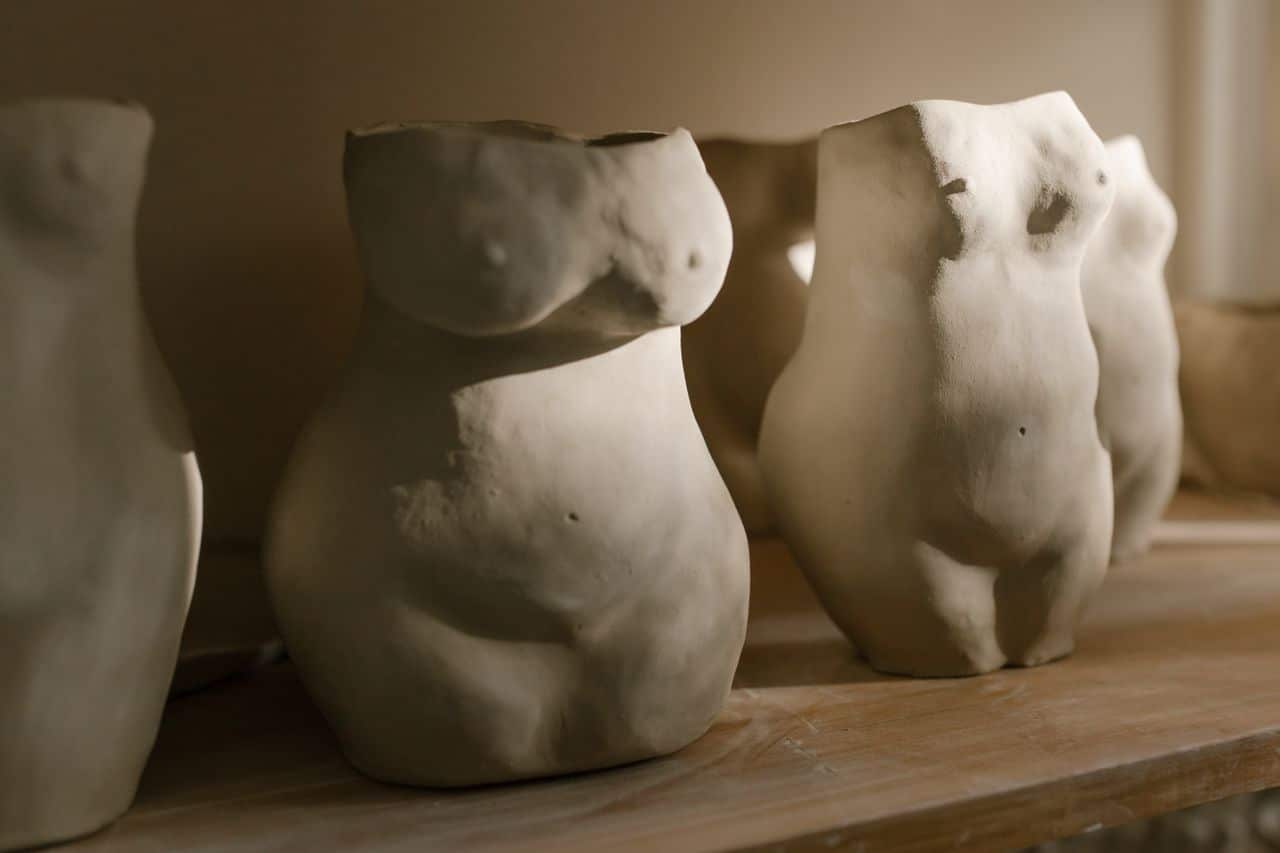
Wabi-sabi, the Japanese philosophy of accepting imperfection and impermanence, teaches perfectionists that no flawless finished version of themselves or their work ever existed to reach, though lasting relief from contingent self-worth typically requires working through cognitive behavioral therapy, acceptance and commitment therapy, or self-compassion focused approaches with a licensed therapist.
What if the flaw you keep trying to fix is actually the most honest part of you? Wabi sabi, the Japanese philosophy of imperfection, offers perfectionists a different question to sit with, and real support to help the answer actually stick.
What wabi-sabi actually means
Before wabi-sabi became a hashtag or a home decor aesthetic, it was two separate ideas doing very different work. Understanding what they meant on their own is the only way to understand what they became together.
What is the Japanese philosophy of accepting imperfections?
Wabi originally pointed to the simplicity and quiet austerity of living apart from wealth and status, the kind of stillness found in a plain room or a solitary walk. Sabi described the beauty that shows up as things age: the tarnish on metal, the fading of cloth, the wear a well-used object collects over years. Over time these two words fused into a single aesthetic sensibility, one that treats impermanence as a defining feature of beauty rather than a flaw in it. The philosophy holds that nothing is permanent, nothing is finished, and nothing is perfect, and it offers that as a plain description of how things actually are, not a complaint about how they should be different.
Wabi-sabi in a sentence sounds something like this: the chipped rim of a favorite mug is not damage, it is the record of every morning you used it.
What are the 7 principles of wabi-sabi?
English-language sources commonly list seven qualities associated with wabi-sabi: simplicity, asymmetry, austerity, naturalness, subtlety, freedom from convention, and tranquility. These aren’t rules to follow so much as ways of noticing what already surrounds you. A cracked bowl, an unevenly glazed cup, or a garden left slightly wild all reflect this same sensibility, though the deeper ideas of imperfection made visible go further than any object can show on its own.
How the term drifted online
Search “wabi sabi meaning” on TikTok or Urban Dictionary and you’ll find something thinner: an aesthetic of messy rooms, mismatched furniture, or a shrug used to excuse low standards. The wabi sabi King of the Hill episode that introduced many Americans to the phrase played much of it for laughs, reducing a centuries-old sensibility to a punchline about clutter. The design world’s version, raw wood and uneven ceramics styled for a certain look, is a real expression of the idea. It just isn’t the whole of it.
How perfectionism takes over a life
High standards and perfectionism look similar from the outside, but they diverge in what happens when the standard is missed. Someone with high standards feels disappointed, adjusts, and moves on. Someone with perfectionism feels the miss as evidence about who they are. The gap between the two is not the height of the bar. It is what the missed bar is allowed to mean about you.
Researchers commonly split perfectionism into three types: self-oriented, where the pressure comes from inside; other-oriented, where you hold the people around you to the same impossible line; and socially prescribed, the belief that other people require flawlessness from you and will withdraw approval if you fall short. Socially prescribed perfectionism tends to feel the heaviest, because the standard seems to belong to everyone else, which makes it feel impossible to argue with or lower.
The mechanics of contingent self-worth
At the center of most perfectionism sits contingent self-worth: the sense that you are acceptable only in proportion to your output. Good work buys you a temporary sense of being okay. A mistake, a missed deadline, or an average result withdraws it. Dr. Suzette Fagan, LCSW, DSW describes the shift out of that pattern this way: “But I am a human being, not a human doing. And so, therefore, I had to separate myself from my accomplishments, separate myself from what I do and who I actually am.” On the space between how you feel and who you are, Dr. Suzette Fagan, LCSW, DSW adds: “what you are seeing as far as you are concerned is so minuscule in comparison to who you’re supposed to And it doesn’t matter how you’re feeling. You are not what you feel.”
What it looks like day to day
Common perfectionism signs hide inside behaviors that get mistaken for something else. Procrastination often looks like laziness when it is actually fear of a flawed first attempt. Projects stall near the finish line because finishing means the work will be judged. A sent text or email gets reread a dozen times, and a completed piece of work never quite earns the satisfaction it should.
The quieter costs run underneath the visible ones. New skills go untried because being a beginner feels unbearable. Relationships get kept slightly at a distance, since closeness risks being seen clearly. Rest arrives, if it arrives at all, without ever feeling earned.
Perfectionism is not itself a diagnosis, but it frequently travels alongside anxiety, depressive symptoms, burnout, and disordered eating. That overlap is one reason the pattern deserves more attention than a personality quirk usually gets, a point the section on when perfectionism needs more support picks up directly.
Where wabi-sabi answers what perfectionism gets wrong
Perfectionism runs on a quiet assumption: somewhere out there, a finished, flawless version of the thing exists, and falling short of it counts as failure. The report, the body, the relationship, the version of yourself that would finally be enough. Wabi-sabi does not argue with the standard. It argues with the premise underneath it, denying that a flawless finished version was ever available to reach in the first place.
That is a different move from telling yourself good enough is fine. “Good enough” still agrees that perfect was the real target and simply lets you stop short of it. Wabi-sabi says the target does not exist. Nothing was ever going to arrive at flawless, because nothing stays still long enough to hold that shape.
Impermanence is the argument that does the work here. If everything, the object, the body, the piece of writing, is already in the process of changing, then arriving is not a category that applies to it. There is no finish line waiting at the end of the process, only more process. Research on wabi-sabi’s framework of imperfection and impermanence connects this reframe to lower anxiety compared with chasing a flawless, finished ideal.
Wear becomes information in this frame rather than damage. A crack, a wrinkle, a scar on an object or a person carries a record that an untouched version does not have. This is the wear-as-biography idea, and it sits at the center of accepting imperfection as something other than settling.
The common objection is that this excuses mediocrity, that if nothing is ever finished, why try. Wabi-sabi craftsmanship answers by being demanding rather than careless, insisting on attention and care precisely because the object will show every shortcut taken with it. This reframe has a limit worth naming honestly: an aesthetic philosophy can change how you interpret a flaw, but it will not, by itself, quiet a nervous system that has spent years running on threat.
Kintsugi and other examples of imperfection made visible
When people picture wabi-sabi, they usually picture a bowl. Specifically, a broken one, put back together with seams of gold.
Kintsugi: the break as history, not flaw
Kintsugi is the Japanese practice of repairing broken pottery with lacquer mixed with powdered gold, silver, or platinum. Instead of hiding the crack, the repair highlights it, turning the break into a visible line running through the object. The scholarship on repair and appreciation in Zen thought frames this as treating breakage as part of an object’s history rather than damage to disguise. The bowl is not worth less for having broken. It is worth more, because now it has a story a pristine bowl does not.
It helps to keep two words separate here. Kintsugi is a specific technique, a craft with tools and gold and a name. Wabi-sabi is the broader sensibility that makes the repaired bowl beautiful in the first place, the aesthetic lens that finds a mended crack more interesting than a flawless surface. Research on the geo-cultural conditions of kintsugi supports this distinction: kintsugi is one practice that expresses wabi-sabi, not a synonym for it. You could remove kintsugi entirely and wabi-sabi would still exist in a mossy stone or a linen sheet. The gold seam is just the most photographed version of the idea.
Where the aesthetic shows up
The tea ceremony tradition is often credited with popularizing this taste. A tea master choosing between a machine-made bowl with a flawless glaze and a handmade one with an uneven rim, a slight warp, a glaze that pooled unevenly in the firing, will often choose the imperfect one. The irregularity is read as evidence of the maker’s hand, not a defect to correct.
This preference shows up throughout wabi-sabi design meaning in interiors and objects: unlacquered wood allowed to darken and weather over years, linen valued for the way it creases rather than resists creasing, hand-thrown ceramics that keep their thrower’s fingerprints as visible tool marks. None of it is trying to look new. Wabi-sabi examples in the natural world follow the same logic: moss softening the edges of a stone, a fence gone silver and warped from years of weather, a preference for autumn’s fading color over high summer’s saturated one.
The same eye can turn toward a life. A scar, a career detour, a friendship that changed shape after a hard year: each carries a visible seam. Wabi-sabi asks whether the seam has to be read as damage, or whether it can be read the way a tea master reads an uneven glaze.
Everyday practices that build tolerance for imperfect
Reading about wabi-sabi can shift how you think, but perfectionism loosens its grip through repetition, not insight alone. These are small, low-stakes exercises you can try this week. Think of them as an accepting imperfection practice, not a personality overhaul.
Small experiments in leaving things unfinished
Pick one low-stakes task each week and stop at adequate on purpose. Send the email after one read-through instead of five. Leave the closet slightly uneven. The point is not the task itself but the data you collect afterward: what actually happened when you stopped short of perfect, versus what you predicted would happen.
A related version is the first-draft rule. Write, cook, or make something with revision banned for a set stretch of time. When the urge to fix it shows up, notice it and let it pass without acting on it. Research on Zen aesthetic principles suggests that practicing naturalness and simplicity as everyday habits, rather than just admiring them as ideas, is linked to better psychosomatic well-being.
Before you start either experiment, set your good-enough standard in advance. Name what “done” looks like on paper first, so the target cannot quietly move while you’re mid-task. This is one of the more practical perfectionism exercises because it removes the moment where your standards creep upward in real time.