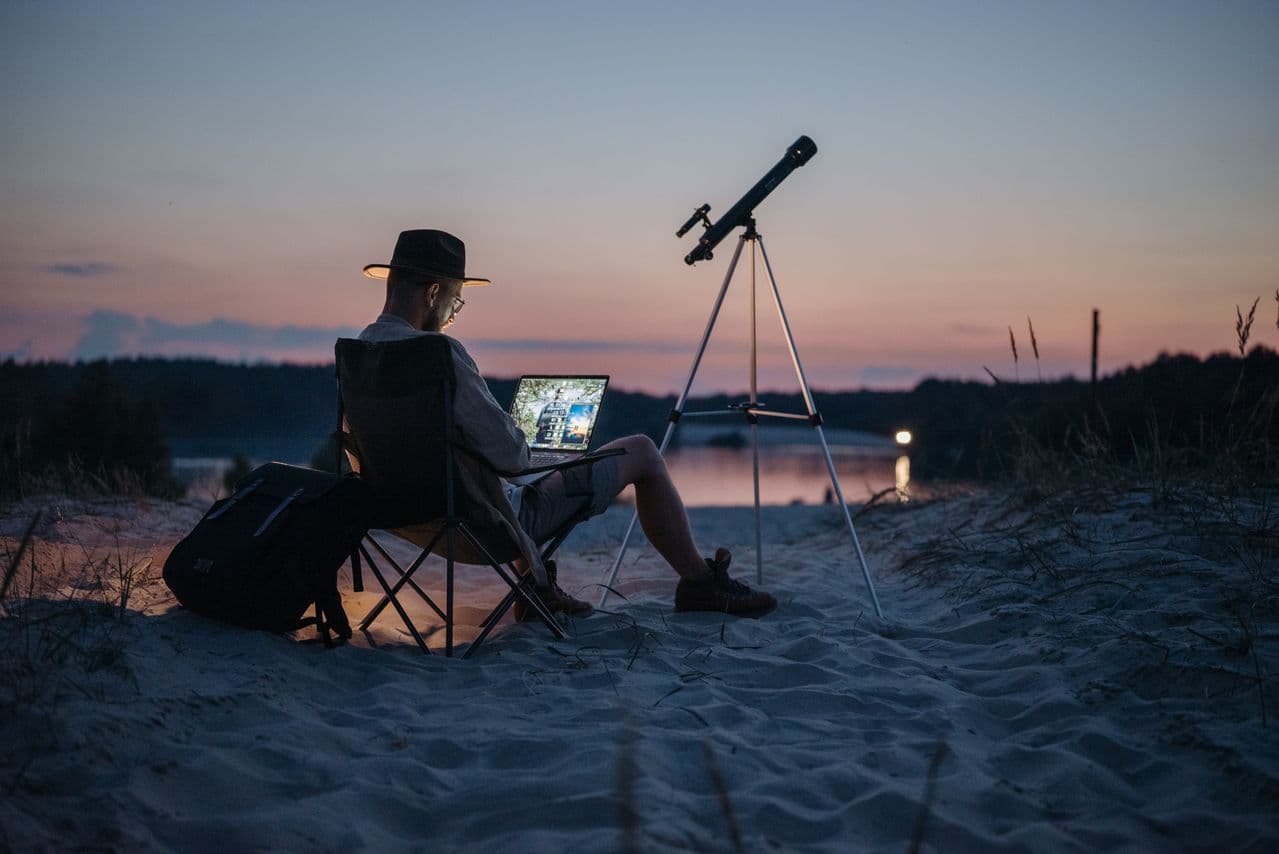
Digital nomad life gradually erodes mental health through recurring loneliness, decision fatigue, and travel burnout once the initial novelty fades, often surfacing as anxiety, disrupted sleep, and reverse culture shock, but evidence-based therapy approaches like CBT and ACT, paired with consistent daily anchors, help restore stability and emotional resilience for those living a mobile lifestyle.
What happens when the sunset photos stop feeling like enough? Digital nomad life often starts as pure momentum, then quietly tips into exhaustion, disconnection, and a loneliness no crowded hostel fixes. Here's what that shift actually looks like, and why it deserves more than a travel reset.
The digital nomad lifestyle looks like freedom from the outside, and for many people it is, at least at first. Digital nomad mental health tends to unravel quietly: the novelty fades, loneliness builds between goodbyes, and a kind of exhaustion sets in that sleep does not fix. This guide looks at what that can look like and what tends to help, on the road and after coming home.
The point where the novelty runs out
The photos never show a Tuesday. They show the rooftop pool, the coworking space with the ocean view, the sunset from a new balcony in a new country. Digital nomad reality is the version that happens after the photo: finding a pharmacy that carries what you need, figuring out which SIM card works outside the capital, doing laundry in a machine with instructions in a language you do not read. The gap between the two is not a failure of planning. It is just what the lifestyle looks like once you live inside it instead of documenting it.
What is digital nomad life like for mental health?
Early on, novelty does a lot of quiet work. A new city supplies its own motivation: everything is unfamiliar, so everything gets your attention, and attention feels a lot like excitement. That effect fades as the unfamiliar becomes routine. Once it does, whatever the novelty was covering, low mood, anxiety, a restlessness that predates the trip, becomes visible again, because the thing that was distracting you from it is gone.
How does being a digital nomad affect your mental health?
It tends to affect people at the transition point more than at any single low moment. You land somewhere new and feel nothing where you expected excitement. You start dreading the next flight instead of planning it. You catch yourself scrolling apartment listings in the city you left, not to move back, just to look. None of that means you chose wrong or that you are, as some people put it to themselves, bad at freedom. It is a predictable adjustment point, not a verdict on the decision to leave.
What shows up here often depends on why you left in the first place. Someone who left to outrun a bad job experiences this moment differently than someone who left after a breakup, or a loss, or a long stretch of feeling stuck. The novelty covered different things for different people, so when it lifts, different things surface. For some, what surfaces resembles anxiety symptoms that had nowhere to be loud until the distraction stopped.
Loneliness that a crowded hostel does not solve
A hostel common room at 9pm can have twenty people in it and you can still feel completely unreached. That is the specific shape of digital nomad loneliness: it is not a shortage of people, it is a shortage of people who remember what you told them last month. Social contact and being known are different things. You can have five conversations a day and still go weeks without anyone asking how the thing you mentioned last week turned out, because nobody was there for last week.
What are the challenges of digital nomad life on mental health?
The core challenge is relational: constant movement trades relationship depth for volume, and depth is what tends to protect mood. One piece of this is the repeated goodbye. Every few weeks you say a real goodbye to someone you only just let in, over and over, and that adds up to a low-grade grief that rarely gets named as grief because nothing dramatic happened.
Another piece is the always-the-new-person loop. You introduce yourself with the same four facts, where you’re from, how long you’ve been traveling, what you do for work, and then you move on before anyone gets past them. Meanwhile the friendships back home keep drifting. You’re the one who left, so the guilt tends to land on you even when nobody back home intended it that way. Time zones do their own quiet damage too, turning a quick call with a parent or an old friend into something that takes real planning, until it happens less and less.
Dating and relationships under constant relocation follow the same pattern: real intensity, almost no continuity, because the relationship usually has an expiration date built into someone’s flight. None of this shows up on a packed calendar, which is exactly why it gets dismissed. A full schedule can sit right alongside remote work isolation, and sustained disconnection like this can eventually show up as symptoms that are easy to mistake for something else entirely.
Travel burnout and the exhaustion that sleep does not fix
Why losing routine costs more than it looks like it should
At home, most of your day runs on autopilot. You know where to get coffee, which train to catch, when the gym is quiet. On the road, every one of those small tasks turns back into a decision: where to eat, where to work today, how to get across town, which neighborhood is safe to walk at night. None of these choices are hard on their own. Stacked together, dozens of times a day, in a new city every few weeks, they add up to something that feels less like adventure and more like travel burnout.
Decision fatigue and the always-on workday
This pile-up of small choices has a name: decision fatigue, the gradual depletion that comes from making one judgment call after another with no break between them. For a digital nomad, that fatigue stacks directly on top of a workday with no real edges. Without a commute or an office to leave, work and rest collapse into the same room, the same laptop, the same hours. Clients spread across time zones can turn a single workday into a 14-hour window of partial availability, where you are never fully off and rarely fully on. Sleep, meals, and movement stop following any default shape once nothing in your environment repeats, and poor sleep in particular feeds back into mood, concentration, and daytime functioning, which makes the whole cycle harder to climb out of. Keeping some regular movement in the day, even briefly, is one of the few things that can support mood and lower stress when everything else around you keeps shifting. Money stress and the anxious math of a precarious income add their own weight, but that is a separate strain worth naming and setting aside here.
Burnout red flags worth taking seriously
Digital nomad burnout rarely announces itself. It shows up in small, specific signs worth naming plainly: dreading a flight you booked excitedly, resenting the place you worked hard to get to, producing less while working more hours, canceling plans you actually wanted to keep, and a creeping cynicism toward travel itself. The clearest tell is exhaustion that does not lift after a week of rest, because the load driving it is cognitive and logistical, not only physical. A break taken in the same conditions, another new apartment, another unfamiliar grocery store, another string of decisions, rarely resolves what caused the exhaustion in the first place. Naming the pattern early, and building some stress management habits into the routine, matters more than waiting for a vacation to fix it.
Anxiety, money, and the stress that follows you across borders
Digital nomad financial stress rarely looks like a low bank balance. It looks like not knowing what the balance will be next month, next invoice, or next border crossing. That unpredictability, more than the dollar amount, is what keeps the nervous system on alert. Digital nomad anxiety tends to live in the gap between what you earn and what you can plan around.
Income that does not arrive on the same day twice
Freelance or contract income rarely lands on a schedule, but flights, visa fees, and insurance premiums do not wait for a client to pay an invoice. One month covers everything with room to spare, the next requires dipping into savings to cover a renewal you forgot was due. Currency swings make this worse, since a payment that looked sufficient in one currency can shrink by the time it clears in another. Add tax obligations that may apply in more than one country, and the math itself becomes a source of dread, not just the outcome.
Insurance, visas, and admin you cannot finish
What is the cost of living as a digital nomad? It depends less on the country and more on the paperwork required to stay there legally and safely. Health insurance gaps raise a specific fear: getting seriously ill somewhere you do not know the system, the language, or who to call. Visa deadlines create a recurring, calendared dread, often resolved with a border run that eats a weekend and a flight budget. None of this resolves once. It recurs, on its own timeline, regardless of how settled you feel.
When the worry outlasts the bank balance
Having savings does not switch the anxiety off, because the instability is structural, not numerical. A stolen passport or a broken laptop can unravel weeks of plans in an unfamiliar place, which is part of why many solo travelers, especially women traveling alone, stay in a low-grade state of alertness. The promise of stretching money further in a cheaper country works for a while, then quietly stops working once visa runs, insurance, and lost income are added back in.
Drinking, stimulants, and the coping nobody puts in the newsletter
In most nomad hubs, drinking is just what people do. It is the rooftop meetup, the welcome dinner for whoever arrived this week, the thing that happens after the coworking space closes. Because everyone is doing it, digital nomad drinking rarely gets read as a coping behavior. It looks like socializing, and some of the time it is.
Alcohol also happens to be the fastest route to feeling close to strangers you will likely never see again. A few drinks compress the usual slow work of trust into one evening. That shortcut feels good, especially when you know most of these people are leaving in a few weeks and so are you. The catch is that the closeness built that way tends to evaporate as fast as it arrived.
The productivity side runs on caffeine and other stimulants, used to hold together a workday that gets stretched and reshuffled across time zones. Calls at midnight, deadlines at dawn, a body that never settles into one rhythm. Sleep aids and over-the-counter remedies get folded in too, often framed as jet lag management rather than what they sometimes are: a way to force sleep in a body that has not felt unfamiliar surroundings become normal. Cheap alcohol, no commute, and nobody around who knew you last year remove most of the friction that would normally slow this down. There is no coworker from home noticing you seem off, no routine to disrupt.
Counting drinks is less useful here than a few plainer questions. Is this the only way the day reliably ends. Could you stop for two weeks without rearranging your social plans around it. Are you drinking alone in the apartment now, not at the rooftop with everyone else. This pattern is genuinely hard to see from inside it, because everyone around you is doing the same thing, and in a month they will be gone and someone else will have taken their place at the same bar.
Building anchors when your address keeps changing
What helps with a lot of what unravels in nomadic life is often not a new city. It is a set of things that do not change when the city does. Anchors are small and boring on purpose: a fixed wake time, the same first hour of the day, a workspace you set up the same way out of the same bag, no matter if you are in Lisbon or Chiang Mai. A digital nomad routine tends to work because it is repeatable, not because it is impressive.
Daily anchors that fit in a carry-on
Objects help as much as schedules. A specific mug, a pillowcase, one book you keep rereading: these are small enough to pack and specific enough to make any rented room feel recognizable. The point is not comfort for its own sake, it is recognition. When nothing else in the room is familiar, a known object gives your nervous system one thing to land on.
Slow travel fits here too, and it is worth treating as a mental health decision rather than only a budget one. Staying somewhere long enough that a cafe recognizes you, that you know which side street to avoid, that a face becomes familiar, gives a place time to stop feeling like a stage set. Constant movement can keep everything feeling unfamiliar. Staying put for a while is what lets a place become real.
Grounding when a place stops feeling real
If a city or even a room starts to feel flat or unreal, the fastest way back is usually through the body, not the mind. Feel the pressure of your feet on the floor. Notice the weight of a bag across your shoulders. Name five objects in the room. Hold a warm cup and pay attention to the heat moving into your hands.