ReachLink is now hiring licensed therapists. Apply to join the current cohort before July 31. Apply now →

Why You Miss a Time You Never Actually Lived

GriefJuly 23, 202614 min read
Why You Miss a Time You Never Actually Lived

Anemoia is the nostalgia you feel for a time or place you never actually lived through, a psychologically real experience rooted in the brain's default mode network, collective memory, and dopamine reward systems, that is typically healthy and enriching but worth exploring with a therapist when it becomes a persistent escape from the present.

Have you ever felt a deep ache for a time you never actually lived through, stirred by a faded photograph or a song from decades before you were born? That longing is called anemoia, and science reveals it is more psychologically real, and more meaningful, than you might expect.

What Is Anemoia?

You stumble across a photograph taken decades before you were born: strangers in sun-faded colors, laughing at a backyard barbecue you never attended. Something aches. It is not sadness, exactly. It feels more like longing for a life that was never yours to begin with. That feeling has a name: anemoia.

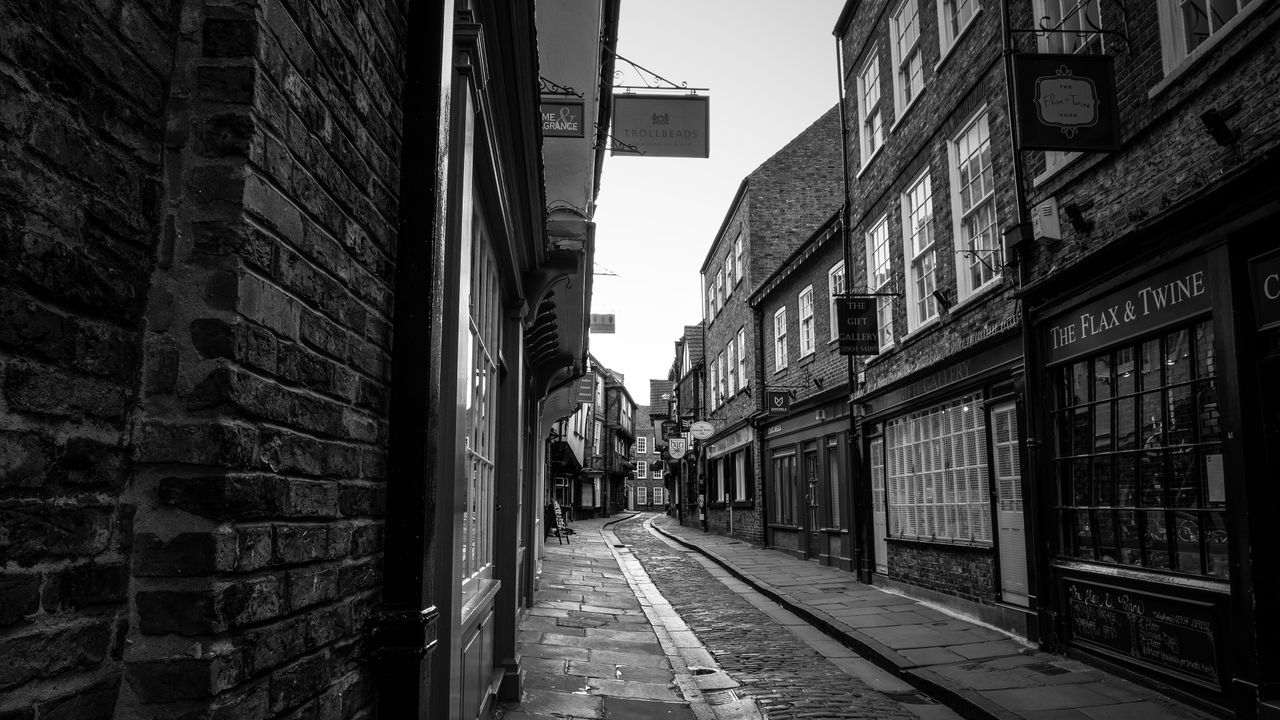
Anemoia is the nostalgia you feel for a time, place, or experience you never actually lived through. It might be stirred by a folk song drifting out of a country you have never visited, the warm, grainy flicker of a Super 8 film reel, or the particular stillness of a black-and-white street scene from a city you have only ever seen in pictures. The feeling arrives uninvited, and it is oddly specific.

Unlike standard nostalgia, anemoia does not need personal memory as its raw material. Ordinary nostalgia is built from your own past: the smell of a childhood kitchen, the sound of a song from your teenage years. Anemoia skips that requirement entirely. You can ache for an era you missed by 50 years.

The word was coined and popularized through The Dictionary of Obscure Sorrows, a creative project dedicated to naming emotions that lack an official label. Anemoia has no formal entry in clinical or diagnostic literature, and it is not a mental health diagnosis. But that does not make it any less real or meaningful. Once people hear the word, they almost always recognize the feeling immediately, which says something significant about how widely this experience is shared.

Where Does the Word Anemoia Come From?

Anemoia was coined by John Koenig, the writer and filmmaker behind The Dictionary of Obscure Sorrows, a creative project dedicated to inventing names for emotions that English has never quite managed to capture. Koenig launched the project as a YouTube channel and blog in 2009, and it grew into a published book in 2021. His goal was simple but quietly radical: if a feeling is real enough to be felt, it deserves a word.

The word is built from Greek roots. Ánemos means wind, and the suffix borrows its emotional weight from the structure of nostalgia, which combines nóstos (homecoming) and álgos (pain). Together, anemoia conjures something like a longing carried on the wind, a homesickness that drifts in from a time or place you never actually inhabited. It is grief with no clear address.

Because the word was invented rather than inherited from ancient Greek, some might dismiss it as poetic wordplay. But its cultural traction tells a different story. Anemoia now appears in academic papers, therapy discussions, and online communities where people recognize the feeling instantly, often saying they had no idea there was a word for it. That kind of resonance points to something Koenig’s broader project makes plain: our emotional vocabulary has real gaps, and psychology is only beginning to map them.

Why Do We Feel Nostalgic for Times We Never Lived?

The short answer is that your brain is remarkably good at building emotional experiences from borrowed material. To understand why, it helps to look at a few converging ideas from psychology and neuroscience.

Researchers Thomas Suddendorf and Michael Corballis describe a capacity they call mental time travel: the brain’s ability to project your consciousness into scenarios beyond your direct experience, whether that means replaying the past or simulating futures that have not happened yet. Crucially, this ability does not require you to have actually been there. Your mind can construct a vivid, emotionally resonant version of 1960s New York or rural Ireland in the 1800s just as readily as it reconstructs last Tuesday’s commute.

Sociologist Maurice Halbwachs adds another layer with his concept of collective memory, the idea that we inherit shared cultural narratives about eras, places, and ways of life. These narratives are passed down through family stories, films, music, and photographs. Over time, they can feel surprisingly personal, even when they describe a world that existed before you were born.

The brain’s architecture helps explain why this happens so easily. The neural networks involved in remembering real events, including the default mode network, the medial prefrontal cortex, and the hippocampus, are the same ones activated when you vividly imagine experiences you never had. The brain does not draw a clean line between the two.

Psychologists Clay Routledge, Constantine Sedikides, and Tim Wildschut have shown that nostalgia serves real psychological functions: reinforcing identity, strengthening a sense of social connection, and helping people find meaning. Anemoia appears to tap into exactly those same needs, using memories that were never yours to begin with. The longing you feel is genuine, generated by your own brain, and that makes it no less real.

The Neuroscience of Missing What You Never Had

Anemoia is not just poetic or sentimental. It has a biological basis, rooted in the way specific brain systems process memory, pattern, and emotion.

How the Default Mode Network Constructs False Familiarity

The default mode network (DMN) is a set of interconnected brain regions that switches on when your mind wanders, when you daydream, and when you reflect on yourself and your experiences. Think of it as your brain’s simulation engine. It does not just replay real memories; it actively constructs imagined scenarios, including ones set in times and places you have never visited.

When you lose yourself in a sepia-toned photograph or a film set in the 1940s, your DMN is building a full mental model of that world. It pulls from fragments of information you have absorbed over a lifetime and assembles them into something that feels coherent and lived-in. The result is a simulated memory that carries real emotional weight, even though it has no grounding in personal experience.

Why Your Brain Uses Cultural Memory Instead of Personal Memory

The hippocampus is best known for retrieving memories, but it also does something called scene construction: building rich, spatially coherent environments from incomplete information. An old photograph does not just show you a kitchen from 1962. Your hippocampus fills in the smell of the coffee, the texture of the linoleum, the muffled sound of a radio in the next room.

When personal memory is absent, the brain does not simply stop. It uses cultural memory as scaffolding instead. Family stories, films, novels, and shared historical narratives all provide raw material. Your DMN then assembles these borrowed fragments into something that registers emotionally as remembering, even though it is closer to imagining. This is why someone who grew up hearing their grandmother describe her childhood home can feel a genuine pang of loss for a place they never set foot in.

Mirror neuron systems likely play a role here too. When you absorb someone else’s memory through a memoir, a film, or a story told at the dinner table, the emotional circuits in your brain activate as though the experience were partially your own. You do not just understand the feeling intellectually. You feel a version of it.

The Dopamine Pathway That Makes Old Music Feel Like Home

Dopamine reward pathways respond to familiar auditory and visual patterns, and this is where anemoia gets its pull. When your brain recognizes a pattern, whether it is a chord progression from a decade before you were born or the visual grammar of a vintage film poster, it releases dopamine as a reward for successful recognition. Crucially, this reward fires regardless of whether the pattern comes from personal experience.

This is why a Motown record or a sun-faded polaroid aesthetic can feel genuinely comforting to someone with no personal history attached to either. Your brain is not checking the source of the familiarity. It is simply rewarding the recognition itself, and that reward feels, from the inside, remarkably like coming home.

What Triggers Anemoia?

Anemoia does not arrive randomly. Specific stimuli reliably pull you toward times you never lived through.

Visual Media

Faded photographs, Super 8 footage, VHS grain, and vintage color palettes do more than look old. They activate the hippocampus while simultaneously signaling another era through what researchers call implicit temporal markers. The washed-out tones and soft focus are cues your brain reads as evidence of a real past, even one you were not part of. Your mind fills in the rest.

Music and Sound

Auditory triggers may be the most powerful of all. The auditory cortex has unusually dense connections to emotional processing centers, which is why a song can move you faster than a paragraph can. Analog warmth, vinyl crackle, radio static, and lo-fi recordings all carry sonic fingerprints of specific eras. Hearing them does not just remind you of a time; it briefly reconstructs the emotional atmosphere of one.

Storytelling and Narrative

A grandparent’s story about their childhood, a well-written memoir, historical fiction, or an oral history project gives your default mode network the raw material it needs to construct an immersive internal experience. The more vivid and emotionally grounded the narrative, the more convincing the simulation becomes.

Aesthetic Movements and Subcultures

Vaporwave, cottagecore, dark academia, and mid-century modern design each package entire eras into a coherent visual and emotional system. They offer curated entry points into feelings of anemoia that are always just a scroll away.

Algorithmic Amplification

Streaming platforms and social media recommendation systems do not just surface nostalgic content once. They learn your preferences and build feedback loops around them, increasing how often you encounter era-specific aesthetics and reducing your exposure to the present moment.

Curious about something here?

Ask your favorite AI about this article

Physical Spaces and Objects

Antique shops, old buildings, vintage clothing, and handwritten letters carry the residue of other lives. Tactile and spatial cues engage your senses in ways that screens cannot fully replicate, grounding the feeling of anemoia in something you can hold or walk through.

Anemoia vs. the World’s Other Words for Impossible Longing

Every culture seems to have reached for a word to describe the longing that ordinary language cannot hold. These words are not synonyms. Each one carves out a slightly different emotional territory, and placing anemoia alongside them reveals exactly what makes it distinct.

Saudade (Portuguese) describes a deep ache for someone or something absent, often carrying the quiet understanding that what is lost may never return. Saudade is rooted in personal experience and real absence. You must have had something to grieve it.

Hiraeth (Welsh) comes closest to anemoia’s territory. It means homesickness for a home you cannot return to, or that never existed at all. That quality of something that never was is shared with anemoia, but hiraeth is anchored to place and homeland rather than to a specific era in time.

Sehnsucht (German) describes an intense, often inconsolable longing for something distant, vague, or simply unattainable. C.S. Lewis called it “the stab of joy,” a sudden, piercing ache for something just beyond reach. Sehnsucht is more existential than anemoia and does not require a temporal target at all.

Toska (Russian) was described by Vladimir Nabokov as a feeling that ranges from mild melancholy to full spiritual anguish. Its defining quality is that it may have no object whatsoever. There is nothing specific to long for. The longing is simply there.

Mono no aware (Japanese) shifts the orientation entirely. Rather than reaching backward or outward, it describes a bittersweet awareness of impermanence in the present moment, the gentle ache of watching something beautiful as it fades.

Anemoia stands apart from all of them across three specific dimensions. It is temporal, meaning it targets a past era rather than a person, place, or abstract ideal. It is vicarious, meaning the person longing never actually lived through that time. And it is modern, coined in the internet age to name a feeling that digital media actively amplifies by flooding us with curated images of eras we never inhabited. No older word was built to carry all three of those qualities at once.

Is Your Anemoia Healthy? A Clinical Perspective

Anemoia exists on a spectrum. At the adaptive end, it fuels creative projects, deepens your appreciation for history, and generates warm feelings that make the present richer rather than emptier. In the middle sits neutral anemoia: occasional daydreaming about another era, an aesthetic preference for vintage styles, the quiet pleasure of an old film. Neither of these warrants any concern.

The maladaptive end looks different. Warning signs include spending increasing amounts of time in nostalgic media specifically to avoid present-day discomfort, feeling genuinely distressed that you were born in the wrong era, or romanticizing past decades while ignoring how harmful those eras were for many people. Longing for the 1950s, for example, is worth examining if it glosses over the very real inequities that defined that decade for millions.

When anemoia functions as avoidance, it can sometimes overlap with patterns seen in depression, including persistent dissatisfaction with the present and withdrawal from current relationships or responsibilities. The longing itself is not the problem. What it might be substituting for is worth a closer look.

Most anemoia is completely normal and psychologically healthy. It only warrants clinical attention when it consistently interferes with present-moment functioning or masks deeper emotional needs. If your longing for another time feels less like creative daydreaming and more like an escape from something in the present, talking with a therapist can help you explore what is underneath. You can start with a free assessment at ReachLink, with no commitment required and entirely at your own pace.

Can You Truly Miss What You Never Had?

Philosophy has long wrestled with counterfactual emotions, the idea that we might authentically grieve or long for something that was never part of our lived experience. Anemoia sits right at the center of that debate. It refuses the tidy assumption that only direct experience earns emotional weight.

What you may actually be missing is not the era itself. The 1970s, the golden age of a city you never visited, a slower and quieter version of life: these are containers for feelings. Belonging, simplicity, coherence. Anemoia may be a longing for a feeling that a time represents in cultural imagination, not the time itself. Narrative therapy recognizes something similar: the stories we inhabit shape who we are, even when we did not write them from scratch.

Philosophers use the concept of possible worlds, coherent versions of reality that could have existed, to explore alternate truths. Anemoia may be what it feels like to emotionally inhabit one of those worlds. It feels real because, in a meaningful sense, it is real to you.

That capacity says something profound about human consciousness. You are not limited to the emotions your own life directly provides. Borrowed feeling, inherited longing, imagined belonging: these are not lesser emotions. They are part of what connects you to every generation that came before.

What You Feel Is Real, Even Without a Memory to Attach It To

There is something quietly remarkable about the fact that you can ache for a world you never touched. Anemoia is not confusion or sentimentality. It is evidence of how deeply human beings are wired for connection across time, how the longing to belong somewhere, to a place, a feeling, a way of life, does not require a personal history to be genuine. What you are reaching for when that feeling arrives is real, even if the era it points toward is not yours.

If you have noticed that this kind of longing sometimes shades into something heavier, a persistent sense that the present does not quite fit, or a pull toward the past that feels more like escape than appreciation, that is worth sitting with. A therapist can help you gently explore what might be underneath. If you are curious about that kind of support, you can try ReachLink for free, with no commitment and entirely at your own pace.


FAQ

  • What is it called when you feel nostalgic for a time period you never actually lived through?

    Anemoia is the word for feeling a deep, nostalgic longing for a time you never actually experienced. It might show up as a strong emotional pull toward a specific decade, era, or way of life from the past, even though you have no personal memories of it. This feeling is more common than many people realize and often surfaces through music, old photographs, films, or vintage aesthetics. While it can feel bittersweet or confusing, it is a recognized emotional experience that reflects how our minds process meaning, identity, and a sense of belonging.

  • Can therapy actually help if I'm grieving for a time that wasn't even mine?

    Yes, therapy can genuinely help if anemoia is causing distress, loneliness, or a sense of disconnection from your present life. A licensed therapist can help you explore what underlying emotional needs the longing might be pointing to, such as a desire for simplicity, community, or a slower pace of life. Approaches like cognitive behavioral therapy (CBT) or talk therapy are often used to help people understand patterns in their thinking and find more fulfilling ways to meet those emotional needs in their current life. If this feeling is interfering with how you engage with your day-to-day world, speaking with a therapist is a meaningful and practical next step.

  • Why do I feel so emotionally attached to a past era I have no real connection to?

    Feeling attached to a past era you never lived through often reflects unmet emotional needs in the present. Your mind may be drawn to a romanticized version of another time because it represents things that feel missing today, like community, purpose, simplicity, or a sense of cultural identity. Psychologically, this kind of longing can also be a way of processing grief for something you sense you should have had but did not. Understanding what specifically draws you to that era can be a helpful starting point for deeper self-reflection or therapeutic work.

  • I think I need to talk to someone about these feelings - how do I get started with therapy?

    If you are ready to talk to someone, a good first step is completing a free assessment with ReachLink. ReachLink connects people with licensed therapists through human care coordinators rather than algorithms, which means a real person helps match you with a therapist who fits your specific needs and situation. All therapy is conducted through ReachLink's telehealth platform, making it easy to access from wherever you are. You do not need a formal diagnosis or a crisis to reach out - simply feeling stuck, disconnected, or curious about these emotions is reason enough to start.

  • Is longing for a different era just a quirky personality trait, or could it be a sign of something deeper?

    For some people, anemoia is a passing curiosity, but for others it can signal a deeper sense of grief, disconnection, or dissatisfaction with the present. If the longing feels persistent, heavy, or tied to feelings of not belonging in your current life, it may be worth exploring with a therapist. These feelings can sometimes be connected to broader patterns like depression, existential searching, or unresolved grief. A therapist can help you distinguish between a meaningful emotional pull and something that is quietly affecting your well-being.

Have a question about this topic?

Type your question and we'll send it to the AI assistant of your choice.

Your question will be sent to an external AI assistant. If you're going through a crisis, please reach out to the 988 Suicide and Crisis Lifeline (call or text 988).

Share this article
Take the First Step

Get Real Support.
See Real Results.

Join thousands who have found specialized therapy that truly understands their health journey. Start today — it takes less than 5 minutes.

No referral needed · Most insurance accepted · Start within 48 hours