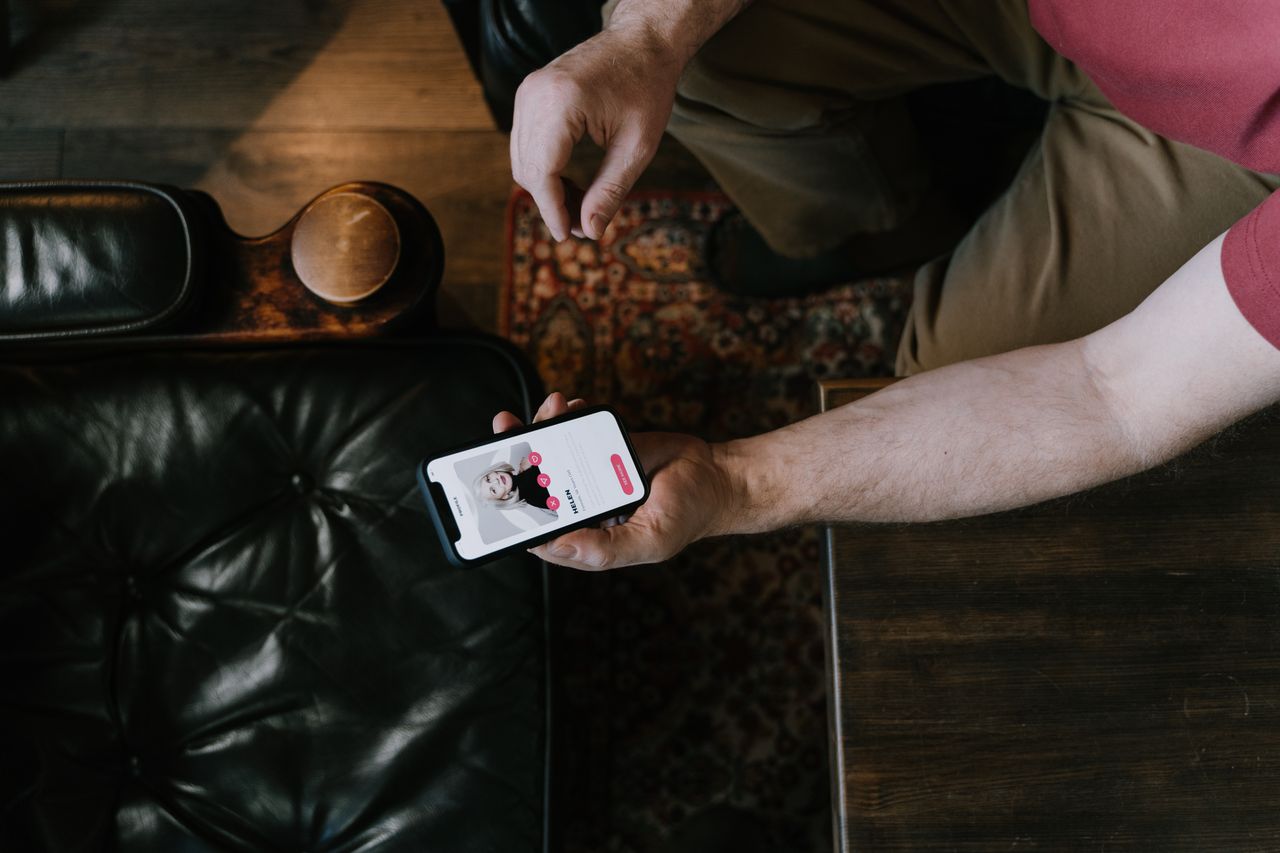
Dating app fatigue produces measurable psychological harm, including eroded self-esteem, rejection sensitivity, and emotional numbing, because swipe-based platforms are engineered for engagement rather than genuine connection, and identifying where you fall on the fatigue-to-dependency spectrum helps you choose the right recovery approach, from a structured app break to working with a licensed therapist.
What if every swipe you take is actually making real connection harder to find? If you've opened a dating app feeling hopeful and closed it feeling hollow, you're not imagining things. This article unpacks dating app fatigue, why the apps are designed to keep you stuck, and how to break the cycle.
What is dating app fatigue?
Dating app fatigue is the emotional, cognitive, and motivational exhaustion that builds up from prolonged use of swipe-based dating platforms. It goes well beyond simply feeling tired of dating. People experiencing it often report a specific cluster of psychological effects: decision fatigue from evaluating an endless stream of profiles, low self-esteem shaped by match rates and message responses, and a gradual emotional numbing that makes genuine connection feel harder over time.
This is not a formal clinical diagnosis, and you won’t find it listed in any psychological manual. That said, relationship researchers are paying increasing attention to how these platforms affect mental health and self-perception. The patterns showing up in the research are consistent enough to take seriously.
The scale of the problem matters here. Pew Research Center data on online dating in the U.S. shows that tens of millions of Americans use dating apps, making this a phenomenon that touches a significant portion of the adult population. And yet, most singles report dissatisfaction with their dating lives, which points to something structural rather than personal.
That’s the central paradox worth examining: dating apps were built to deliver more connection, but for many people, they consistently deliver less. The problem isn’t that you’re doing something wrong. It’s that the design of these platforms works against the very thing you’re looking for.
Signs you’re experiencing dating app fatigue
Dating app fatigue doesn’t always announce itself loudly. It tends to creep in gradually, shifting your relationship with the apps from hopeful to hollow. Recognizing the signs early can help you understand what’s actually going on, and why it isn’t a personal failing.
Emotional signs
One of the earliest clues is a sense of dread when you open the app. Where you once felt a flutter of excitement at a new match, now you feel a low-grade irritability, or nothing at all. Conversations that would have thrilled you six months ago feel like obligations. That apathy is your mind’s way of signaling that it’s running low on emotional fuel.
Behavioral signs
Pay attention to how you’re actually using the apps. Are you swiping without reading profiles, making split-second decisions on autopilot? Do you let matches expire because messaging feels like too much effort? You might find yourself opening the app, staring at it, and closing it again without doing anything at all. These patterns point to a disconnect between what you’re doing and what you actually want.
Cognitive signs
Fatigue also shows up in how you think about the people you encounter. You might catch yourself assuming the worst about a match before a single message is exchanged, or running a cynical internal commentary that would have felt foreign to you when you first started. That mental shortcut is a sign your brain is protecting itself from repeated disappointment.
Physical signs
Your body keeps score too. A tightening in your chest when a notification pings, tension in your shoulders during a swiping session, or disrupted sleep from late-night scrolling are all real, physical symptoms worth taking seriously.
The shift from want to have to
Perhaps the most telling sign is a quiet but significant change in motivation. You’re no longer swiping because you want to find someone. You’re swiping because you’re afraid that if you stop, you’ll miss out. That fear-driven compulsion, rather than genuine hope, is a core feature of dating app fatigue and a signal worth listening to.
Fatigue, burnout, or dependency? A self-diagnostic framework
Not everyone who feels worn out by dating apps is experiencing the same thing. What looks like app fatigue from the outside can actually sit anywhere on a spectrum, from a simple need for rest to something that requires real, structured support. Understanding where you fall on that spectrum matters, because the right response for each state is different.
Fatigue: when you need a break
Fatigue is the mildest state, and the most common. It shows up as a dip in motivation: you open the app, feel nothing, and close it again. Your self-worth stays intact. You still believe connection is possible; you’re just tired of the process right now. Think of it like needing a vacation from a job you still mostly like. A short, intentional break, even a week or two off the apps, is usually enough to reset. When you return, the interest comes back.
The key marker here is reversibility. Fatigue lifts with rest.
Burnout: when a break isn’t enough
Burnout runs deeper. It develops over time with sustained use, and research on dating app burnout confirms it is a distinct, measurable phenomenon, not just a bad week. Psychologist Christina Maslach’s foundational burnout model identifies three core dimensions: emotional exhaustion, cynicism, and a reduced sense of personal accomplishment. All three can appear in dating app burnout.
You might notice yourself depersonalizing matches, treating profiles as interchangeable rather than as real people. Your self-esteem may drop measurably, not just your enthusiasm. Taking a break helps temporarily, but the cynicism returns quickly when you go back. Burnout calls for active recovery: setting clear limits around app use, rebuilding your sense of self outside of dating metrics, and giving yourself a longer, more deliberate offline period.
Dependency: when the app uses you
Dependency is the most serious state, and it flips the dynamic entirely. Here, you are not using the app to find connection. The app is functioning as a source of validation, and compulsive checking has become a way to manage anxiety or emotional discomfort. Behavioral addiction criteria from the DSM-5 are useful here: dependency involves continued use despite negative outcomes, loss of control over the behavior, and withdrawal symptoms, including anxiety, when access is removed.
If deleting the app produces genuine distress, or if you keep returning despite knowing it makes you feel worse, that pattern deserves attention beyond self-help strategies. Talking to a licensed therapist can help you understand the underlying needs driving compulsive use. You can start with a free assessment on ReachLink, at your own pace and with no commitment required.
Knowing which state you are in is the first step toward an honest, effective response.
Why swiping apps are designed to keep you hooked
If you’ve ever told yourself you’d spend five minutes on a dating app and looked up an hour later, that’s not a personal failing. It’s the product working exactly as intended. Dating apps are built using the same behavioral psychology principles that power slot machines and social media feeds, and understanding those mechanics can help you stop blaming yourself for feeling stuck in the cycle.
Variable ratio reinforcement is the engine underneath it all. In behavioral psychology, this term describes a reward system where the payoff arrives unpredictably, sometimes after two swipes, sometimes after two hundred. Research shows this is the pattern most resistant to extinction, meaning it’s the hardest to stop responding to. Every match you receive is a small, unpredictable reward, and your brain learns to keep pulling the lever to chase the next one.
The infinite scroll makes this worse. When there’s no bottom to the deck, the app quietly suggests that someone better is always one swipe away. Psychologists call this the paradox of choice: the more options you have, the harder it becomes to commit to any of them, and the less satisfied you feel with your decisions. Endless swiping doesn’t feel like abundance. It feels like obligation.
Notification design adds another layer. A ping that says “Someone liked you!” without revealing who is a deliberate choice, not an oversight. That partial information creates a loop of anxiety and compulsive check-ins that keeps you returning to the app long after you planned to put your phone down.
Filter-stacking is a subtler trap. The ability to set hyper-specific preferences feels like control, but over-filtering can eliminate hundreds of viable matches before a single conversation ever happens. You’re left with the feeling of endless options and the reality of genuine isolation.
None of this is accidental. A meta-analysis aggregating 17 years’ worth of studies on dating app use and psychological well-being found that sustained engagement with these platforms is associated with measurable psychological harm. The business model helps explain why: dating apps profit from prolonged engagement, not from successful matches that end in someone deleting the app. Your loneliness, in a very real sense, is a feature.
The loneliness paradox: why more access creates less connection
Here is a contradiction worth sitting with: you have access to more potential partners than any generation in human history, and yet dating feels more exhausting and isolating than ever. This is not a coincidence, and it is not your fault. It is the predictable result of psychological mechanisms that app design quietly sets in motion, often without you realizing it.
The relationship capital displacement effect
Think of your emotional energy as a finite resource, like money in a bank account. Every interaction you invest in, even a low-stakes one, draws from that account. The Relationship Capital Displacement Effect describes what happens when time and emotional energy spent on shallow digital interactions actively crowd out the capacity for meaningful connection. When you spend an hour cycling through matches, composing openers, and managing conversations that go nowhere, you are not resting or recharging. You are spending relational capital on interactions that return almost nothing. Over time, the account runs low, and genuine connection, which demands patience, vulnerability, and sustained attention, starts to feel like too costly a withdrawal.
This is compounded by what the swipe interface itself teaches you. Presenting people as a stack of photos and a short bio trains your brain to evaluate potential partners the way you evaluate a product listing: quickly, comparatively, and with the assumption that something better is one scroll away. Complex human beings get reduced to a thumbnail judgment. That mental habit does not stay inside the app. Research consistently shows that cognitive schemas, the mental shortcuts we build through repetition, transfer across contexts. Regular app users begin carrying snap-judgment patterns and a next-option mindset into face-to-face interactions, making it harder to extend the patience that real relationships require.
Why more options produce less satisfaction
Research by Iyengar and Lepper on the paradox of choice demonstrated that an abundance of options does not lead to better decisions or greater happiness. It leads to less satisfaction, more post-decision regret, and higher rates of paralysis. Applied to dating apps, the infinite deck of potential matches does not help you find a better partner. It makes every choice feel provisional, because the next profile might be the one. Commitment becomes psychologically harder when the alternative pile never empties.
There is also the illusion that activity equals connection. Maintaining fifteen shallow conversations at once creates a genuine feeling of social engagement, a buzzing sense that something is happening. But surface-level exchanges deliver none of the relational depth that actually reduces loneliness. Loneliness is not simply the absence of other people. It is the absence of feeling known. Swipe culture keeps you surrounded by strangers while systematically preventing the conditions under which strangers become something more.
The psychological effects of online dating burnout
Dating apps were designed to help you find connection, but the mechanics of how they work can quietly wear down your mental health. The effects are not always dramatic or sudden. More often, they accumulate slowly, reshaping how you see yourself, how you interpret other people’s behavior, and how much emotional energy you can bring to any potential relationship.