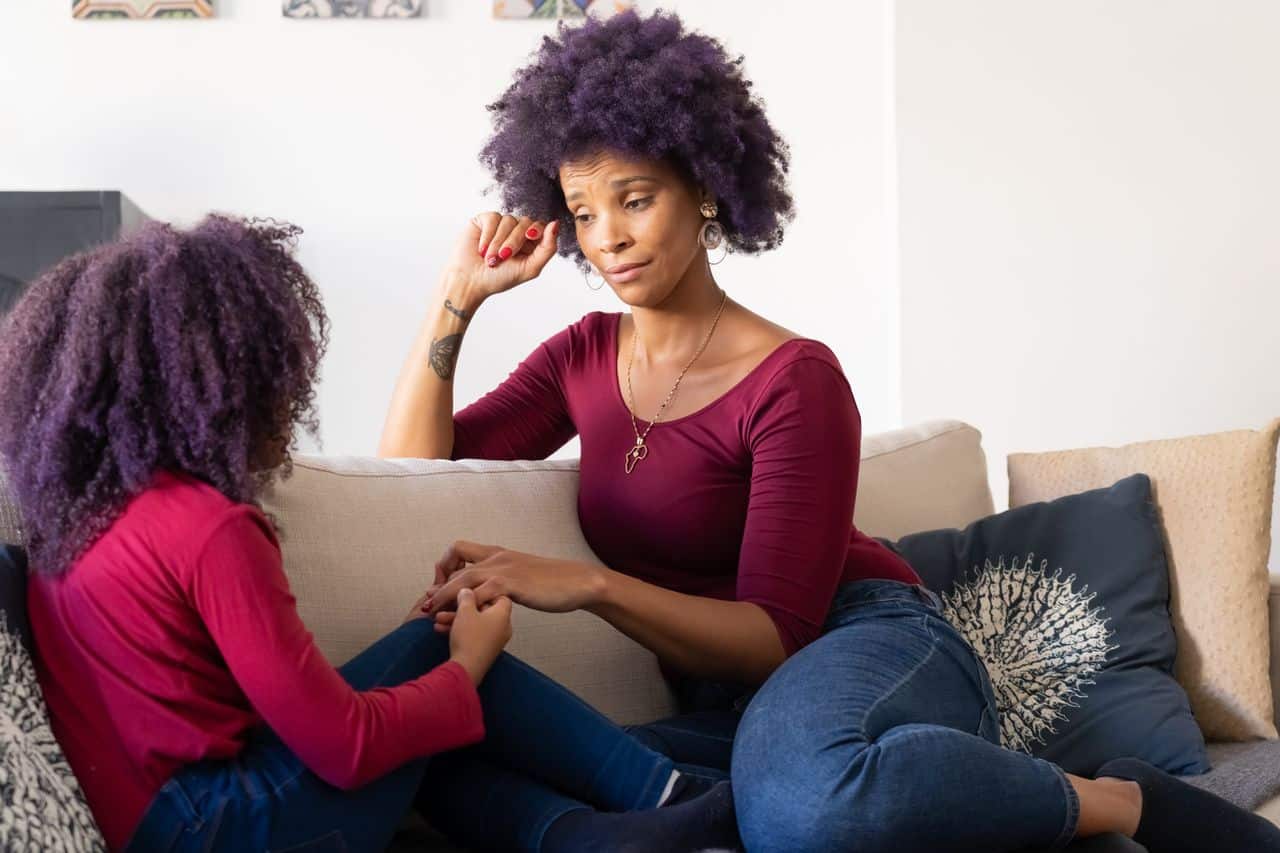
Emotional incest occurs when a parent relies on their child as a primary emotional confidant or surrogate partner, a boundary violation that carries long-term costs including disrupted identity, anxious or avoidant attachment, and complex PTSD, all of which trauma-informed therapists help adult survivors understand and heal.
Growing up as your parent's closest confidant may have felt normal, even loving. But emotional incest, when a parent turns to their child to fill an adult emotional role, is a recognized form of childhood trauma, and the cost it carries rarely shows up until adulthood.
What is emotional incest?
Emotional incest happens when a parent consistently turns to their child to meet emotional needs that should be met by another adult. The child becomes a surrogate partner, a confidant, or an emotional caretaker, filling a role they were never meant to fill. Psychologist Kenneth Adams first named and defined this dynamic, describing it as covert incest to capture how it mirrors the boundary violations of physical incest, just without sexual contact. The word “incest” applies because the harm operates at the same level: the collapse of an appropriate parent-child boundary.
If you’re encountering this term for the first time and wondering whether it applies to your childhood, that uncertainty is completely normal. Many people who experienced this dynamic were never given language for it, and the absence of a name can make it harder to trust that what happened was real and significant.
One reason this concept can be difficult to recognize is that nothing overtly harmful may have occurred. There was no physical abuse. A parent may have seemed loving, even unusually close. But research validating the Childhood Emotional Incest Scale distinguishes the “surrogate spouse” dynamic from general parentification, identifying it as its own distinct construct with its own pattern of harm. The damage comes from role reversal: a child’s developmental needs get pushed aside to serve the parent’s emotional needs. As the CDC recognizes in its framework on childhood emotional maltreatment, emotional harm is clinically significant even when no physical abuse occurs.
Emotional incest does not appear as a formal diagnosis in the DSM, but it is a well-recognized concept in developmental trauma and family systems therapy, and it sits squarely within the broader landscape of childhood trauma.
Why do parents do this?
One of the most disorienting parts of recognizing emotional incest is reconciling the harm with the fact that your parent probably loved you. Most parents who lean on their children this way are not acting out of cruelty. Understanding what drives this behavior can help you make sense of your experience without dismissing the very real damage it caused.
The parent’s own unmet needs
Many parents who emotionally parentify their children carry unresolved attachment wounds from their own upbringing. If a parent was never taught what healthy emotional boundaries look like, they simply replicate the only relational template they ever knew. A parent who was their own mother’s confidant will often, without any conscious awareness, recreate that same dynamic with their child.
Loss also plays a significant role. Divorce, the death of a partner, or a spouse who is emotionally unavailable can strip a parent of their primary adult attachment figure overnight. The child becomes the most accessible source of comfort, and the boundary quietly erodes.
Some parents struggle with personality disorders or traits, such as narcissistic, dependent, or borderline patterns, that make independent emotional regulation genuinely difficult. Mental illness, addiction, and chronic stress can have the same effect, depleting whatever coping capacity the parent has and leaving the child to fill the gap.
Cultural and family-of-origin norms can also make this dynamic nearly invisible. In some families, a child taking on emotional labor is framed as maturity or loyalty, not as a burden. When everyone around you treats enmeshment as normal, there is no signal that anything is wrong.
None of this excuses the behavior. Intent does not determine impact, and the harm to you was real regardless of what your parent understood or intended.
Signs of emotional incest
Emotional incest doesn’t always look dramatic from the outside. To neighbors, teachers, or extended family, the relationship might seem unusually close or even admirable. But the child living inside it often carries a quiet, persistent weight: the sense that their parent’s emotional survival depends on them. Recognizing the specific patterns can help you make sense of experiences you may have never had words for.
- The parent shares adult problems with the child. This goes beyond the occasional stressful day. It means a parent regularly unloading marital conflict, sexual frustrations, financial fears, or workplace grievances onto a child who has no emotional framework to process any of it.
- The child feels responsible for the parent’s emotional state. You may have grown up scanning your parent’s mood the moment you walked into a room, feeling guilty when they were upset, or anxious whenever you were separated from them.
- The parent treats the child as their primary emotional support. Rather than turning to adult friendships, a partner, or a therapist, the parent consistently relies on the child to meet needs that belong in adult relationships.
- The child’s own needs come second, consistently. Your preferences, developmental milestones, and emotional experiences were regularly set aside to make room for the parent’s feelings. Over time, your inner life became background noise.
- The parent monitors the child’s inner world intrusively. Demanding to know every thought, feeling, or private experience, framed as closeness or love, is a form of emotional surveillance. Real intimacy doesn’t require full access.
- The parent reacts with jealousy or withdrawal to the child’s independence. When you formed friendships, developed romantic interests, or simply wanted space, the parent became punitive, cold, or guilt-inducing.
- The child is placed in the middle of adult conflicts. Being asked to mediate between parents, take sides, or act as a confidant during a separation puts a child in a role they were never equipped to hold.
- The relationship feels exclusive in a way that isolates. The dynamic is often framed as special, but that specialness comes at a cost: distance from siblings, peers, and the ordinary social world of childhood.
Examples of emotional incest in everyday life
Reading about emotional incest in the abstract can feel distant. But when you see it in specific, ordinary moments, something shifts. These examples are drawn from the kinds of situations that come up repeatedly in therapy, and they may feel uncomfortably familiar.
A mother going through a divorce pulls her 10-year-old son close and calls him her “little man.” She tells him he’s the only one who truly understands her. He starts skipping soccer practice to stay home with her, because leaving feels like abandonment.
A father sits his teenage daughter down and walks her through everything wrong with his marriage. He asks her directly: should he stay or should he leave? She spends the next decade terrified of conflict in her own relationships, having learned early that love means solving problems that were never hers to solve.
A parent insists on sharing a bed with their child long past the age when it makes developmental sense, framing it as mutual comfort. The child learns that their body and their space exist to regulate someone else’s emotions.
A parent reads their child’s diary. When the child asks for privacy, the parent cries or gets angry, making the child feel guilty for wanting a self that belongs only to them.
A mother shares graphic details about her sex life with her daughter, treating her like a peer confidante. The generational boundary, which exists to protect the child, dissolves entirely.
A parent becomes withdrawn, tearful, or cold every time their child makes plans with friends or starts dating. The child learns to hide their relationships, or to feel guilty for having them.
And then there’s the phrase many people with this experience carry into adulthood: “You’re the only reason I’m still alive.” Spoken regularly, it places the full weight of a parent’s survival on a child’s small shoulders.
None of this means a parent can never be vulnerable in front of their child. Parents are human, and children can handle age-appropriate honesty. The difference lies in pattern, role reversal, and weight. A single hard conversation is not emotional incest. A childhood spent managing a parent’s emotional world, where your needs come second to theirs and your boundaries are treated as betrayal, is something else entirely.
Five archetypes of the emotionally incestuous parent
Emotional incest doesn’t look the same in every family. Recognizing the specific pattern your parent followed can give you language for something that may have felt impossible to name. These five archetypes aren’t rigid diagnoses, as many parents blend more than one, but they reflect the most common and distinct dynamics that show up in adult survivors’ experiences.
The Wounded Bird
This parent used you as a container for their pain. Chronic illness, grief, failed relationships, or a deep sense of victimhood became the emotional weather of the household, and your job was to absorb it. You may have learned early that your own needs were a burden, because there was simply no room for them. As an adult, you might find yourself drawn to caretaking roles while quietly erasing your own feelings, wants, and limits.
The Best Friend
This parent erased the generational line entirely. Phrases like “we tell each other everything” or “you’re my best friend” may have felt like compliments at the time. But being treated as a peer confidant meant you never got to simply be parented. You were recruited into adult emotional territory before you had the tools to handle it. In adulthood, relationships with authority figures can feel confusing or threatening, and navigating hierarchy at work or in social settings may bring up unexpected friction.
The Reverser
This parent made you the parent. You may have managed household logistics, talked a parent down from emotional crises, or stepped in as a caregiver for younger siblings. The role came with a quiet weight: if you didn’t hold things together, everything would fall apart. Adults who grew up with a Reverser often struggle with hyperresponsibility, chronic burnout, and a deep discomfort with doing nothing.
The Boundary Dissolver
This parent treated your privacy, your body, and your inner world as extensions of their own. Monitoring, intruding, and controlling were framed as love, which made it nearly impossible to name what felt wrong. When the message is that closeness means having no separateness, you grow up without a clear sense of where you end and others begin. Poor personal boundaries and difficulty identifying your own needs are common patterns in adulthood.
The Loyalty Enforcer
This parent weaponized your relationship against the other parent, a sibling, or extended family. Exclusive allegiance was the price of love, and guilt or punishment enforced it. You were placed in the middle of adult conflicts that were never yours to resolve. As an adult, this often shows up as black-and-white thinking in relationships, a deep fear of being disloyal, and difficulty holding space for complexity or nuance when people you love are in conflict.
Effects and long-term consequences on adult survivors
Emotional incest doesn’t end when you leave home. The patterns it creates, built during the years when your brain and identity were still forming, tend to follow you into adulthood in ways that can feel confusing or even shameful. You may not connect your current struggles to what happened in childhood. But the effects are real, well-documented, and worth understanding.
Identity and self-worth
When a child’s role is to manage a parent’s emotional world, their own inner life gets pushed aside. Your preferences, values, and desires had little room to develop because your energy was directed outward, toward the parent’s needs. As an adult, this can leave you genuinely unsure of who you are. You might struggle to name what you want in a relationship, a career, or even a conversation. Chronic guilt tends to run alongside this, along with an outsized sense of responsibility for how other people feel. When someone near you is upset, it may feel like your fault, your problem to fix, or both.
Relationships and intimacy
Emotional incest disrupts attachment in two common directions. Some survivors develop anxious attachment, staying hypervigilant to a partner’s moods and needs the same way they once monitored a parent. Others swing toward avoidant attachment, pulling back from closeness because intimacy became associated with being consumed or controlled. Boundaries are often difficult in either case: you may find yourself over-giving and people-pleasing, or walling off emotionally to stay safe.
The caretaker dynamic can also resurface in adult relationships. You might gravitate toward partners who seem to need rescuing, or notice that you’ve unconsciously stepped into the same role you played as a child. Intimacy and sexuality can carry their own complications, including confusion between emotional closeness and threat, shame around desire, or a tendency to dissociate during moments of vulnerability.