Amy Cuddy's body language research on power posing shows that while original hormonal claims were scientifically debunked, expansive postures consistently increase feelings of confidence and reduce anxiety, making them valuable therapeutic tools for individuals facing high-stakes situations or working through self-esteem challenges.
What if everything you think you know about power posing is wrong? Amy Cuddy's body language research sparked a global phenomenon, but years of scientific scrutiny revealed surprising truths about what actually works for confidence and what doesn't.
What is power posing? Amy Cuddy’s core discovery
Power posing refers to adopting expansive, open body positions that signal dominance and confidence. Think of a superhero stance: feet planted wide, hands on hips, chest lifted, chin up. These postures take up space and project authority. Amy Cuddy, a social psychologist then at Harvard Business School, proposed that holding these positions could do more than just change how others see you. She believed they could actually change how you feel about yourself.
What is Amy Cuddy’s research on body language?
In 2010, Cuddy co-authored a groundbreaking study with Dana Carney and Andy Yap that introduced power posing to the scientific community. The research examined whether adopting certain body positions could influence hormone levels and behavior. Participants held either high-power or low-power poses for just two minutes before completing tasks designed to measure confidence and risk tolerance.
The original findings suggested that high-power poses increased testosterone (associated with dominance) while decreasing cortisol (the stress hormone). Participants who struck powerful stances also showed greater willingness to take risks and reported feeling more powerful overall. These results hinted at a simple but compelling idea: your body could essentially trick your brain into feeling more confident.
High-power poses share common characteristics. They are open, expansive, and take up physical space. The classic “Wonder Woman” pose, with hands on hips and feet apart, became the most recognizable example. Leaning back with hands behind your head or standing with arms raised in a V shape also qualify. Low-power poses look quite different: crossed arms, hunched shoulders, making yourself smaller, or touching your neck protectively.
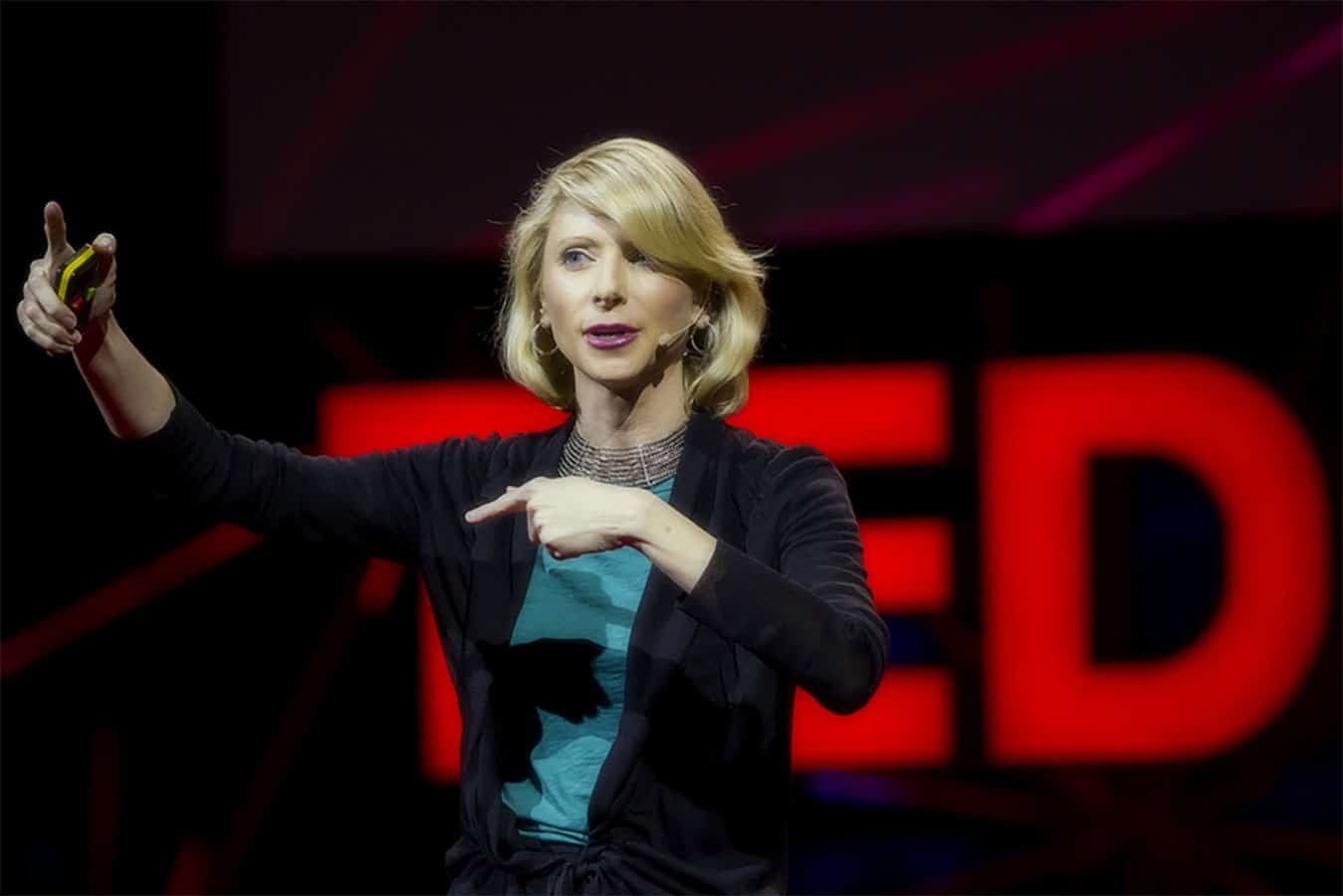
Cuddy’s academic work might have remained in research journals if not for her 2012 TED talk. Her presentation, titled “Your Body Language May Shape Who You Are,” became one of the most-watched TED talks ever. In it, she shared not only the science but her own story of overcoming self-doubt after a traumatic brain injury. The talk resonated with millions who wanted practical tools for building confidence before high-stakes moments like job interviews, public speaking, or difficult conversations.
The talk’s popularity transformed power posing from an academic concept into a cultural phenomenon. People around the world began striking superhero stances in bathroom stalls and empty hallways, hoping to boost their confidence before walking into challenging situations.
The science behind power posing: what the research actually shows
Before power posing became a cultural phenomenon, it started as a carefully designed laboratory experiment. Understanding what the original research actually measured helps separate scientific findings from popular interpretation.
The 2010 study by Carney, Cuddy, and Yap involved 42 participants randomly assigned to hold either high-power poses (expansive, open postures) or low-power poses (contracted, closed postures) for just two minutes. Researchers collected saliva samples before and after the posing exercise to measure testosterone and cortisol levels. Participants then completed a gambling task designed to assess risk tolerance and reported how powerful they felt.
The original study made three striking claims: high-power posers showed increased testosterone levels, decreased cortisol, and greater willingness to take risks. These findings suggested that simply changing your posture for two minutes could shift your hormonal profile in meaningful ways.
How does body language affect confidence according to Amy Cuddy?
Cuddy’s central argument rests on a bidirectional relationship between body and mind. We already know that confident people tend to adopt expansive postures. Her research proposed the reverse might also be true: adopting expansive postures could make you feel more confident.
This idea draws from the approach/inhibition theory of power, which suggests that feeling powerful activates approach-related behaviors. People in high-power states tend to take more action, focus on rewards rather than threats, and feel less constrained by social pressures. Cuddy proposed that the body could serve as a back door to these psychological states.
In her book Presence, Cuddy expanded this framework beyond the laboratory. She argued that power posing was not just about fooling others but about reducing the internal anxiety that holds people back in high-stakes moments.
The embodied cognition connection
Power posing fits within a broader scientific concept called embodied cognition. This theory suggests that our physical experiences shape our mental processes in ways we do not always recognize. Smiling can make you feel happier. Nodding can make you more agreeable to ideas. The body is not just a vehicle for the brain; it actively participates in how we think and feel.
This concept shares common ground with therapeutic approaches like cognitive behavioral therapy, which recognizes that thoughts, feelings, and behaviors all influence each other. Changing one element can create shifts in the others.
The distinction between hormonal claims and psychological effects matters here. While the hormone findings would later face significant scrutiny, self-reported feelings of power and confidence showed more consistent results across studies. Participants genuinely felt different after holding expansive postures, even when the biological markers told a more complicated story.
The replication timeline: what’s been proven and what hasn’t
Few TED talk topics have sparked as much scientific debate as power posing. The original research made bold claims about body language changing your hormones and behavior. Science is a process of testing and retesting, and the years following that viral 2012 talk brought serious challenges to some of those claims.
The 2015-2016 replication failures
In 2015, a research team led by Eva Ranehill tried to reproduce the original findings with a much larger sample. The hormonal changes did not appear. Testosterone and cortisol levels stayed essentially the same regardless of pose, though participants did report feeling more powerful after expansive poses.
The bigger challenge came in 2016 when Dana Carney, the lead author of the original study, publicly disavowed the hormonal findings. In a detailed statement, she outlined concerns about the original methodology and stated she no longer believed the hormone effects were real. Part of the problem may have been methodological challenges with hormone measurement itself, as small studies can produce unreliable results that do not hold up under scrutiny.
What the current scientific consensus says
Between 2017 and 2020, several meta-analyses pooled data from multiple studies to get clearer answers. These comprehensive reviews consistently found no reliable evidence for hormonal changes from power posing. The testosterone and cortisol claims were effectively set aside.
The same meta-analyses found consistent support for self-reported effects. People who held expansive postures genuinely felt more powerful and confident afterward. By 2024, the scientific consensus had settled into a clear position: the hormonal claims did not hold up, but the psychological effects are real.
Which claims actually hold up
So what survived the replication scrutiny? The answer matters for anyone interested in practical applications.
What did not survive:
- Testosterone increases from power posing
- Cortisol decreases from expansive body language
- Measurable changes in risk-taking behavior tied to hormones
What the evidence supports:
- Increased feelings of power and confidence
- Reduced anxiety before stressful situations like interviews or presentations
- Shifts in self-perception and emotional state
The original claims suggested your body chemistry was fundamentally changing. The reality is more modest but still meaningful: your psychological experience shifts. You feel different, even if your hormones stay the same. For mental health purposes, feeling more confident before a job interview or less anxious before a difficult conversation has real value, regardless of what is happening at the molecular level.
How power posing affects your mind: the confidence mechanism
If power posing does not reliably change your hormones, why does it still seem to help people feel more confident? The answer lies not in your bloodstream but in how your brain interprets your own actions.
Self-perception theory, developed by psychologist Daryl Bem, offers a compelling explanation. We often figure out how we feel by watching what we do. When you stand tall with your shoulders back, your brain notices and thinks, “I must be feeling confident right now.” This creates a feedback loop where your posture actually shapes your emotional state. Research on the dual systems driving emotions supports this body-mind connection, showing that physical states can influence psychological experiences in meaningful ways.
This mechanism works similarly to the facial feedback effect. Just as forcing a smile can nudge your mood in a positive direction, expanding your body can nudge your sense of personal power. Your brain is constantly reading cues from your body to determine how you should feel. When you give it confident cues, it often responds with confident feelings.
One crucial distinction that often gets lost: power posing appears to work best as preparation, not performance. Cuddy describes using expansive postures in the minutes before a stressful situation, like a job interview or difficult conversation. Trying to power pose during the actual event would be awkward and distracting. Think of it like stretching before a workout rather than during a sprint.
Cuddy’s phrase “fake it till you become it” captures something real about how confidence develops. People with low self-esteem often wait until they feel confident before acting confidently. The research suggests this gets the sequence backward. Acting confident, even when you do not fully feel it, can help build genuine self-assurance over time. You are not being fake. You are practicing a new way of being until it becomes natural.
When and how to use power posing: a practical guide
Incorporating these techniques into your daily life does not require any special equipment, training, or extra time in your schedule. With a few simple strategies, you can start using power poses to build confidence before the moments that matter most.
The best times to power pose
Power posing works best as a preparation tool, not something you do during high-stakes situations. The ideal window is about two minutes before any situation where you want to feel more confident. This might include job interviews, important presentations, difficult conversations with family members, first dates, or medical appointments that make you anxious.
Finding a private space matters. Bathroom stalls are a popular choice since they are available almost everywhere. Stairwells, empty conference rooms, your parked car, or any quiet corner where you will not be interrupted all work well. One common mistake is trying to power pose during interactions. Standing in a dominant stance while talking to your boss or spreading out across a table during a meeting can come across as aggressive or inappropriate. Save these poses for your private preparation time.
Five effective power poses to try
The Victory Pose: Stand tall with your feet shoulder-width apart and raise both arms above your head in a V shape. This is the pose athletes naturally strike after winning, and it signals triumph to your brain.
The Wonder Woman: Plant your feet firmly, place your hands on your hips, and lift your chin slightly. Keep your shoulders back and chest open. This classic stance takes up space and projects strength.
The CEO Lean: While seated, lean back in your chair with your hands clasped behind your head and your elbows out wide. Cross one ankle over the opposite knee if that feels comfortable.
The Performer: Stand with feet wide apart, arms extended outward at shoulder height, palms facing forward.
The Starfish: If you have floor space and complete privacy, lie on your back with arms and legs spread wide. This full-body expansion can feel particularly freeing when you are dealing with intense anxiety.
Building your pre-performance routine
Power posing becomes even more effective when combined with other calming techniques. Try pairing your chosen pose with slow, deep breathing: inhale for four counts, hold for four, then exhale for six. This combination addresses confidence from multiple angles, using both your body’s position and your breath to signal safety to your nervous system.
Consider building a consistent pre-performance routine. Start by finding your private space five minutes before the event. Spend the first minute doing slow breathing to settle any initial nerves. Then move into your preferred power pose for two full minutes while continuing to breathe deeply. Use the remaining time to mentally rehearse a positive outcome. For people working through deeper confidence issues or anxiety, combining these practical techniques with psychotherapy can create lasting change that goes beyond any single situation.
Power posing and mental health: clinical applications and considerations
The leap from laboratory findings to clinical practice requires careful consideration. While Cuddy’s research emerged from social psychology rather than clinical settings, mental health professionals have begun exploring how posture-based interventions might support their work with clients.
What are the implications of Amy Cuddy’s research on mental health?
Cuddy’s findings suggest that our bodies are active participants in shaping our emotional states. This idea has meaningful implications for people struggling with anxiety symptoms and low mood.
Research on psychological resilience points to the value of interventions that help people feel more capable of handling stress. Power posing may reduce anticipatory anxiety, that uncomfortable dread before challenging situations like job interviews, difficult conversations, or medical appointments. When you physically expand rather than contract, you send signals to your nervous system that the threat is not as overwhelming as it feels.